
Monthly roundup: from non-Euclidean platformers to Source 2 tooling
This month’s gamedev highlights span everything from a quadruple-A puzzle platformer built on open source tools to the latest updates for a pair of 2D level editors, plus a look at two very different projects that dig into Valve’s engine ecosystem.
Roboden: new Inferno environment
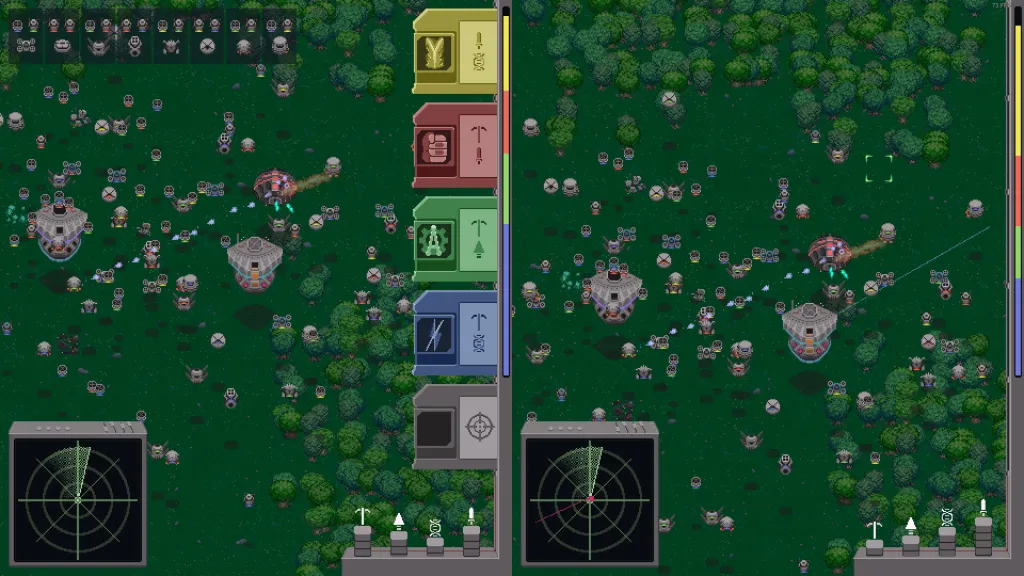
The real-time strategy game Roboden offers a distinctive take on the genre: rather than controlling units directly, you prioritize goals for autonomous drone fleets, and enemy factions are deliberately asymmetric to your forces. The latest release announcement details a new environment called Inferno, which introduces threats such as geysers and lava, depletes available resources, and adds higher-risk opportunities for rewards.

Aaaaxy: a non-Euclidean puzzle platformer

Rarely do we see a quadruple-A title, but Aaaaxy earns the label. This non-linear 2D puzzle platformer plays with traditional platforming conventions in a world where the shortest path between two points isn’t always a straight line—set in a non-Euclidean space that makes it tricky to describe but fascinating to explore.
The game was built with a stack of free and open source tools:
- Ebitengine, a 2D game engine written in Go
- Oto, a cross-platform low-level sound library
- Tmx, for parsing Tiled tile map files

Crazee Rider: a classic in 6502 assembly

The Acorn Electron recently marked its 40th birthday—the 1983 home computer was the mass-market successor to the influential BBC Micro. For a window into that era of game development, look at the source for Crazee Rider, a motorcycle racing game published in 1987. @KevEdwards wrote the game in 6502 assembly, where, much like the racetrack itself, there were no guardrails.

Updated Scavengers mode in Beyond All Reason

Beyond All Reason, the real-time strategy title known for battles with massive numbers of units, has updated its Scavengers game mode. This mode has players fighting for survival against new enemy spawning mechanics, variant units, and a new final boss. The release announcement covers both the gameplay changes and the development effort that went into them.

Level designer toolkit updates
Two level editors shipped notable releases this month.

LDTK—the “Level Designer Toolkit” from @deepnight, creator of Dead Cells and Nuclear Blaze—comes with UI improvements, better background handling for save/load operations, and bug fixes in its latest version. It serves as both an editor and a level format, with a Haxe library for loading levels into games. The screenshot above shows his game Tenjutsu, featured last Halloween and created in 48 hours for Ludum Dare 51, being edited in LDTK. Details are in the v1.3.4 release notes.

Also updated is Tiled, a flexible 2D level editor that handles styles ranging from top-down RPGs to side-scrollers. The new release brings support for custom project properties, several new scripting features, and bug fixes. The v1.10.2 announcement has the full breakdown.
FamiStudio for NES music composition

FamiStudio helps composers create music for the Nintendo NES (or Famicom), aimed at chiptune musicians and homebrew developers. The latest release delivers bug fixes and localization updates. It also gives us a moment to appreciate chiptunes: our Game Off videos have used music played on actual Nintendo hardware—check out “Spectra” by Chipzel on the Game Off 2020 Sizzle Reel.

Peeking inside Source 2 games with VRF

VRF is a library and app aimed at modders and the curious who want to inspect files from games built on Valve’s Source 2 engine—assets like animations, meshes, and textures. The project reverse-engineers many proprietary Valve file formats, and the latest release jumps from v0.4.0 to v5.0. Highlights include improved rendering quality, vmap decompilation, and GUI refinements, as described in the VRF 5.0 release notes.

Alien Swarm: Reactive Drop continues to expand
Also Valve-adjacent: the August update to Alien Swarm: Reactive Drop, an open-source mod of Valve’s source-available Alien Swarm. The mod extends the Source engine demo with additional maps, alien enemies, and game modes. The latest release improves several missions and lays groundwork for an in-game reporting system; see the Reactive Drop update post for specifics.

Game jam season heats up
A game jam is a timed, creative event where developers—often in small teams—design and build a game within a set window, usually 48 hours to a week, frequently around a theme. Coming up this season:
- Ludum Dare #54 (September 29 to October 31)—Solo developers are tasked with making a game over a weekend.
- Scream Jam 2023 (October 17 to 24)—A horror-themed jam arriving just in time for spooky season. Share your code on GitHub for a chance to be featured in our Halloween highlights.
- Game Off 2023 (November 1 to December 1)—GitHub’s own jam returns; make a game, publish the source in a GitHub repository, and follow a theme announced when the jam kicks off.
Game of the month: Knight Dreams
Fresh from the JS13K competition, Knight Dreams is an endless-runner arcade action platformer. Guide your 13th century knight to gather gems, take down enemies, and scroll your way through the level. Play it in your browser or dig into the source code.

Engine Watch
Unreal Engine 5.3


Unreal Engine's reach has grown well beyond gaming into film and television production, and the engine's latest milestone is version 5.3. While the engine itself is not open source, licensed subscribers can access the code through Epic's GitHub repository and contribute changes, which Epic accepts from customers. The release notes give credit to the many GitHub contributors whose work is packed into this update.
TIC-80 fantasy console


TIC-80 is an open-source fantasy console that imposes strict limits on color counts, sprite sizes, and audio channels to recreate the feel of early hardware. After shipping its first releases of 2023, it remains a solid fit for jam projects and quick prototyping before moving to less restricted tooling. Two standout carts are worth a look: Nibiruman:2080 (source), an intensely playable arcade shooter, and Dangerous Dave (source), a faithful remake of John Romero's Mario-inspired 1988 platformer. If you want a broader look at the ecosystem, browse the GitHub Collection of fantasy consoles.


