

GitHub Issues gets project tables, custom fields, public projects
The new GitHub Issues experience is now in public beta for all GitHub.com users. The overhaul brings project tables and boards with filtering, sorting, and grouping for issues and pull requests, plus iteration fields for sprint-based planning and custom fields for team-specific tracking. Projects can be public or private, with the ability to switch visibility as needs change; GitHub’s own public roadmap is built on this capability.
Discussions matures with labels, Actions, and mobile support
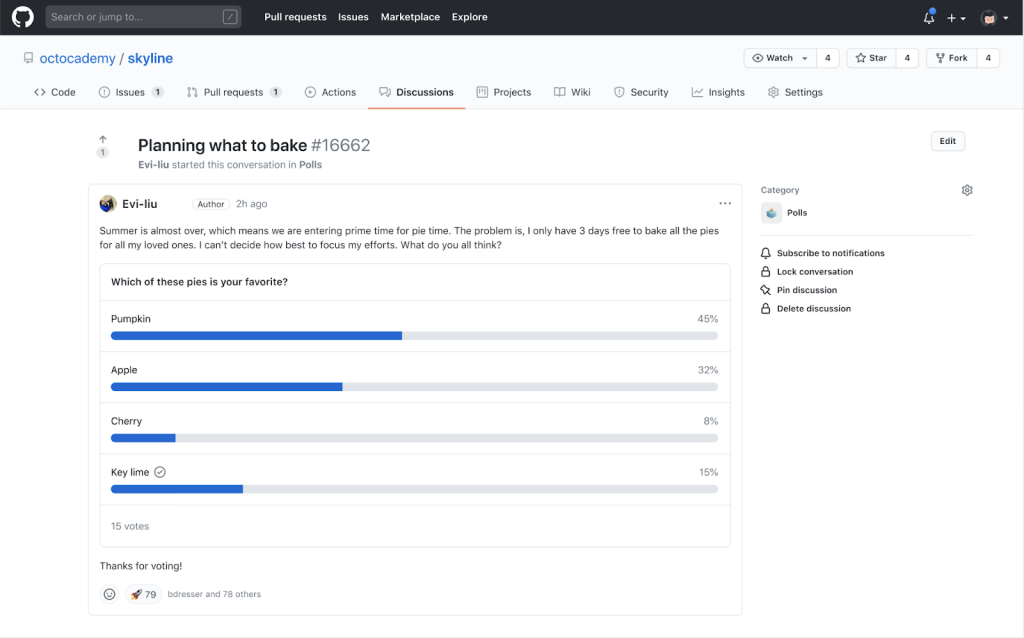
GitHub Discussions, out of beta since August, now supports custom labels for categorizing conversations. Actions workflows can trigger on Discussion and DiscussionComment webhook events, and Discussions are available in the GitHub Mobile app. Two features are on the way: polls for gauging community interest and community insight dashboards that track trends across issues, discussions, and pull requests.
Codespaces targets faster setup and broader access
GitHub’s engineering teams now use Codespaces as their default development environment. What previously took up to 45 minutes to provision from scratch now takes roughly 10 seconds. New capabilities include one-click devcontainer.json setup, GitHub CLI support for Codespace management and direct SSH access, a REST API in beta for programmatic control of machines and secrets, and access control for forwarded ports that can be marked public, private, or org-shared. Dev containers stored in GitHub Container Registry authenticate automatically without a personal access token. Codespaces remains available to Team and Enterprise Cloud plans.
Copilot expands editor coverage
GitHub Copilot now works with Neovim and JetBrains IDEs, targeting the latest IntelliJ IDEA and PyCharm releases. Multiline completions for Java have been added, with additional languages planned. The technical preview continues to admit developers from a waitlist.
Actions adds reusable workflows, OIDC, and runner autoscaling
Recent GitHub Actions releases target both automation and deployment security. Reusable workflows let teams standardize deployment practices from a single shared repository. OpenID Connect based authentication supports cloud providers including AWS, Azure, and GCP, allowing short-lived credentials instead of long-lived secrets. For self-hosted runners, new webhooks and APIs enable autoscaling fleets on VMs or Kubernetes in response to workload demand, with two recommended open-source solutions. The Actions Marketplace has passed 10,000 actions from the community and partners.
Command palette for keyboard-driven navigation
A new command palette, now in public beta, provides IDE-style keyboard shortcuts across the GitHub interface. The command k shortcut on macOS or control k on Windows and Linux opens quick navigation to organizations, repositories, issues, and pull requests, plus command execution.
Ruby joins GitHub code scanning beta
GitHub has added Ruby support (beta) to the CodeQL engine that powers code scanning. Ruby is the 10th most popular language in the open source community, and the new analysis targets many of the most common security issues, including SQL injection, regular expression denial-of-service (ReDoS), multiple cross-site scripting attack vectors, and command-line injection.
CodeQL analysis identifies security issues and traces the flow of data to the vulnerable location in the code. Ruby support is available by default in GitHub.com code scanning, the CodeQL CLI, and the CodeQL extension for Visual Studio Code starting today, and will be included in GitHub Enterprise Server 3.4. Ruby joins the list of supported CodeQL languages alongside C/C++, C#, Java, JavaScript/TypeScript, Python, and Go.
To start using the Ruby analysis, update an existing code scanning workflow file or create a new analysis workflow from the Security tab in your repository.
Enterprise Cloud access control updates
GitHub also announced two security and permission updates for GitHub Enterprise Cloud:
- Enterprise managed users (EMU): A new option for managing enterprise identities where administrators can own and manage the entire lifecycle of identities, with improved provisioning and deprovisioning capabilities. Contact your account manager to get started.
- Custom repository roles: Admins can now create custom permission levels for teams, organization members, and outside collaborators. This capability is available as a public beta.


