
Why Design Principles Matter
Design principles are often treated as rigid rules that dictate every decision. In practice, they are far more useful as a way to align a team around shared values and goals. They document what an organization believes in, helping teams make consistent choices without endless debate about personal preferences or taste.
Without principles, product initiatives tend to be random, sporadic, and ad-hoc — and the outside world notices. Users will define your product's character for you if you don't define it intentionally. Principles give teams a reference point for what they stand for, beyond short-term metrics or passing trends.
What Good Principles Look Like
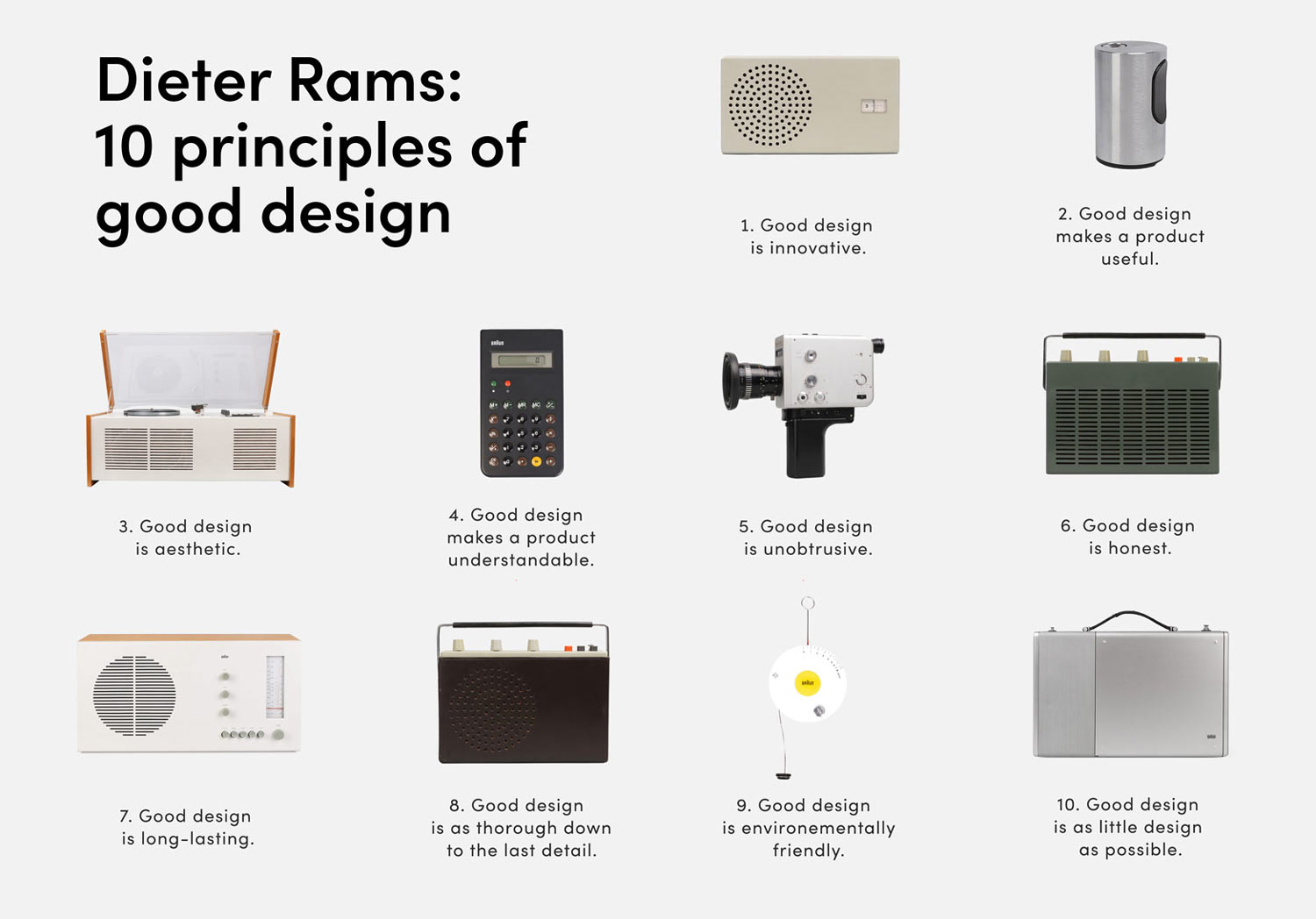
Effective principles are more than visionary statements. They have a point of view and explain both what the team does and what it deliberately avoids. Consider Dieter Rams' 10 principles of good design, which guided his work at Braun: they contain no bold claims or abstract ambitions. Instead, they offer a clear, honest inventory of where care and attention go in the design process.

For reference, strong principle sets exist across many domains:
- Anthropic's Constitution
- Principles of Product Design, by Joshua Porter
- Guiding Principles for Experience Design, by Whitney Hess, PCC
- Principles of Web Accessibility, by Heydon Pickering
- Humane by Design, by Jon Yablonski
- Designing Voice UX Principles, by Brian Colcord
- Agentic Design Principles, by Linear
- AI Chatbot Design Principles, by Emmet Connolly
- Voice UX Principles, by Ben Sauer
Design systems also embed principles as part of their guidance. Notable examples include 18F, Carbon (IBM), Gov.uk, Firefox, NHS, and Uber, among others.
Running a Principles Workshop
Establishing principles is rarely a solo exercise. Ideally, the whole product team contributes — user experience spans performance, support, and customer service, so participants should reflect that breadth. Yet the process can feel abstract and hard to pin down. A structured workshop helps make it concrete.
A simple 8-step format, inspired by Marcin Treder, Maria Meireles, and the Better design team, works well:
- Pre-session Research — Study how users talk about your products, what they appreciate, and the words they use.
- Get Into Principles Mode — Invite 6–8 participants, ask each to pick a favorite object and describe it in 3 words.
- Product Analogies — Compare the product to tangible items such as a Porsche 911 or a Braun audio system.
- Extract Attributes — Have everyone write 3–5 initial principles silently, then group them by theme.
- Link Attributes To Research — Connect each attribute to actual user pain points or desires to keep ideas grounded.
- Value Statements — Reframe findings as "We want X because of Y" sentences.
- Move to Principles — Strip away analogies to produce enduring rules that guide the design process.
- Reality Check — Find positive and negative examples in existing products to see where principles hold or fail.
Starter templates can accelerate the process:
- Design Principles Workshop (Figma Template), by Maria Meireles
- Design Principles Workshop (FigJam Template), by Richard Picot
- How to Create Design Principles (Miro Workshop Template), by NanoGiants
Applying Principles Consistently
Drafting principles is the small part of the effort; the real work comes from sharing and embedding them in everyday practice. Principles only become a default when teams revisit their settings, templates, naming conventions, and outputs against them. Done well, they prevent the endless discussions that stem from personal taste, keeping design decisions tied to stated goals and values. A comprehensive, searchable collection of principle examples is available at Principles.design, assembled by Ben Brignell.