Open network hardware moves Meta’s data centers toward the metaverse
Meta is rolling out a new generation of data center network hardware and has migrated its network operating system to a standard, open API. Announced at OCP Summit 2021, the work spans new top-of-rack (TOR) switches built with two different ASIC vendors, next-generation fabric switches, and a shift to the Open Compute Project’s (OCP) Switch Abstraction Interface (SAI).
Both moves extend the open, disaggregated approach Meta has taken since founding OCP in 2009. The company says the hardware and software contributions are aimed at supporting the workloads that will underpin the metaverse — advanced AI applications among them — while keeping data centers efficient and sustainable.
Wedge 400 and 400C TOR switches
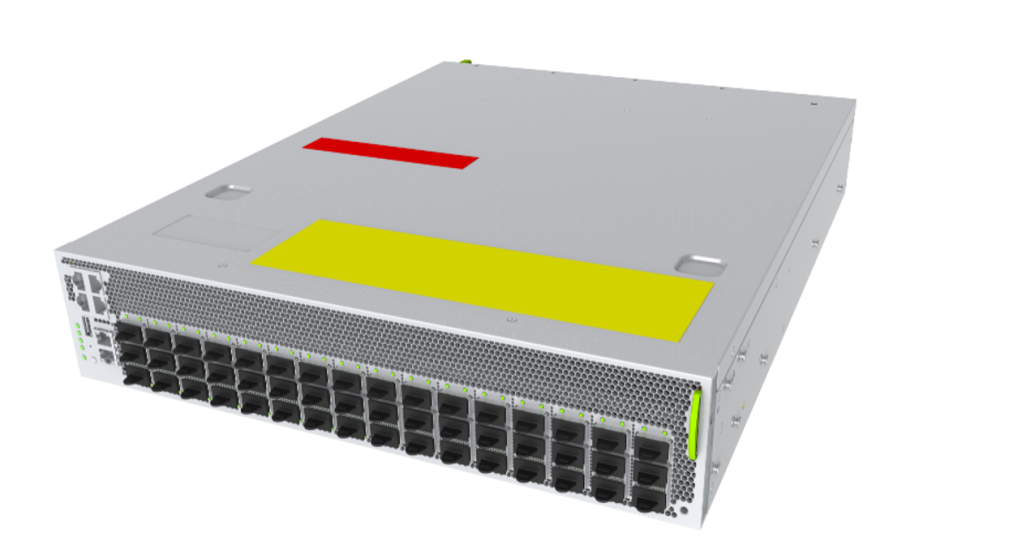
The new Wedge 400 and 400C TOR switches are built in partnership with two ASIC vendors: Broadcom and Cisco Systems. The Wedge 400 uses Broadcom’s Tomahawk 3 ASIC, while the Wedge 400C is Meta’s first contribution built on Cisco’s Silicon One chip. Both switches are manufactured by Celestica and are available as open platforms that any developer can adopt.
Compared with the prior Wedge 100S, the new switches offer 4x the switching capacity — up from 3.2 Tbps to 12.8 Tbps — along with 8x the burst absorption performance and a field-replaceable CPU subsystem. Both models are already deployed in Meta’s data centers.
FBOSS moves to SAI
FBOSS, Meta’s network operating system for switch control, previously relied on vendor-specific ASIC APIs. With the migration to OCP SAI, the OS can now run across silicon from multiple vendors without requiring engineers to work with each chipset’s proprietary SDK.
Broadcom collaborated closely on moving FBOSS from OpenNSA to SAI, and Cisco Systems now supports FBOSS via SAI on its ASICs. The abstraction layer has also been extended down to the PHY level, with Credo Semi supporting FBOSS through its own SAI implementation.
Because the hardware is being shared through OCP, the SAI-based approach also enables broader industry collaboration — developers can build software for the open platforms and contribute it back to the community.
Next-generation 200G and 400G fabrics
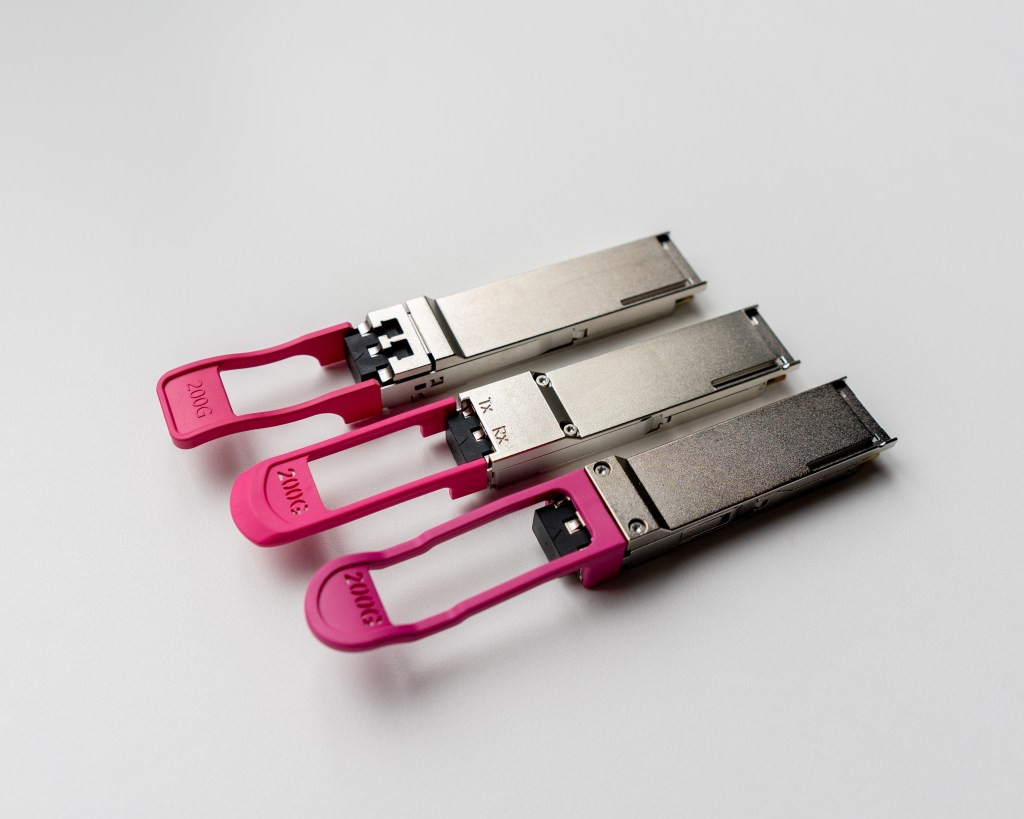
Meta’s data center fabrics have progressed from 100 Gbps to 200 Gbps and 400 Gbps. The company has deployed 200G-FR4 optics at scale and contributed to the specification for 400G-FR4 optics for future use.
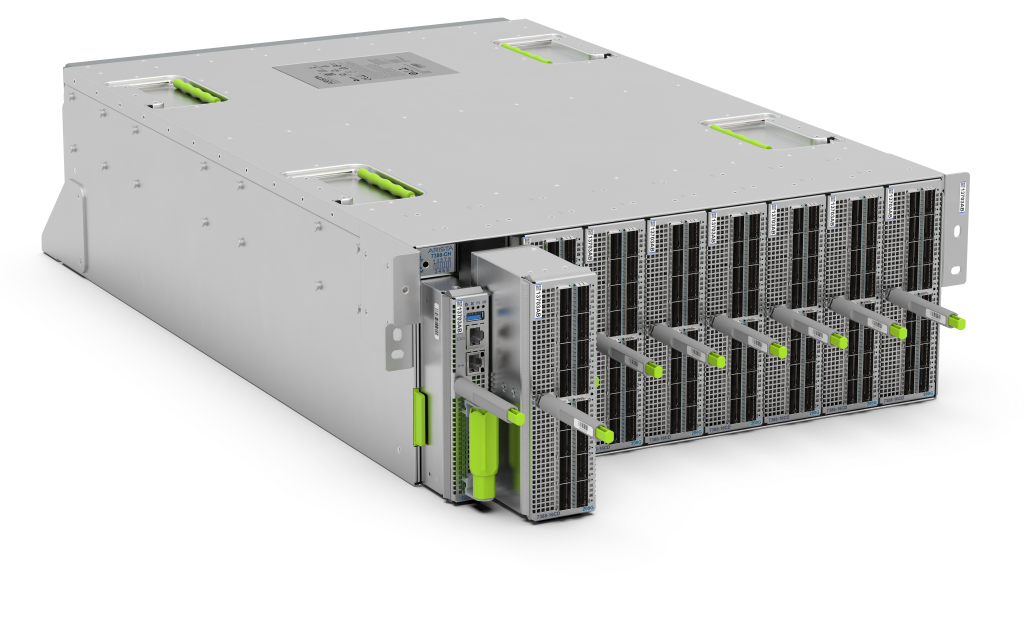
Two new 200G fabric switches have been developed: the Minipack2, the latest version of Meta’s modular network switch, and the Arista 7388X5, built in partnership with Arista Networks. Both are backward compatible with earlier 100G switches and will support future upgrades to 400G.
The Minipack2 is based on the Broadcom Tomahawk4 25.6T switch ASIC with a Broadcom retimer. The Arista 7388X5 also uses the Tomahawk4, with some versions incorporating a Credo chipset. Both switches transmit up to 25.6 Tbps and 10.6 Bpps with modular line cards, and support 128x 200G-FR4 QSFP56 optics modules. They maintain a consistent SerDes speed across the switch ASIC, optics host interface, and optics line/wavelength, eliminating the need for a gearbox to convert data streams. Power per bit is significantly reduced compared with the previous Minipack and Arista 7368X4 models.
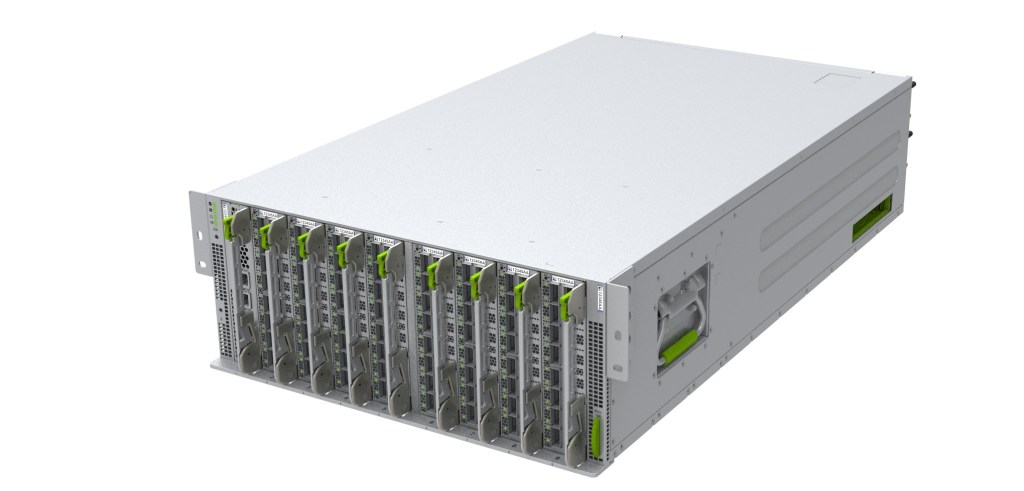
Beyond the shared features, the Arista 7388X5 offers hyperscale cloud scalability and supports multiple operating systems — Arista EOS, FBOSS, and SONiC.
Open hardware as a foundation
The metaverse will depend on a range of technologies, including large-scale AI, which in turn relies on flexible and efficient network infrastructure. Meta says that disaggregated global networks and data centers will underpin these emerging workloads, and that open collaboration through groups like OCP is essential to building hardware that is both performant and sustainable.
Open hardware designs — for racks, servers, storage boxes, motherboards, and networking gear — are what will drive the innovation needed for the next major computing platform, the company argues. The road to the metaverse, in Meta’s telling, will be built on open advanced networking hardware.