
Design systems need a little chaos
Figma Designer Advocate Laura Fehre has spent years building design systems meant to streamline work. But she argues that craft needs room to breathe—that systems should unlock creativity, not confine it. To prove the point, she built Mani Mansion, a playful Figma playground for nail art enthusiasts. The project began as a routine salon visit and ended as a lesson in letting structure go, just enough to make room for surprise.
From childhood memory to digital salon
Scrolling through social feeds yielded no nail design that felt right. Then Fehre remembered Barbie Nail Designer, a Mattel Media game from September 1998 she obsessed over as a kid. As an adult, her monthly salon appointment remained a ritual where time slowed down. That seed grew into a question: Why not recreate this experience in Figma? Not a tool for efficiency, but something that invites people to lose track of time.
A walk through her neighborhood, past nail salons, brought back the sensory details: chatter and drills, almond-scented cleanser, glossy counters. She sketched these impressions in a new notebook, doodling plush seating and neon signs. The Mani Mansion, she realized, would need to capture an atmosphere—translating texture, sound, and smell into something interactive and digital.
Embracing the breakdown
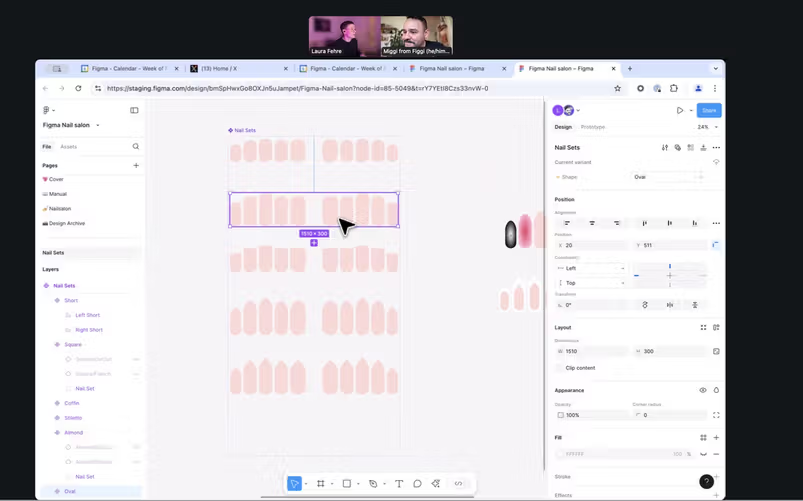
The initial vision was deliberately disorderly, the opposite of her systems work. Fehre crafted every nail shape by hand with the vector tool, making each one unique, like real nails. But reality intervened. Distinct shapes made layering a nightmare; every combination required endless duplicates, turning the file into a frustrating exercise.
The structure she had avoided was exactly what she needed. Back to square one, Fehre felt lost and insecure, doubting skills she had honed for years. The glossy illustrations she imagined weren’t materializing, and she admitted her graphic design chops had grown rusty.
She reached out to fellow Designer Advocate Miggi Cardona. What began as a confession about being stuck turned into hours of experimentation with nail shapes and patterns. That feeling—getting lost in the process, free from the pressure of building something "useful"—was the goal all along. Fehre realized she had set unrealistic expectations, focused on impressing others rather than creating something that delighted her. Reframing problems as play, she let go of perfection and found room to laugh at the absurdity.
Putting the playground to the test
When her next nail appointment arrived, Fehre finally tested her own creation. She sat at her desk, opened the mood board in her playground file, and gathered inspiration: disco ball glitter, '80s Versace vibes, baddie energy, and black—basically her entire wardrobe. With Valentine's Day approaching, hearts were mandatory.
At the virtual nail station, she picked colors and played with shapes, making each nail unique. Though she had abandoned totally custom shapes early on, the more systematic approach granted a different kind of creative freedom in the final design. She brought the finished design to her nail tech—not for a copy, but to spark the tech's own creativity.
Invitation to wander
In creative fields, outputs can start to feel uniform. Honing craft, Fehre argues, depends on embracing individual expression. Building Mani Mansion was her way of breaking from rigid standards, reminding herself that not everything requires optimization.
The best outcome came after publication. A teacher reached out with a video of her first-grade students playing with the Mani Mansion, designing their own nails without rules. It wasn't the feedback Fehre expected, but it was better.
Technology is woven into daily life, but everyday routines can still spark digital ideas—and vice versa. The key is a bit of play. Step into the Mani Mansion and try it yourself.