At Vercel Ship in San Francisco, Vercel announced three backend capabilities: general availability for Python, container support in Vercel Functions, and a Public Beta of Vercel Daemons for long-running background workers. The Python work follows earlier zero-config support for Python and TypeScript frameworks, and complements Vercel Services, Queues, and durable workflows.
Python reaches general availability
Python backends now run on Vercel's infrastructure with the same local development, preview, and production deployment flow used for frontends. FastAPI, Flask, and Django are supported, running on standard CPython with PyPI dependencies; Vercel handles framework detection, builds, and scaling.
Vercel reports 150,000 teams already running Python backends on the platform, including OpenAI, Polymarket, and Exa. Python SDKs cover Vercel Blob for file storage, Vercel Queues for background jobs, Vercel Workflows for durable steps, Vercel Sandbox for running untrusted code, and the AI SDK for Python for streaming model responses and tool calls.
Delphi, which builds AI digital minds from books and talks, moved its Python backend from AWS ECS to Vercel. The ten-engineer team has no dedicated infrastructure role, ships to production more than 100 times a day, and uses Queues for background jobs.
"With Vercel, we barely think about infrastructure at all."
Spencer SchoebenFounding Engineer at Delphi
Containers for any language
The Vercel container runtime deploys applications in any language together with the OS libraries and executables they depend on. Since container support entered Public Beta, 5,000 teams have shipped 150,000 container deployments.
Containers deploy as Vercel Functions on Fluid compute and scale with traffic under Active CPU pricing, which does not bill for idle time spent waiting on API responses, database queries, or LLM inferencing. They fit into the same surrounding stack: Vercel Services for developing and deploying a backend alongside a frontend, Vercel CDN for serving traffic on your domains, Vercel WAF for protection, plus logs and rollbacks.
A video app illustrates the pattern, using a container to prepare a playback copy and thumbnail for each uploaded clip. This Dockerfile packages the Python processor, its dependencies, and ffmpeg to run with Daemons:
FROM python:3.12-slim
RUN apt-get update \
&& apt-get install -y --no-install-recommends ffmpeg \
&& rm -rf /var/lib/apt/lists/*
WORKDIR /app
COPY requirements.txt .
RUN pip install --no-cache-dir -r requirements.txt
COPY processor.py .
CMD ["python", "processor.py"]
Deploying through Git or the Vercel CLI causes Vercel to build the image and store it in your Vercel Container Registry.
Daemons: pull-based background workers
Vercel Daemons deploys containers as continuously running background workers on Fluid compute. You set the number of instances per region, and Vercel maintains that capacity by restarting processes that exit or crash.
The launch supports pull-based workloads, where code requests work from another system and processes it as it arrives — consuming queue messages, for instance, or fetching pending jobs from a database.
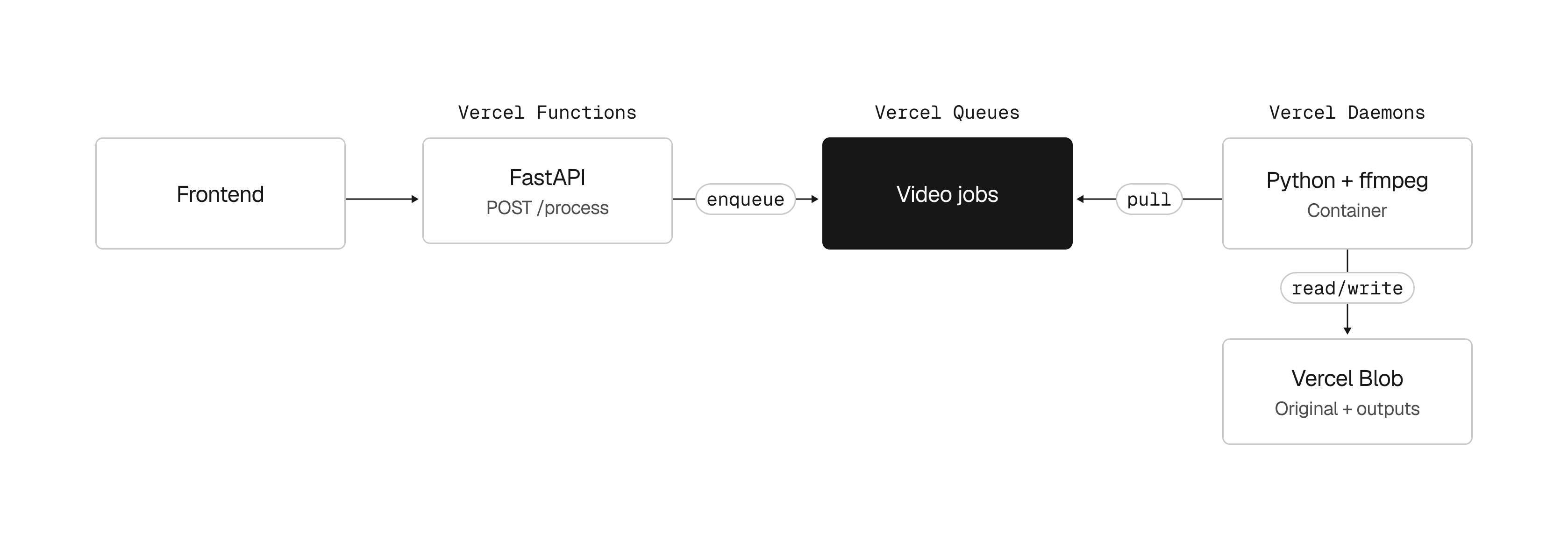
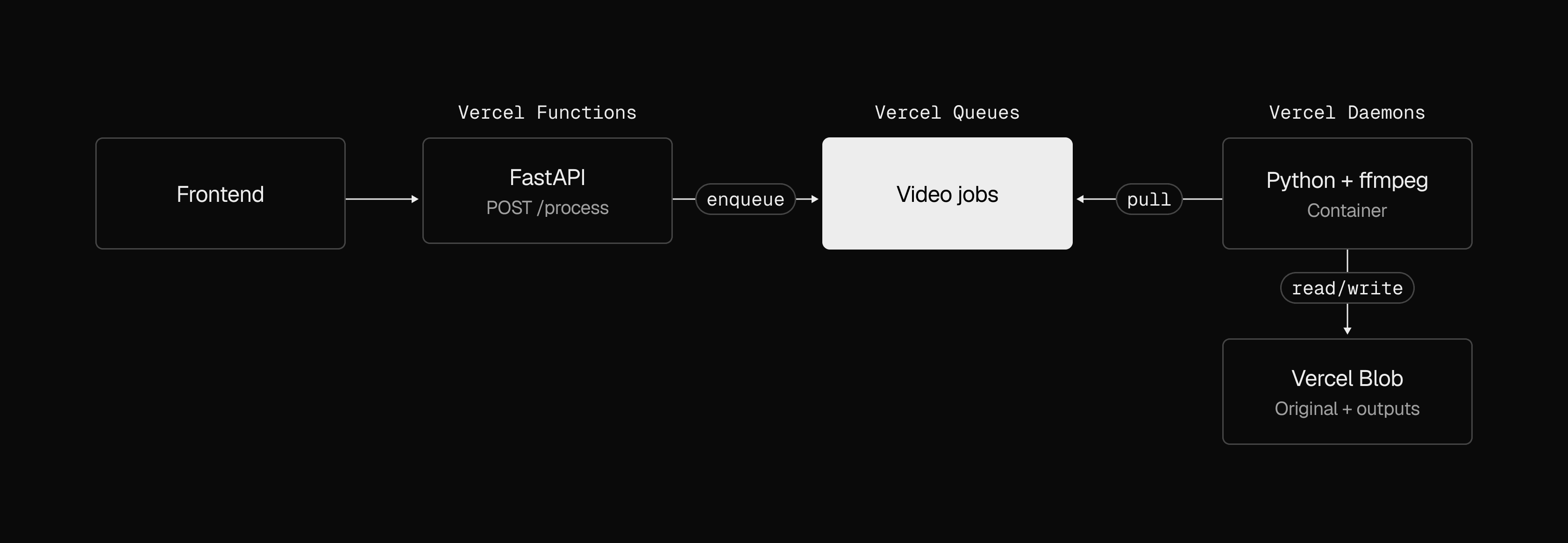
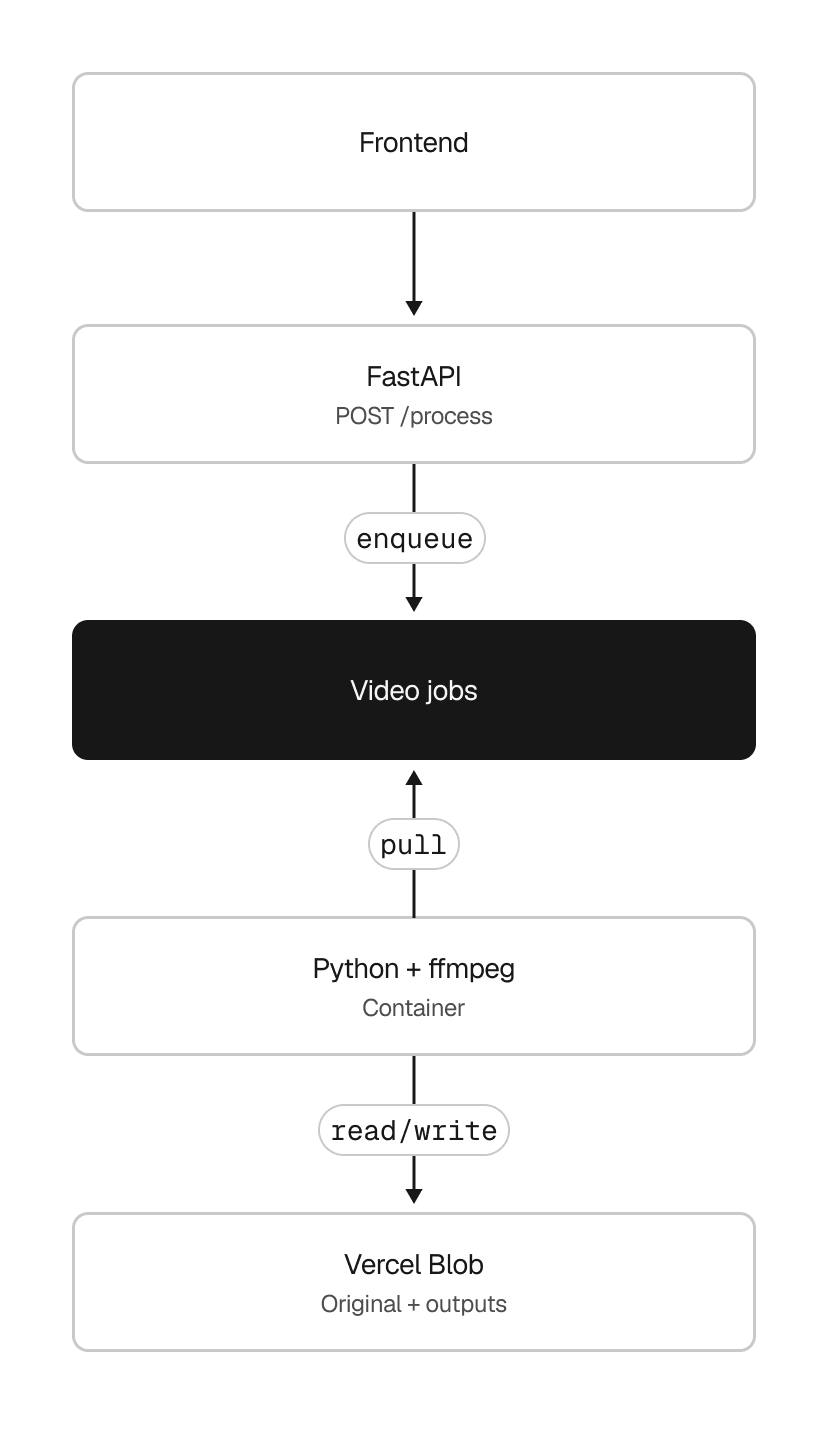
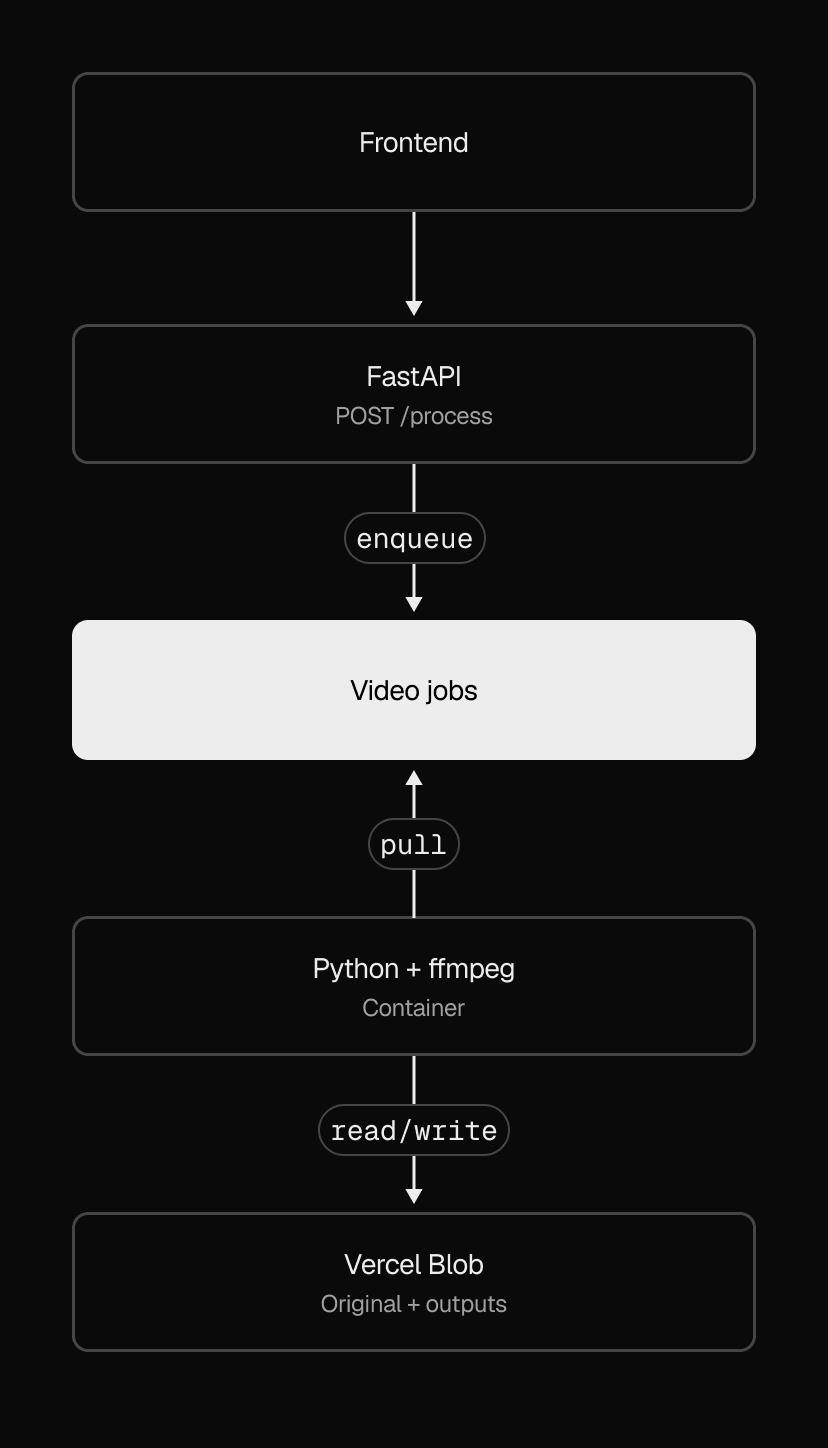
In the video example, Daemons runs the processor continuously while it pulls jobs from Vercel Queues. The project's vercel.toml defines the Next.js frontend, routes requests to it, and adds the processor via Dockerfile:
#:schema https://openapi.vercel.sh/vercel.json
[services.frontend]
framework = "nextjs"
root = "."
[[routes]]
src = "/(.*)"
destination.service = "frontend"
[daemons.videos]
root = "."
entrypoint = "Dockerfile"
instances.iad1 = 1
Further reading
- Backends guides in the Knowledge Base
- The complete guide to Vercel Daemons
- One-click deployment of an eve agent with Python