From Dumplings To Digital Tokens: Yiying Lu On Creativity, Community And NFTs
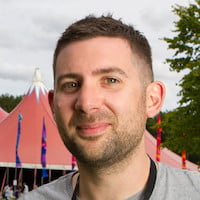
Yiying Lu’s name means “happy, creative land” — a blessing from her grandfather, who insisted on changing the character in her name from one denoting physical beauty to one focused on the heart and happiness. That shift, she says, set the mission for her life and work: bringing joy and creativity to everyone she reaches. Lu joined the Smashing Podcast to talk with Vitaly Friedman about how that ethos has guided her journey from a traditional art career to designing emoji used on billions of keyboards, and now into the emerging world of NFTs.
The Roots Of A Creative Practice
Lu was born in Shanghai, grew up between Sydney and London, and is now based in San Francisco, where she runs her bilingual creative studio. That international background, she explains, is central to how she thinks about art. Rather than focusing on what makes cultures different, living across continents has shown her the commonalities that unite people — a theme she tries to weave into everything she creates.
What drives her work, at its core, is what she calls a very childlike curiosity. “When I create, I don’t know what it’s going to come out,” she admits. She often begins with only a destination unknown and works from an innate desire to communicate. Her goal is to find the “fun in the functional” — pointing out that the word function literally contains fun. Visual art, she believes, can trigger an immediate emotional response, letting her communicate with people without saying a word.
Everybody Is Creative
Asked whether creativity is something only a select few possess, Lu is unequivocal: “Absolutely. Honestly, I think everybody is creative.” She argues that each day we wake up not knowing what it holds, and we create that day as we improvise through our conversations and decisions, essentially authoring our own lives. The problem is sparking that latent creativity.
Lu organized a large drawing festival right before the pandemic to do exactly that. She found that when people who don’t consider themselves creative — engineers, lawyers, accountants — are given a creative prompt, they often produce some of the most interesting drawings and stories. The exercise simply activates a part of the brain that rarely gets a chance to be expressed.
Designing The Dumpling Emoji
One of Lu’s most well-known projects began in 2015 with a simple frustration: she wanted to send a dumpling emoji and discovered none existed. As a designer, she saw a problem she could solve and made her own version — an animated GIF she calls the “bling bling dumpling” — which she sent to her friend Jenny Lee, a former New York Times journalist. Lee encouraged her to pursue it publicly, and the project grew from a dumpling party at Lee’s house, where guests from around the world shared their own dumpling traditions — gyoza from Japan, khinkali from Georgia, ravioli from Italy, pierogi from Poland, and momos.
That research revealed dumplings as a universally beloved food, not just an Asian cuisine, and led Lu and Lee to the Unicode Consortium, the nonprofit responsible for emojis. They presented their proposal in person, and the dumpling, chopsticks, fortune cookie, and takeout box were approved in early 2016. It took another two years for vendors to roll out their own designs. That was far from the end for Lu: she has now designed six emoji in total, including the recently approved boba tea (which was actually rejected in her original 2015 submission, only passing later thanks to data scientists who proved its usage during the pandemic) and the peacock.
The Twitter Whale’s Origin
Lu’s famous “Fail Whale” — the image that graced Twitter’s over-capacity page for years — wasn’t designed for Twitter at all. It started as a personal birthday e-card for friends and family. Lu created the giant whale lifted by little birds to symbolize an enormous wish being carried across the ocean, because she felt she was missing too many graduations and celebrations. A startup called Twitter later licensed the artwork. Its co-founder, Biz, chose the image despite it representing a frustrating service outage because it felt whimsical and brought users joy even in a difficult moment.
For Lu, this reveals what art does: it acts as a beacon of light that helps people connect with emotion, whether happy or sad, and highlights an inner truth. “That’s why we need art in our lives,” she says.
Becoming An NFT Artist
Lu has recently expanded her practice into NFTs, and she’s eager to demystify both the mechanics and the mindset. For newcomers, she stresses the definition of the acronym itself. “Non-fungible” means unique and irreplaceable, much like each person’s experience. Even identical twins, she notes, live completely different lives.
And while many people associate the word “token” with currency or speculation, Lu looked into its etymology: it comes from an Old English word with Germanic and Dutch roots that means “to teach.” She reframes her work accordingly: creating something as a token is a chance to teach the world something new, and she hopes artists enter the space with that intention, not just as a transaction.
Building work technically involves a few clear steps. For digital art, you need:
- A digital wallet — essentially a bank account on the blockchain.
- A platform to host your art — examples include OpenSea, Foundation, SuperRare, or MakersPlace.
- A way to create — the artwork can be digital, but you can also scan physical art, compose music, or make video.
The process is called minting. When you mint a piece once and only once, it’s called a one-of-one; you can sell it at a fixed price or through an auction. Some platforms accept only Ethereum, while others take fiat currency like US dollars or even credit cards. Lu has also experimented with what’s called an open edition — a limited-time sale where people have within 24 hours to purchase a piece — as well as chance-based sales. On MakersPlace, she ran a sale with five designs, each with different rarity levels. Buyers didn’t know what they were getting; the rarest option had only a small percentage of appearing, making it an exciting game within the buying experience.
Navigating Hype And Scams
First, however, is a question that matters more to the culture than the technology: is it worth it for artists to enter a space flooded with stories of million-dollar sales and failures? Lu’s advice rings loud: “Before you criticize anything, try it yourself and see if you can make a difference.” Most of the early crypto artists were anonymous, which made establishing trust with a community difficult and enabled too many scams. Projects failed, foundations were shaky, and transparency was missing. That’s the fundamental difference between Web2 and Web3.
YIYING: The technology itself isn’t wrong, any more than social media is. There’s abundant possibility if you work with the right intentions as well as the right people. If you approach a new piece of technology with curiosity — not scepticism — you just might create something new.
Balancing Art, Community And Service
Beyond NFTs, Lu seems to be everywhere at once: apart from her studio work, she has also served as a San Francisco arts commissioner, appointed by Mayor London Breed, working to bring public art into the city — from the murals at the airport to the parks near Chinatown. That civic role helps her stay connected to the physical, three-dimensional world, grounding her online presence with real-world contributions. She has led initiatives to support community mental health, and she sits on nonprofit boards that she’s passionate about.
Her advice for juggling such a packed life or finding time? She says she’s always been doing things she loves. Working with people she enjoys learning from, like the Smashing community and its speakers, provides constant motivation. She particularly shared that the recent years of isolation during the pandemic and long divides from her family in Australia were sustained entirely through community and creativity. Receiving an Adobe Creative Fund gave her the space to develop The Very Hungry Red Panda project, a children’s book that emerged from a design she created as a volunteer for a night market. Since red pandas are endangered — less than 10,000 remain in the wild — she wanted to use art to advocate for endangered animals worldwide in a way that would appeal to children. The book is written to tell its story through a metaphor of costumes and a stage play, featuring children from different backgrounds, coming together to appreciate each other.
What Is The Next Dream Project?
What lies ahead? Lu says she is literally beginning her dream project: a book about creativity, entrepreneurship, and, fittingly, happiness — themes written into her name. While it combines her life’s lessons, for people starting careers now, her advice is practical optimism: “If you work hard and be kind, amazing things are going to happen.” And, in a nod to Joseph Campbell, “Follow your bliss.” Her final parting words are lighter, and effective: “Drink a lot of water and take a deep breath every now and then.”