
Web platform tracker expands to nearly full feature coverage
The web platform dashboard on webstatus.dev has been overhauled. What started last year with roughly 250 tracked features now covers over 1,000, pulling almost all of the web platform into a single monitoring view. The update also adds mobile browser data, platform-wide statistics, and new tools for filtering and sharing queries.
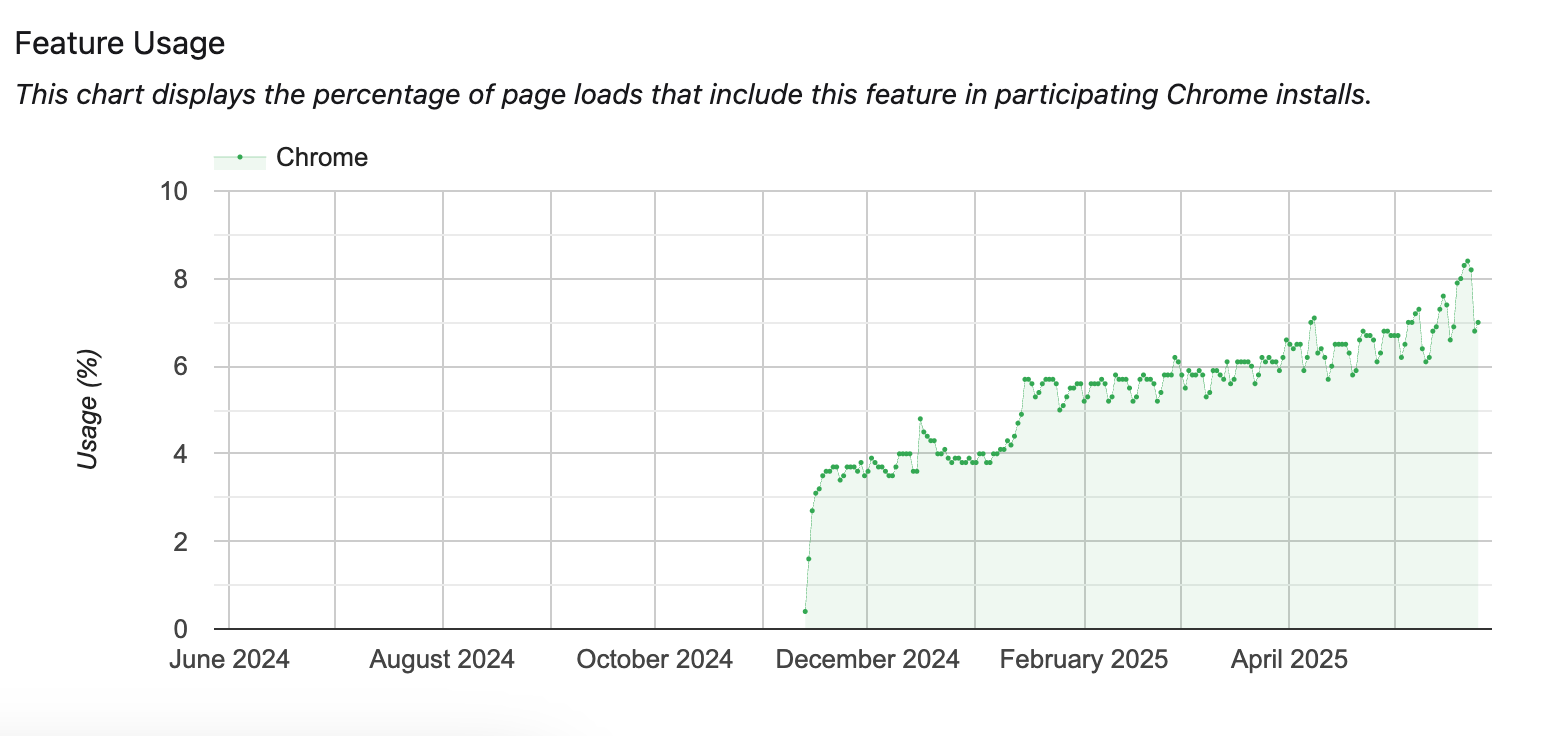
Feature data comes from the W3C Web Platform DX (Web DX) Community Group's web-features project, which includes contributors from all major browser vendors. Alongside the broader coverage, the dashboard now includes usage timelines for nearly every feature shipped in Chrome since 2020, so you can see not just whether a feature is supported, but how adoption is trending.
Mobile support data reveals where Baseline breaks
Mobile browser support information is now integrated into the dashboard. That makes it easier to spot when a feature fails to reach Baseline not because of desktop gaps, but because a key mobile browser is missing it—useful context for progressive enhancement planning.
Query, sort, and share your exact view
New sorting and filtering controls make it possible to construct precise queries. For example, you can find features that were already available in Chrome and Firefox, landed in Safari within the last 12 months, and are sorted by current usage with a single query. Saved searches are shareable, so teams can maintain a custom dashboard for a particular API set or feature area and keep tracking its progress toward Baseline via a direct link.
Community-requested features get top billing
The dashboard now includes lists of the top 10 most requested features from the State of CSS and State of HTML surveys, making it simpler to track whether the features developers are actively asking for are moving toward support.
Interoperability over time, in one chart
A new platform-level statistics view provides something the ecosystem hasn't had before: a data-driven look at interoperability trends. The count of features supported by all major browsers has risen from about 400 in 2020 to almost 700 today. That change is now visible in a single chart, documenting the cumulative effect of cross-vendor collaboration.
The near-Baseline view: missing in one browser
The expanded dataset makes it possible to isolate features that are supported by all major browsers except one—the "almost Baseline" category. The dashboard shows how this list has shifted over time for each browser, and lets you cross-reference those features against other signals.
- Spot features on the edge of universal availability.
- Filter for near-Baseline features that also rank among the top-requested CSS or HTML features, flagging high-visibility gaps.
- Check which ones are already on the Interop 2025 list and expected to reach Baseline by the end of the year.
That granular view can inform where advocacy efforts might have the most impact, and gives frontend teams a clearer basis for planning adoption of newer features.
With the broader feature set, usage data, mobile browser integration, and the missing-in-one-browser analysis, the webstatus.dev dashboard is now a significantly more complete tool for tracking the web platform's evolution. It's available to explore at webstatus.dev.


