

October’s open source highlights
With Hacktoberfest in full swing and community pull requests flooding in across GitHub, the open source ecosystem has been busier than ever. We sorted through the submissions to bring you the most significant releases from the past month — from long-awaited 1.0 launches to major version upgrades with breaking changes worth knowing about.
Home Assistant OS 9.0
Home Assistant, the popular smart home control platform, has shipped version 9 of its operating system. The new release is built on the latest Linux kernel and delivers faster boot times, improved USB support, updated firmware, and enhanced Bluetooth and WiFi connectivity. Full details are available in the release notes.

Appwrite 1.0
After two consecutive years of sponsoring Hacktoberfest, Appwrite has finally reached its 1.0 milestone. The open source backend server—positioned as a Firebase alternative for web, mobile, and Flutter developers—has gained a substantial following for both its functionality and its distinctive visual design. The team is actively looking for contributors to their Hacktoberfest projects via good-first-issues.
Git Story 1.0
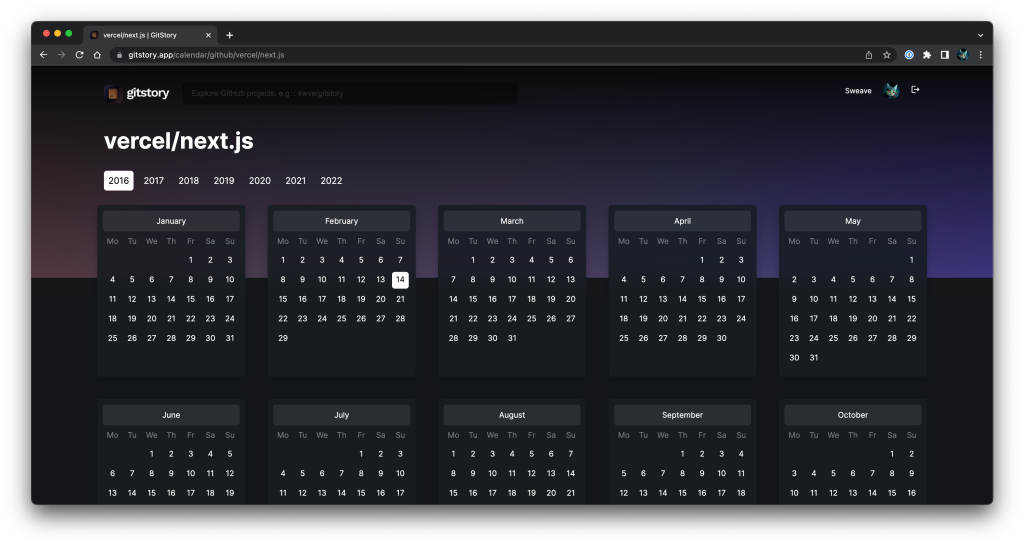
Git Story gives developers a way to travel back in time through their GitHub repositories. Powered by the GitHub API, it provides an interactive calendar interface that lets you select a point in history and view a snapshot of your project as it existed then. You can browse commits and explore how the codebase evolved — though unlike a certain time-traveling film franchise, this tool only lets you observe, not alter, the timeline. The project has shipped its first major release under swve/gitstory.
RxDB 13.0
RxDB (Reactive Database) has returned with version 13 after being featured in Release Radar earlier this year. The offline-first NoSQL database for JavaScript applications—supporting websites, Electron, Node.js, and progressive web apps—now includes a faster replication protocol, a new storage implementation, and a web socket replication plugin. The complete changelog is on the release notes page.

MONAI 1.0
The Medical Open Network for AI (MONAI) has reached its first major release. Built on PyTorch, this framework serves the healthcare imaging community with tools for pre-processing, evaluation metrics, and other deep learning workflows. Researchers and clinicians are leveraging it to support faster and more accurate diagnostics. Code is available at Project-MONAI/MONAI.

Chips-n-Salsa 6.0
For Java developers in need of optimization algorithms, Chips-n-Salsa version 6 brings new capabilities to this library of customizable, hybridisable, iterative, parallel, stochastic, and self-adaptive local search methods. The release focuses on extending support for evolving solutions to problems where solutions are represented as permutations—a key requirement for many scheduling and routing problems. The library lives at cicirello/Chips-n-Salsa, and the name, naturally, is an acronym.
Lazy Trivy 1.0
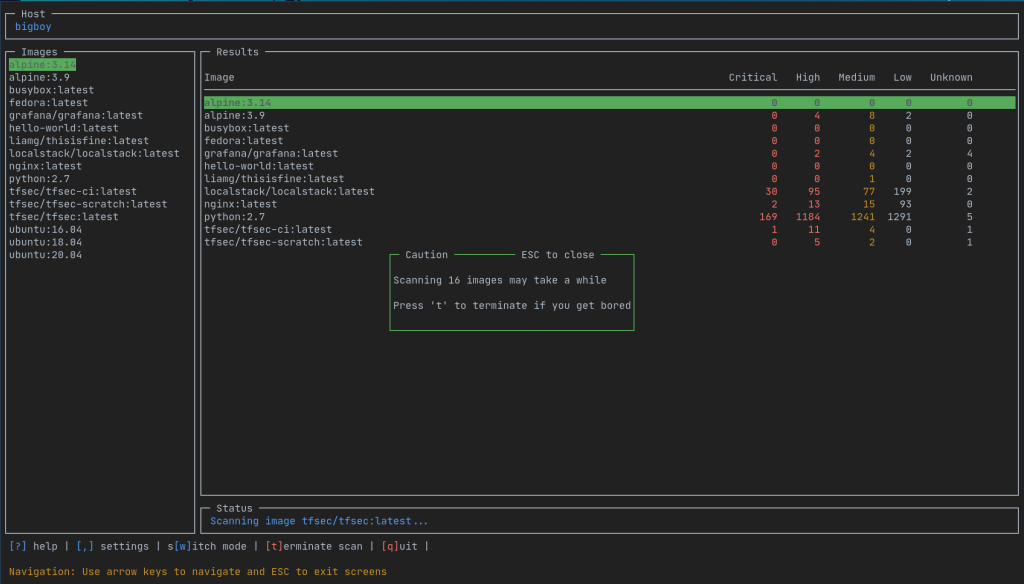
If you're tired of memorizing command-line flags for Trivy, the vulnerability scanner, Lazy Trivy offers an alternative: a wrapper that runs Trivy inside a Docker container and renders results in a terminal UI. The project just celebrated its first major version.
Spaceship Prompt 4.0
Spaceship Prompt, one of the most widely used Zsh prompt frameworks, has released a major update that makes it faster and more extensible. Version 4 introduces a new command-line interface, async rendering, and a sections registry, alongside customizable configuration files. The project also hints at more sections on the horizon. Details are on the Spaceship blog.
Wails 2.0
Wails lets developers build desktop applications using Go for the backend and web technologies for the frontend. Version 2.0 adds native application menus and dialogs, expands the runtime API, and brings support for Apple's M1 chips. The full list of changes is available on the Wails changelog.

Amplication 1.0
Amplication has hit a major milestone with its first stable release. The Node.js development tool is designed to cut down on boilerplate work, helping developers build production-ready applications more efficiently. Its continuous sync between GitHub and the platform ensures your codebase stays up to date across both environments.
Keep the momentum going
October has been an exceptional month for open source, with projects shipping everything from first major releases to significant upgrades. If you’re new to contributing, the third edition of Open Source: The Right Way offers a solid starting point for understanding what goes into a good pull request.
For those attending GitHub Universe 2022, there’s a community-dedicated stream to check out, and the GitHub Game Off begins shortly after. Missed last month’s picks? Catch up on August’s releases, and if you're shipping a major version soon, submit your project to the Release Radar repository.


