Building on a Familiar Foundation
Returning for a second internship at the same company comes with a distinct set of advantages. The uncertainty of the first summer is gone—the codebases are less intimidating, the team dynamics are familiar, and the onboarding curve is much shorter. But a return internship also brings a new challenge: how do you turn that comfort into meaningful growth rather than just repeating what you already know?
That was the situation I found myself in as a return intern on Slack's Mobile Developer Experience (mDevXP) team, based in San Francisco for the summers of 2022 and 2023. Coming back to the same team meant I understood the underlying tech stacks and how the team operated, but it also meant I had to be intentional about pushing into new territory.
From Scripting to a Custom Plugin
The mDevXP team's mission is to improve the development experience for mobile engineers—helping them ship code with confidence and velocity. My previous summer involved working with BuildKite and scripting, which gave me a solid foundation for navigating Slack's development environment. This time around, I shifted gears entirely to build Skate, a custom plugin for Android Studio.
Skate was created to address pain points experienced by Android developers at Slack, and it was the team's first foray into building IntelliJ plugins. My contribution focused on a "What's New" panel feature that parses a changelog Markdown file and surfaces only the latest changes by date.
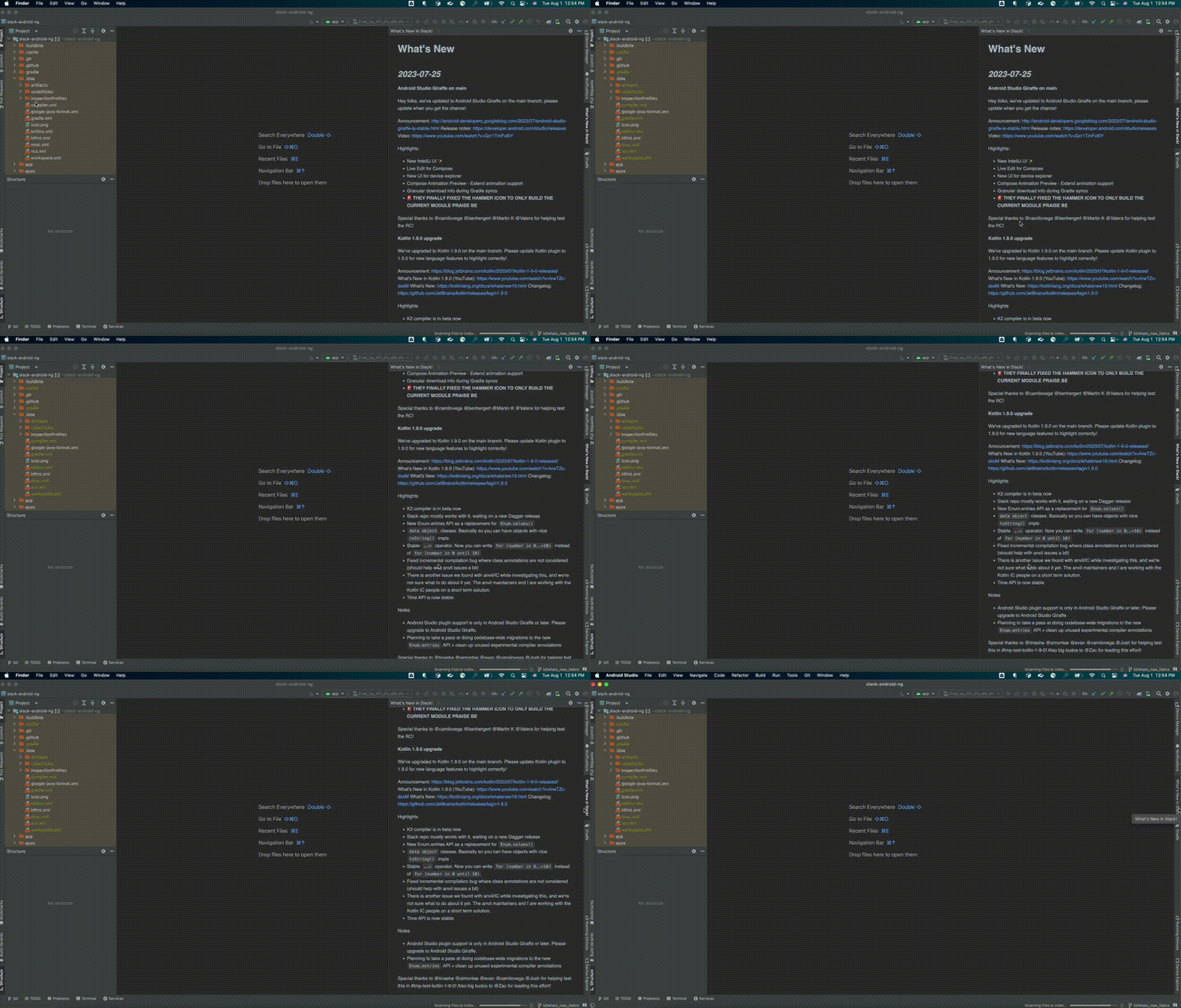
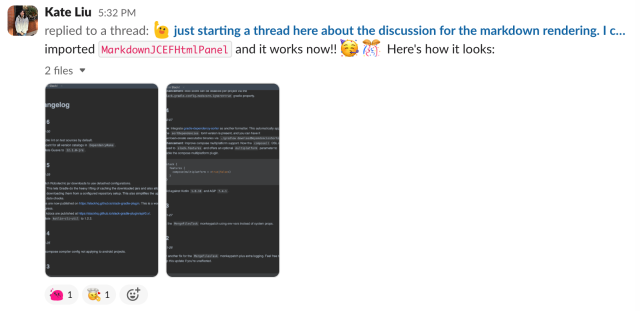
The panel gives Android developers visibility into recent updates, announcements, and news directly within the tool they use all day. Instead of expecting developers to check a separate channel or document, the plugin meets them where they already are, making important information stickier. Skate also marked my first contribution to an open source project—a fitting capstone for a project named after me (Kate & Slack).
Transferable Skills
Although I moved from scripting and Python to Android and iOS work, the skills I built during my first summer carried over. Understanding how to navigate a large codebase, communicate effectively, and dig into unfamiliar tech stacks turned out to be highly transferable. The experience reinforced how adaptable a team can be—and how important it is to embrace fluidity when jumping between different parts of the development ecosystem.
Making the Most of a 12-Week Return
Having a second summer is a rare opportunity, but it goes by fast. Here's what I found most effective for making the most of those 12 weeks.
Work in the Open
One of the strongest parts of Slack's culture is its transparency, and that's a direct benefit to interns. Most project channels are public, which means your work—and your learning process—is documented from day one. I made a point of posting daily updates in a dedicated public channel, #proj-android-studio-plugin, for visibility.
- Post questions and blockers publicly as threads. It creates a record of what you were stuck on and how you reached the solution.
- Share what you're researching and learning. It keeps your team informed and might surface useful input you wouldn't have gotten otherwise.
- Celebrate milestones in the channel. It builds momentum and keeps stakeholders engaged.
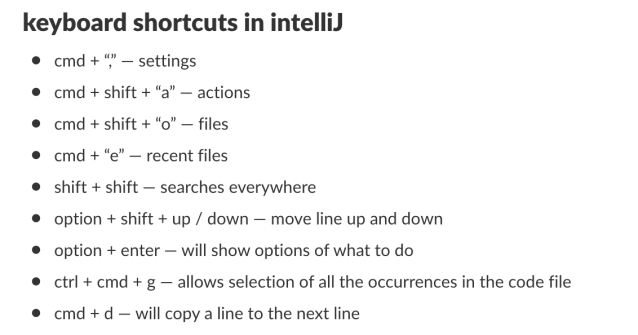
Toward the same end, I kept a canvas document in my channel with shortcuts I picked up while working on the IntelliJ plugin.
Prefer async meetings whenever possible—handling things offline is often faster and less disruptive than scheduling a live call.
Reintroduce Yourself
A year is a long time. Even though you're returning to a team you know, it's important to actively rebuild connections. People may have changed roles, new teammates may have joined, and your own relationships will have naturally faded over the year. Don't hesitate to reach out, especially to people you didn't interact with much the previous summer.
A good cadence for coffee chats or 1:1s as a return intern is at least one per week with someone new. Some practical advice:
- Briefly research the person's role and prepare questions ahead of time.
- Set a loose agenda so the conversation has direction without feeling scripted.
- Reach out when you see something interesting—for example, I messaged an accessibility PM after spotting their posts in an Android dogfood feedback channel and learned a lot about cross-platform accessibility work.
Close the Feedback Loop
Feedback is one of the most valuable things you can get out of any internship, and a second summer is the perfect time to deepen that practice.
- Ask for feedback regularly. Don't wait for scheduled reviews; check in as you go.
- Write it down. You won't remember everything said in a conversation, so keep notes to track your progress.
- Act on it. Feedback only matters if you put it into practice. When people see that, they'll be more willing to give you more.
- Give feedback too. Offer constructive input to teammates, mentors, and your manager. Two-way feedback creates a culture of continuous improvement that benefits everyone.
The Advantage of Returning
Returning for a second internship gives you a head start that you only get by having been there before. The team context, the codebase familiarity, and the existing relationships all make the exploration phase less intimidating and let you dive deeper into the work faster. Those 12 weeks go by quickly—make sure to enjoy the journey, connect with the people around you, and absorb as much as you can from the familiar and the new alike.


