Magic is a developer SDK for passwordless authentication covering email magic links, social logins and WebAuthn. The argument behind it is simple: accounts sit at the heart of business-minded sites — social media, eCommerce, CMSes — so the sign-in experience is worth getting right.

Pricing and fit
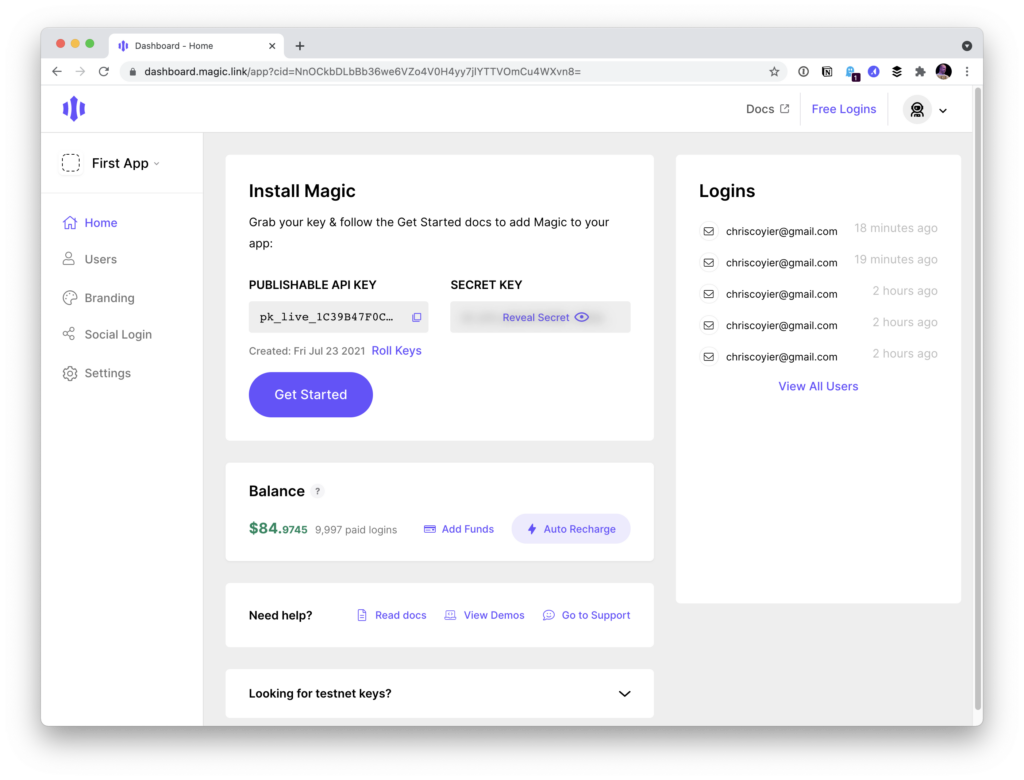
Signing up grants $85 in credit, enough for 10,000 logins; each login costs $0.0085 after that. For small apps the bill stays tiny or nonexistent, and at tens or hundreds of thousands of users the cost is negligible next to the time saved by not building auth from scratch.
What it provides
The pitch to developers rests on a few points:
- A fast, easy-to-implement developer experience.
- Metered pricing — pay only for what you use — plus the technical debt avoided by not writing your own auth.
- Adaptability to future authentication methods, since auth keeps evolving.
- No passwords, and therefore fewer security concerns.
- Next-generation security infrastructure.
The adaptability point is analogous to image CDNs: a good one adds support for new formats and optimization techniques without work on your side, and the same holds for auth.
Magic also fits the Jamstack model — the "J" and "a" originally stood for JavaScript and APIs. Although the service has server-side offerings and Jamstack apps can use cloud functions, auth can be handled entirely client-side. The practical payoff is UX: users get an auth flow that never blocks them, which helps conversion.
Implementation
You start with an account, and the signup itself uses Magic's own auth, previewing what you'll ship. From there the fastest path is scaffolding a working app:
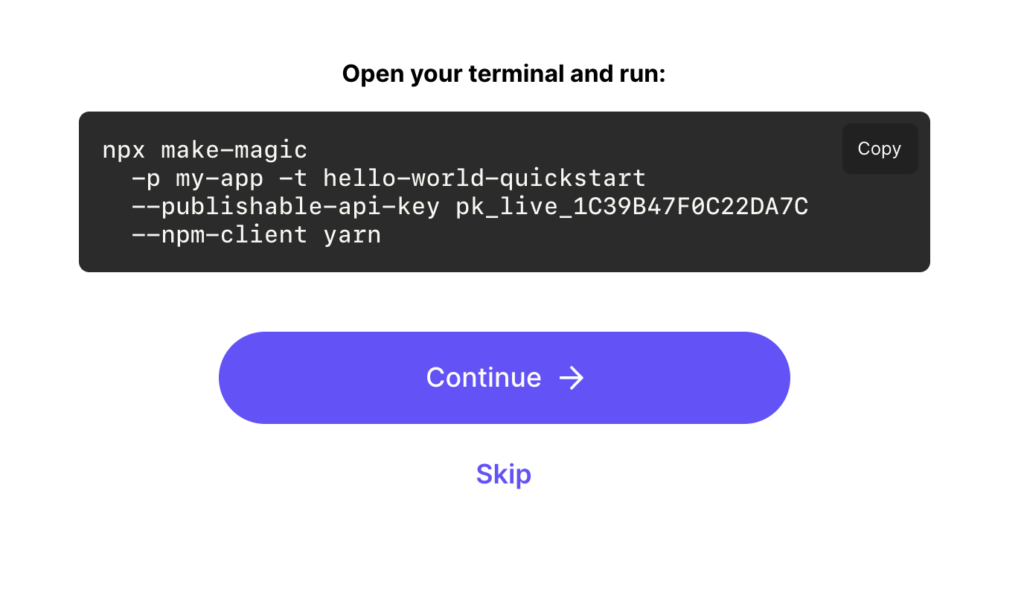
The web starter ships with docs, examples and live demos, and a demo can be ported to CodePen Projects quickly. The client-side core is minimal:
import { Magic } from 'magic-sdk'

const m = new Magic(API_KEY)
m.auth.loginWithMagicLink('[email protected]')
Server-side support covers Node, Python, Ruby, PHP and Go. Security-sensitive apps are in scope too: you can authenticate client-side and then use AWS services, including their Hardware Security Modules (HSMs). SDKs exist for React Native, iOS, Android and native web. Beyond email magic links, social login covers Google, Facebook, Apple, GitHub, GitLab, Bitbucket, LinkedIn, Twitter and Discord.
The no-password thesis
With Magic there are literally no passwords. The email link flow requires none, and social logins only require the user to be logged into the other service rather than remember a secret unique to your app. The company lays out the reasoning in Passwords Suck:
Using passwords is a nightmare. No one wants to memorize yet another passphrase when our heads are already filled with them. Passwords are a huge vector for security breaches precisely because they place the burden of choosing unique and secure secrets on the user, who just can't be bothered. We end up having one password for all the important stuff like banking, work, and school, one for the social-medias, and one for all the miscellaneous one-off services we don't care too much about. The result is that a whopping 59% of people reuse their passwords across services, which means a leak anywhere quickly becomes a liability for the whole web.
Going passwordless is good for users and good for the web. Signup is free and requires no credit card, and new accounts get 10,000 free logins to try it out. Referring fellow industry folks earns 3,000 bonus logins each, up to 90,000 in total.



