
A different kind of internship
Aryan, an EECS student at UC Berkeley, spent the summer as a software engineering intern at Vercel. His path there started at Hack Cupertino 2018, his first hackathon, which shifted his perspective from consuming apps to building them. That spark led through high school startup stints and into Cal Hacks, where he helped build open-source tools for running large-scale hackathons.
Long before applying, Aryan was a Vercel customer. Every hackathon project he built ran on Vercel and Next.js, drawn by the DX and performance. When it came time to interview, he found the process refreshingly practical: instead of leetcode-style puzzles, the interview focused on breaking down problems and reasoning aloud, with Google and clarifying questions encouraged. It felt like a real engineering conversation.
Three projects, one summer
Over 12 weeks, Aryan led three significant efforts. These weren't side projects — they were production systems used daily by Vercel's customers.
Support Center UX overhaul
The first was revamping the Vercel Support Center, the portal Pro and Enterprise customers use to submit and track support cases. Working with Customer Success Engineers, the team identified three key improvements:
- Search support case subjects
- Filter cases by case status
- Sort cases by created, updated, and severity fields


This work touched Vercel's website monorepo (powered by Turborepo), Next.js, the internal Geist design system, and Vercel's API. The changes shipped to production and were announced in a changelog and at Demo Day, Vercel's weekly company-wide showcase.
Citations for v0
Next came the new conversational UI for v0. Aryan spearheaded the implementation of citations, which meant enhancing the Retrieval Augmented Generation (RAG) pipeline to source documentation from Next.js, Vercel, Turborepo, Turbopack, AI SDK, and shadcn/ui. He also built the frontend for displaying sources and inline citations.


The design went through several iterations. The first used source cards at the top of the response, which felt too attention-heavy. Iteration 2 moved a pill design below the response — compact but lacking information. The final version settled on redesigned, more compact cards that balanced information density with visual restraint.

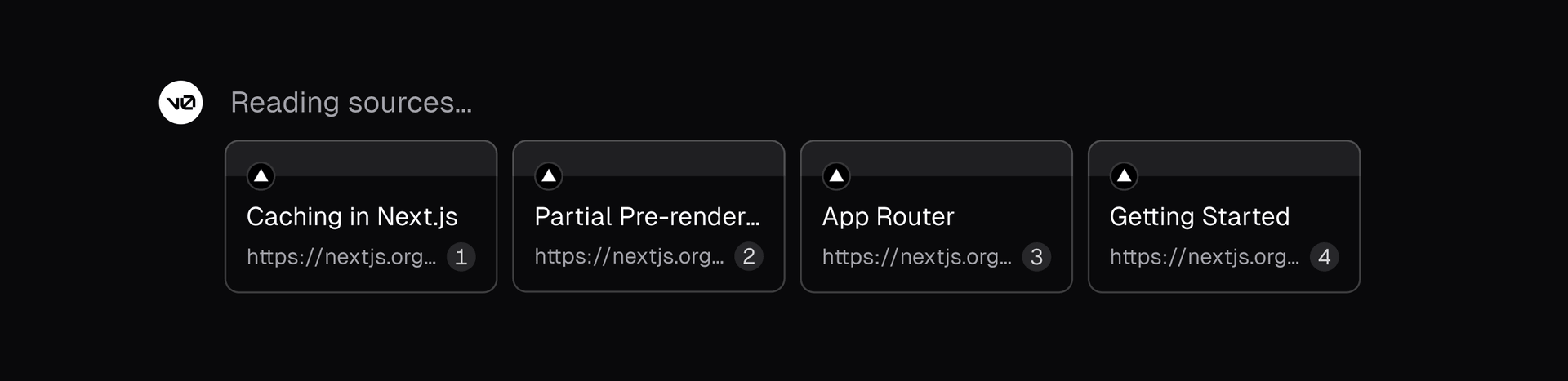

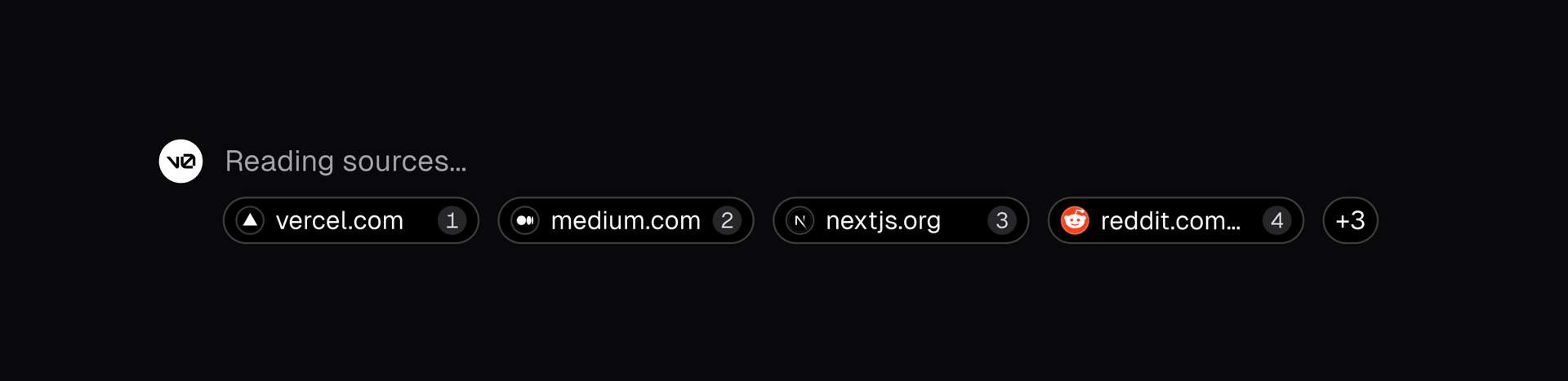


The result: v0's answers are grounded in facts, with numbered references like a research paper. Beyond the feature itself, Aryan rolled out hundreds of beta invitations and built the onboarding experience for new users.


Feeding the model with v0 Brain
The third project addressed a simple problem: great insights from Vercel's engineers were trapped inside Slack. Aryan built v0 Brain, a workflow where anyone can add an emoji reaction to an insightful Slack message, funneling it to the AI team for evaluation and inclusion in v0's underlying model. The goal was to bring the knowledge of the people who built React, Next.js, and shadcn/ui directly into v0.
Operating like a full-time engineer
The internship was structured for ownership. Aryan had direction but full autonomy from day one, with support from his manager and assigned "welcome buddies." He merged pull requests and released to production on his second day, shipping over 80 PRs across the summer. Describing the pace, he compared it to "the intensity of a hackathon," but with proper safeguards and process in place.
A large part of the value came from proximity. He met people like shadcn of shadcn/ui and Paul Henschel of zustand and react-three-fiber, learning firsthand from the creators of the tools he'd been using for years.
What stuck
Beyond shipping features, Aryan cataloged what he learned about working in engineering organizations:
- Engineering at scale. TypeScript's role in keeping large, multi-year codebases maintainable.
- Communicating ideas. Using design docs and RFCs to get early feedback and buy-in.
- Design engineering. Sweating details like a custom loading animation to make interfaces feel delightful.
- Advanced LLM techniques. Few-shot prompting, chain-of-thought prompting with structured tagging, prompt chaining, parsing and chunking strategies, plus observability and evals for benchmarking model performance.
The soft skills came through coffee chats across Engineering, Design, Customer Success, and Sales:
- Work in public. Post updates and blockers openly, especially in remote environments.
- Communicate clearly. Strip complexity and write with the reader in mind.
- Pair program. It practices real-time communication and reveals how others approach problems.
- Iterate to greatness. Launch quickly without sacrificing quality; refine from there.
- Manage up. Keep stakeholders updated on progress and blockers, seek weekly feedback, and connect your work to company priorities.
Building your experience bank
The job search can wear you down — months of applications, interview prep, and rejection letters. But the work pays off when an opportunity lands. My path to Vercel involved countless applications and technical interviews before it clicked.
The biggest differentiator was hands-on experience. Taking an idea from concept to a live, deployed application teaches you the full software delivery lifecycle in a way that passive studying cannot. I built this foundation through hackathons and personal side projects, which gave me deep familiarity with Vercel’s stack before I ever applied. That practical knowledge translated directly into confidence during the interview process.
My advice for anyone in a similar position: invest in yourself. Build that project you have been thinking about — the process of shipping something real can open doors you never expected.


