The path from bytes to pixels
When a browser loads a page, it performs a substantial amount of work to convert raw HTML, CSS, and JavaScript bytes into the visual output you see on screen. For developers, most of that work happens out of sight — you write markup, and a rendered page appears. Optimizing performance means understanding those intermediary steps between receiving the resources and producing pixels. That sequence of operations is the critical rendering path.

Why the critical path matters
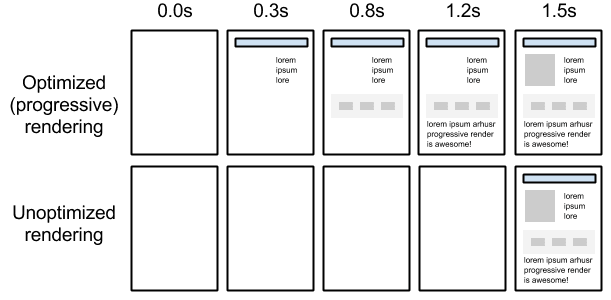
The critical rendering path directly determines your page's time to first render. Shortening it improves perceived loading speed. Beyond initial load, the same sequence of steps runs continuously for interactive applications — each frame update follows the same pipeline, ideally at 60 frames per second.
Understanding the pipeline gives you a foundation for building performant, interactive pages. The process itself is not optional; the question is how efficiently the browser can run it. To see how, it helps to trace what happens for a simple page from the moment the browser receives its first bytes.