When Conversion Goals and User Experience Collide
Designers, marketers, entrepreneurs, and product owners share a common challenge: we want to deliver a good user experience, but we also need users to take action — sign up, buy, or engage. Too often these goals are treated as opposing forces. Tactics that boost metrics, like aggressive pop-ups or manipulative dark patterns, can damage trust and drive users away in the long run.
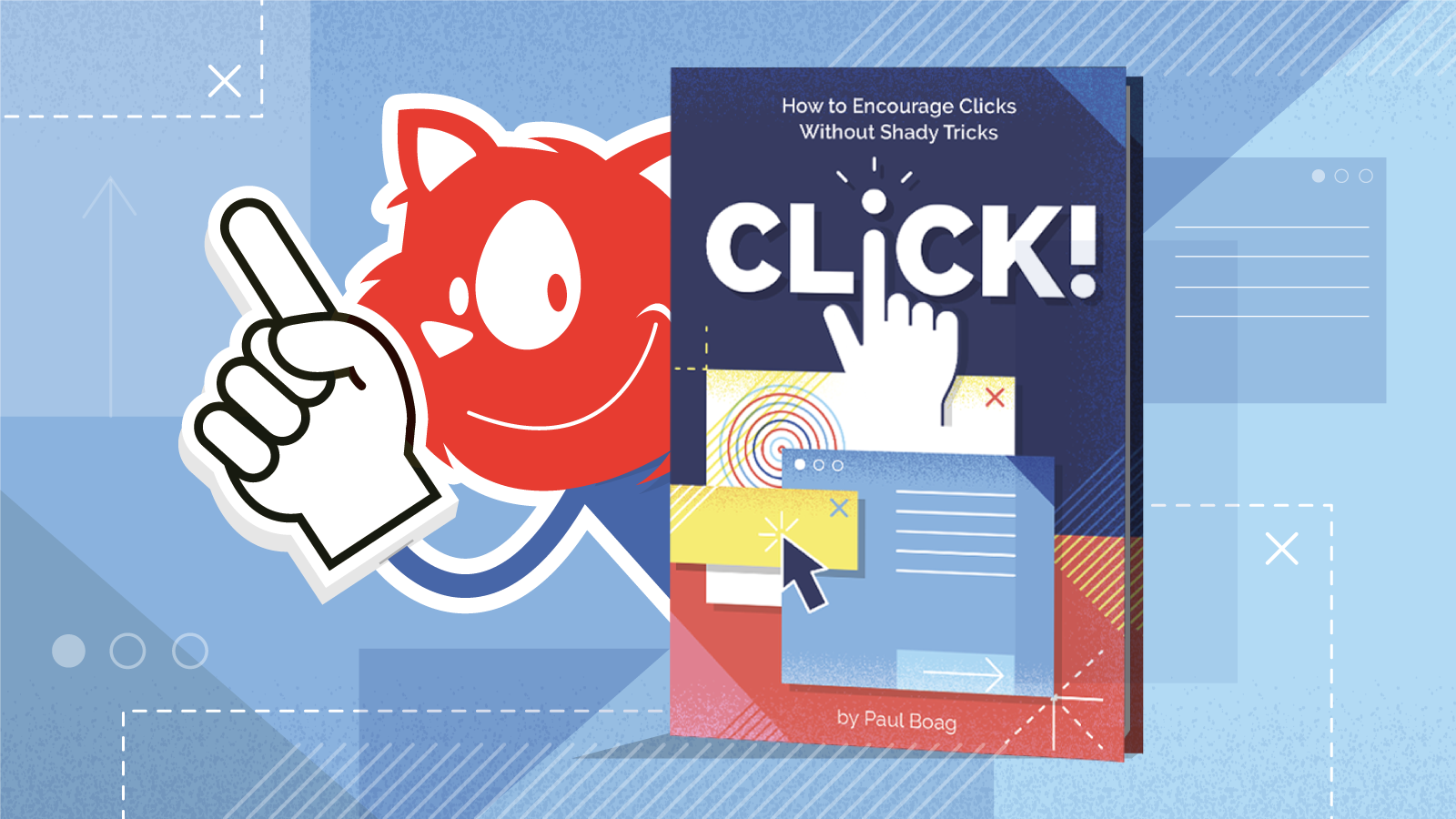
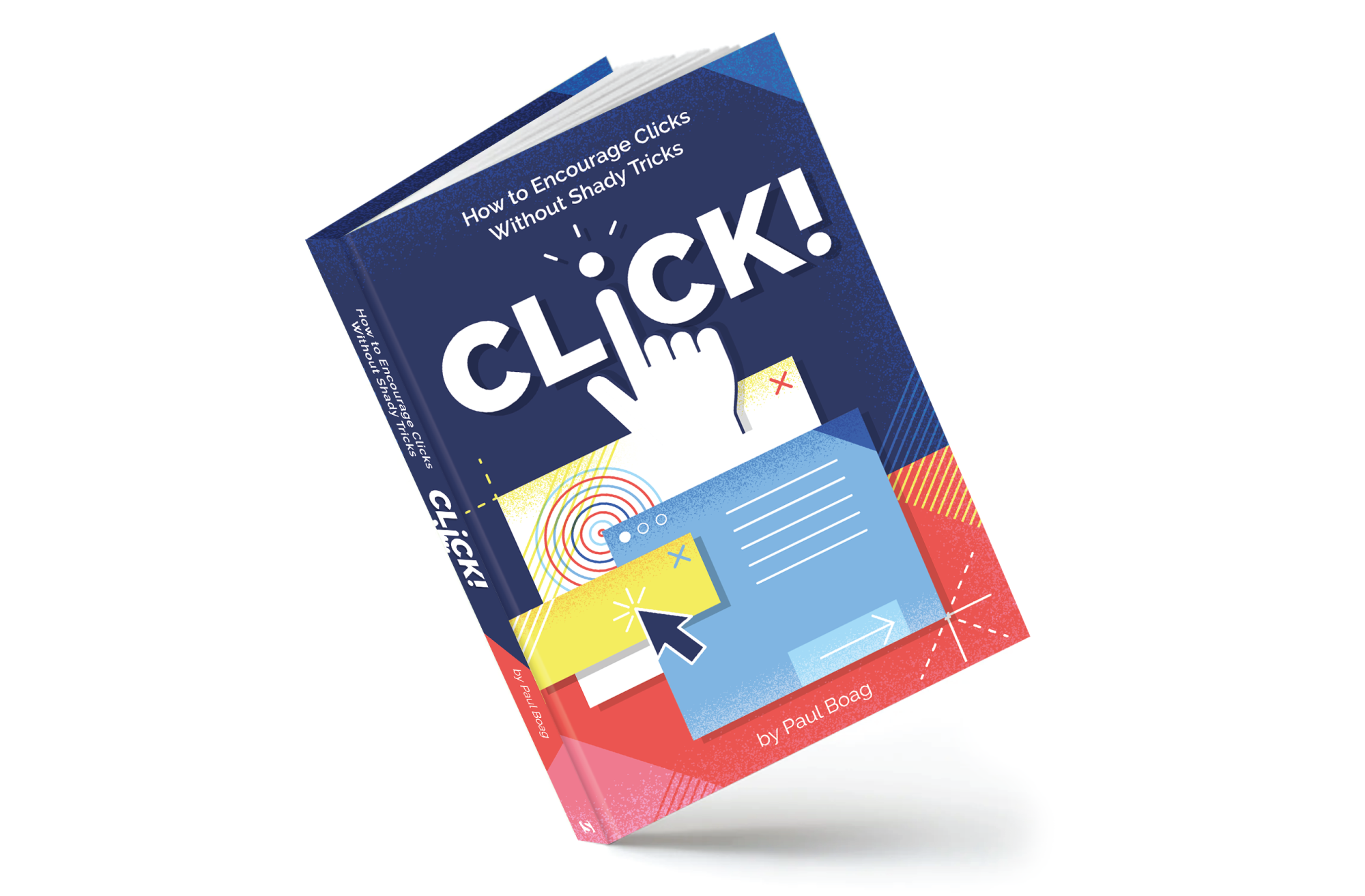
Click! How To Encourage Clicks Without Shady Tricks, written by Paul Boag, aims to resolve that tension. The book presents practical strategies for improving conversion and retention while building loyalty and trust with your audience. The 304-page volume is available in print and eBook formats ($39.00 for the hardcover + eBook bundle, or $19.00 for the eBook alone, which is also included with a Smashing Membership). Printed copies are shipping now, and a free PDF excerpt (17.3 MB) is available for download.
What the Book Covers
The book offers strategies for boosting conversion without compromising the user experience. Rather than providing quick hacks, it focuses on a long-term approach to getting users to act. By reading Click!, you will learn how to:
- Measure and boost business KPIs effectively.
- Build a user-centric sales funnel.
- Reduce risks and address objections.
- Build trust and overcome skepticism.
- Persuade people without alienating them.
- Establish a strategy for higher conversion.
Because marketing and UX concerns frequently collide, the book addresses how to satisfy both business targets and the need for a respectful, frustration-free product. A little surprise is shipped with the first 500 printed books, so early buyers get an extra treat.
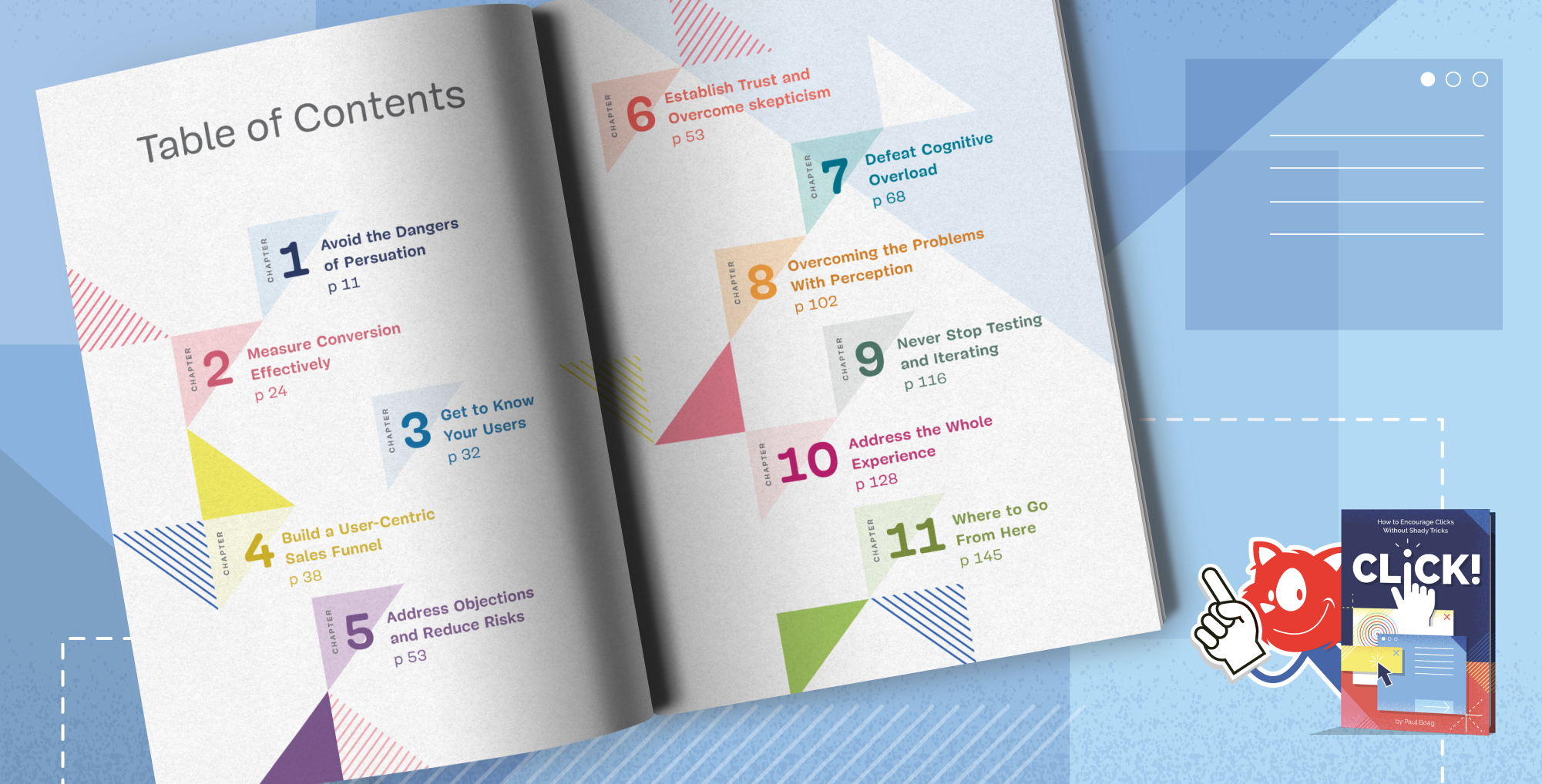
Eleven Chapters, One Goal: Better Conversion the Right Way
The book is split into 11 chapters. Early sections cover the psychology of decision making and practical measurement, while later ones focus on building trust, reducing friction, and testing results.
Chapter 1 begins with the "why": it builds a solid business case for avoiding manipulative techniques, something you can present to management or clients when they push for dark patterns. You will see how empowered consumers are, what manipulation costs you in hidden ways, and the dangers of buyer's remorse.
Chapters 2–3 focus on preparation. Measuring conversion rate properly comes first — without good metrics you cannot improve your results. You will learn how to set key performance indicators, what to track, and how to track it. Chapter 3 then introduces lightweight research methods for understanding your audience's thinking and preferences, requiring minimal time and budget.
Chapters 4–5 shift to customer journey and concerns. You will learn how a sales funnel should support — not interrupt — user experience, how to map a customer's journey, and how to build a funnel around it. The book also explains how to identify user objections and address concerns so you can reduce the perceived risk of acting.
Chapters 6–8 delve into the psychology of persuaasion: establishing trust and overcoming skepticism through openness and social proof, settling
distractions for a time-poor audience by reducing what conversion experts call "cognitive load," and ensuring your users are getting the intended impression of your brand, since wrong assumptions hinder conversion just as much as friction does.
Chapter 9 focuses on process, urging ongoing testing and iteration as the real engine of sustained conversion improvements. You will learn to choose the right projects, test design concepts, and integrate testing throughout your development cycle.
Chapters 10–11 widen the lens and bring closure: address the whole experience by involving developers and other digital channels and organizational change, then learn quickly-implementable next steps — and where to go once the book is done.

What Readers Say
This is a great book on how to practically, and ethically, optimise website conversion rates. Before, I was roughly aware of what CRO was, but now I feel confident to start implementing these techniques in projects. As you would expect, Paul explains all of the concepts in an easy-to-follow and friendly manner.
— Dave Smyth, Agency Owner
I picked up a super simple testing idea, and saw a 42% lift in conversion rate. It was surprising to me, so I ran it again to significance with the same result. That equates to about 2.5 million USD/year in revenue at no additional cost. So I'd say I got my money's worth!
— Brandon Austin Kinney, Director of Lead Generation
Written by Paul Boag and designed by Veerle Pieters, Click! is targeted at designers, marketers, entrepreneurs, and product owners.