Revamping Figma’s design career levels from the ground up
When design manager Sara Culver joined Figma in 2021, she quickly realized a fundamental problem: everyone agreed that career progression came down to “craft,” but nobody could define what that meant. Was it visual design chops? Prototyping skill? Specialized expertise in motion design? With no shared definition, coaching and evaluating designers became guesswork. The existing career ladder—a one-page Notion document the head of design had created a few years earlier—had worked for a smaller team but hadn’t scaled as Figma grew across multiple products and teams.
What started as an effort to clarify craft spiraled into a complete overhaul of the team’s career ladder. Nearly a year later, the team released the Figma Product Design & Writing Career Levels and an accompanying Skills Widget. Here’s how the project unfolded.
Research first, with a heavy dose of internal input
With many designers hitting their second or third year at the company, the timing was right for a refresh. The goal: create a ladder that would scale, support managers in hiring and performance decisions, and give individual designers a clear map of where to invest in their development.
The original ladder categorized skills into product strategy, craft and quality, and upleveling others. Some of that structure was worth keeping. To gather input, Culver surveyed the broader team, asking how they used the existing ladder, what questions they wanted answered, and what they’d like to preserve. The responses clustered around a few themes:
- More detail, less ambiguity. Phrases like “can handle complex product challenges” were too subjective to drive meaningful performance conversations. Designers wanted concrete examples.
- Clarity around senior levels. As designers get more senior, their skills often become spikier—more “T-shaped.” The team needed an explicit position on whether advancement required excellence across the board or rewarded natural specialization.
- Better definitions of craft. Specifically, what skills constitute a strong craftsperson at each level.
Team members also pointed to inspiring models from other companies: Slack’s career framework, plus examples from Buzzfeed, Meta, and Basecamp. One designer, Shana Hu, went a step further, delivering detailed feedback on the existing ladder and proposing a more visual, FigJam-based format.
The team created a FigJam template that lays out the design organization’s performance expectations at every level, including a skills chart and descriptions of the core competencies expected for each role.
Drafting a new framework
Culver studied industry examples and pulled together a mood board of preferred approaches. Three approaches stood out: grouping skills by area, replacing “ladder” language with “stages” or “levels” (to better reflect nonlinear career paths), and visualizing information for easier scanning using FigJam.
The initial proposal centered on four core skill areas. Craft was a given, and a “product” category covering vision, strategy, and research was also essential. Two additional categories made the framework translatable across the whole team, which includes specialties like design operations and UX writing:
- Product Strategy: Defining requirements, research, vision
- Collaboration: Communication, process and feedback, mindset
- Craft: Visual design, interaction design and prototyping, systems design
- Impact: Business impact, leadership, design citizenship
Iterating through critique
Culver started placing these skill areas into a visual format inspired by Shana’s proposal and brought the draft to the design management team for critique. The overall skill areas were well-received, but managers pushed for consolidation and raised pointed questions: Should hiring specifically be incentivized in a growing team? Was “systems design” widely understood enough to appear explicitly in a levels document? Where did communication fit given its cross-cutting impact? And how should the framework reward quality beyond an individual’s own work to encompass all of Figma’s products?
As with any large project, a single critique round wasn’t enough. Culver revised heavily and returned to the managers several times. The framework was refined, individual skill descriptions riffed on, and an onboarding section added to help designers understand how to use the career levels. Feedback was also sought from beyond the team, which pushed the group to go deeper: clarifying how skills should change for senior designers, adding summaries for each level, reducing bias, and firmly nailing down what “craft” actually means.
From seven levels to four categories: Figma’s design ladder update
By the time Figma’s design team was ready to share its revised career levels in May 2022—a full year after the project started—the work had shifted from drafting documents to building tools around them. The team wanted to roll out the new structure early in a performance cycle so that no one felt blindsided right before reviews. The goal was also to make the levels a living part of manager-report conversations, not a static reference pulled out once a quarter.
Making the ladder more concrete
The previous ladder had seven categories that the team felt were too nebulous. The revised structure condenses expectations into four clear-cut areas: Strategy, Craft, Collaboration, and Impact. Alongside better definitions, the new format includes concrete examples and visual infographics to reduce ambiguity about what each level requires.
To make the material more interactive, the team built a Skills Chart widget that visualizes skills across the design and writing career ladder. Noah Levin, head of design, also iterated on the visual format of the levels file and developed the widget to support self-assessments and performance reviews directly in FigJam.
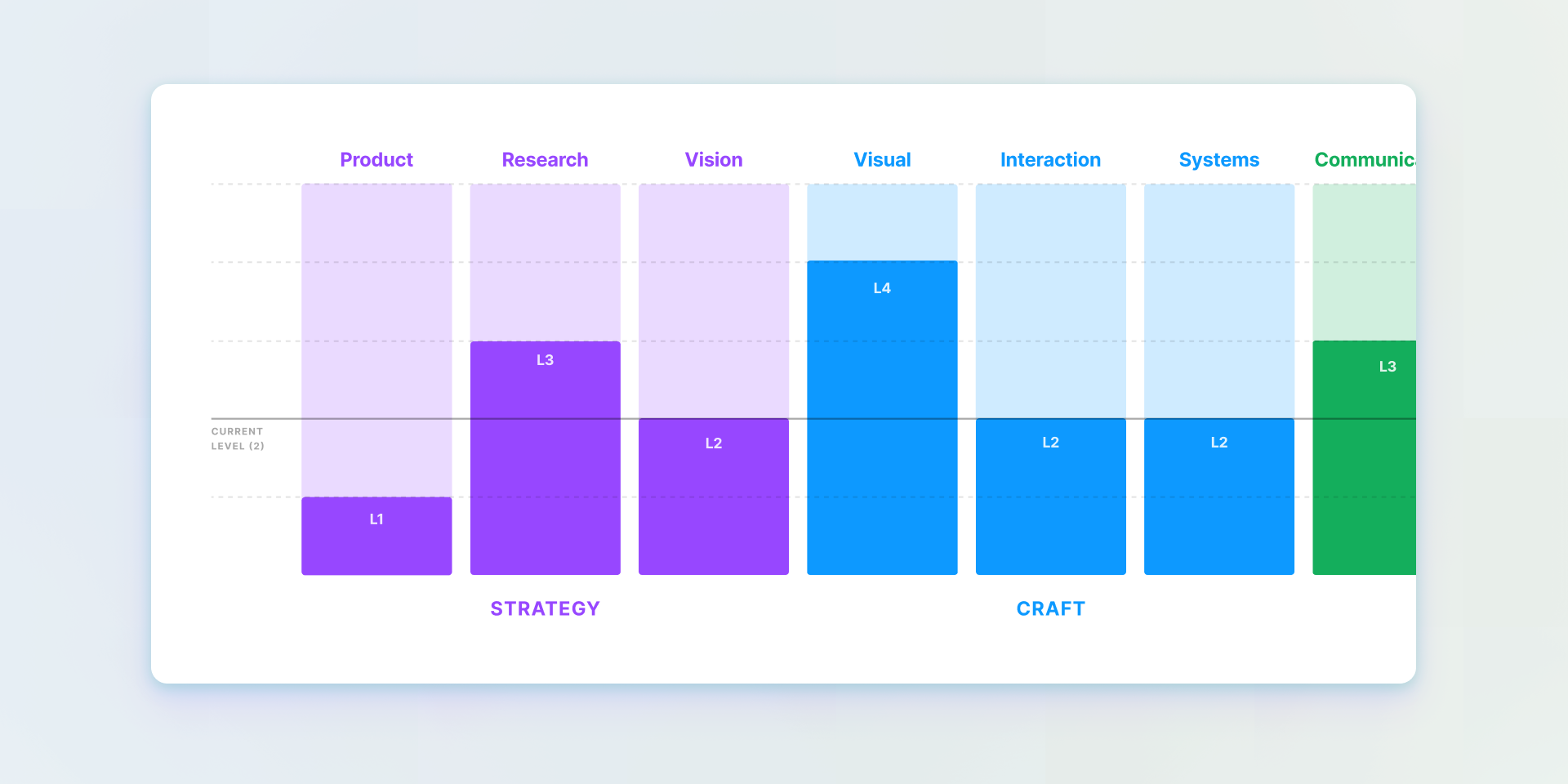
The internal announcement reiterated the rationale behind the project: streamlining the old ladder down from seven nebulous categories to four clear ones, while improving clarity through better definitions, examples, and graphics. Since the launch, the team has gone through one full performance cycle with the new levels and has iterated on how feedback is given in FigJam. Managers are encouraged—though not required—to reference the levels document during regular career conversations.
Feedback and calibration in FigJam
The review process itself was also rebuilt. Noah created a FigJam template that mirrors how Figma runs performance reviews. As a manager, tying feedback to explicit expectations has been a significant improvement over the broad or vague prompts common at many companies. The visual, open-ended canvas makes expectations legible at a glance, and managers can include screenshots for context or "jam" with reports on growth ideas using sticky notes and tables.
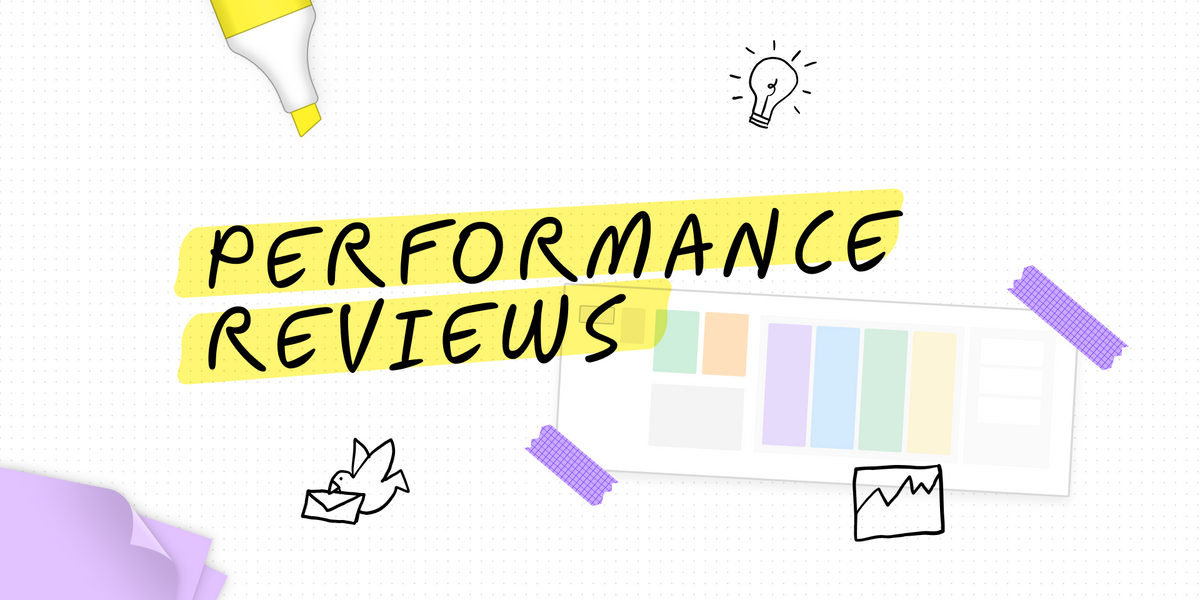
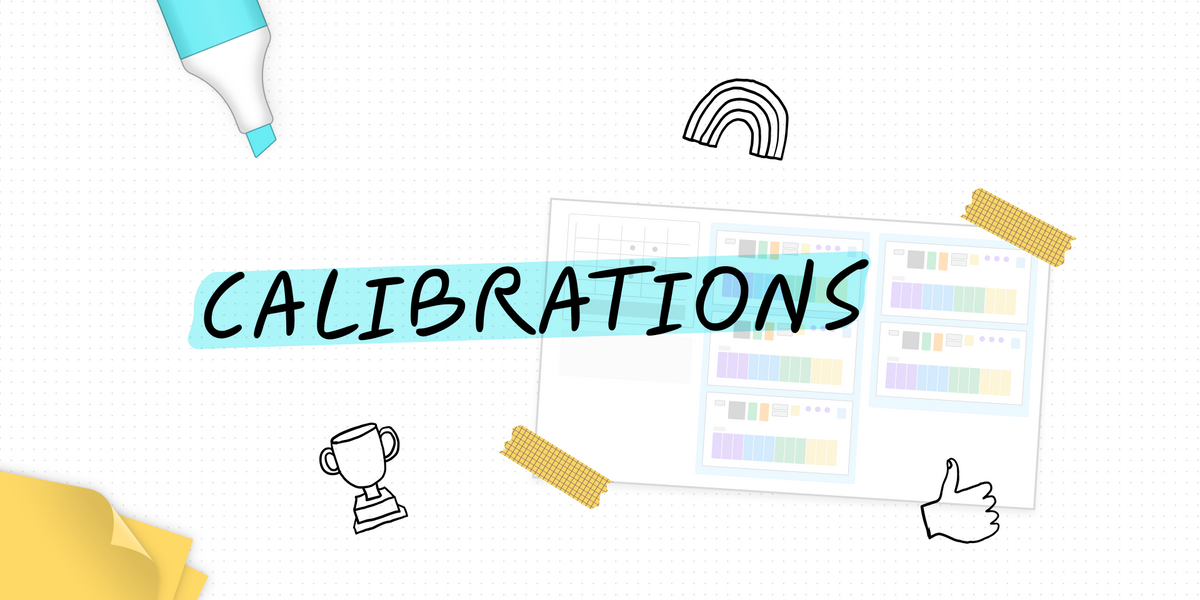
The same format scaled beyond individual reviews. The design organization uses it for performance reviews and calibration across the whole team. FigJam gives every people manager a bird's-eye view of all designers' completed skills charts, which simplifies understanding overall performance and guiding conversations efficiently.
An ongoing project
Career levels, the team acknowledges, are living documents. Figma is still soliciting feedback and expects to make updates as the company grows. Known areas for future work include aligning the ladder more explicitly with Figma's values, adapting it for use in hiring and candidate assessment, and adding manager-level descriptions for transparency and accountability. The full set of materials is available to the community: the Figma Product Design & Writing Career Levels, the Skills Chart widget, and the calibration template.