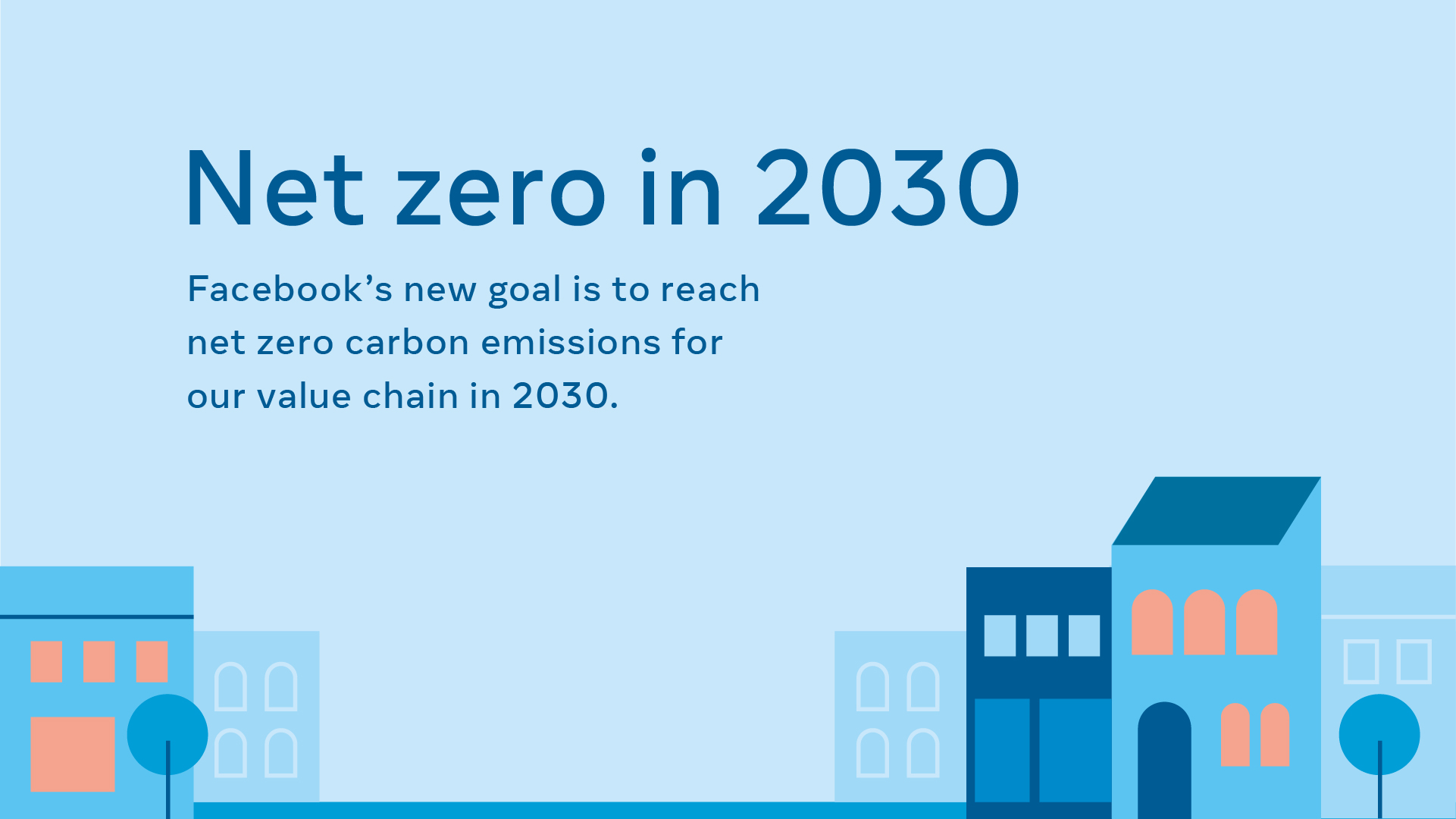
Facebook targets net zero emissions by 2030
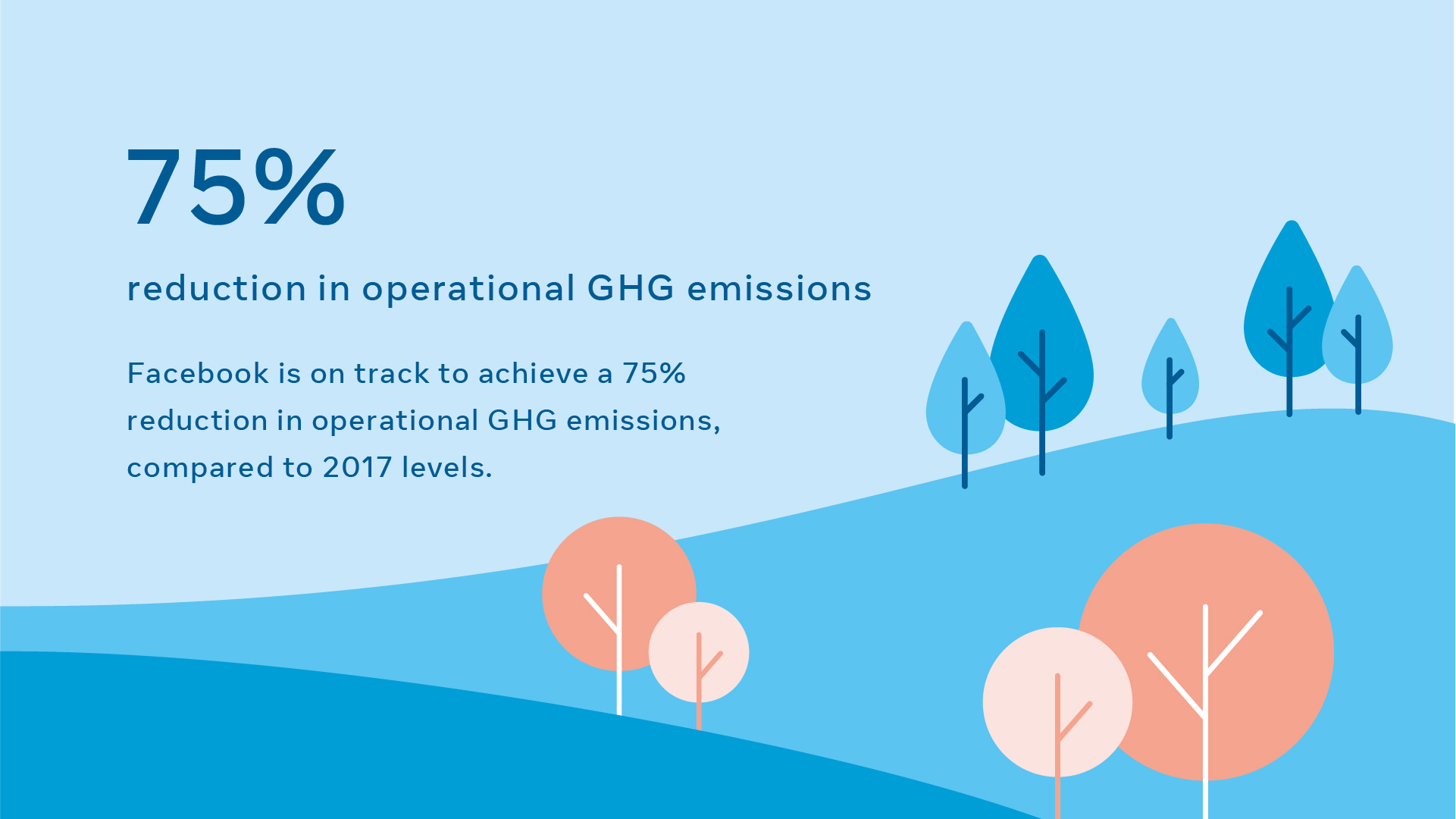
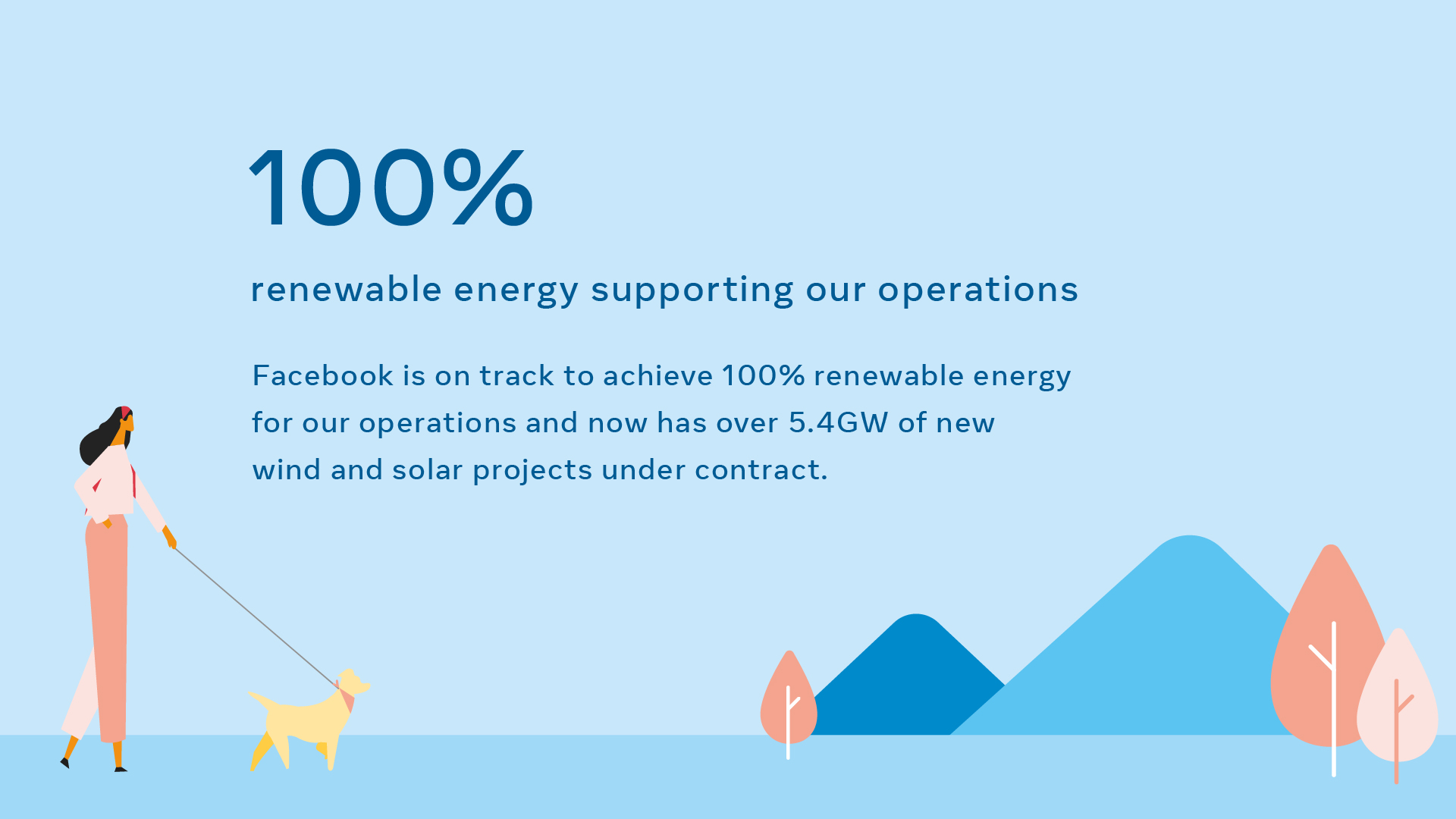
Facebook has announced a ten-year climate strategy that commits the company to net zero greenhouse gas emissions across its entire value chain by 2030. The goal extends well beyond the initial 2020 target of cutting operational emissions by 75 percent and running global operations on 100 percent renewable energy — both of which the company says it is on track to meet.
Those earlier commitments drove the construction of over 5,400 megawatts (MW) of new solar and wind capacity and cut emissions by more than 2.6 million metric tons of carbon dioxide equivalent (CO2e) in three years. Responding to the acceleration of climate change, the company sees the next decade as a defining window for reducing GHG emissions. Net zero by 2030 — twenty years ahead of broader international targets — will be achieved through renewable energy, hyperefficient operations, supplier engagement, and carbon removal.
Scope of the goal
To meet net zero across all three emission categories defined by the EPA, Facebook will track Scope 1 (direct emissions from owned sources), Scope 2 (indirect emissions from purchased energy), and Scope 3 (value chain emissions like supply chains, business travel, and commuting). In 2020, operations will still be supported entirely by renewable energy, but the company will go further in subsequent years and target zero net emissions even as it renews its commitment to the Science Based Targets initiative (SBTi), with alignment to the Paris Agreement’s goal of limiting warming to 1.5°C.
On the energy procurement side, the renewables contracts Facebook has entered into since 2013 could power more than 1.5 million U.S. homes. In 2019, the company reached 86 percent renewable energy supply, and was recognized as the No. 1 corporate buyer of renewable energy in the U.S. by the Renewable Energy Buyers Alliance (REBA), and No. 2 in the world by Bloomberg NEF. Work with utilities to develop new green tariffs and membership in RE100 are further levers it cites for advancing grid decarbonization.
Beyond carbon
A renewables-heavy energy mix also contributes to water savings. Facebook estimates it saved over 3 billion gallons of water in 2019 by sourcing energy from its solar and wind projects instead of the conventional utility mix. Energy-efficient cooling designs for data centers added another 2 billion gallons in savings worldwide. Water restoration projects supporting end-of-life at data centers in high-water-stress regions will have been contracted at two-thirds of those locations by the end of 2020.
Cutting through the value chain
Scope 3 emissions reductions will rely on design improvements across offices and data centers. The company highlights its contributions to the Open Compute Project — hyperefficient servers that can operate in higher temperature environments, reducing cooling needs and making outdoor air cooling feasible instead of energy-intensive air conditioning.
Circular economy principles — designing out waste, keeping materials in use, and regenerating natural systems — will be worked into the lifecycle of buildings, server hardware, and consumer products such as Oculus and Portal. That means evaluating lower-carbon materials, integrating repairability and recyclability into design, and managing end-of-life responsibly.
Decarbonization extends beyond owned operations to supplier relationships through the Responsible Supply Chain program. The company supports data reporting capacity-building and energy assessments that identify reduction opportunities, and works with suppliers on science-based targets and accurate GHG reporting. It acknowledges the 2030 value-chain goal is challenging — acknowledging that carbon removal projects will offset any emissions that remain after reduction efforts.
Climate information efforts
Separately, Facebook has launched a Climate Science Information Center to provide science-based information from partners like the Intergovernmental Panel on Climate Change (IPCC), UN Environment Programme (UNEP), NOAA, World Meteorological Organization (WMO), and the Met Office. The effort focuses on the platform side of climate action: leveraging its reach for disseminating vetted climate data.
Tracking progress will be posted on sustainability.fb.com and the Climate Science Information Center.