Open source relief: How Karuna 2020 automates COVID-19 aid with GitHub Actions
When Anand Chowdhary returned to India from the Netherlands during the pandemic, he saw a crisis within the crisis. The lockdown was hitting migrant workers and daily wage earners hardest—people with no work and no way to feed their families. While he could safely shelter at home, millions of others couldn't.
His response was Karuna 2020, an open source initiative on GitHub built with a coalition of startups, corporates, and nonprofits. The group collects donations, assembles "dry ration kits" designed to sustain a family for a month, and partners with nonprofits to manufacture masks for healthcare workers, police, and other front-line staff.

Transparency through automation
From the start, Chowdhary wanted Karuna to be fully open. GitHub Actions became the backbone of that effort, running workflows that build the organization's website, host its open data APIs, and maintain its open source guidelines for front-line workers.
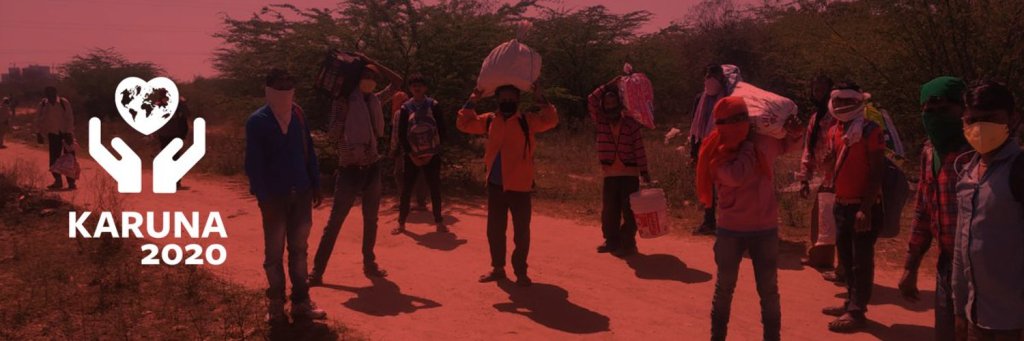
One of the clearest wins came from automating a privacy-sensitive task. For every dry ration kit distributed, Karuna took a photo of the recipient and published it on their website to show donors exactly where money went. The catch: faces had to be blurred before photos went live.
For the first few days, this was a manual process, taking up several volunteer hours.
A volunteer wrote a Python script that runs inside GitHub Actions. The script uses the faceblur library to anonymize images, then uploads the processed photos to distribution cards on Airtable, which populates the website automatically.

Beyond image processing
The same pattern extends across Karuna's operations. Another Action generates tax invoices for donations and sends them to recipients automatically, using GitHub Actions' scheduling feature to run the process every few hours.
The team's broader mission is to package these workflows as reusable assets for other nonprofits. Karuna publishes detailed guides covering donor lifecycle management, volunteer onboarding, creative design, and social media posting—all free of charge. The goal, Chowdhary says, is to help nonprofits make their operations more efficient so they can concentrate on their core work.
Maximizing impact without infrastructure
Chowdhary emphasizes that the workflows were designed to run entirely on GitHub's hosted infrastructure. No self-hosted runners, no dedicated servers.
All the tools we're using are open source. They work with GitHub Actions without requiring a self-hosted instance. This has been the most important feature for us. We're able to design complex processes and automating important tasks, without requiring dedicated servers. GitHub Actions offers a powerful way not only to test and deploy code, but to create real impact in the world.
Karuna's work shows a practical side of CI/CD tooling: the same automation that tests and deploys software can also handle the operational overhead of a relief organization, letting volunteers focus their hours on people rather than paperwork.