A Benchmark Suite Built for Hyperscale Workloads
Hyperscale and cloud data center deployments now account for the largest share of server shipments worldwide. But the workloads running inside those facilities look nothing like the HPC or enterprise applications that traditional benchmark suites were designed to model. Server architects evaluating new platforms for data center use therefore lack tools that reflect real production conditions — and the design trade-offs that matter at scale.
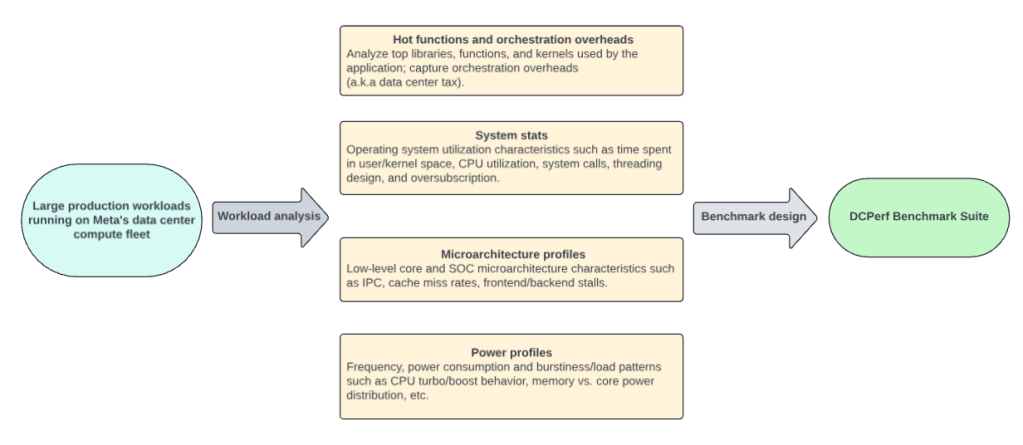
DCPerf, now open sourced on GitHub, is Meta's answer to that gap. Each benchmark in the suite is built by referencing a large application running in Meta's production fleet. The team used techniques spanning low-level hardware microarchitecture features to application and library usage profiles to analyze production workloads and distill their important characteristics into the benchmarks. Hardware and software optimized against DCPerf should translate more directly into efficiency gains in actual hyperscale deployments.
Designing for Real Deployment Conditions
The suite has been continuously refined to support multiple instruction set architectures, including x86 and ARM. Meta also validated the benchmarks against emerging industry trends such as chiplet-based architectures and added multi-tenancy support so the workloads can scale with the rising core counts on modern server platforms.
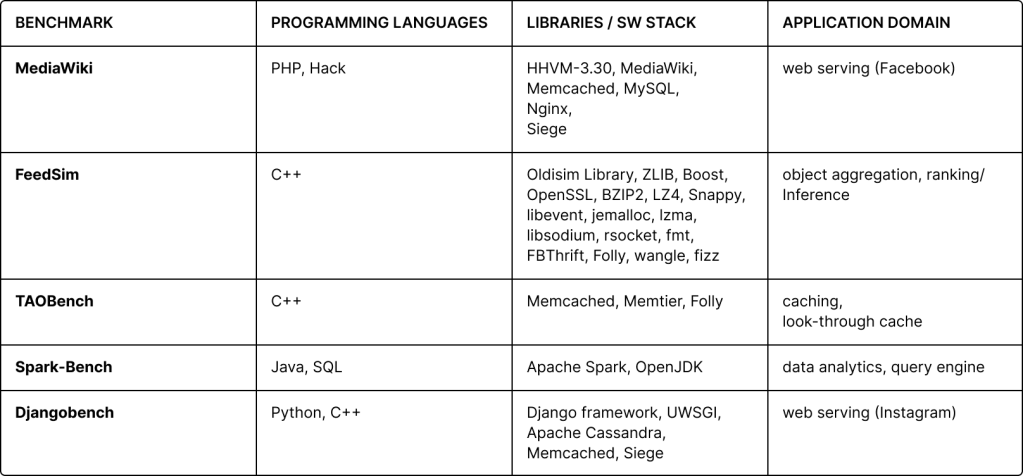
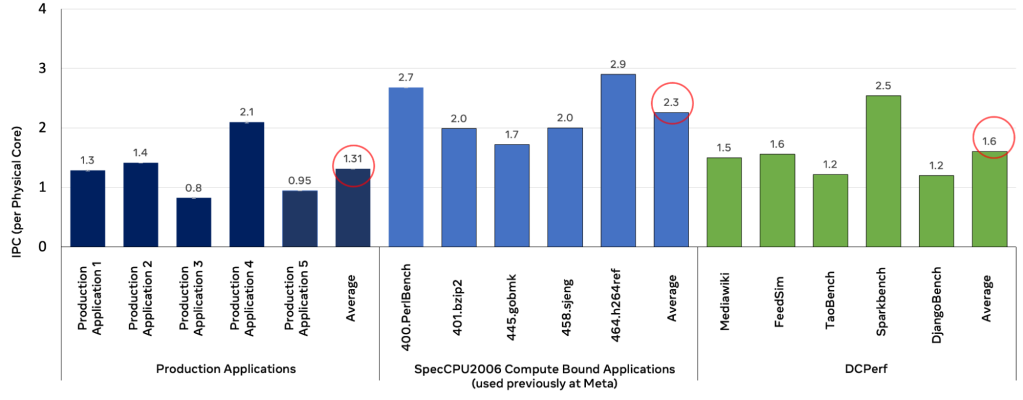
Internally, Meta uses DCPerf alongside the SPEC CPU suite for product evaluation, making configuration choices for data center deployments. The benchmarks also support early performance projections for capacity planning, help surface performance bugs in hardware and system software, and feed joint platform optimization work with hardware collaborators.
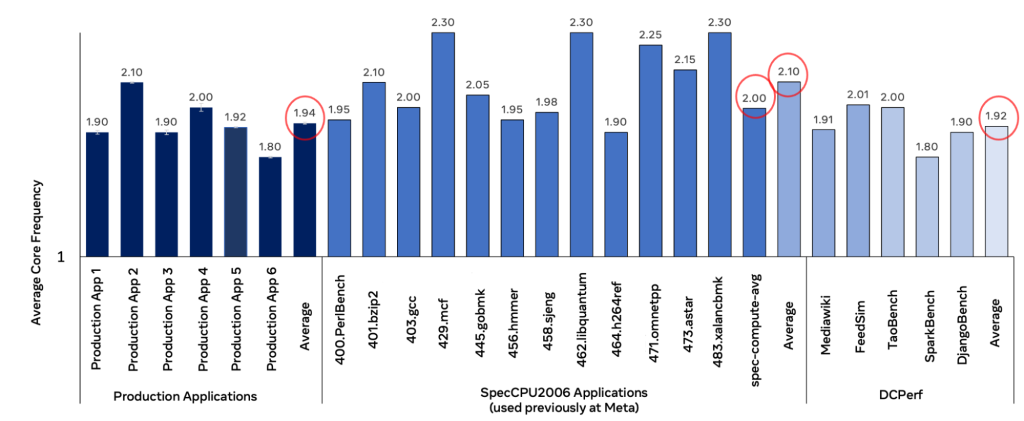
DCPerf offers a significantly broader set of application software diversity than SPEC CPU, which gives better coverage signals on platform performance. That has made it part of Meta's decision process for choosing which platforms to deploy.
Collaborating with CPU Vendors on New Silicon
Over the past two years, Meta has worked with leading CPU vendors to validate DCPerf on pre-silicon and early-silicon setups. Those efforts have produced concrete results: multiple cases where DCPerf exposed performance bugs or led to optimizations in areas like CPU core microarchitecture settings and SOC power management.
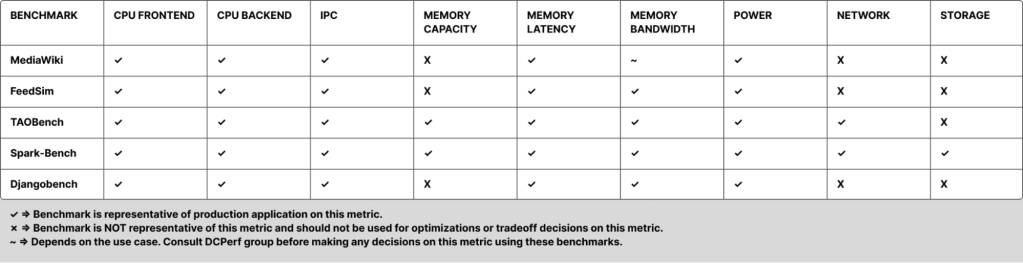
The suite's representativeness of production usage has made it a useful signal for hardware and system software optimization, though Meta acknowledges areas that remain future work. The company expects to keep releasing new versions of the benchmarks as technologies evolve.
Building an Open Reference Standard
By open-sourcing DCPerf, Meta aims to create a collaborative reference benchmark for designing, debugging, and optimizing compute platforms for hyperscale. If adopted broadly by the hardware industry, academia, and other internet companies, the suite could become a standard method for capturing the workload characteristics that matter in hyperscale data center deployments.