AI Model Targets Domestic Concrete Production
The United States pours roughly 400 million cubic yards of concrete annually, yet imports about a quarter of the cement that binds it. Now Meta is releasing new tools aimed at helping domestic producers reformulate mixes around American-made materials.
Concrete mix design traditionally relies on trial-and-error in the lab, engineer intuition, and decades of accumulated knowledge—a slow, expensive workflow. Different cements have different chemistries, so a mix that works with one cement may fail with another. This makes it difficult for U.S. producers to substitute imported cement with domestic alternatives without extensive testing cycles.
At the 2026 American Concrete Institute (ACI) Spring Convention, Meta is releasing Bayesian Optimization for Concrete (BOxCrete), an open-source AI model for designing concrete mixes, alongside the foundational dataset used to develop its award-winning concrete formulations. The model improves on Meta's previous work with greater robustness to noisy data and adds the ability to predict concrete slump, an indicator of workability.
The stakes are significant. Roughly 20-25% of U.S. cement consumption is met by imports, and cement made domestically complies with U.S. performance and environmental standards that are inconsistent with international ones. Reshoring and foreign direct investment have brought over 1.1 million jobs back to the U.S. since 2020. Manufacturing has one of the highest economic multipliers—every $1.00 spent adds $2.69 to the U.S. economy—and the cement and concrete sector alone contributes more than $130 billion annually while supporting roughly 600,000 jobs.
Real-World Deployments of AI-Designed Concrete
Illinois and Minnesota
Meta has partnered with the University of Illinois at Urbana-Champaign and Amrize, the largest cement and concrete manufacturer in North America, on implementing AI for sustainable, domestically-produced concrete. Amrize operates 18 cement plants, 141 cement terminals, and 269 ready-mix concrete sites across North America. The company recently launched a Made in America cement label and announced nearly $1 billion of capital investments in 2026, in part to increase domestic cement production.
The BOxCrete model was put to the test at scale in a site support section of a data center building slab in Rosemount, MN. Working with Amrize, Mortenson, and the University of Illinois, the AI-optimized mix was designed for the massive foundation supporting thousands of servers and cooling systems. Using domestically sourced materials, the mix reached full structural strength 43% faster than the original formula while reducing cracking risk by nearly 10%. After data confirmed it met all structural requirements, the mix was qualified for use in additional areas of the data center.
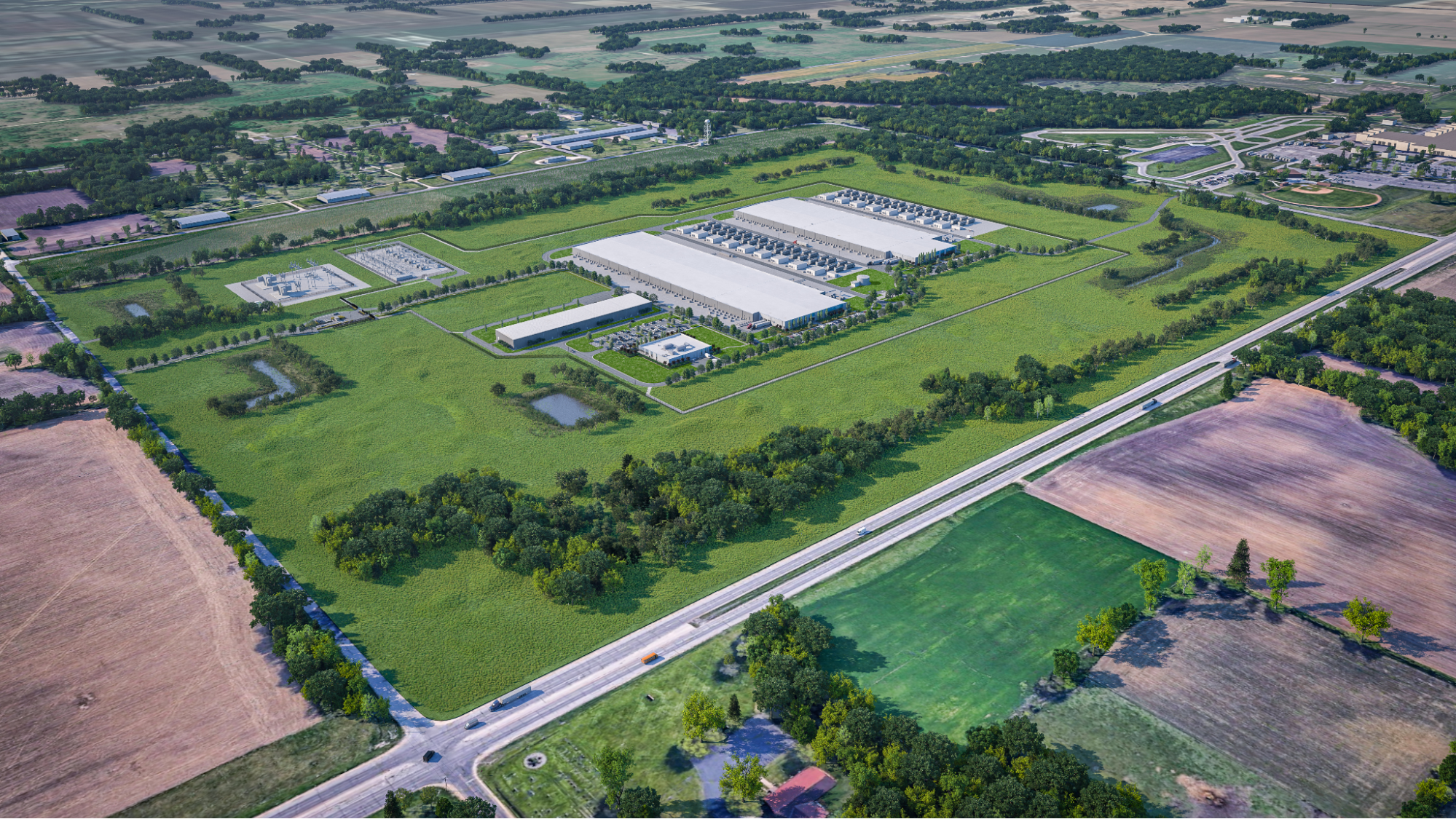
Meta is also releasing the foundational data used to develop the novel concrete mix for its Rosemount data center. According to Meta, this is the best systematic foundational data for concrete mix performance compared to other open-sourced, published datasets. A paper on BOxCrete detailing the model, data, and methodology has been submitted for publication.
Commercial Adoption in Pennsylvania
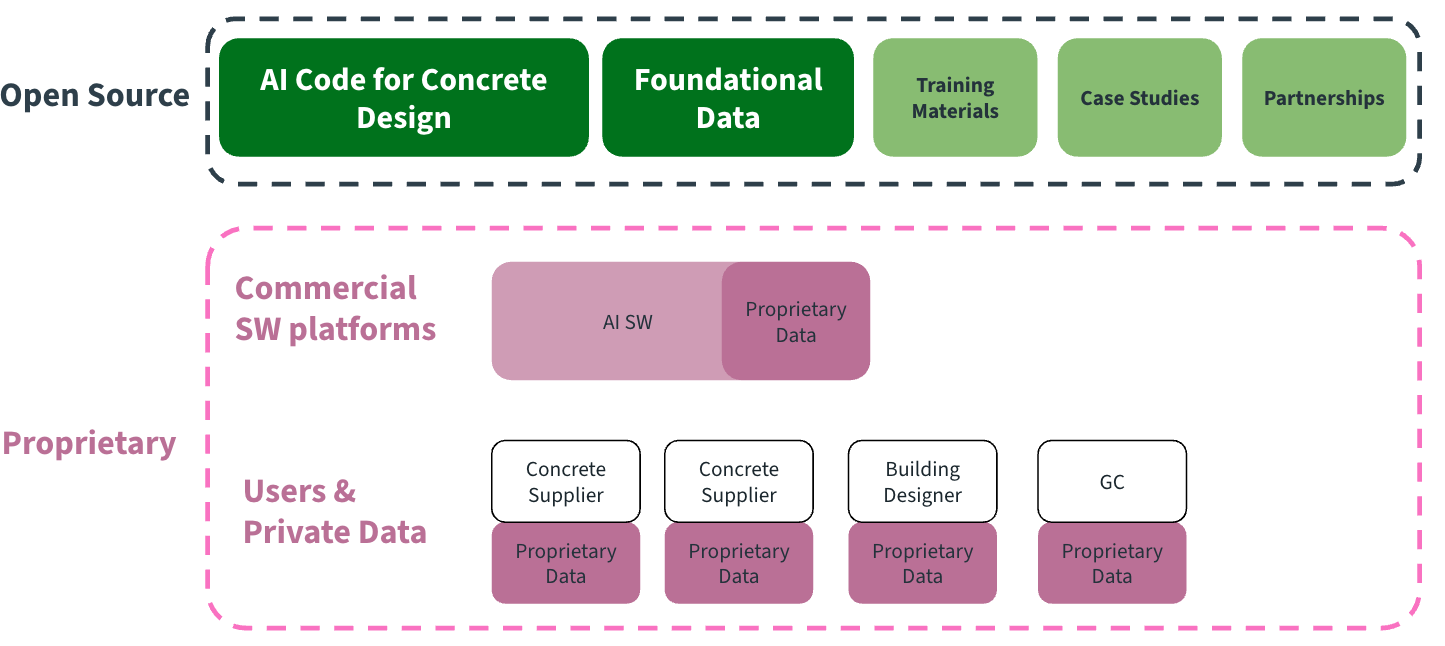
In 2023, Meta released its concrete optimization AI framework as open-source software under the MIT license, enabling broad adoption from academia to commercial software providers. Pennsylvania-based Quadrel, an enterprise SaaS platform serving the ready-mix industry, has adapted the framework into its software.
Quadrel has applied the models to real-world use cases including data preprocessing, batch and test normalization, feature engineering, and customer-specific model training. The models, which continuously improve as field test results are incorporated, are embedded in daily mix design and quality control workflows.
The Adaptive Experimentation Approach
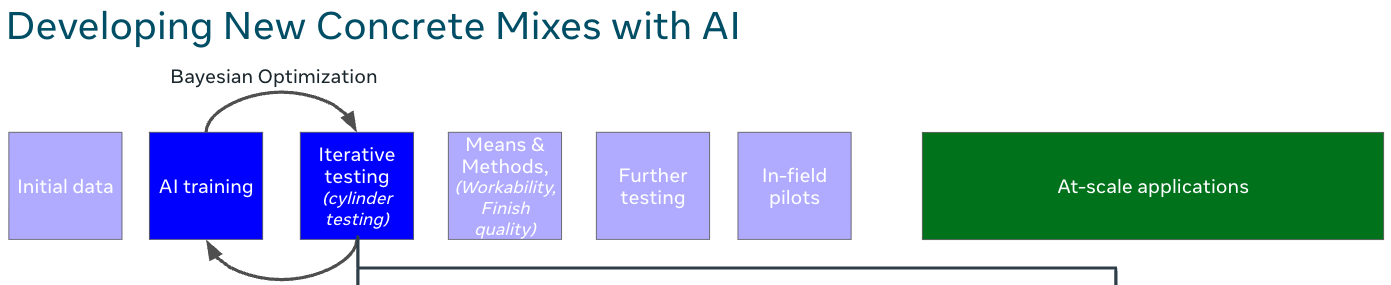
Meta's approach leverages its Adaptive Experimentation (Ax) platform, which uses Bayesian optimization to navigate the vast space of possible concrete formulations. Instead of random testing or relying solely on human intuition, the system follows four steps:
- Learns from existing data: Historical mix designs, lab results, and performance metrics train the model on what works.
- Proposes high-potential candidates: The AI suggests new mixes likely to meet target specifications and can compare performance between U.S.-made and foreign materials.
- Incorporates constraints upfront: Users specify technical requirements and the ingredients to be used.
- Refines with each test: Every lab result improves the model's predictions in an automatic improvement loop.
This approach does not change the process of lab validation, field trials, engineering sign-off, or code compliance, but it speeds discovery, helping engineers find better starting points with fewer tests.
Toward Industry-Wide Adoption
The work with Amrize, the University of Illinois, and Quadrel represents the first wave of adoption. Meta plans to continue collaborating with the construction industry over the next few years to develop new AI tools, with the goal of making AI-optimized mix design accessible to producers without requiring changes to existing workflows. Academic collaboration with the University of Illinois Urbana-Champaign will continue, exploring how AI can address not just domestic material substitution but broader challenges in concrete sustainability and performance.