

Images Are Still the Web’s Heaviest Asset
Images remain the largest and most frequently requested assets on the web, right after video. That makes image optimization one of the highest-leverage areas for performance work. Smashing Magazine has published a new book, Image Optimization, written by Addy Osmani, an engineering manager on Google Chrome with a long focus on performance. The 528-page volume covers the full pipeline: modern image compression, responsive delivery, browser decoding, CDNs, lazy-loading, and Core Web Vitals.
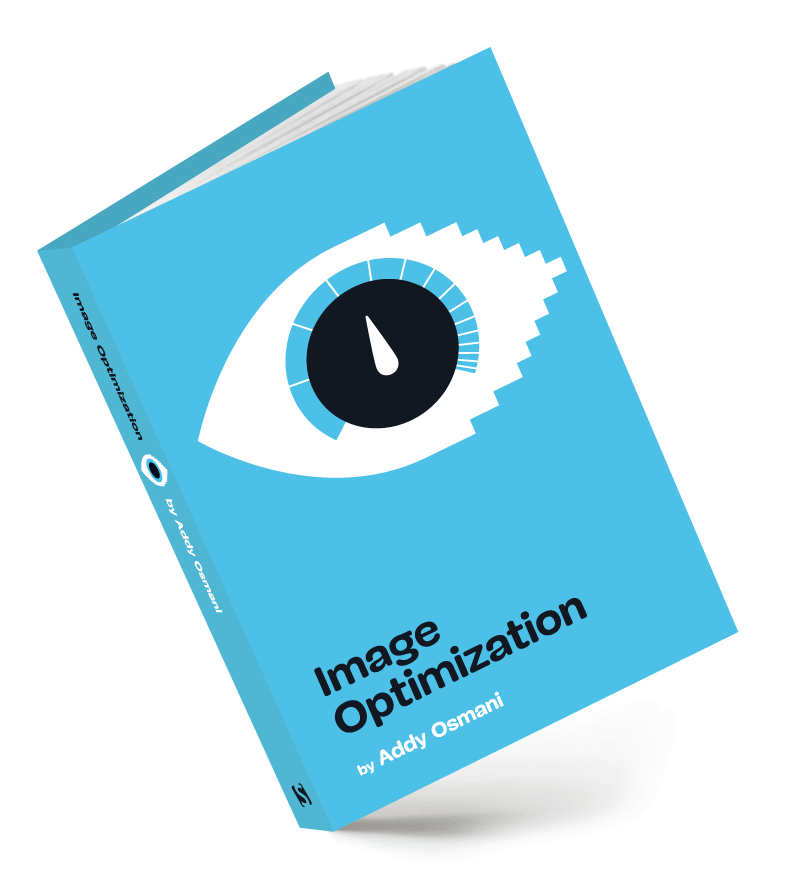
What the Book Covers
The book is organized into 23 chapters that trace the lifecycle of an image from encoding to maintenance. Early chapters establish fundamentals, while later ones dive into modern formats and advanced delivery strategies.
Key topics include:
- Image formats and compression — from JPEG, PNG, and WebP to newer entrants like AVIF, JPEG XL, and HEIF.
- Browser rendering — how images are decoded and displayed, and how
imgelement features affect performance. - Responsive images — techniques for preparing images for different resolutions and viewport sizes.
- Automation and maintenance — practical tooling to streamline optimization and keep strategies sustainable.
- Adaptive delivery — approaches such as lazy-loading offscreen images, data saver modes, and image CDNs for global traffic.
- Core Web Vitals — how image loading behavior impacts metrics like LCP and CLS, with guidance for optimization.
The book emphasizes practical application, with case study material from real-world pipelines. A chapter on Twitter’s image pipeline examines how the platform balances visual impact with loading speed at scale.
Image Formats and Compression
Compression quality settings are rarely handled well by default. The book walks through how to set quality levels deliberately to avoid artifacts while reducing file sizes. It compares formats on perceptual quality rather than raw specifications, and includes a dedicated chapter with tables summarizing feature support across different image types.
SVG, despite being a vector format, also gets attention: the book covers implementation approaches and how to keep SVG markup lean and performant. For animated graphics, a chapter addresses replacing animated GIFs — an area where significant performance gains are possible without sacrificing content quality.
Loading, Delivery, and Measurement
Efficient loading is not only about file size. The book examines how quickly browsers can decode images, and how decoding delays affect perceived performance. Network efficiency is covered through HTTP caching, service workers, preloading, and image spriting.
For measurement, it explains how to use Lighthouse to audit images for optimization opportunities and how to enforce performance budgets. Core Web Vitals are treated specifically as they relate to image handling: loading experience, interaction readiness, and visual stability.

Format Details and Delivery Options
The book is available in multiple formats. A DRM-free eBook edition (PDF, ePUB, and Kindle formats) is available immediately, and a quality hardcover print edition with free worldwide shipping is offered as well. Both are backed by a 100-day money-back guarantee.