Why Thumbnail Loading Bogs Down
Dropbox users accumulate thousands of photos through automatic camera uploads, and those images need to render quickly across mobile, web, and desktop clients. To keep scaling costs down at render time, thumbnails are pre-generated at multiple resolutions when photos are uploaded. The remaining bottleneck is network transfer: rapid scrolling through a photo grid triggers a flood of thumbnail requests, and every client platform limits how many requests can run concurrently against a single host.

The web client illustrates the problem clearly. On www.dropbox.com/photos, loading every thumbnail as an individual image request produces a waterfall of blocked requests. Browsers typically cap concurrent connections at six per host, so images load in small waves. High latency to the datacenter makes each wave slower, and page load time suffers proportionally.
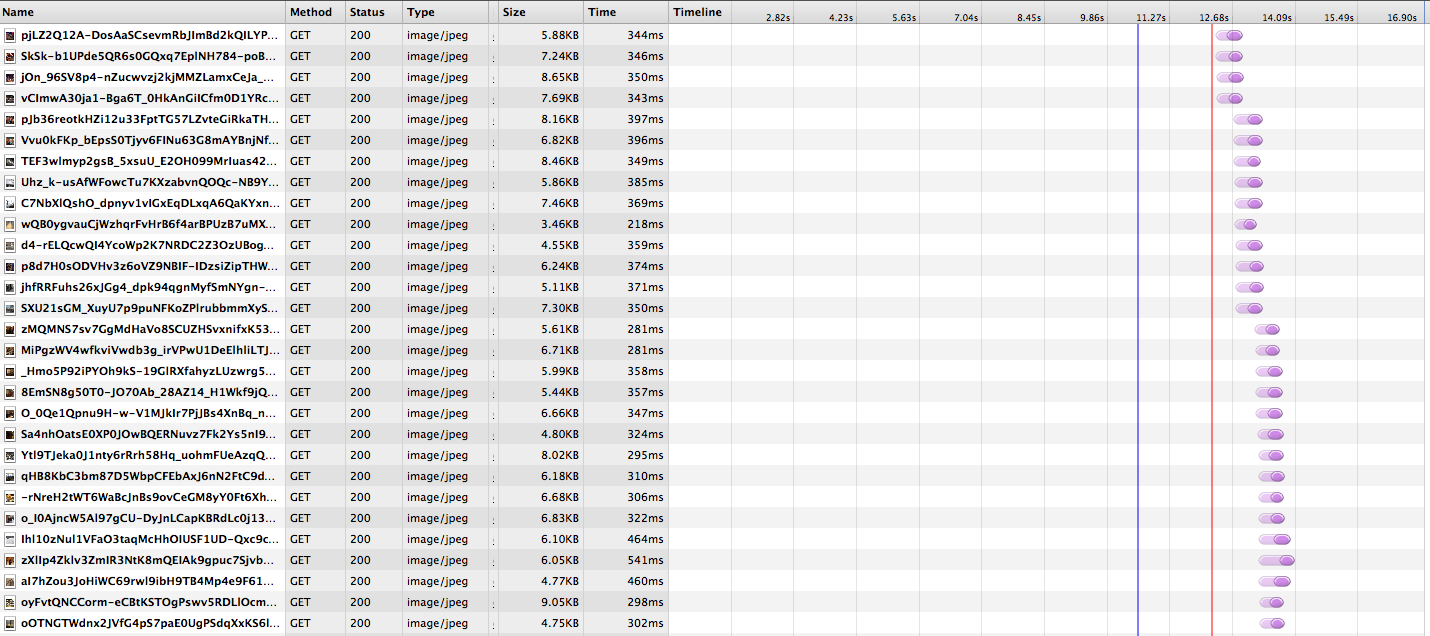
Domain sharding—splitting resources across multiple hostnames like photos1.dropbox.com, photos2.dropbox.com, and so on—raises the concurrency ceiling but introduces its own costs: extra DNS lookups, TCP handshakes, and SSL negotiations per domain. It also scales poorly when hundreds of images are on screen at once. iOS and Android impose similar per-host or global connection limits, so a solution that cuts total HTTP requests is the only approach that helps uniformly.
Instrumenting First
Before changing anything, the team wired up measurements to quantify the baseline and later verify improvements. The web app reports metrics through the Navigation Timing API, which captures DNS resolution time, SSL handshake time, render time, and overall page load time from JavaScript. Desktop and mobile clients log their own timing data.
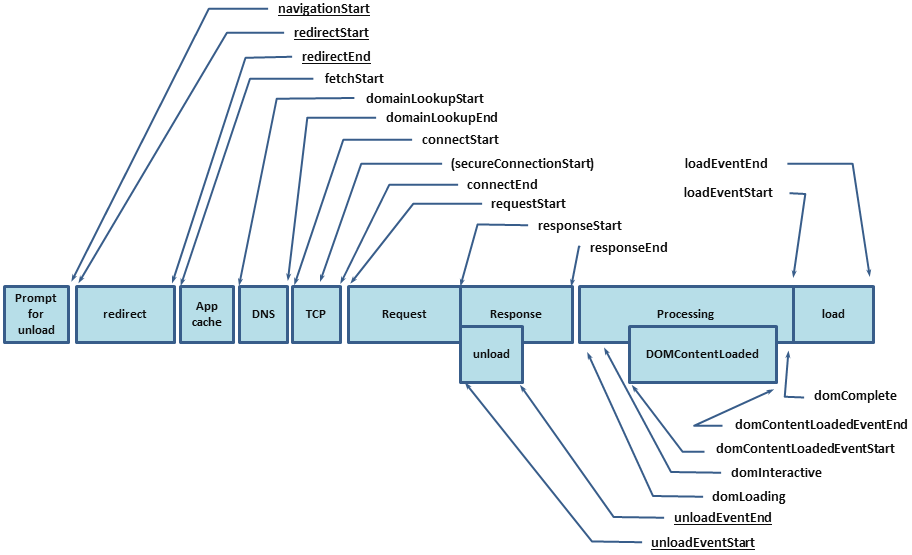
All metrics flow back to Dropbox's frontends, land in log files, and are imported into Apache Hive for analysis. Each request carries metadata such as the originating country, so results can be segmented. Hive's percentile() function is used to track the full page-load distribution—tail latency matters as much as the mean. Client-side instrumentation measures targeted intervals too, like the elapsed time from issuing thumbnail requests until every thumbnail in the current viewport has rendered. Dashboards fed from this data let engineering teams monitor trends over time.
Why Not SPDY?
SPDY looked like the natural fix: multiplexing over a single connection eliminates request queueing and avoids repeated connection setup. Dropbox's infrastructure, however, stood in the way. The frontends run nginx, which at the time had no stable SPDY release. Amazon ELB, used for load balancing, did not support SPDY either. The mobile apps' networking stacks had no SPDY implementation, and introducing one would be a large, risky change. SPDY was shelved in favor of a more portable trick.
Batch Requests Over HTTPS
The alternative is straightforward: instead of fetching thumbnails one URL at a time, clients send a single HTTPS request containing multiple image URLs. The server responds with every requested image in one plain-text payload.
GET https://photos.dropbox.com/thumbnails_batch?paths=
        /path/to/thumb0.jpg,/path/to/thumb1.jpg,[...],/path/to/thumbN.jpg
The batch response looks like this:
HTTP/1.1 200 OK
Cache-Control: public
Content-Encoding: gzip
Content-Type: text/plain
Transfer-Encoding: chunked

1:data:image/jpeg;base64,4AAQ4BQY5FBAYmI4B[...]
0:data:image/jpeg;base64,I8FWC3EAj+4K846AF[...]
3:data:image/jpeg;base64,houN3VmI4BA3+BQA3[...]
2:data:image/jpeg;base64,MH3Gw15u56bHP67jF[...]
[...]
Each line in the response holds one image as a base-64-encoded data URI, prefixed with an index matching the request order. The encoding choice and response structure deliver several properties:
- Batched: A single response carries all images. Base-64 data URIs let web code insert the payload directly into
<image>srcattributes after splitting the response with AJAX; mobile clients base64-decode before rendering. - Progressive: The backend issues thumbnail reads from storage in parallel and streams each image back the moment it is retrieved, using chunked transfer encoding. Responses can arrive out of order, and since content length is unknown ahead of time, chunking is mandatory. Clients begin parsing the stream as soon as the first line lands—via progressive
XMLHttpRequeston the web, or direct stream reads in the mobile apps. - Compressed: Gzip compresses the whole response. Base-64 encoding adds roughly 33% overhead by itself, but gzip erases that cost, leaving the payload effectively the same size as the raw images.
- Cacheable: Batches are marked cacheable. A repeated request for the same URL set is served from cache, avoiding network traffic entirely. This only works if batch URLs stay consistent—any deviation bypasses the cache and triggers a fresh request.
Results and Next Steps
The scheme rides on plain HTTPS, which every platform already supports, so it rolled out across web, desktop, and mobile without protocol changes on any client. Web page load time dropped 40%.
Dropbox treats this batching approach as an interim measure, not the final architecture. SPDY support is planned across all clients, pushing multiplexing down to the protocol layer. That would simplify application code, deliver comparable speedups, and improve cacheability since per-request consistency constraints would disappear.