How and where to learn HTML and CSS has no single answer. What fits depends on how serious you are, what foundation you already have, what else is available to you, what you want to do with the skills, and how much time you can give it.
Books worth considering
Dozens of books cover HTML and CSS, often both in one volume, and most do a fine job. Two stand out as recommendations, and you probably do not need both.
Jon Duckett's HTML and CSS: Design and Build Websites is remarkably well designed and approachable.

Jennifer Robbins' Learning Web Design: A Beginner's Guide to HTML, CSS, JavaScript, and Web Graphics ranges a bit wider and works either for personal reading or as a classroom textbook.

Free courses and guides
Frontend Masters
Frontend Masters offers its in-depth bootcamp free of charge: 21 hours of video material. If the material suits you, more advanced paid courses are available.

freeCodeCamp
freeCodeCamp is also free and follows a step-by-step path — you complete tasks rather than only watching.

Khan Academy
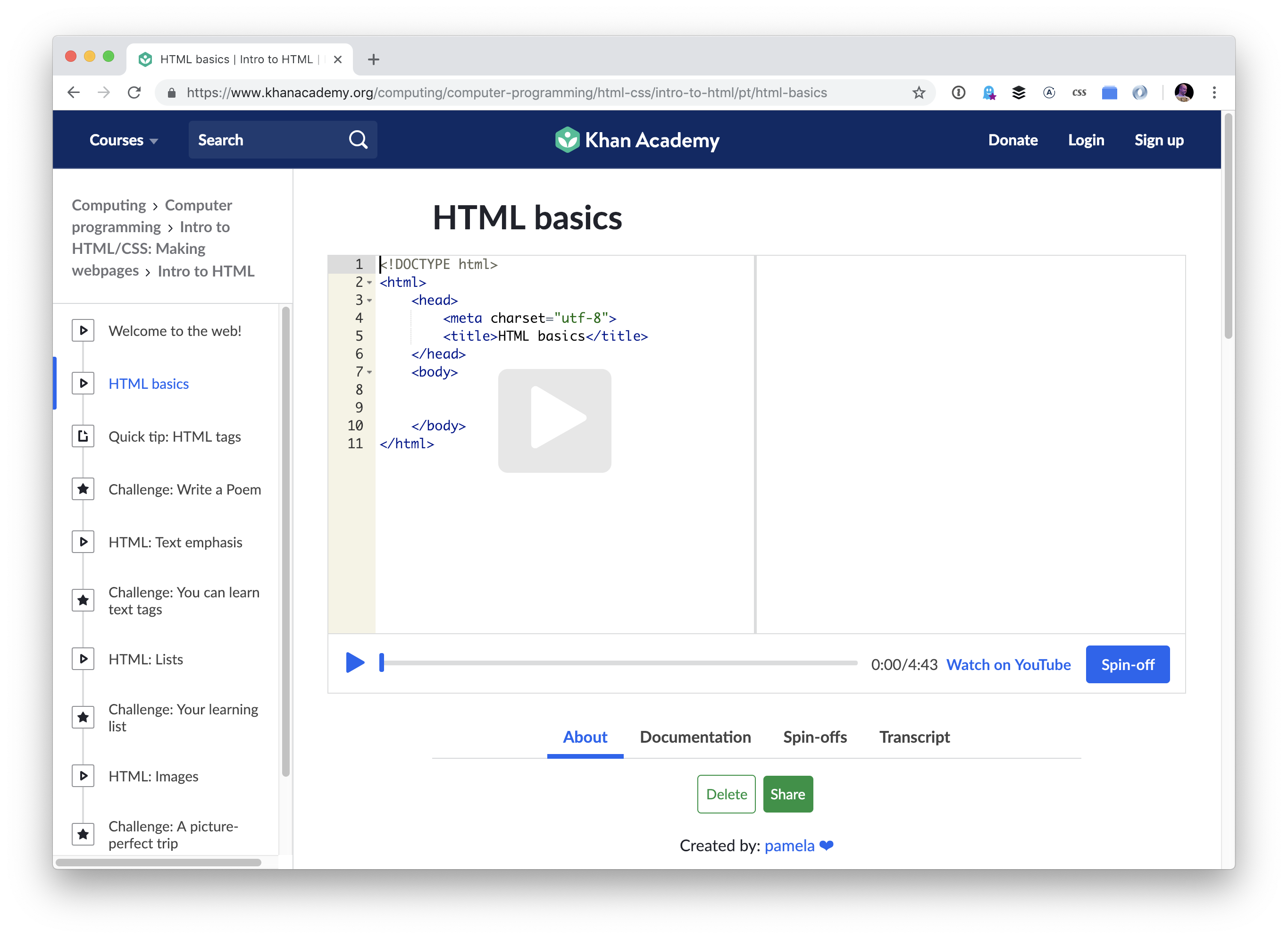
Khan Academy's Intro to HTML/CSS: Making webpages presents instruction as live coding: you hear the instructor while watching a real text editor and its output. The instructor sometimes controls the code, and at other points the lesson breaks into challenges where you edit the code yourself.
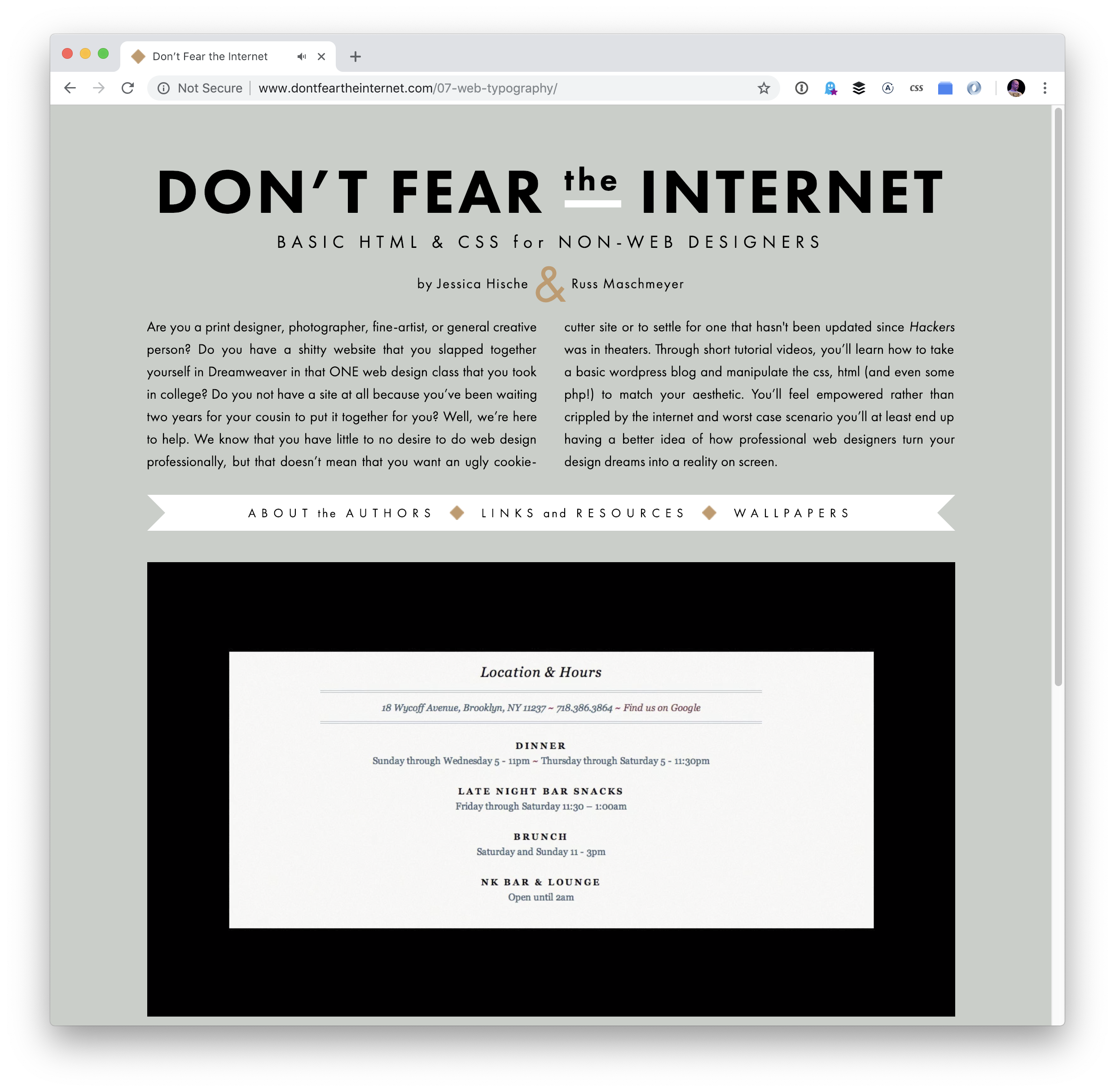
Don't Fear the Internet
Jessica Hische and Russ Maschmeyer's Don't Fear the Internet is an eight-part series that even covers typography.
Through short tutorial videos, you'll learn how to take a basic WordPress blog and manipulate the CSS, HTML (and even some PHP!) to match your aesthetic.
Internetting is Hard
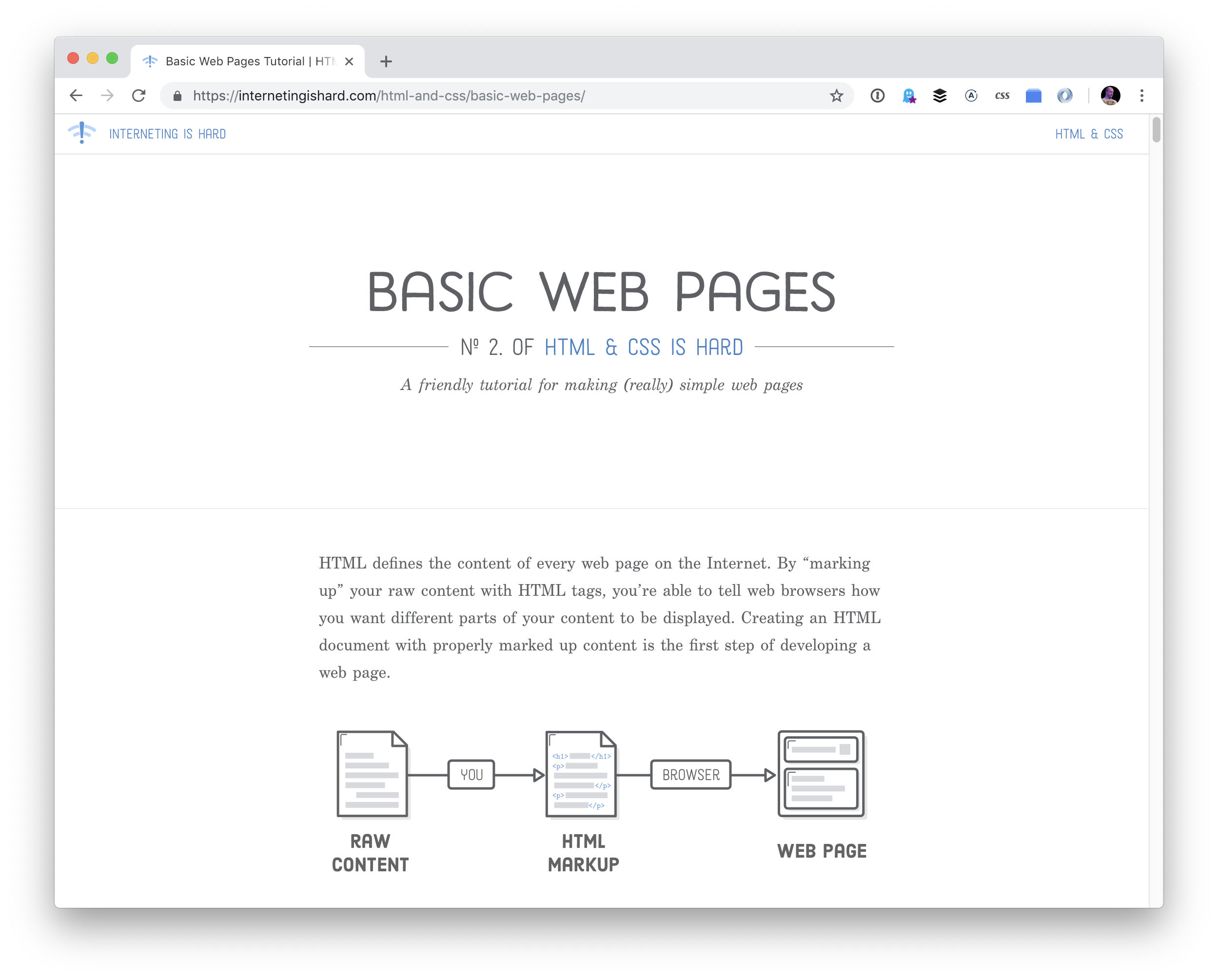
Oliver James's online course Internetting is Hard (But it doesn't have to be) states its ambition directly:
We designed HTML & CSS Is Hard to be the only introduction to HTML and CSS that you'll ever need. If you put in the effort to read every section and write every code snippet, this tutorial has the potential to replace hundreds or even thousand of dollars worth of online courses and live training.
Scrimba: Intro to HTML
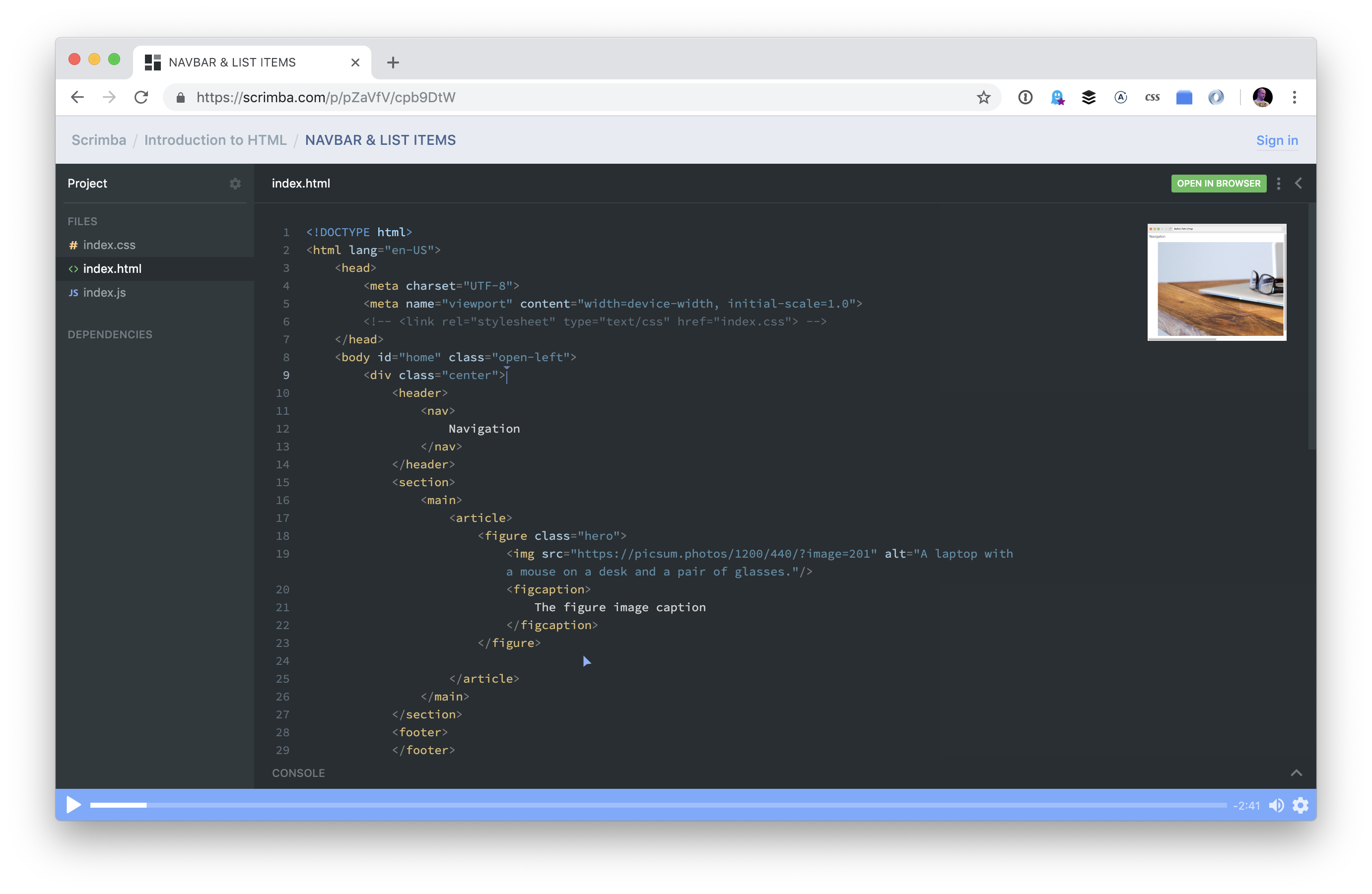
Eric Tirado's Intro to HTML on Scrimba combines spoken guidance with slides, a live code editor and a preview.
Paid courses, by level
Paying can supply the accountability that keeps you going, the same way a gym membership turns exercise into a commitment. As broad generalizations, these are reasonable starting points:
- Beginner: Treehouse, Lynda.com
- Intermediate: Design+Code, Udemy, Udacity, Pluralsight, Coursera
- Advanced: Frontend Masters, Wes Bos
Code schools and bootcamps

A college degree is an option without prior study, though it delivers a broad education rather than purely web design and development skills. For coding-specific schooling, some programs serve a single city: Hackbright, an all-women coding bootcamp in San Francisco; Actualize in Chicago; Center Centre in Tennessee; HackerYou in Toronto. Larger operations include Flatiron School, with campuses around the U.S., and General Assembly, with campuses worldwide. Many of these also run online courses that retain live instruction and cohorts, such as LambdaSchool, which is free to start and later takes a portion of your salary once you land a job in the industry.
Practice and real projects

Not every moment of learning should follow a course laid out by a book, class or teacher — that would not happen even if you tried. When something sparks your interest, play with it; CodePen aims to make that easy and useful and to connect you with others in the field.
Building a personal site is how countless developers got started. Wanting full control over a site pushed the author through getting a self-hosted WordPress install online. Having a real site that at least some people see supplies powerful motivation to keep going. Equally common is building a site for your band, a friend, or a business contact. A real project live on the internet makes you responsible for something real people will see.
Learning comes from everywhere at once
Asking musicians whether they are "self-taught" treats talent as either a lightning bolt at birth or a teacher's gift. That is nonsense.
People learn anything, music and web development alike, inside a hurricane of influences. Learning to play music takes many forms: listening a lot, finger exercises, scales, transposing chords on a chalkboard, YouTube, online courses, local jams, joining a band, lessons from a Craigslist ad, local music school, books. Web design and development works the same way. There is no silver bullet — it takes bashing away at it from several angles, with time and motivation. Money is not required, but multiple approaches are.