The Real Reasons Collaboration Still Feels Broken
Distributed work has settled into a permanent rhythm. Stanford’s WFH research counts five times more work-from-home days in the US compared to 2019, and a Figma survey of designers across Europe and Asia finds 75% now work from home more often than before the pandemic. Office occupancy and public-transit use, as Stanford Professor Nick Bloom notes, appear to have permanently shifted—even as other activities return to pre-pandemic patterns.
Yet the mechanics of getting work done have not caught up. Forrester Consulting, in a study commissioned by Figma, found that 9 out of 10 respondents experienced some type of barrier in the product development process. 6 out of 10 hit one of the top three: a lack of alignment across teams, difficulty making decisions, or lengthy development cycles.
None of these obstacles are new, but three forces have amplified them.
Three Forces Straining Product Development
More people involved. Product design is no longer a designer–engineer duo. As Mark Kawano, Senior Vice President of Design at Zendesk, puts it: "When I started it was just the designer and the engineer…now we have data and security, content, marketing, product management, executives—all in the mix." Everyone from content to security now has a stake in the file.
More distributed work. Teams spend less time in person, and physical distance often translates into emotional distance. Trust—an essential ingredient for great work—becomes harder to establish when interactions happen through cursors and comment threads instead of conversations. The old management instinct to "walk around" no longer applies.
More work in progress. Release cycles have compressed dramatically. "You went from releasing a couple times a year, to releasing multiple times a week, to releasing multiple times a day," recalls Tamar Yehoshua, partner at IVP and former Chief Product Officer at Slack. As Figma Chief Product Officer Yuhki Yamashita says, "Today, every digital product is a work in progress."
Managed well, this frequency yields steady improvement. Managed poorly, it produces a "cooperative mess"—a jamboree of alerts, notifications, and threads that never quite resolve into aligned action.
What High-Performing Teams Do Differently
Forrester defines successful teams as those who say they are "creating great digital sites, apps, products, and experiences." Their behaviors point to a few repeatable patterns.
Share Work Before It's Finished
Successful teams are 67% more likely to share in-progress work across design, development, and product. Rather than guarding work until final review, they open the feedback loop early. One head of design at a financial services firm credits open discussions involving 70 to 100 employees across multiple departments.
But volume alone is not the answer. "The more people, the more viewpoints you have—and that's good. But we should be intentional about adding types, not just numbers of people," says Sam Berg, Head of Design at Seatgeek. "You might want one PM from team A, a designer from team B and an engineer from team C—all with different backgrounds and viewpoints."
Diverse expertise catches issues before they become expensive. An engineering manager told Forrester: "When we catch something in code, it's already too late. The alignment has to happen at design time."
Make Process Visible
Rachel Kobetz, Chief Design Officer at PayPal, keeps her teams aligned with centralized statuses, links to work in progress, Slack broadcasts, and bi-weekly memos. She extends that visibility outward with quarterly showcases and case studies that celebrate cross-functional partners. Her rationale: "The more you open your process and practices to others, the more champions you will have across the company."
Intentional connection matters as much as transparency. The teams that avoid the chaos are not necessarily the ones with the most tools—they are the ones that treat collaboration as a design problem in itself, deliberately choosing who reviews what and when. Across Forrester's research, the pattern is consistent: transparency, shared understanding, and intentional connection separate the synergy from the shambles.
Shared standards close the communication gap
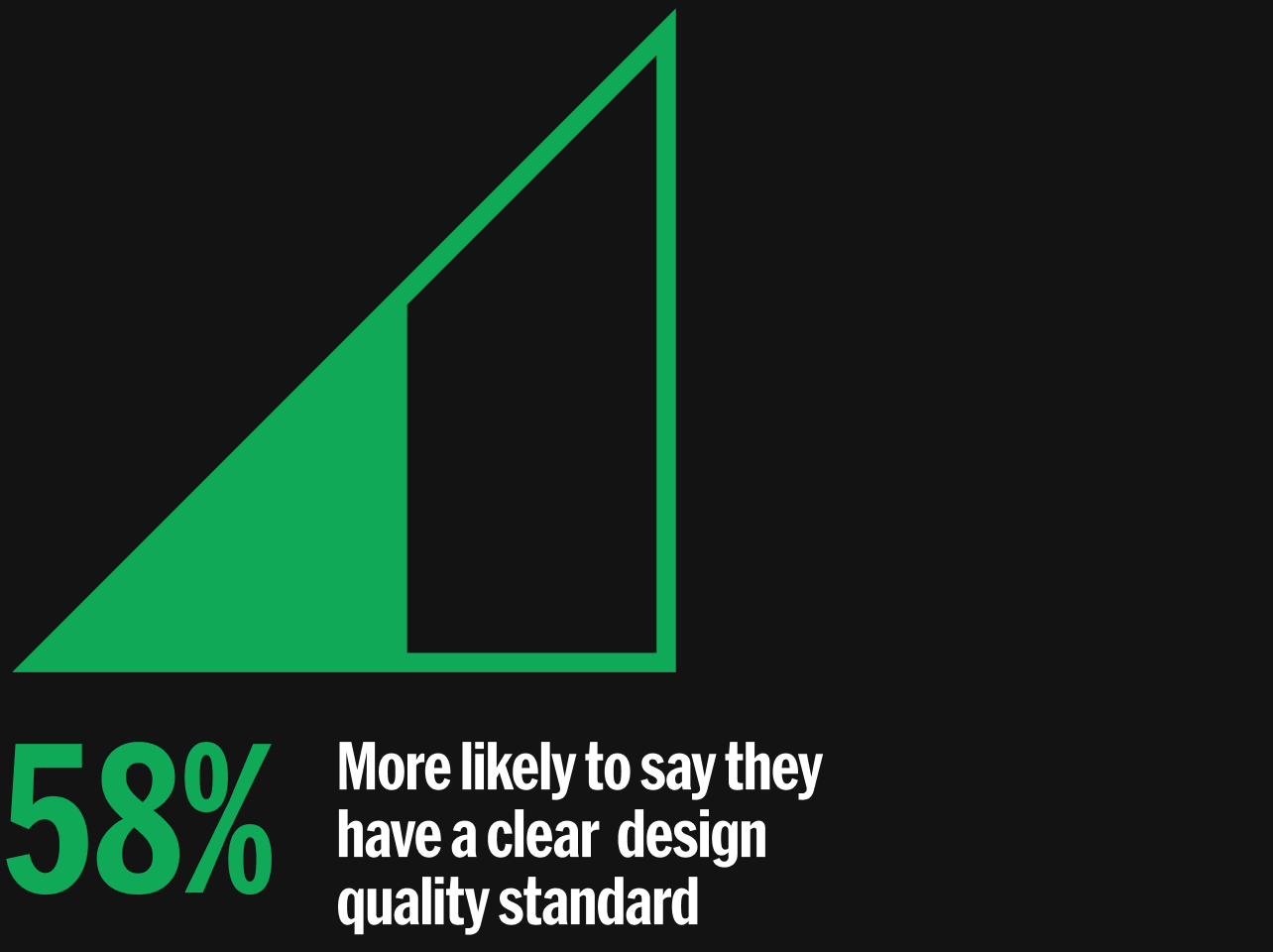
The clearest differentiator among high-performing teams is a common definition of what good looks like. Teams that describe themselves as successful are 58% more likely to report having a clear standard of design quality. Alignment on goals, outcomes, values, and decision-making matters just as much as sharing in-progress work. But reaching that agreement is harder in digital spaces, where tone and context are easy to lose.
Figma researcher Nannearl Brown points out that feedback becomes more fraught without in-person cues. “Giving and receiving feedback can be vulnerable places to be,” she says. “You might share new ideas and be judged. Comments that might have been softer in person are now ‘What are you doing? Why would you do it this way?’” Both the giver and receiver want to feel heard, which is tougher when power dynamics and tone are hard to read.
Teams are adapting with new signals. Tamar Yehoshua, former Chief Product Officer at Slack, discussed at Config 2023 how emojis have become a subtle part of company culture—a thumbs up can be sarcastic, a skull can mean laughter. Leaders also model the behavior they want. Bob Baxley, Senior Vice President of Design at Thoughtspot, drops deliberately over-the-top jokes in Zoom to set a relaxed tone. “If the team sees I’m relaxed, they’ll be relaxed, and having that type of tone is essential to us coming up with good ideas together.”
Focused meetings are another recurring tactic for building mutual understanding. Weekly kickoffs and engineering crits target specific types of feedback and outcomes. Sam Berg, SeatGeek’s Head of Design, breaks hour-long reviews into 10–20 minutes of reading with synchronous comments and sticky discussions, then moves to a 40-minute group discussion. Other projects skip the meeting entirely and run over Slack or via document feedback. SeatGeek also reviews prototypes in their native environments, such as on phones rather than big screens.
Context is the foundation, says Sara Vienna, Vice President of Design at Metalab. Her team outlines a product’s key deliverables—roles, objectives, priorities, key features, definitions, and technology—as a document that is “part executive summary, part blueprint.” Berg agrees: “In the current environment ... everything also has to live on its own.”
Bringing humanity back to remote work
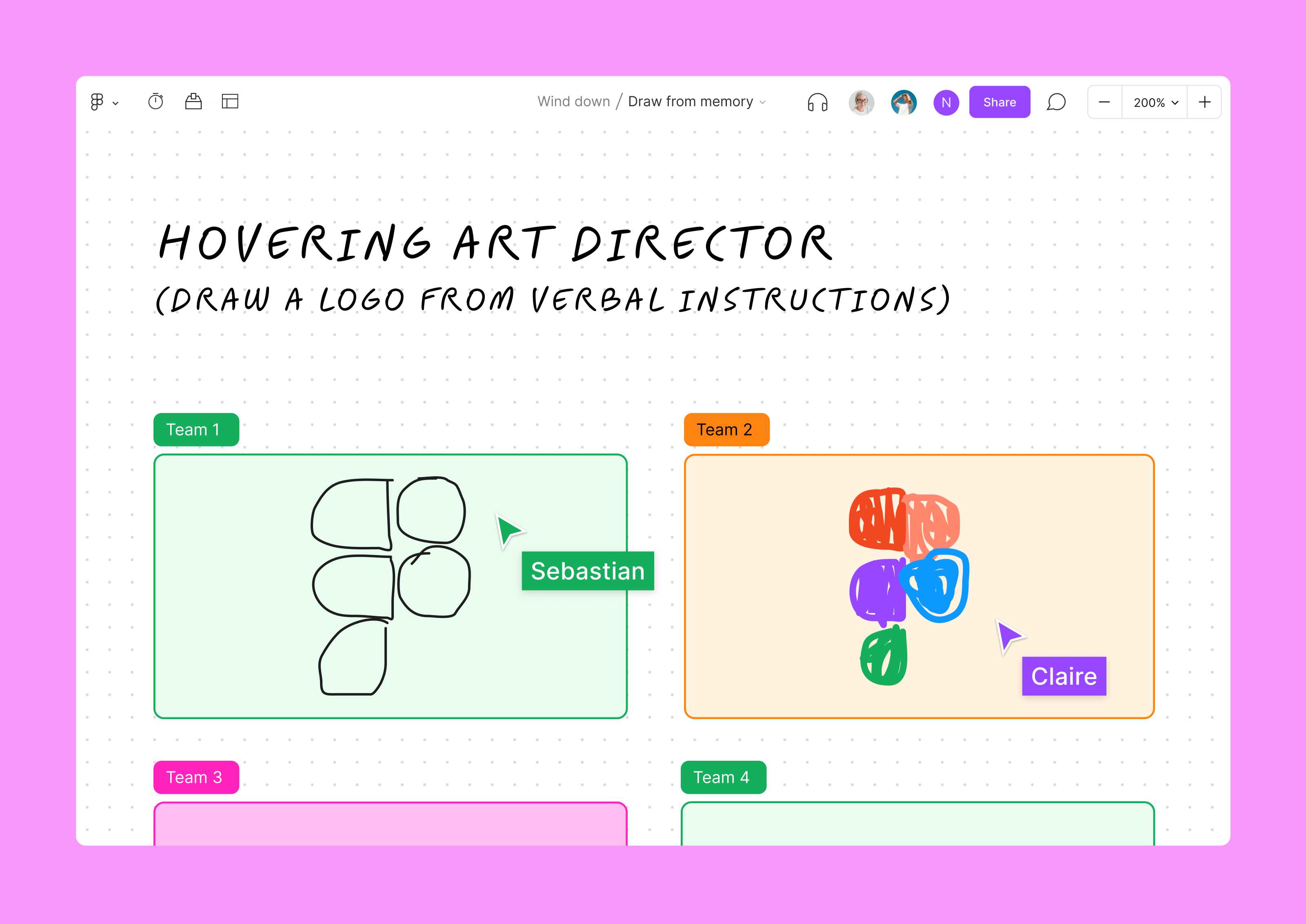
A frequent criticism of distributed work is that it feels transactional, draining the emotional connection between teammates. Sebastian Speier, UX manager at Shopify, tells us “it’s very taxing emotionally ... to have 100% of your communications with your team be about making your work better.” His team holds weekly “cool downs” with just-for-fun prompts. Others use playful activities, like Stripe’s prompt for teams to draw their Starbucks order, or Shopify’s exercise of drawing a logo from verbal instructions. These moments let people loosen up and learn about each other outside of project goals.
Deliberate rituals are essential, according to Rachel Kobetz. Figma’s newcomers share what makes them a maker at company-wide FigNation sessions, while local offices host “Three Things,” short talks about what shaped each person. A strong culture of digital card-making also marks milestones and expresses appreciation.
As Metalab’s Sara Vienna puts it: “This constant work of bringing people together is what we have to do to have a team that feels deeply connected, wherever they are. Helping teams feel connected enough to create the best work of their careers is my number one job, and I will never stop thinking about it.”
Adaptability beats nostalgia
The magic of collaboration is not a fixed formula. Forrester’s study commissioned by Figma found that the most successful teams collaborate more and treat improving that collaboration as critical. They want better feedback on work in progress, earlier involvement of more people, and more cross-team collaboration.
Change is constant, including the coming wave of AI and its promise of collaborating with increasingly intelligent applications. The answer is not to retreat to a pre-2020 playbook. As SeatGeek's Sam Berg says: “There is no going back to the office of 2019. We look for a thing we call normal, but part of me thinks that’s a fallacy and a waste of time. Too many companies are focused on moving backwards and not moving forwards.” The teams that keep creating and building together are the ones that keep adapting.