
AV1’s Path into Lower-Cost Smartphones
Meta, Vodafone, and Google have jointly published a white paper, “Video Streaming with the AV1 Video Codec in Mobile Devices,” making the case for broader AV1 adoption in the mobile ecosystem. The paper’s core recommendation targets chipset vendors: system-on-chip (SoC) makers should evaluate adding AV1 hardware decode support, and where that is not feasible, they should consider software-based AV1 decoders as an interim step for low- and mid-tier devices.
The push comes as video accounts for 70–80% of all mobile data traffic, while low- and mid-tier handsets make up roughly 75% of global handset sales. According to the companies’ testing, wider AV1 use in those more affordable segments can bring video quality in line with premium devices while reducing network load and improving compute and storage efficiency.
Why AV1 Matters for Mobile Networks
AV1 already has a track record in production. Meta has deployed AV1-compatible codecs across its platforms, and Google has done the same. The codec delivers around 30% better compression than earlier standards such as H.264 and VP9, which makes it suitable for most video formats.
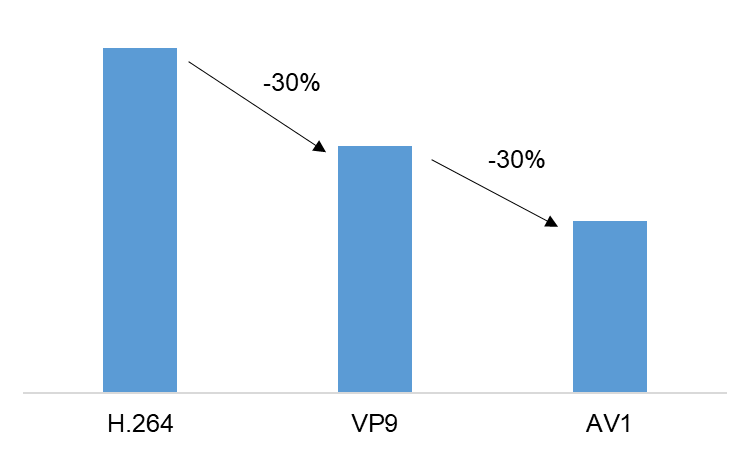
The gap, however, is in the device base. Many phones in use today are lower- or mid-tier models that lack the built-in hardware needed to decode AV1 efficiently, which can lead to buffering or poor playback. Current chipset support for AV1 is largely limited to premium products, so the user-experience benefits are not reaching the majority of handset owners.
Closing the Hardware Gap
AV1 can be delivered to phones in two ways: as a software upgrade to existing devices, or as a hardware feature embedded in the SoC. Hardware implementation offers better battery efficiency and performance, and the white paper notes that it gives manufacturers energy-efficient compression gains without sacrificing connection speeds.
For mid- and low-tier segments where hardware support is still absent, a software decoder can serve as a transitional step. The paper argues this approach helps operators manage growing video traffic while reducing compute, edge cache, and energy costs, and it points to the need for collaboration among content providers, network operators, chipset vendors, and OS developers to ensure a consistent quality of experience.


