
Figma will introduce higher prices for Figma Design, a rebuilt billing model, and broader seat entitlements starting March 11, 2025. Existing customers will be emailed details, and additional information is available in the Help Center or from account managers.
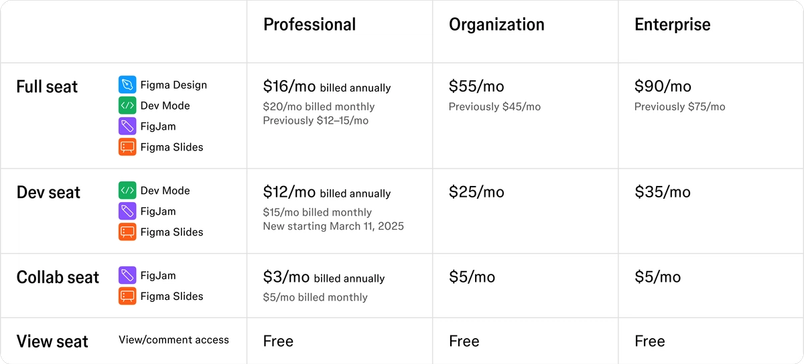
What changes on March 11, 2025
- Figma Design pricing increases, with the specifics shown in the table above.
- The billing model is re-architected. User-driven upgrades give way to admin approval of seat upgrades by default.
- Every paid seat gains more functionality. FigJam and Figma Slides are included with all paid seats.
On that date, existing plans are migrated to the new Full, Dev, Collab, and View seats and to the new upgrade workflows. The Full seat price increase and updated prorated billing take effect at each customer's first renewal on or after March 11, 2025.
How seat requests and approvals now work
Seat upgrades have until now been triggered by user actions, with admins able to review them afterward and before the next bill — a process Figma says customers have found frustrating. Under the new model, admins hold control from the moment a seat is requested: by default, any upgrade that adds cost requires admin approval. Admins also manage a single seat per user rather than separate seats per product.
To keep collaboration moving during review, a user can temporarily use the functionality of the requested seat for up to three days. In that window they can create new files and edit files where teammates have granted them edit access.
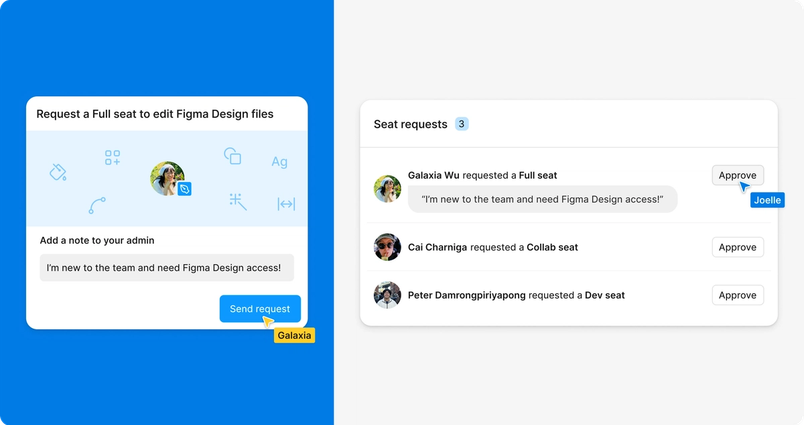
Approved seats are added to the next invoice, prorated from the approval date through the end of the subscription period. The changes apply to all paid plans.
Groundwork for Connected Projects
The billing rework sets up Connected Projects, a feature planned for later in 2025. Today, freelancers and agencies must buy licenses on multiple plans to work with clients; with Connected Projects, they will be able to create and co-edit files with clients using their existing Figma seats, removing the need for multiple licenses.
Figma frames the effort as rebuilding its billing model from the ground up, noting that its product has grown considerably since Figma launched in 2016 while the billing experience had not kept pace.