Creator Fund: Three community-built tools that shipped
Figma’s Creator Fund, launched in March, has distributed nearly $300,000 across 13 creators in nine countries. The goal: support free widgets, plugins, and templates for the Figma Community. Recipients so far have produced everything from a Mandarin-language design systems tutorial to a plugin that teaches Figma’s developer platform.
Figma’s Tucker Stockman, who helps organize the fund, says the committee looks for projects that “tackle hard problems and offer practical, time-saving solutions.” That focus, he adds, helps sustain tools that would otherwise be hard to keep free while creators pour time and energy into them.
Three of the first grant recipients recently shared what they built and what the process taught them.
Figma to Code by Bernardo Ferrari
Location: Curitiba, Brazil
Ferrari’s plugin converts Figma layouts into HTML, Tailwind, Flutter, and SwiftUI code. It grew out of pandemic-era frustration: helping maintain a Covid-19 tracking website, he found himself designing in Figma and then manually reproducing the design in code.
Existing design-to-code plugins fell short. They were slow, required payment for full functionality, covered only part of Figma’s API, ignored auto layout, or exported to a single framework. Many also overlooked responsiveness and accessibility. Ferrari spent two months building his own plugin and released it in July 2020.
But the plugin aged as Figma evolved. Auto layout changed, padding rules shifted, and the original tool didn’t keep pace. When Ferrari learned about the Creator Fund, he saw a way to overhaul the plugin while keeping it free. He had about a month to implement everything he proposed and to support Dev Mode before its announcement at Config 2023.
He pushed the update live from the conference itself, borrowing a laptop from the Figma team and remotely accessing his computer in Brazil—which his father powered on. “The good news is: Now I own a laptop.”
Ferrari’s work has also influenced the frameworks themselves. He helped make Flutter rendering roughly 20% faster and convinced Android’s Jetpack Compose to add item spacing and percent-based layout. His mindset shifted accordingly: instead of asking for workarounds to get borders working in Flutter, he now asks what Figma does that is still hard to replicate in Flutter and how he can close that gap.
Next, he wants to build a SwiftUI-inspired Flutter plugin—a goal he’s tried and failed at before, but one he plans to keep pursuing.
LabKit by Niclas Bauermeister and Marcel Tobien
Location: Berlin, Germany
LabKit is an isometric object library for Figma and FigJam. Bauermeister and Tobien started by sketching simple surfaces and furniture in a Figma file; once the scene took on the feel of a real room, they kept building items out of personal interest and met on weekends to expand the set.
Hundreds of people had signed up to test the library and request new pieces, but the pair struggled to scope the project. The Creator Fund “motivated us to deliver” and gave the pair room to dedicate more free time to the work, they say. They collaborated with the Config 2023 team to build a virtual conference space from real floor plans, which pushed the library’s level of detail forward.
The emotional reaction to LabKit, the creators say, is part of the point. People use it for client workshops, virtual offices, and team hangout rooms. The first expansion pack, LabCat, includes poses, fur colors, emotions, headwear, glasses, and other accessories. Their design principle: “Craft things that are surprising and delightful.”
A design-to-code tool with a wider remit
The fund’s first cohort also included a tool that translates designs into multiple front-end frameworks, opening the door for more creators to build their own products. Applications for the Creator Fund remain open at the Figma Community Creators page. The committee’s advice to applicants is simple: be intentional, include visuals if asked, and don’t try to guess what the fund wants—pursue what genuinely interests you.
Animate Text: Bringing Motion to Figma Without the Code
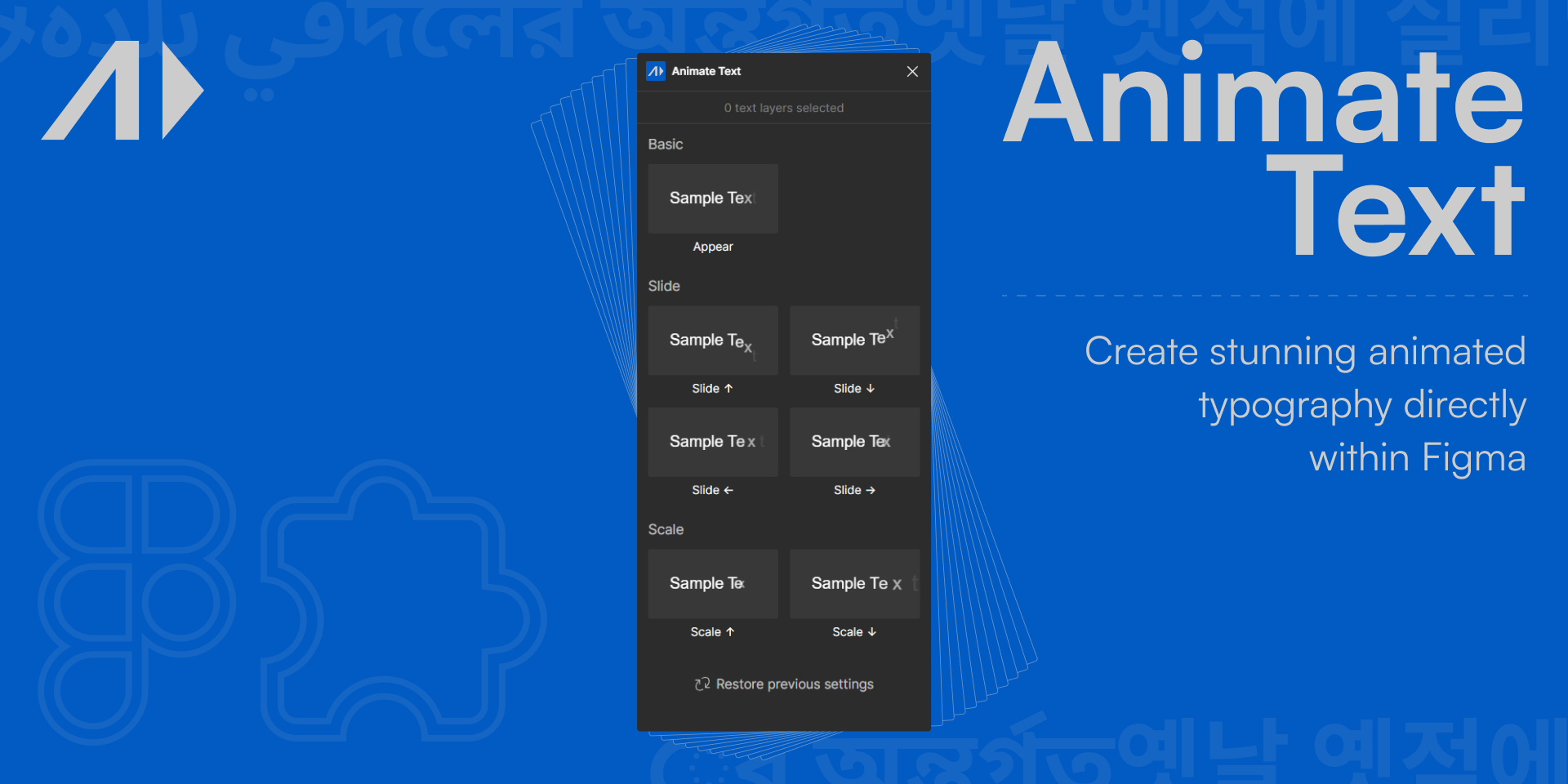
Text animation is often what separates a polished, memorable site from a static one. Yet for many designers, the usual routes to achieving it—video editing tools or hand-written code—come with a steep learning curve. Aamir Shaikh, a self-taught developer in Ahmedabad, India, built the Animate Text Figma plugin to close that gap for good.
Shaikh's motivation came from building his own portfolio. Noticing how many standout websites used text animation to convey personality or guide users through a flow, he wanted a way for anyone to apply the technique directly inside Figma—no timeline editor or JavaScript required.
The result is a plugin designed for resilience and polish. Its interface includes live preview, hover interactions, and tooltips that explain each property. It also anticipates common failure states, such as alerting users when no text layer is selected or when a font is missing from their system. Development took 69 days, mostly on weekends, with help from the Figma plugin API docs and the community forum.
It’s easy to forget that every resource we see online was made by someone who encountered the same problem, decided to solve it for themselves, and shared it with others.“It’s easy to forget that every resource we see online was made by someone who encountered the same problem, decided to solve it for themselves, and shared it with others.”
A Free Launch and an Unexpected Audience
Support from the Creator Fund gave Shaikh the confidence to release Animate Text for free. The community response exceeded his expectations: more than 10,000 users have adopted the plugin, a significant milestone for his first product launch. Users have also found applications beyond standard animations, like splitting text into individual letters, and several have shared their creations back with him.
His advice to other builders is simple: "Take a break when you’re stuck. Things will sort themselves out when you come back to the work."
Apply for the Next Creator Fund Cohort
Animate Text is one of several projects supported by Figma's Creator Fund, which grants up to five projects each month on a rolling basis. The committee evaluates a range of ideas—from tools that solve a common pain point to those exploring the limits of what's possible within Figma itself. Creators looking for that kind of support can submit their project for the next cohort.