
Why Maersk Finally Cut the Cord on Internet Explorer
Steve Workman, Lead Engineer for Maersk.com, knows the pain of supporting legacy browsers better than most. When he joined Maersk in 2018, his first project was building a new global navigation bar. The requirements were extensive: fully testable, easy to deploy, mobile-first, responsive, multi-brand, configurable, localised into 11 languages — and compatible with IE9. At that time, Windows 7 with its default IE9 browser was still widespread, and Maersk's data showed a significant portion of trade coming from customers on IE9, or worse, IE11 running in compatibility mode. This traffic leaned heavily toward emerging markets where Maersk's customer base was expanding fastest. If the navigation menu failed, users couldn't reach the login button. If login failed, they couldn't book containers.
Polyfills and Progressive Enhancement
To handle this, Maersk adopted a progressive enhancement strategy. Core functionality would "work" on legacy browsers, but it required substantial polyfills and restrictions. IE, for example, lacks support for the Fetch API. While polyfills exist that extend back to IE10, IE9 needed a separate file with XMLHttpRequest calls, loaded conditionally only when fetch couldn't be polyfilled. When the handful of remaining IE9 users finally dropped off, Maersk removed that code with minimal effort and maximum benefit for users on modern browsers.
As Maersk's digital transformation progressed, much of the site was rebuilt as VueJS-powered micro-front-ends. Vue offered future-friendly features, including modern mode, which builds two versions of an application: one using the latest ES Module syntax for evergreen browsers, and one for legacy browsers that don't understand ES6 modules. Served to browsers like IE, the legacy bundle is often 100KB larger in gzipped polyfills alone, reflecting the sheer number of missing features.
Modern CSS layout techniques largely worked, thanks to Microsoft having started the CSS Grid spec back in IE10. Tools like autoprefixer helped Maersk build a lightweight, flexible layout system. But lingering compatibility issues still consumed significant development time.
The Breaking Point
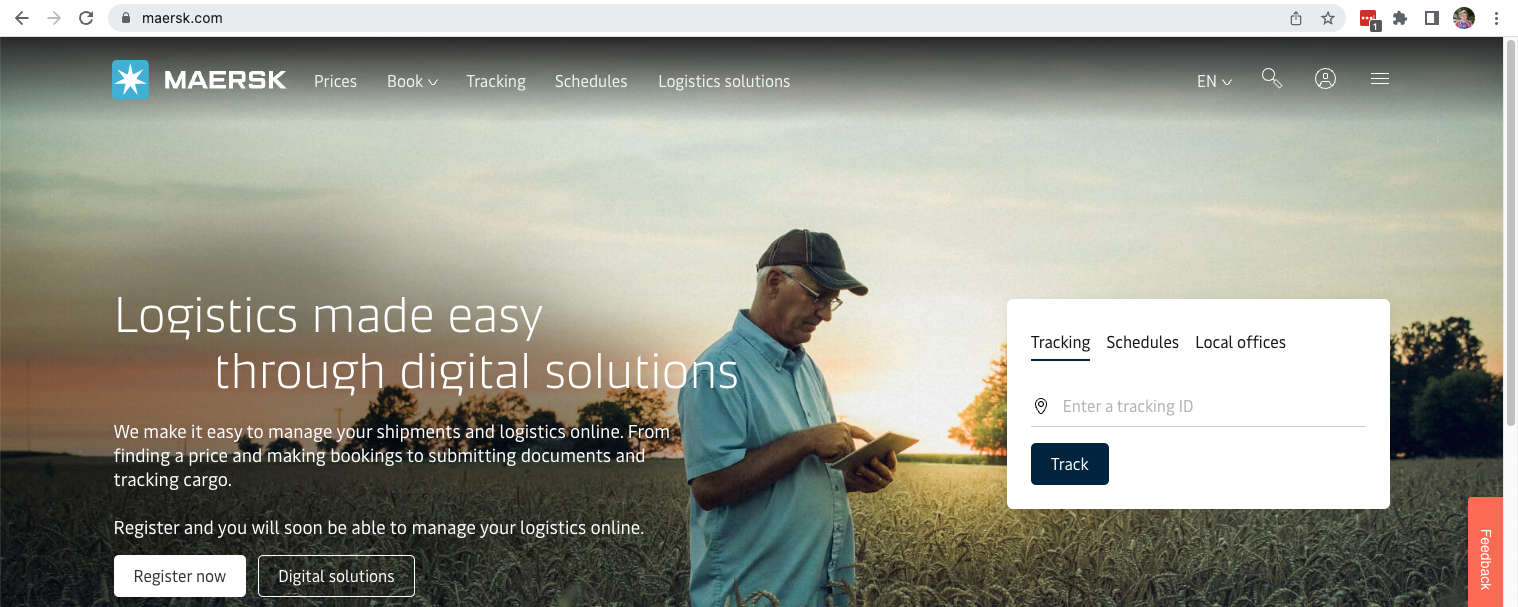
By 2022, Maersk had done the cost-benefit analysis again — this time for every version of IE. The trade-off was supporting a shrinking user base against incurring weeks of painful development time for each project. Maersk first nudged IE users toward modern browsers with a message on the site, which convinced some regular customers to change their habits, but not enough to make the numbers work. As IE visits trailed off, the company decided to end official support, even though usage data technically still justified keeping it.
The decisive factor was that the web platform had moved beyond what IE11 could handle, even with a small army of polyfills. The navigation component, for instance, should be a custom element with its own encapsulated styles, driven by CSS variables and container queries so it controls everything in one place. Polyfills for custom elements, ShadyCSS, ShadyDOM, and the template element can emulate most of these features. They work fine for isolated components, but in a complex application with multiple components, IE would grind to a halt — tens of seconds of white screen while the JavaScript runtime recalulated the style tree for the fortieth time. The user experience was severely compromised simply to support one browser.
Life After IE
The aftermath of ending IE support was notably uneventful. No avalanche of customer support tickets, no negative feedback. Instead, the benefits were immediate. Engineers became happier. Applications gained a clear upgrade path to Vue 3, which rejects IE11 support because the Proxy object cannot be polyfilled. Bundle sizes shrank. Full support for CSS variables and variable fonts simplified theming across brands, and using design tokens inside Vue's single-file components reduced cognitive complexity, improving the developer experience.
Customer-side, IE usage continues its slow decline. Maersk hasn't shut off the site for IE users, but as progressive enhancement turns into graceful degradation, features and applications will cease working. Customers benefit from advances in technology, with a more consistent experience as best practices, accessibility, and design are baked into an evolving Lit-based design system, fully interoperable with whatever framework comes next.
Looking ahead, there is genuine excitement about new web platform features. Dark mode could make vessel systems easier to use at night. Web Bluetooth, WebXR, and PWAs open paths for web apps to interact with the physical world in any conditions. As Workman puts it: "Thank you, Internet Explorer, for many things; we're now free to catch up with the web platform."


