
Traffic and the return to publishing
Pageviews for the site had been declining since 2020, a pattern shared by most front-end development blogs. The pause of more than a year sent them sharply downward. Publishing resumed in late May 2024, with regular output closer to mid-June. Overall, the site recorded 26 million unique pageviews in 2024 — the same figure as 2023, when traffic was collapsing. Breaking even after that drop is a win.
Output by the numbers
- 2020: 1,183 articles
- 2021: 890 articles (site acquired by DigitalOcean)
- 2022: 390 articles
- 2023: 0 articles (site paused)
- 2024: 153 articles (site resumed in late June)
Going from zero to 153 articles (this one included) in six months involved a small team. The author was the sole writer until roughly October; there are now three extremely part-time staff, joined by 19 guest authors. If momentum holds, upwards of 400 articles in 2025 is imaginable. Three guides shipped in six months — CSS Anchor Positioning, CSS Length Units, and CSS Selectors — against just one guide in 2022 and a goal of three for all of 2021. The Almanac also gained 34 new entries, covering Anchor Positioning and View Transitions features plus items such as @starting-style.
Rebuilding the site
Most of the year's effort went into site infrastructure, split across several areas.
Almanac
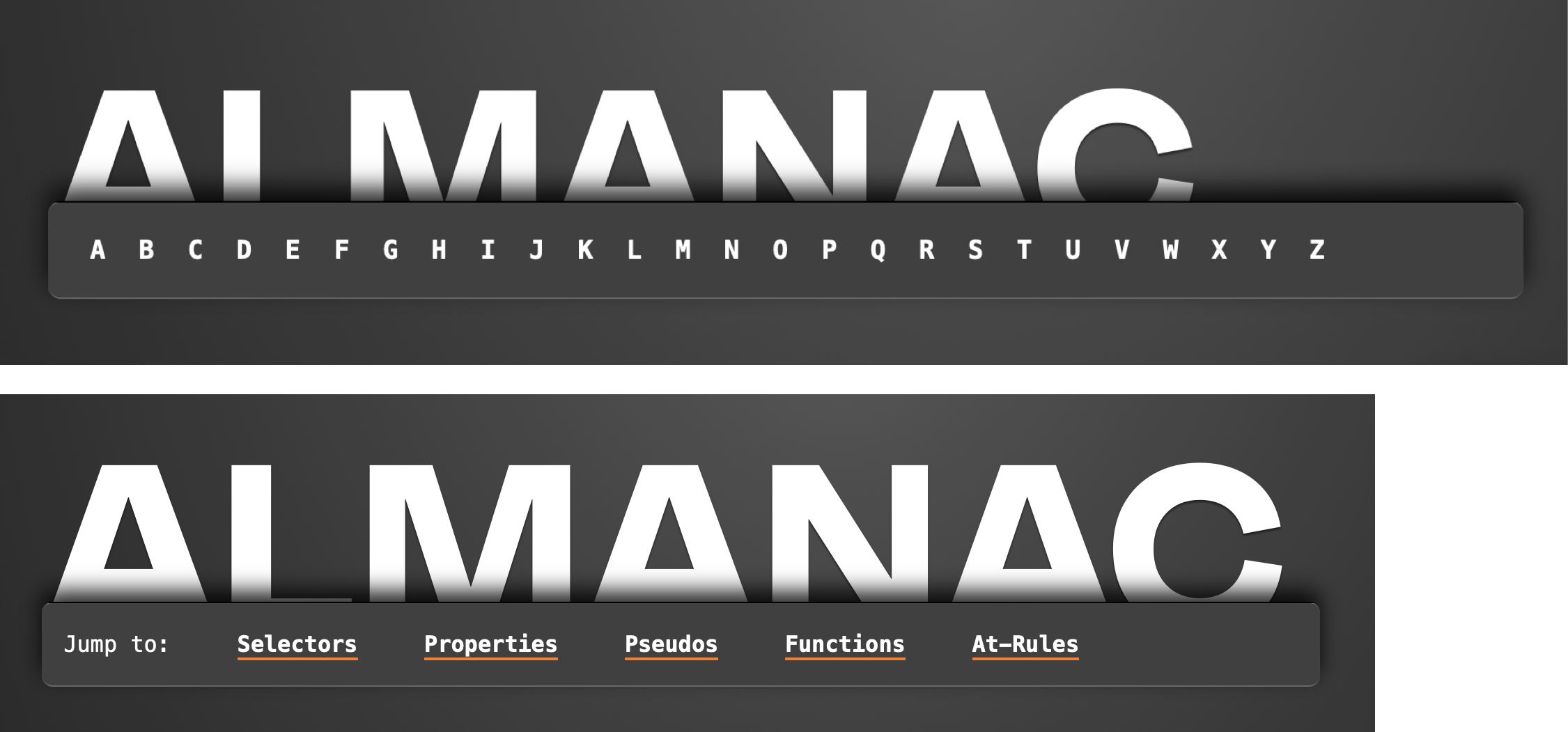
The Almanac was fully refreshed. It previously covered only selectors and properties; now it can document at-rules, functions, pseudos, and more. Guest writing contributions are still welcome.
Table of Contents
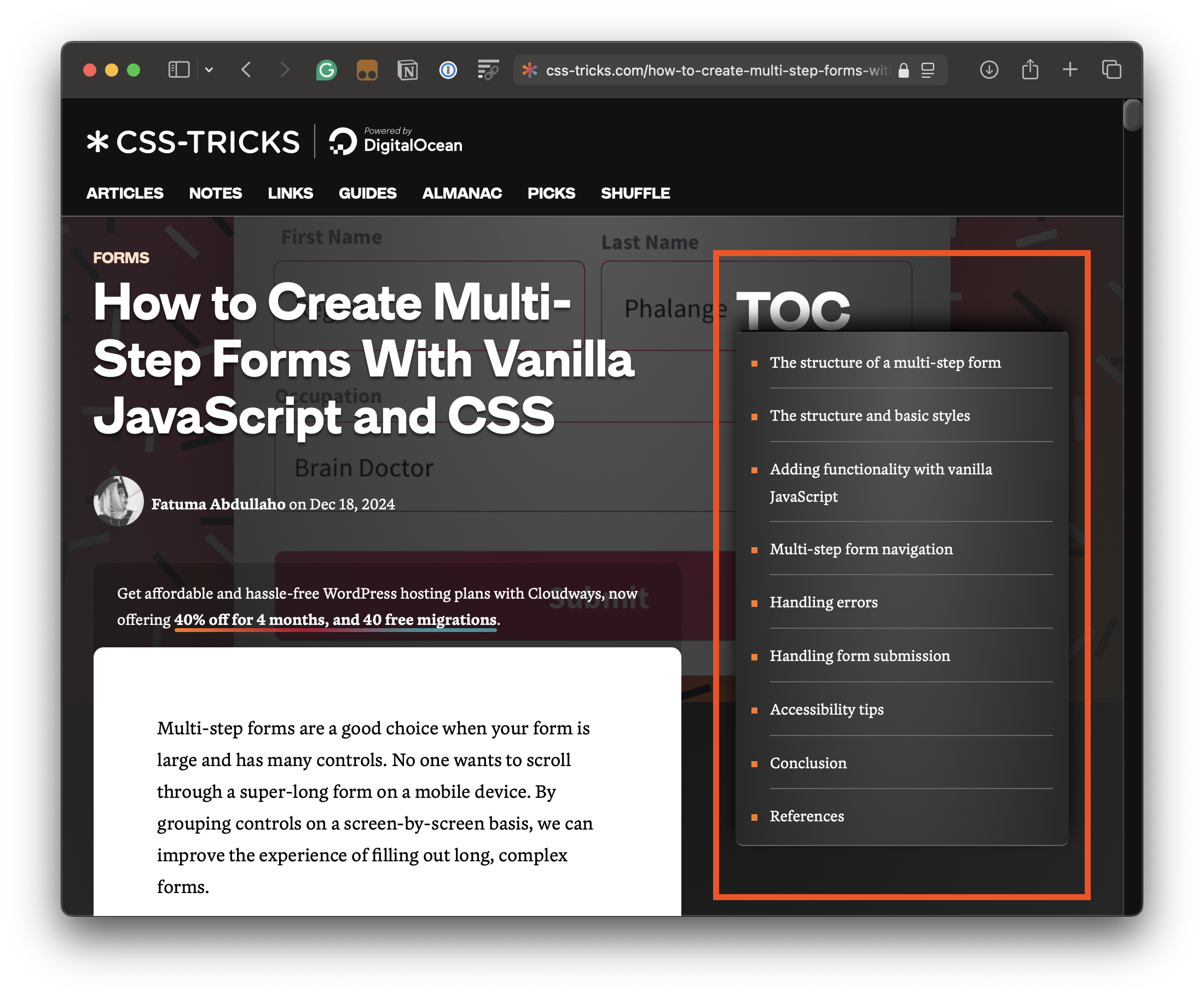
Anchor links to section headings, previously inserted via a WordPress block and limited in placement and customization, are now generated automatically, with a per-article toggle. A write-up on the implementation is planned for after the holiday break.
Notes
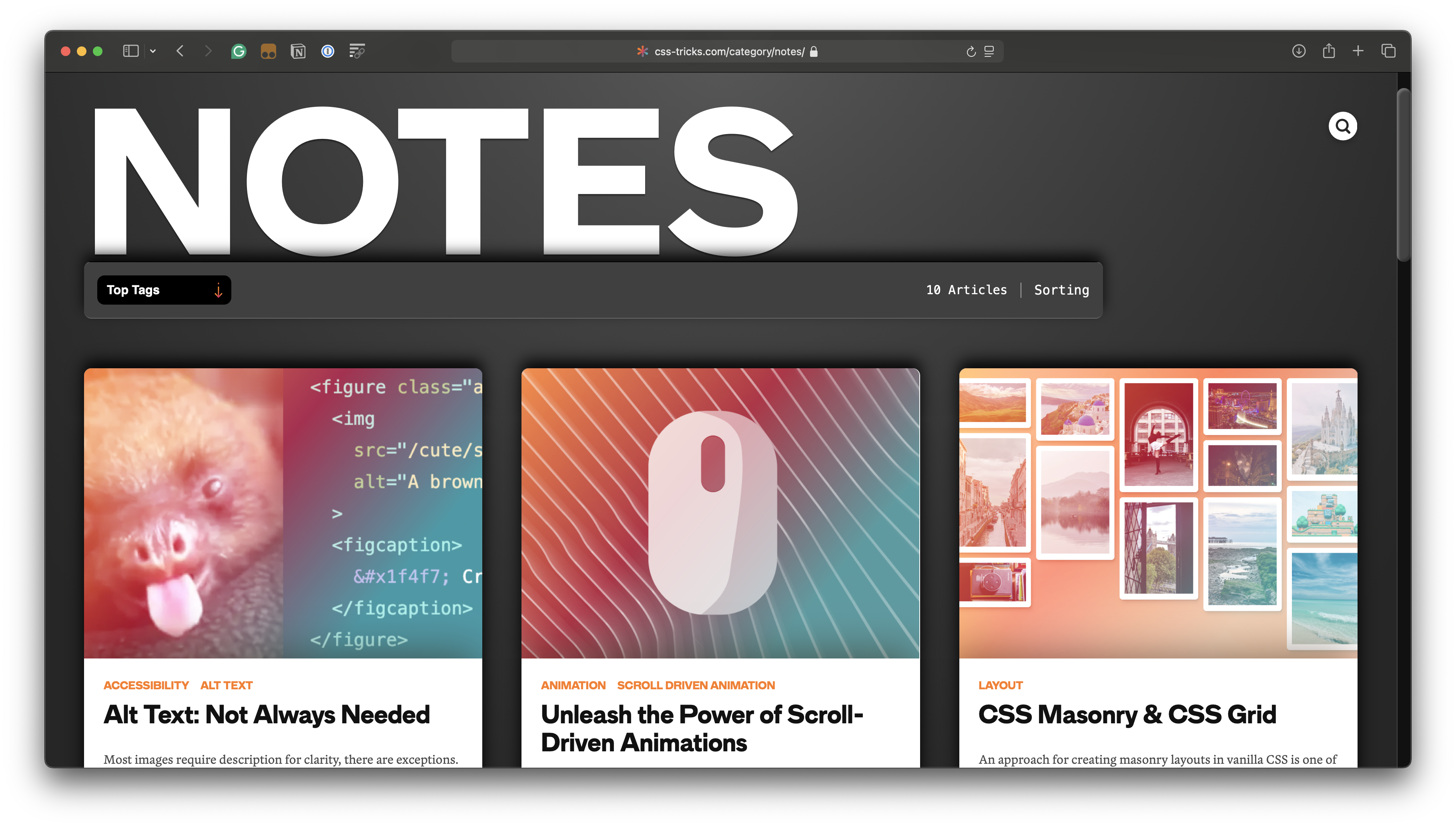
A new section collects takeaways from other people's writing. The goal is to lower the barrier to publishing: careful, planned technical writing conflicts with open, ongoing learning, so the Notes section provides a central place to share what the team is learning, such as notes taken from Bramus' free course on scroll-driven animations.
Links
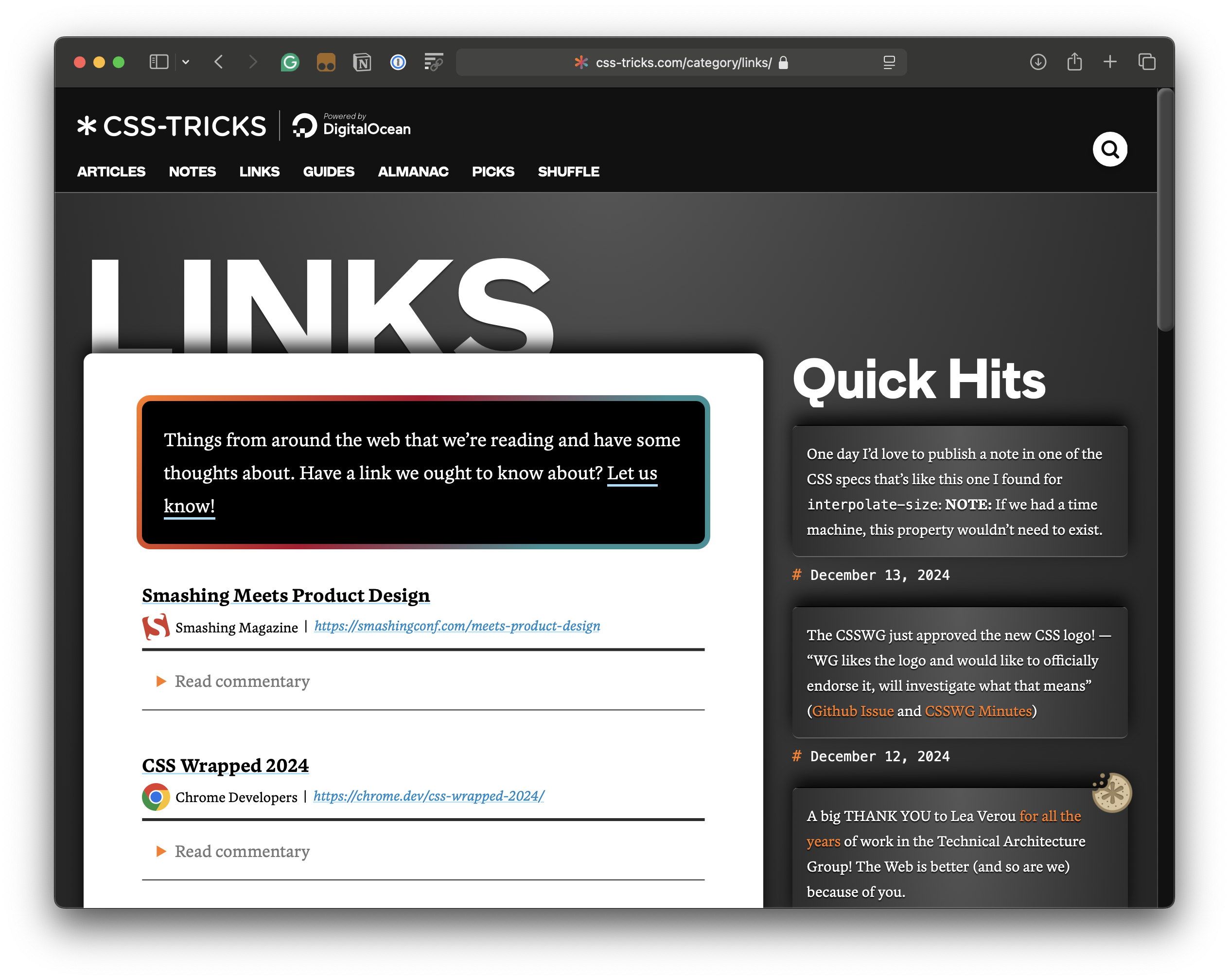
Links were moved out of the main article stream into their own section. Since links are meant to be quick, shareable conversation starters, separating them reduces noise in the main feed and gives them a faster path to the original article — useful for flagging resources like a new Anchor Positioning learning game.
Quick Hits

Brief one-liners, the kind typically posted to Mastodon or Bluesky, can now be written on the site and pushed out when needed. Posts still go to those platforms, but the site offers more flexibility. This area has not yet received much attention.
Picks

A feed of articles the team is reading. Items can be "starred" straight from an RSS reader and appear in the feed with no commentary required — simply interesting articles worth spotlighting. The idea originates with Chris a few years back; a write-up will follow the break.
Baseline Status

The Chrome team released a web component for embedding web platform browser support data. It was converted into a WordPress block for use throughout the Almanac, and is already appearing as content is published or refreshed — for example, in the anchor-name property entry. The plugin is available in the WordPress Plugin Directory.
Post Slider
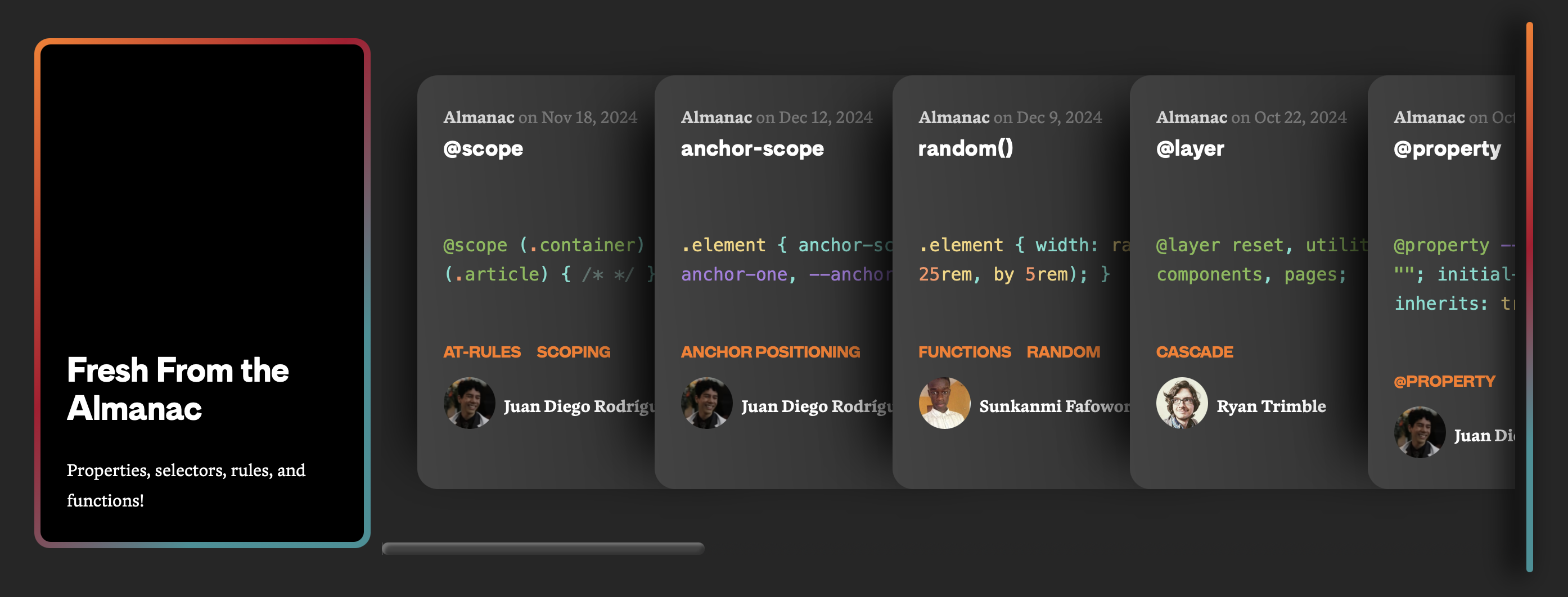
The homepage previously showed only the 10 most recent articles. A series of post sliders now pulls from different areas of the site — the latest five articles, the 10 most recently updated Almanac items or guides, and classic CSS tricks — to make specific content types easier to find. Converting the existing slider component into a WordPress block made it more portable and much easier to update the homepage and any other page or post that needs one.



