
Decoding the ink
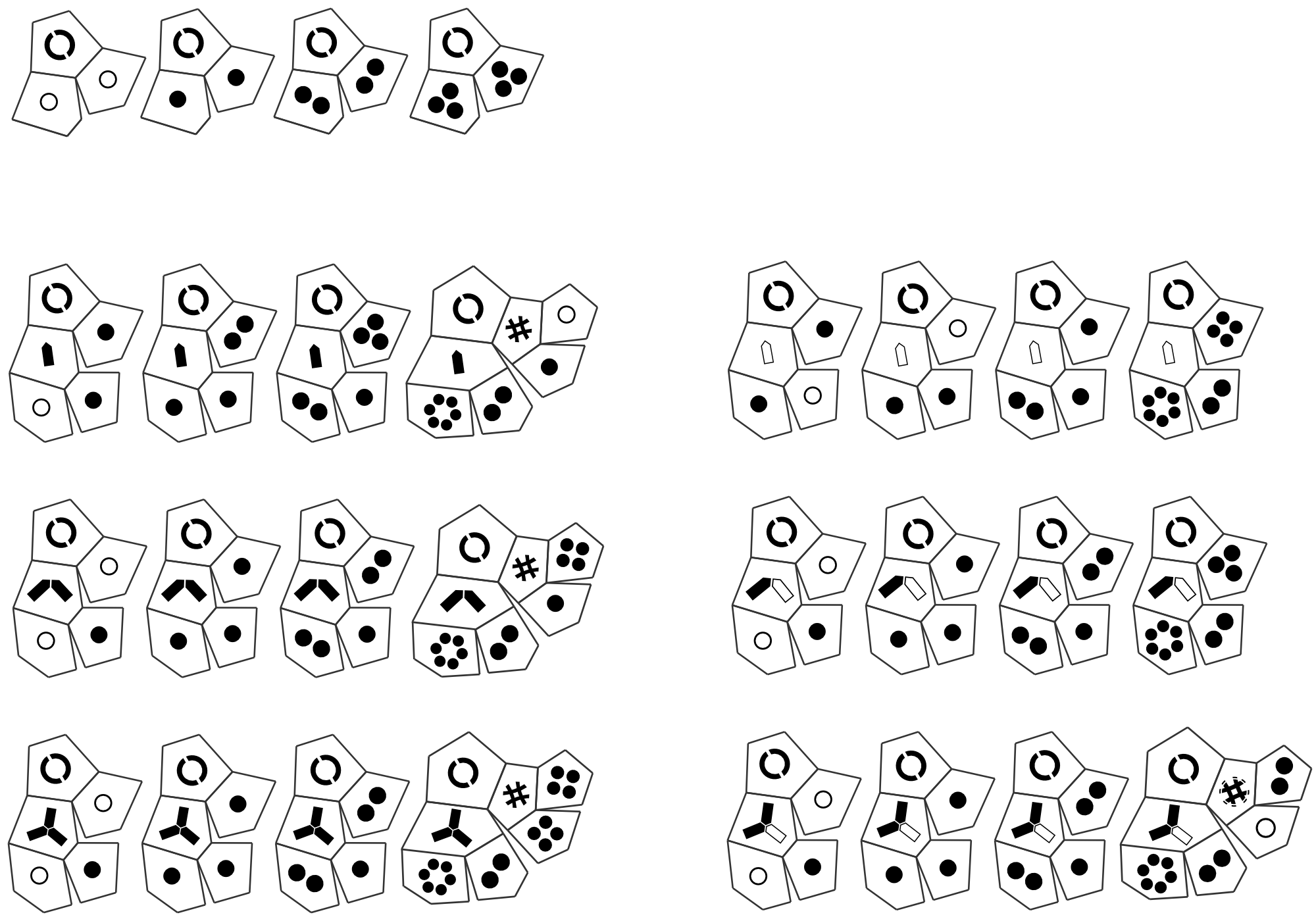
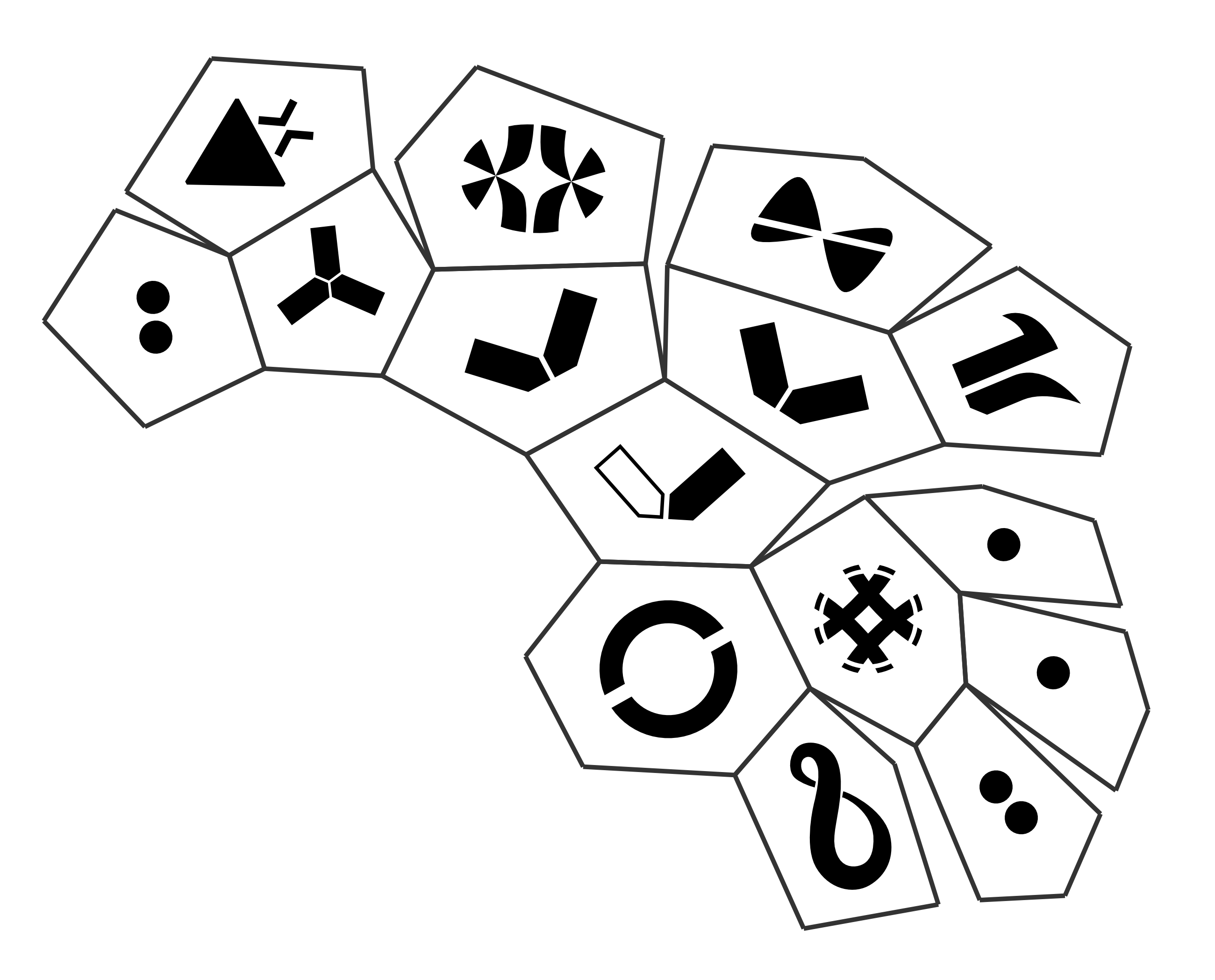
This tattoo encodes a single, well-known number using a custom symbolic language. The design is built around a poster that lays out a primer of twenty-eight expressions, arranged in a four-by-seven grid. Solving the puzzle requires understanding that language, and the primer itself contains enough structure to reverse-engineer it.
Where to start
Orientation and scale don't matter. The positions of the primer expressions don't matter either, though they've been laid out suggestively, grouping them to make the underlying logic easier to spot.
Each group of four expressions shares a particular symbol. Some of those symbols appear only at the edges of the design, while others connect multiple cells. The connected cells don't form loops. Pay attention to which glyphs are solid black and which have outlined counterparts, and try relating glyphs by their component shapes.
Reading the language
The key question is how you'd represent large numbers. The primer shows dot clusters, and the densest circle packing in a plane naturally accommodates six dots. Think about how that pattern would extend to seven, eight, or nine dots. The rows and columns of the primer also relate to each other in a systematic way. A # glyph in the bottom right has small cut-outs that hint at its meaning.
Once you start assigning values, consider the inverses of exponentiation: logarithm and root. Ask yourself what integer is closest to the square root of six, and what integer is closest to log(6, 2). Equivalence relations here aren't always binary—they can involve more than two elements.
The number itself
The result is a constant any physicist would recognize immediately. A common solution for a planar light wave describes sinusoidal electric and magnetic fields oscillating at right angles to the direction of propagation, and the number in this design is tied directly to that framework.


