
Wizard Zines: A Year of Sales Data
Independent authors often share their business numbers, and the data behind Wizard Zines—a publisher of programming zines—offers an interesting look at how a small internet-native business actually runs. The entire business is built around selling zines directly to readers; no sponsorships, consulting, or commissions factor into the numbers below.
Digital vs. Print, Corporate vs. Personal
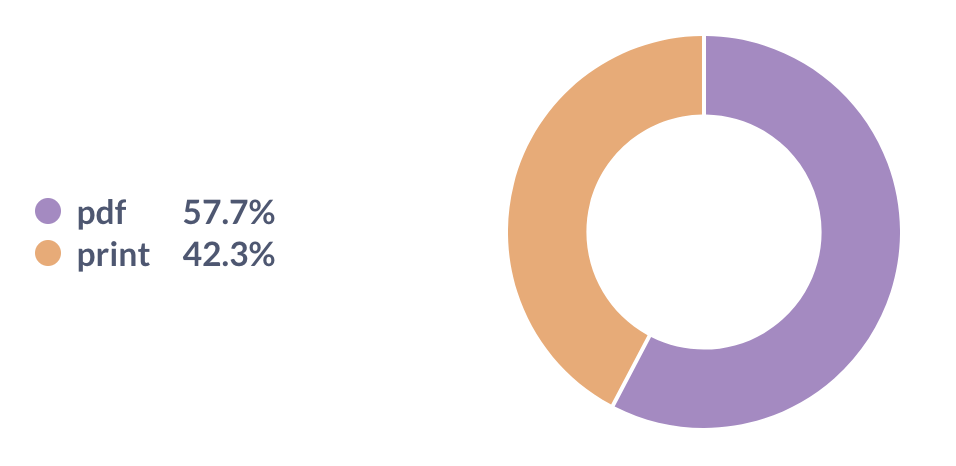
In 2022, 58% of sales were digital (PDF downloads) and 42% were physical print copies shipped to customers. That split is notable because when the company began printing and shipping physical zines in 2021, there was some concern that no one would buy them. Both the first and second print runs have since sold out.
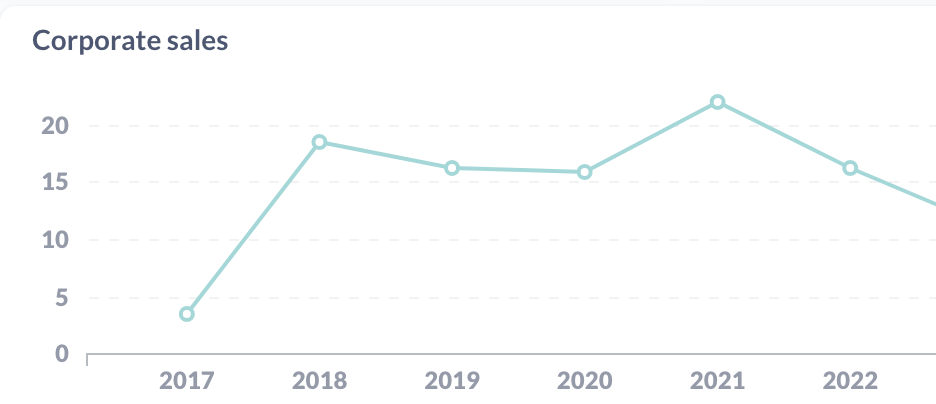
Alongside personal purchases, Wizard Zines sells corporate licenses designed for team-wide distribution. That channel has held steady at roughly 16% of revenue for 2022, a figure that appears to have been flat over time.
The Purchasing Power Parity Program
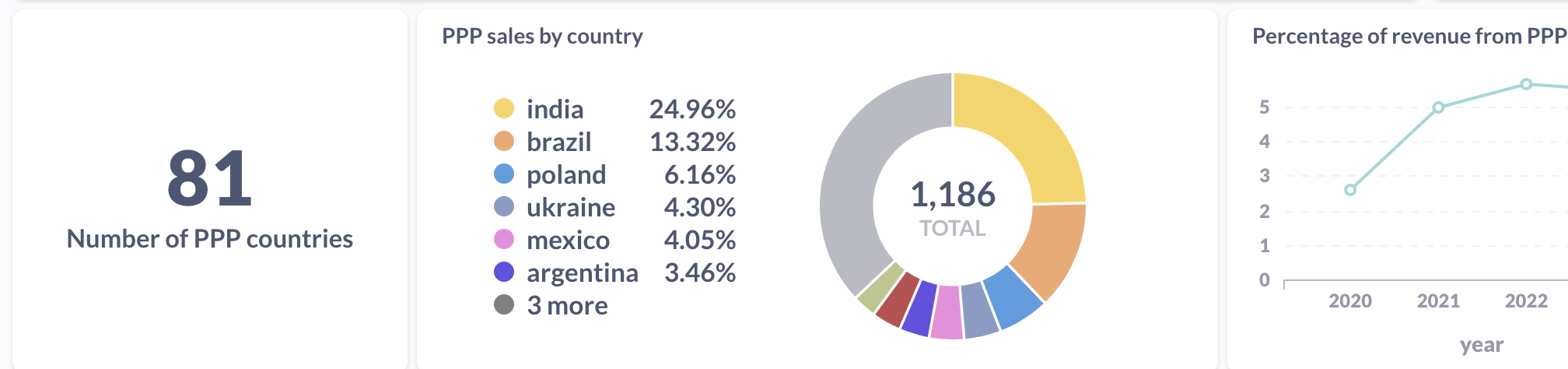
The store runs a purchasing power parity (PPP) program that provides discounts to customers in countries with weaker currencies relative to the US dollar. The program has seen significant adoption: customers from 81 different countries used it, with India and Brazil being the top two users, which tracks with those being two of the most populous countries in the world. About 5% of total revenue came from sales with PPP discounts.
Bundles Have Become the Main Purchase Model
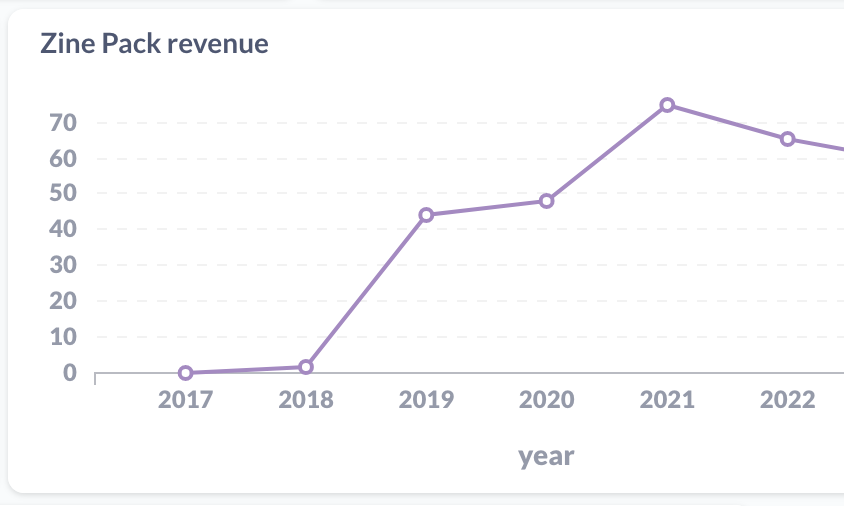
Originally, customers could only buy individual zines—when they wanted everything at once, they had to check out each one separately. A suggestion to add an “all zines” pack turned out to be transformative for the business. What started at 3% of revenue in 2018 (when packs were introduced) grew to 65% of all 2022 revenue.
Leaving Gumroad for Shopify
Wizard Zines migrated its entire storefront from Gumroad to Shopify over a period spanning 2020 to 2023. The driving forces were practical: the company needed inventory management to sell print zines, and its chosen fulfillment partner (White Squirrel) relies on a Shopify plugin. Once Shopify was necessary for the print side of the business, consolidating everything onto one platform made sense.
The economics also played a role. Gumroad charged 10% (7% plus processing fees), while Shopify charges $38/month plus processing fees—though the actual monthly cost runs closer to $150 with required plugins. For this business, the flat fee comes out less than 7% of revenue. The migration took about a month of concentrated effort in 2022, but the ability to manage everything in one place has made it worthwhile.
Revenue Trends: 2020 Through 2022
Looking at relative revenue across three years of the store's life shows 2022 below 2020, but well above 2021.
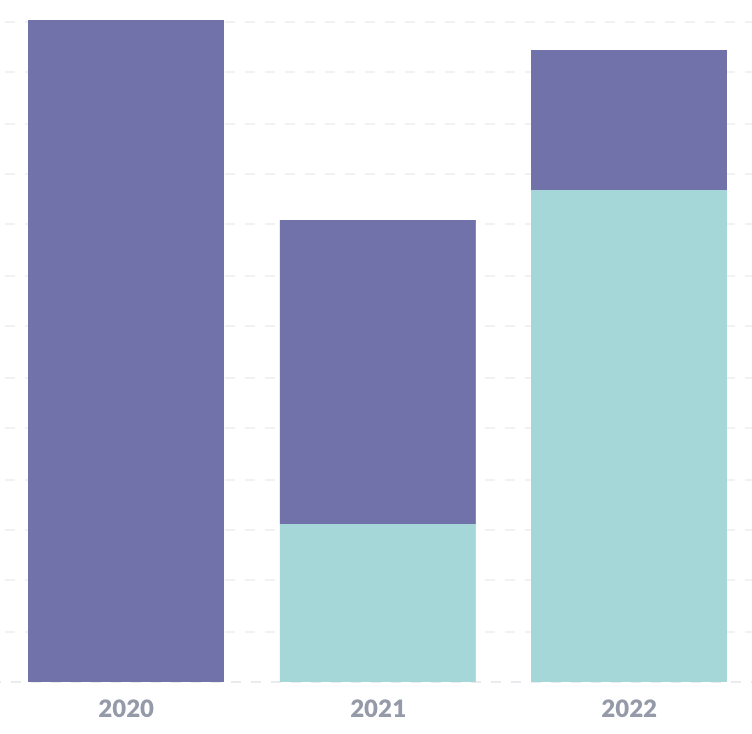
The pattern closely tracks the number of new releases each year: three zines in 2020 (Become a SELECT Star, How Containers Work, Hell Yes! CSS!), one in 2021 (Bite Size Bash), and two in 2022 (The Pocket Guide to Debugging and How DNS Works). While that variability might raise concerns, the business has so far generated enough revenue each year to comfortably pay everyone involved.
Seasonal Spikes in the Sales Calendar
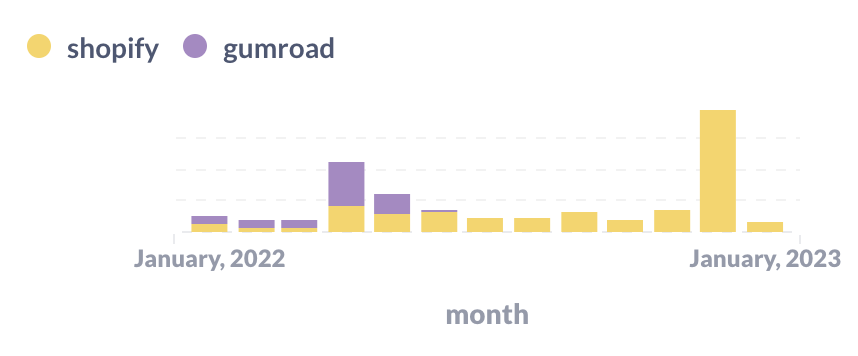
The monthly revenue chart for 2022 and into early 2023 shows two clear surges: one in April and another in December, both coinciding with new zine launches. The same chart also reveals the platform migration in action—Gumroad was dropped entirely in May.
Geography of the Customer Base
When looking at where revenue comes from, the US leads at roughly 59.65%, with the EU (treated as a single block) at 14.71%. Other notable figures include Canada at 6.57%, the UK at 5.43%, and Australia at 3.34%, followed by Germany, France, and the Netherlands. Dissecting the "Europe" category shows Germany at 4.81%, France at 1.85%, and the Netherlands at 1.58%. Beyond the top 25 countries listed, the remaining purchases come from 117 additional countries.
One of the more striking takeaways is that 40% of all revenue originates outside the US. The count of copies sold tells a different story: India and Brazil each move above Australia when looking at unit volume. The international share of the business has prompted active consideration of how to improve shipping costs for smaller international orders, since free shipping currently only applies to large orders.
Customers came from a total of 126 countries in 2022. The full list spans from the expected heavyweights (US, UK, Canada) through more surprising entries such as Pitcairn Island, Turks and Caicos, Rwanda, and Mauritius.
How the Graphs Are Made
Every chart shared was built on a lightweight data pipeline running locally. Shopify and Gumroad API data is imported via sqlite-utils scripts into a small (~100MB) SQLite "data warehouse." A single database view merges Gumroad and Shopify transactions into an all_sales table, which is then queried with Metabase, an open-source BI tool. The whole setup runs via cron jobs on a laptop, and all graphs are screenshots taken directly from Metabase dashboards.


