
A Year of Shingled Storage at Scale
Roughly a year ago, Dropbox became the first major tech company to deploy high-density SMR (Shingled Magnetic Recording) drives in production. The motivation was straightforward: SMR offers significant cost savings over conventional PMR (Perpendicular Magnetic Recording) drives. The catch is that SMR is slower to write. After a year of running this new hardware, the key findings are in: the transition was smoother than expected, and the gains in density, cost, and power efficiency have met or exceeded projections.
The Value of a Dry Run
When the first production machines arrived, the apprehension was real—this was raw, untested technology. But the rollout was uneventful, which was exactly the goal. The lack of drama stemmed from extensive preparation.
For three years, the hardware and Magic Pocket software teams worked in tandem to identify edge cases and stress-test scenarios before deployment. Critically, a large portion of the software changes needed for SMR’s sequential write pattern were developed and tested against the existing fleet of PMR disks. The new architecture was designed to support both disk types from the start. This meant the entire software stack was validated by hundreds of thousands of installed drives before a single SMR disk was brought online. The only variable left to chance on arrival day was the physical media itself.
This architectural foresight also benefited from an existing design principle: the infrastructure handles immutable data blocks up to 4MB. This natural fit allowed random writes to be staged and then written sequentially into new blocks. The write zones in Magic Pocket, set at 1 GB extents, align perfectly with the 256 MB zones used on the SMR drives.
Hardware and Vendor Collaboration
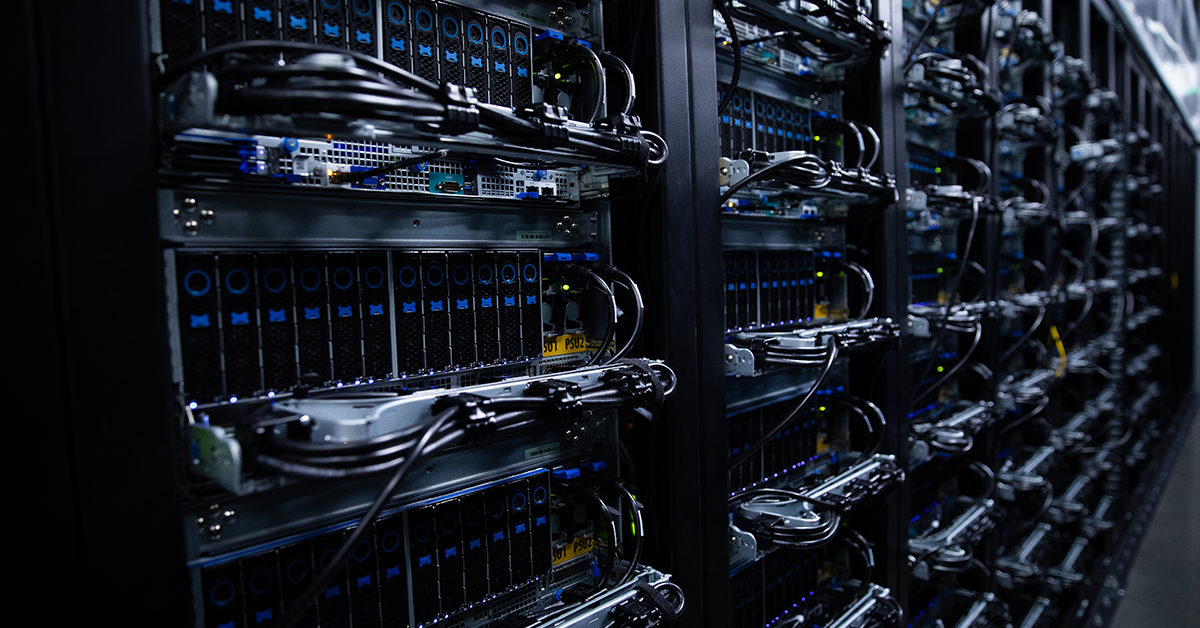
From a hardware perspective, SMR was initially a proof of concept: could it function as intended? The use case aligned well with how Magic Pocket is architected, allowing for faster density growth than PMR. However, the hardware team faced a steep learning curve, as SMR was new to the data center context.
Being first had notable challenges, particularly regarding the sheer volume of data managed. Vendor support was limited because no one else had the chassis configuration in use. The test cluster—approximately six racks, 48 systems, and close to 5,000 drives—provided a much stronger test signal than what vendors could offer. This meant Dropbox often performed the heavy testing for its vendors, which in turn kept the company ahead of the curve.
A significant hardware hurdle was firmware fragmentation. With multiple drive vendors, various host bus adapters, and different server chassis, each component operated with its own firmware. The first initiative was simply getting partners to communicate. By working with each vendor to resolve issues early, Dropbox avoided single points of failure and reduced reliance on any one supplier.
Density, Cost, and Power Gains
The original goal was to have 25 percent of storage capacity on SMR drives in 2019. Since September, all new drives for storage servers have been SMR. Density has increased faster than data growth, and by the end of 2019, close to 40 percent of Dropbox’s data is expected to reside on SMR—surpassing the initial target.
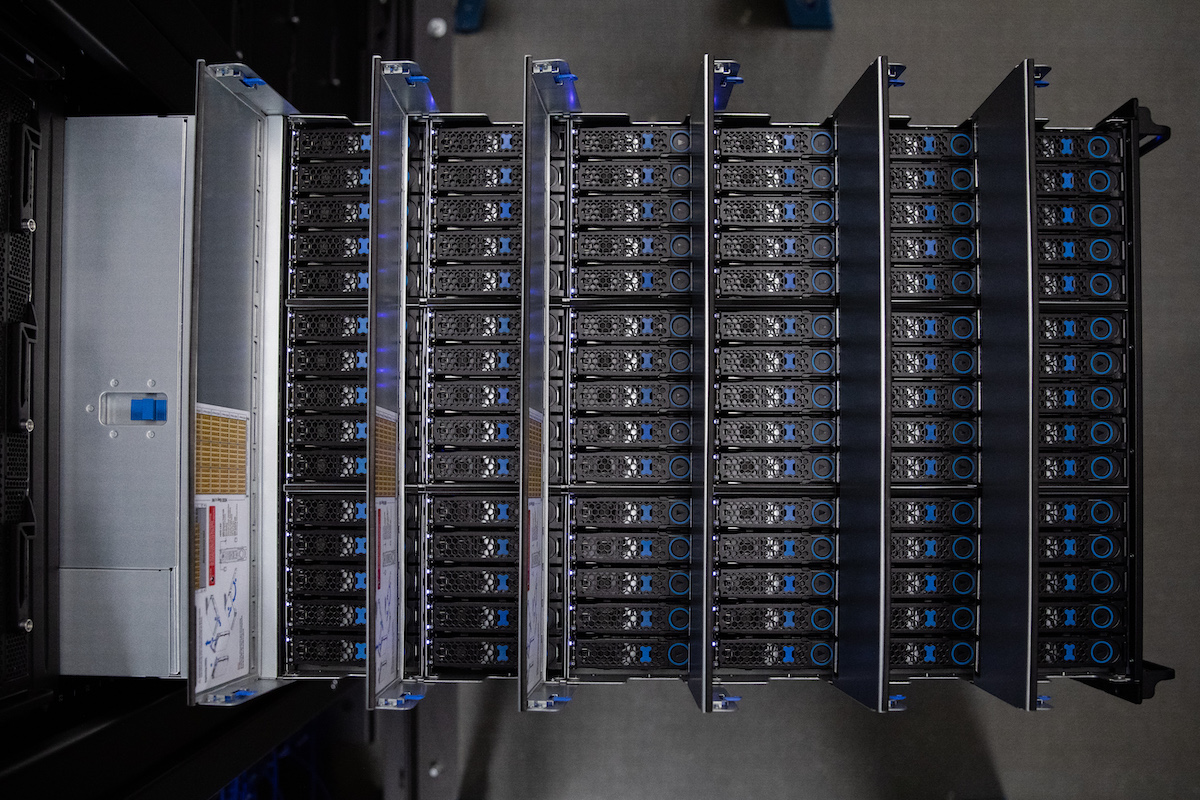
The cost savings have matched expectations. An SMR drive stores roughly 10 to 20 percent more data than a PMR drive of the same capacity at little to no cost difference. Overall, the new high-capacity SMR drives have resulted in more than 20 percent savings compared to the last-generation storage design, aided partly by other lower-cost hardware.
Energy consumption has also improved. SMR drives have a lower power footprint, and the shift from 8-terabyte to 14-terabyte drives means denser racks with only marginal increases in power draw. A single machine can now hold 100 disks instead of 60, using the same CPU and memory. These efficiencies are expected to compound as Dropbox moves to 18, 21, and 24-terabyte drives.
Software Lessons and Open Source
On the software side, Dropbox chose to write directly to the disks without a filesystem for greater capacity, performance, and flexibility. This required using libzbc, an open-source library that sends commands directly to the disk, bypassing the Linux block device stack.
Testing exposed a recurring disk failure issue. The root cause was a hardcoded loop: because Linux kernel code includes retry logic that wasn't being used, Dropbox had to implement its own retry logic for disk access.
Through this process, Dropbox has made 13 contributions to libzbc. The team also developed SMRtest, a testing tool that generates synthetic workloads for write/read verification and benchmarks throughput on SMR drives. The tool has already been shared with ecosystem partners and suppliers and is slated for release as open-source software.
Colder Storage and Future Technologies
SMR has also enabled a new cold storage tier for less frequently accessed data. Depending on the replication scheme, disk usage has been reduced by 25 to 33 percent with no noticeable change to the end-user experience. The cold tier uses the existing mix of SMR and PMR drives, translating to additional savings without performance differences.
The simplicity of the architecture positions Dropbox to adopt future storage technologies. Emerging methods like microwave-assisted magnetic recording (MAMR) or heat-assisted magnetic recording (HAMR) are expected to use the same or similar zone-based interfaces. By jumping to SMR now, the underlying software architecture will be ready for future HDD enhancements, opening the door for more cost-efficient storage with a smaller energy footprint.


