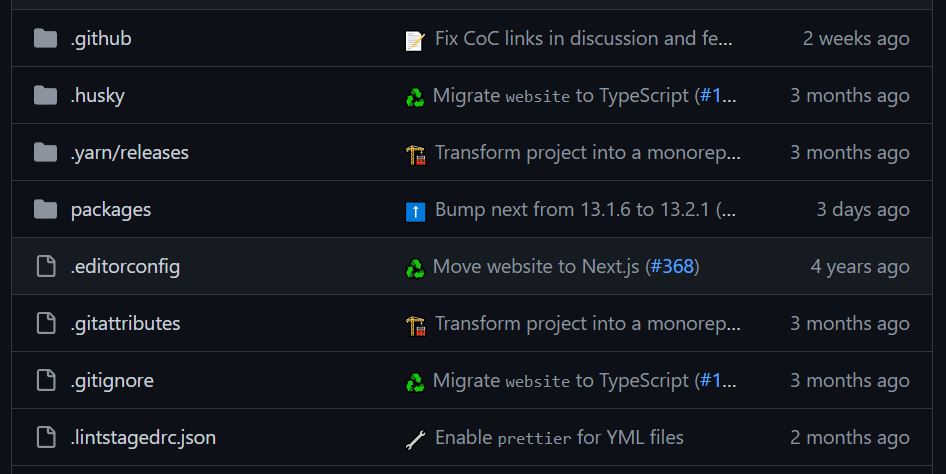

February's Open Source Standouts
After the holiday lull, the open source community has returned in force. The February Release Radar saw dozens of submissions, and while we can't feature every project that shipped a major version update this month, we've picked out a representative selection covering everything from container runtimes to AI-powered image tools.
Moby 23.0
The original Linux container runtime—formerly Docker Engine—has shipped its first major release in two years. Among the many changes in Moby 23.0, the standout is that BuildKit/Buildx is now the default build experience on Linux. The release also brings better support for alternate container runtimes, and SwarmKit gains experimental support for Container Storage Interface (CSI) plugins.
DalleCLI 1.0
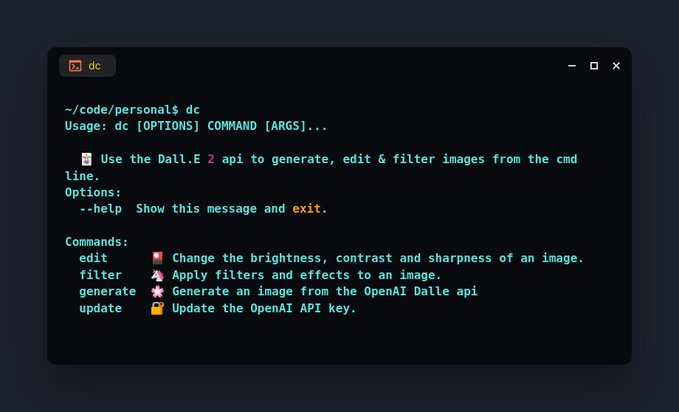
For those who want to work with DALL-E without leaving the terminal, DalleCLI brings image generation, editing, and filtering via the DALL-E 2 API to the command line. Install it with:
~$ pip3 install dallecli
Infection Monkey 2.0
Chaos engineering—deliberately stressing a system to find its breaking points—gets a new tool in Infection Monkey. Designed to test resilience against perimeter breaches and internal server infection, the 2.0 release refocuses on adversary emulation while improving security, simulation speed and reliability, and streamlining feature sets.
Pretty Maps 1.0
Pretty Maps draws custom maps using Python and OpenStreetMap. You can generate styled maps from an address, coordinates, or a custom boundary, with several presets available to tweak the final look.

Homebrew 4.0
The perennial favorite for installing software on Apple and Linux systems returns with a significant speed boost. Homebrew 4.0 now downloads JSON metadata instead of installing from the local Homebrew core. Analytics have also been expanded, now sending data to both Google Analytics and InfluxDB.
Snippets for VSCode 3.0
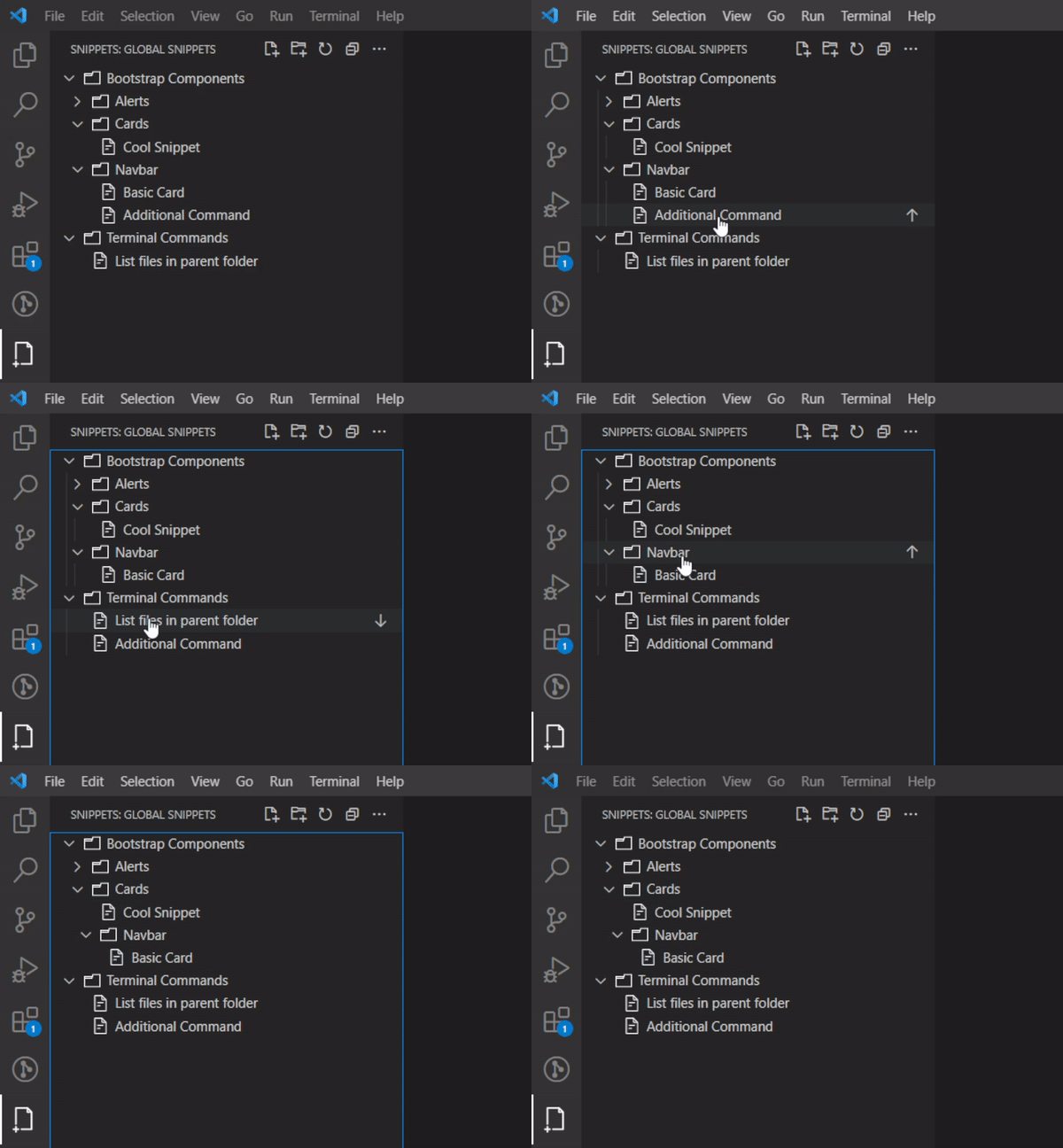
This VSCode extension, previously featured in Release Radar, has implemented one of its most requested features: drag and drop support. Organizing code snippets within the editor without quitting is now considerably simpler, alongside a host of other updates detailed in the extension's README.
Qdrant 1.0
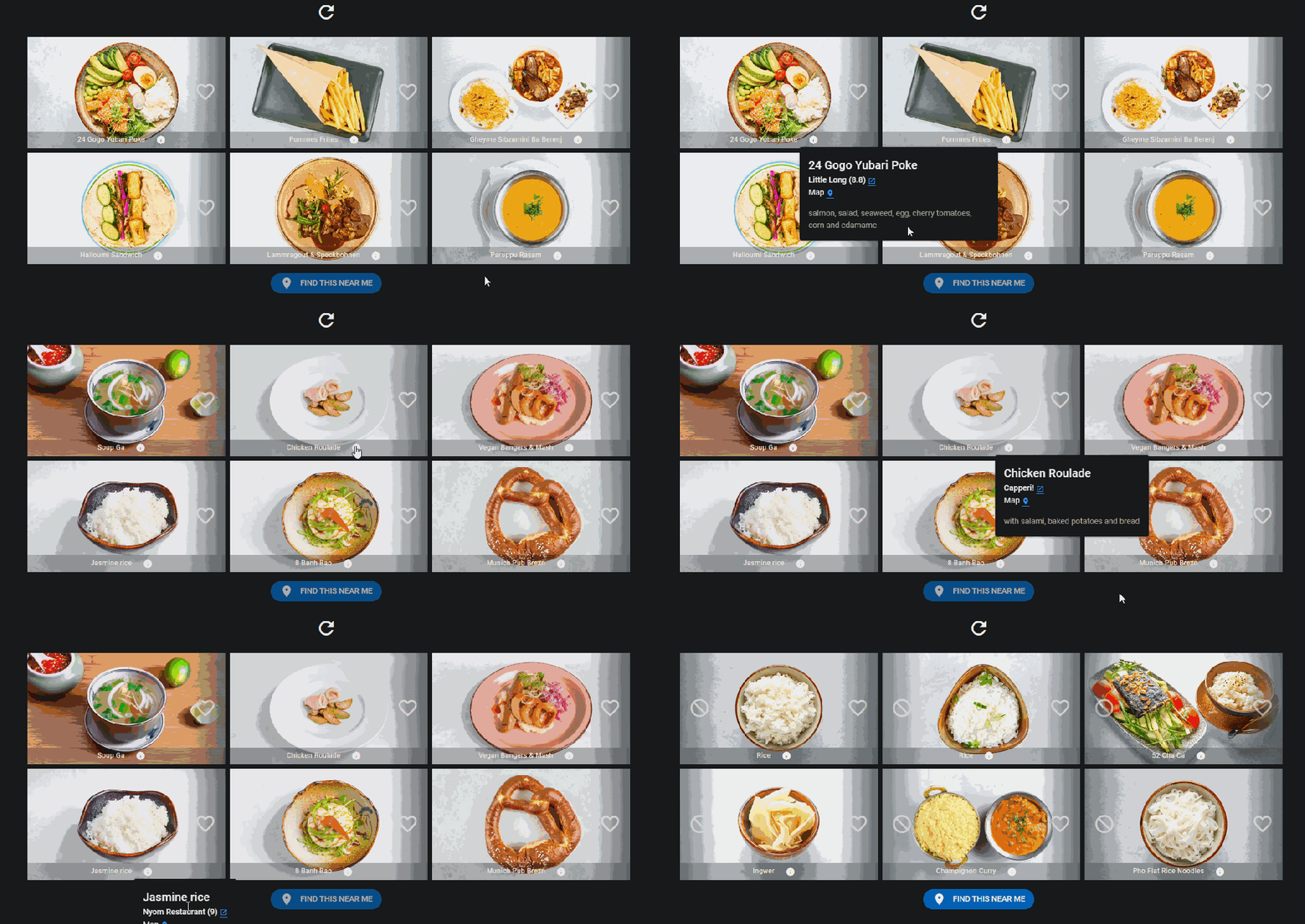
Built in Rust, Qdrant is a vector search engine designed for AI applications. It searches for nearest high-dimensional vectors, turning neural network encoders into practical tools. This capability enables image-based search—for example, a user could identify an unfamiliar dish by photo, and Qdrant would match it against similar images to return the dish's name.
Rallly 2.0
Scheduling across time zones for remote work or catching up with friends can be a headache. Rallly is a self-hostable polling application for finding common availability. The 2.0 release adds localization options, including language preference, the day the week starts (Monday or Sunday), and time format (12 or 24 hour).

Brainchop 2.0
Despite the name, Brainchop is a serious clinical tool—a web-based application for scientists and clinicians to perform segmentation on brain MRIs. It uses pre-trained deep learning models and protects client privacy by processing everything in the browser. The 2.0 update brings numerous features directly into that browser experience.

GitMoji CLI 8.0
A Release Radar regular, GitMoji CLI brings emoji to your commit messages from the command line. Version 8.0 raises the requirement bar, now needing Node version 16 or higher.