

July's open source majors: from Kubernetes tools to QR readers
July brought a broad wave of major version releases across the open source ecosystem. This roundup covers everything from React-based video frameworks and audio visualisation libraries to Kubernetes management tools and natural language processing updates.
Octokit.js 3.0
GitHub's official SDK for Browsers, Node.js, and Deno has hit version 3.0. Octokit.js provides client libraries for the GitHub API, App client, and Action client. The most significant change in this release is the removal of support for Node.js 14 and 16, so teams relying on those versions will need to check the breaking changes before upgrading.
Wavesurfer.js 7.0
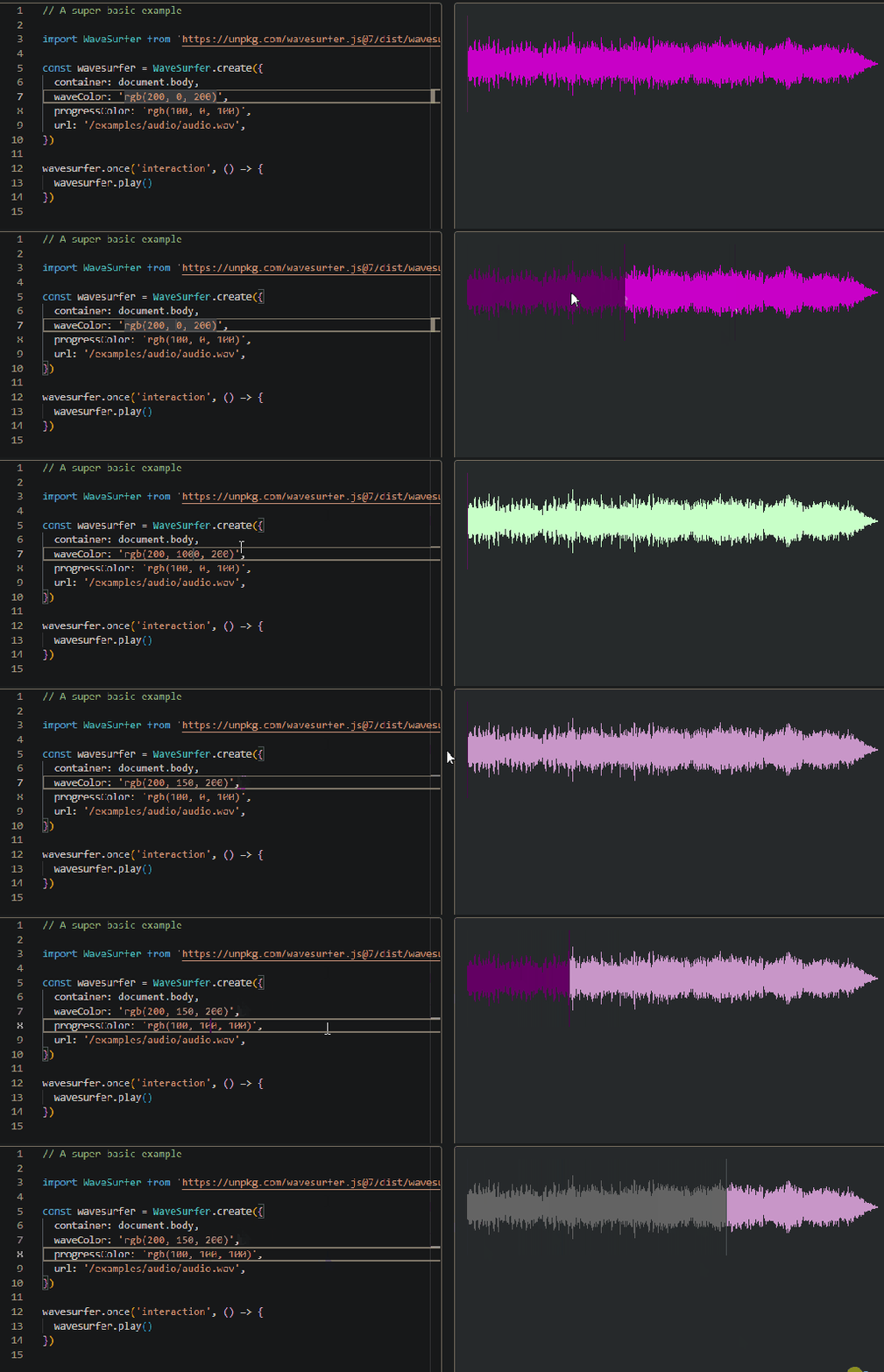
The audio visualisation library for creating interactive waveforms has undergone a complete TypeScript rewrite. This brings improved developer experience and performance, alongside new plugins. Existing users will need to review the migration guide covering the jump from version 6.0, as the rewrite introduces breaking changes alongside the new features.
Spark NLP 5.0
John Snow Labs' state-of-the-art natural language processing library now supports ONNX Runtime, text embedding, and document similarity ranking. Spark NLP is designed to deliver scalable large language models, and this update has significant implications for training models and performance that are worth investigating in the full release notes.
Remotion 4.0
The React-based video creation framework used for GitHub Unwrapped has shipped its largest update yet. Version 4.0 introduces the Remotion Studio, is now powered by Rust, and brings substantial workflow improvements. The release also adds new packages, upgraded templates, and a new API.
Whisky 1.0
A modern wine wrapper for macOS reaches its first major version. The tool lets users create and manage bottles through a UI that fits seamlessly into macOS, enabling Windows games to run on Apple hardware. It's available via Homebrew for quick command-line installation.
QrcodeReader 5.0
This set of Vue.js components detects and decodes QR codes entirely within the browser. Users can scan codes directly or drag and drop them to see where they route. The newest version adds support for detecting multiple QR codes at once.
Prettier 3.0
Not to be confused with the Prettier VSCode extension featured in a previous radar, Prettier itself enforces consistent code style across many languages and environments. Version 3.0 introduces changes to how Prettier works with Markdown, improved plugin support, clearer CSS handling, and requires Node.js 14 or higher. The release notes also cover how emojis are handled in formatted output.
I hate money 6.0
For those managing shared expenses in houses, restaurants, or group holidays, this tool handles shared budgets so you can skip the mental arithmetic. Version 6.0 adds Python 3.11 support, an expanded set of spoken languages, QR codes for easier invitations, and cleaner UI/UX around editing and removing expenses.
Flux 2.0
Flux keeps Kubernetes clusters in sync with configuration sources like git repositories and automatically updates configurations when new code deploys. This general availability release is built around Kubernetes' API extension system and integrates with Prometheus alongside other core Kubernetes ecosystem components.
We're thrilled to announce the General Availability (GA) release of Flux v2.0.0! 🥳
It's been an incredible journey since April 2020, and we're grateful for your support. 🤗
Explore the latest release, changelog and upgrade guide here.
KubeVirt 1.0
Another Kubernetes project celebrating a first major version, KubeVirt is a virtual machine management add-on for Kubernetes clusters. It extends Kubernetes to support predefined VMs that can be scheduled, launched, stopped, or deleted just like standard cluster resources. The team celebrated a quick post saying: "Congrats to the team on shipping your first major version 🥳." This is the project's first 1.0 release, gained after the community has been building around the project since the ecosystem was young—and at a time when Kubernetes itself just hit its ten-year anniversary.


