Subject and Object
Prey is a first-person shooter, a stealth adventure, and a platformer set on a dying space station. That much is clear from the opening minutes. But the more interesting story lives beneath the surface mechanics—in the game’s obsessive, recursive attention to how we see things, what we believe we see, and how impossible it is to confirm a surface reveals anything about what's underneath. The game builds an entire practice around this doubt, and that practice is worth examining closely. Spoilers follow.
Prey’s narrative structure is a series of nested frames. Morgan Yu wakes in an apartment that turns out to be a simulation lab, an artificial space built to study her personality after each Neuromod injection resets her memory. The apartment is both an idyllic dream and an iterative prison. When Morgan smashes the glass door and steps into the darkened lab beyond, she penetrates the boundary of that first frame and arrives at the second: Talos I, the space station where the main game unfolds. That station, we later learn, is encased in yet another frame. The epilogue reveals the entire Talos I experience as another layer of simulation, a morality test run by Alex and his operator proxies to evaluate whether a Typhon creature imbued with human abilities can be trusted.
This framing device is not decorative. The story of humanity and the Typhon is, at its most fundamental level, a story about containment and invasion. Talos I itself is archaeologically structured around envelopment. The TranStar corporation’s station was constructed around a US R&D station, which was itself built wrapping the US-Soviet Kletka station—the name means “cage”—which in turn contained the Vorona I satellite. At each layer, humans attempted to enclose something that had already been penetrated. Vorona I was the first object breached by the Typhon, who burrowed through the face-shields of the repair crew to consume them. Kletka surrounded the satellite but became infested. Talos I was cleared and repurposed after the same containment failure killed a research team. The pattern holds through to the game’s climactic arrival of the Apex, which tears through the station from within, and onward to the epilogue’s revelation that Earth itself was ultimately overrun.
Path as Wall, Wall as Path
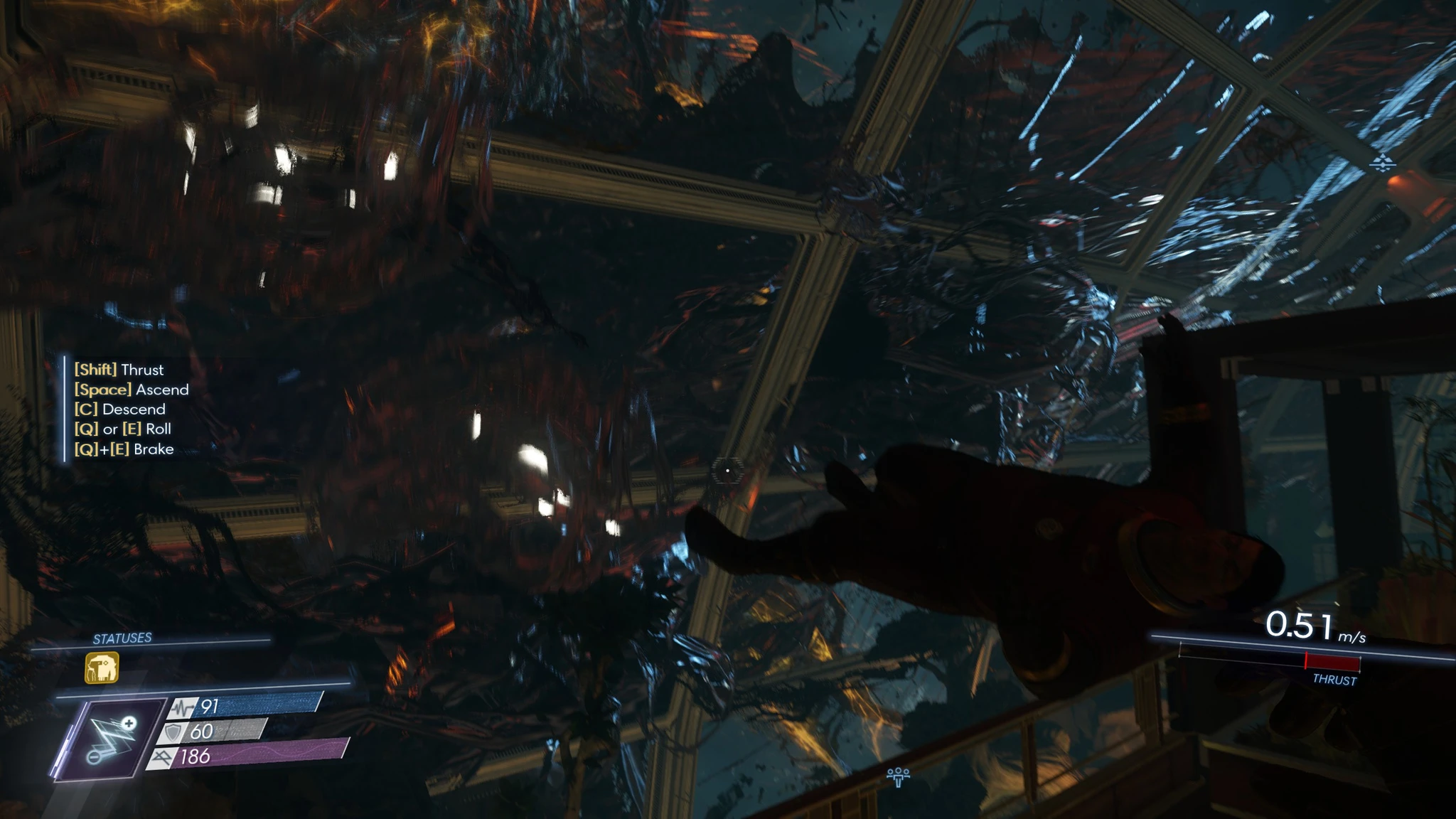
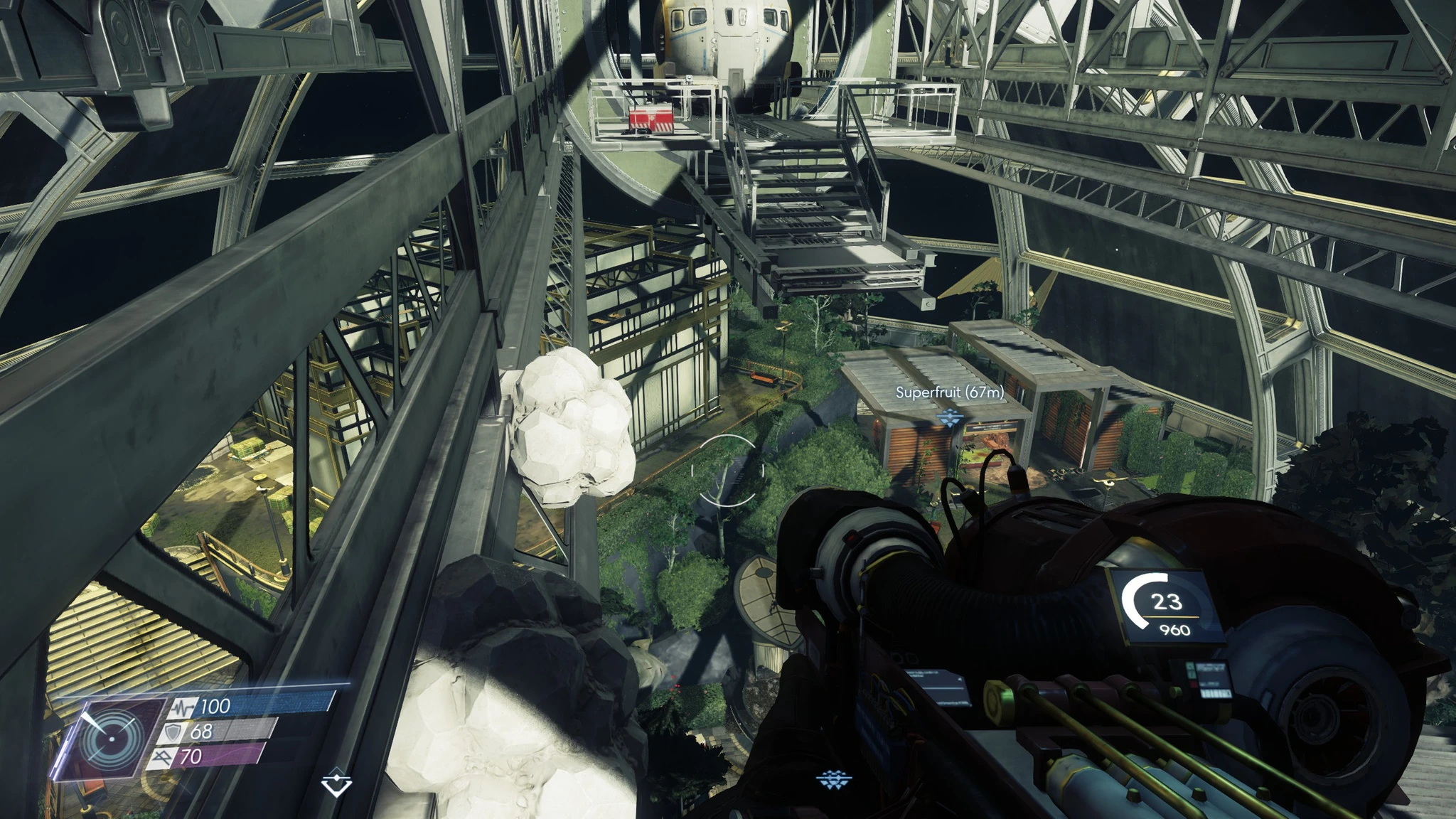
The player’s own methods mirror the Typhon’s invasive logic. Morgan’s stated mission is containment—stopping the alien threat from reaching Earth—but her practice constantly resists enclosure. She sneaks through ducts, hacks security systems, and injects restored Typhon abilities into her brain. The game’s designers bend the environment to encourage this reading. Stealth and hazard mechanics push the player away from catwalks and corridors and toward glass walls, service hatches, and vent shafts. Morgan can shrink into the form of a teacup to skitter under obstacles, retrieve objects through gratings, and blast away barricades with recycler grenades. The GLOO gun is the purest expression of this philosophy, turning any surface into a staircase or ladder. The game rewards the unlearning of conventional spatial schemas—the challenge is not finding the alternate route but remembering to look for one.
That freedom, of course, is engineered. Prey’s station has been meticulously groomed to support alternate traversal. Every inch of the environment is intentional, every alternate route a decision made by a designer. The game makes the player feel clever and invasive, but the solutions were all foreseen. This is a productive tension, perhaps even a deliberate one: the experience of transgression is supported by a system that carefully bounds every possible deviation.
The Language of Surfaces
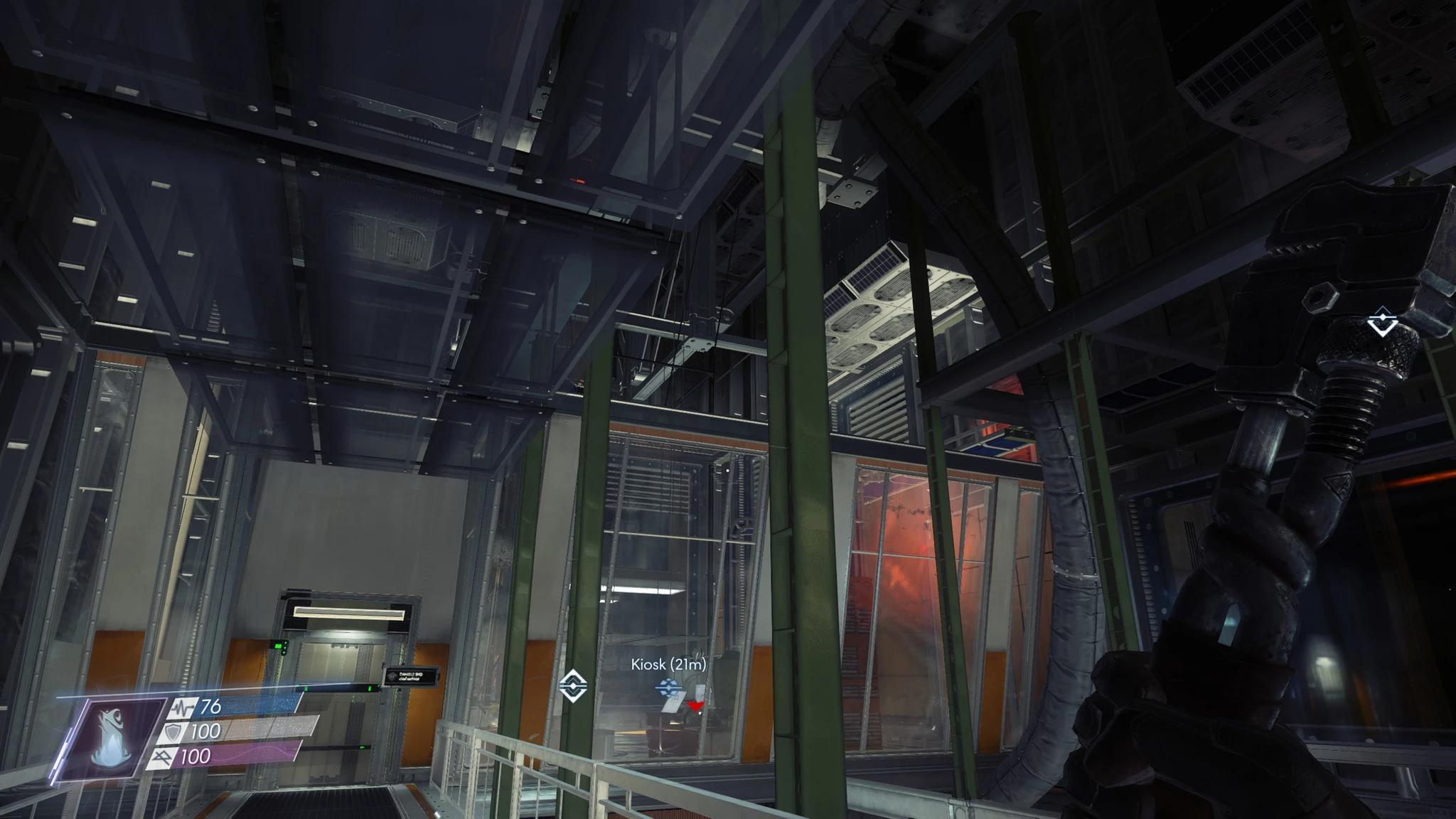
No material in Prey carries more thematic weight than glass. The station is full of it: walls, floors, panels hanging from ceilings. Structural Expressionism dominates the architecture, with exposed ducts, girders, and machinery walled off behind floor-to-ceiling panes. There is regular glass, which is transparent, breakable, and passable, and there is reinforced glass, which is impenetrable. GLOO, for presumably mechanical reasons, will not adhere to it. But the most interesting material is Looking Glass—a projection technology that appears transparent but is always showing you a recording, never the real thing.
Looking Glass terminals recur throughout the station. Morgan’s apartment windows are a Looking Glass display that, when smashed, opens onto the Sim Lab. The Arboretum’s waterfall is a projection; breaking it reveals a hidden room. Some displays show the same room from a different angle or a different point in time. In Psychotronics, a terminal appears to be genuinely transparent, but walking behind it reveals subtle differences between the display and the room it purports to show. The Looking Glass’s near-transparency is a lie, and the game punishes—or rewards—players who test it.
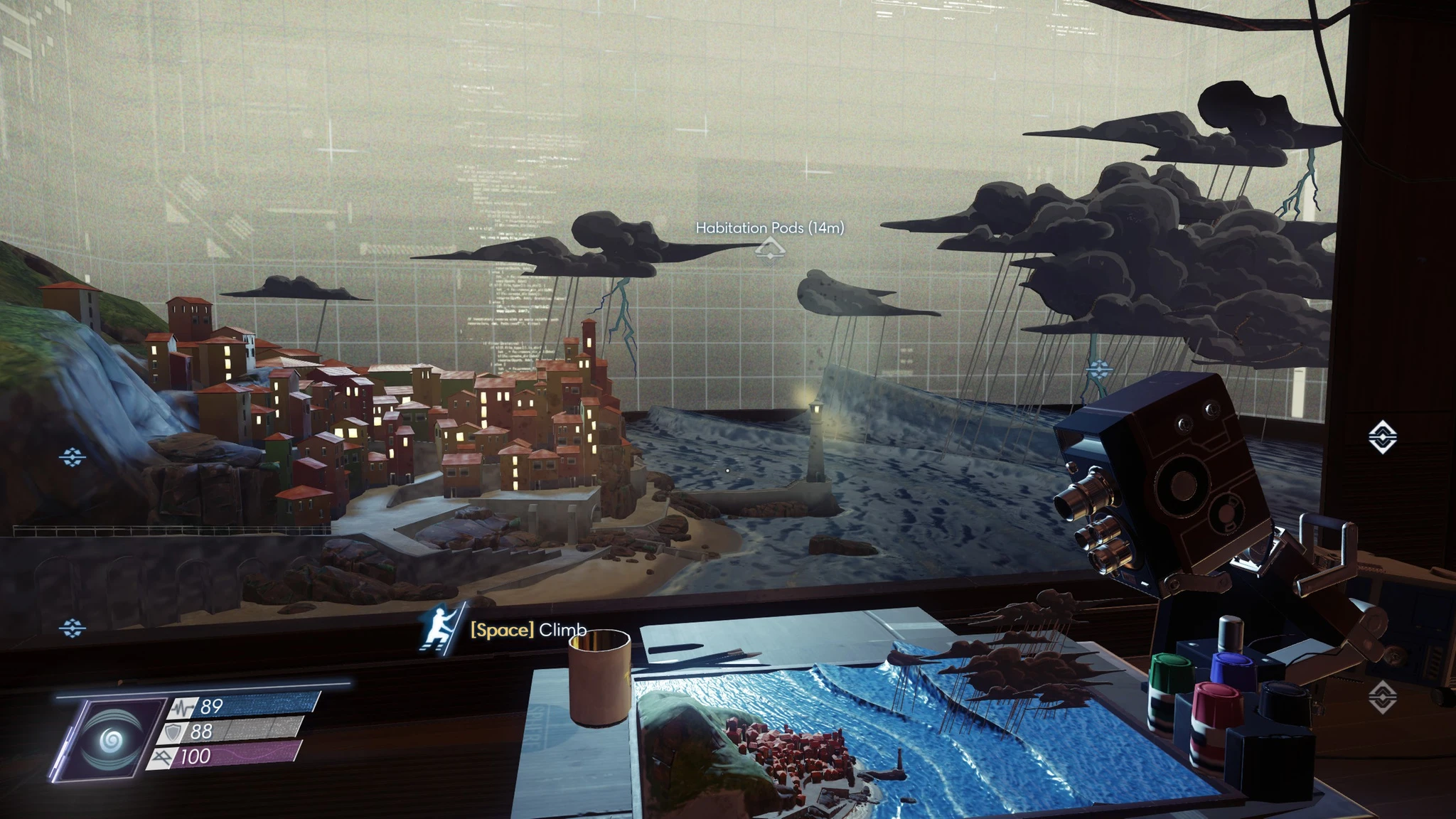
Dr. Calvino’s quarters contain a more personal miniature: a tiny coastal village under a storm, watched over by a camera feeding a large Glass display. His logs reveal he built the diorama to preserve his failing memory. It is another simulation nested inside the simulation, a scaled model of his mind that the player is free to intrude upon.
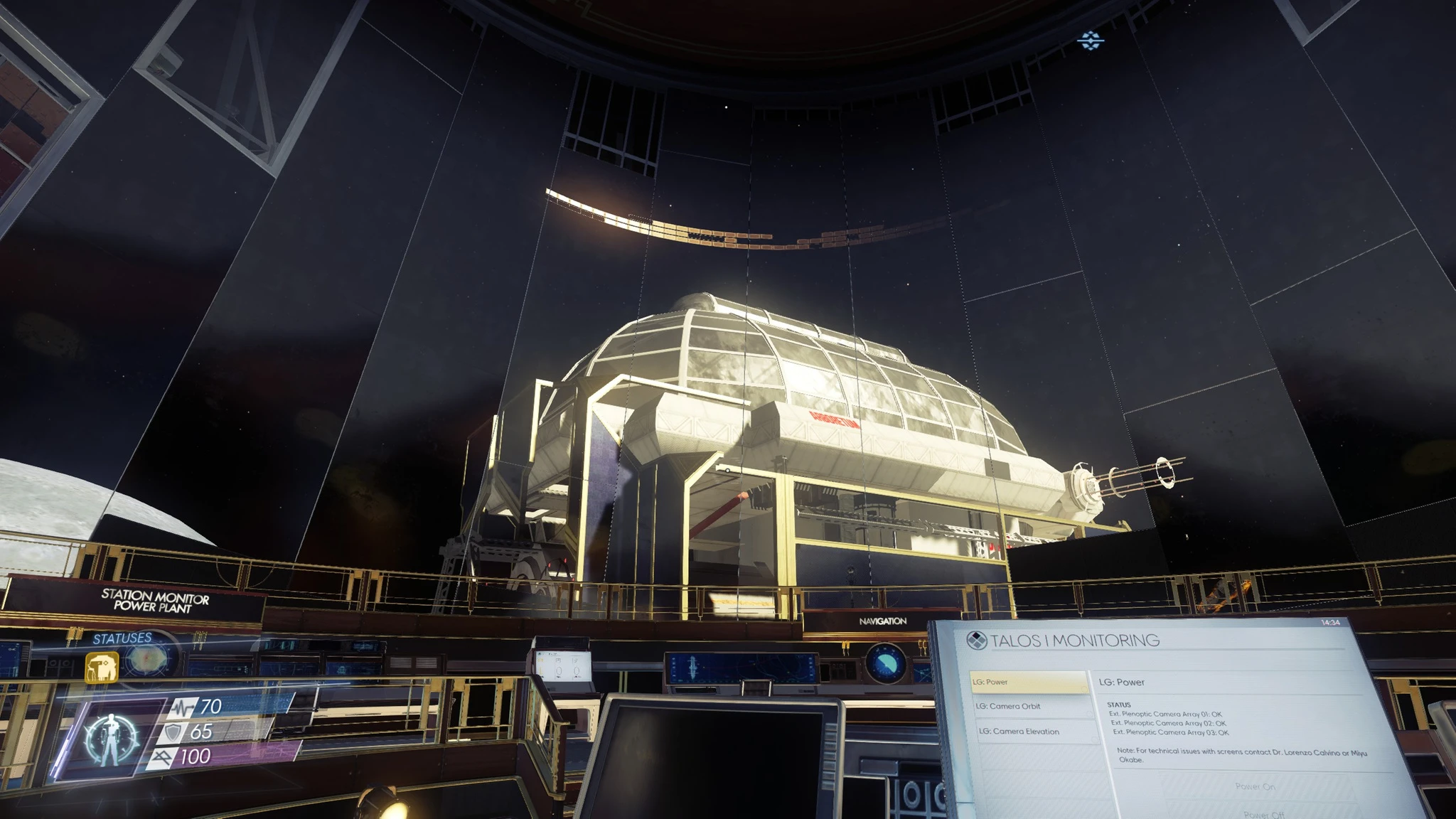
The bridge of Talos I extends the metaphor to architecture. Its sweeping windows offer a view of the stars, but like the bridge of the Ishimura in Dead Space, Prey’s bridge mediates that view—and then goes further. Its windows are a projection; smashing them reveals the screen behind. The station’s most outward-looking point turns out to face inward, with the captain’s crew enclosed in a simulated sky.
Reflection and Doubt
There is a single mirror in the game, at the character selection screen. Morgan stares at herself, nervous, glitching. Sometimes her eyes flash, for a moment, bloody. This reflection is yet another surface that cannot be trusted, and that is not incidental. Throughout Prey, the player is amnesiac, seeking identity from the world while the world continually problematizes the very act of looking. The book titles in Morgan’s suite take up the question head-on: Proxies, Agents, and Personhood asks whether an AI facsimile could be granted power of attorney over the original person’s will. Morgan’s operator is herself an agent—an iteration of a mind that has already been copied, flawed, and overwritten more than once. By the epilogue, proxy operators for Igwe, Ilyushin, and Elazar—dead crew members whose personalities have been archived as digital stand-ins—judge whether the player’s Typhon protagonist has acted in a way they consider human.
The question posed is deceptively simple: is a Typhon with a sliver of humanity capable of empathy? Can it see humans “like we see ourselves”? Alex and his operators have no way to know. They only have the surface evidence of the player’s choices within the simulation—the same evidence the game has spent hours teaching the player to distrust. That is why the final choice exists. The player may act in ways that would convince Alex of their humanity, and then, in the final seconds, kill him anyway. The game’s ethics cannot be read at face value, because Prey’s central claim is that nothing can be.
Playing the Phantom: Identity in Prey’s Simulation
Prey satirizes the notion of a reliable narrator early on, populating Talos I with dissembling operators, quarreling ghosts, and amnesiacs hunting for traces of their former selves. By the epilogue, the existence of at least six Morgan Yus—and likely dozens more—has been established. One of them we presume is the real Morgan Yu, but nothing substantiates that. The player’s entire journey through the station is a simulation crafted by Alex, a Typhon sitting in a chair dreaming it is Morgan Yu. That the player’s every act invents a new Morgan only deepens the uncertainty. Characters in games are not merely inhabited, Prey insists; they are partly composed by the player.
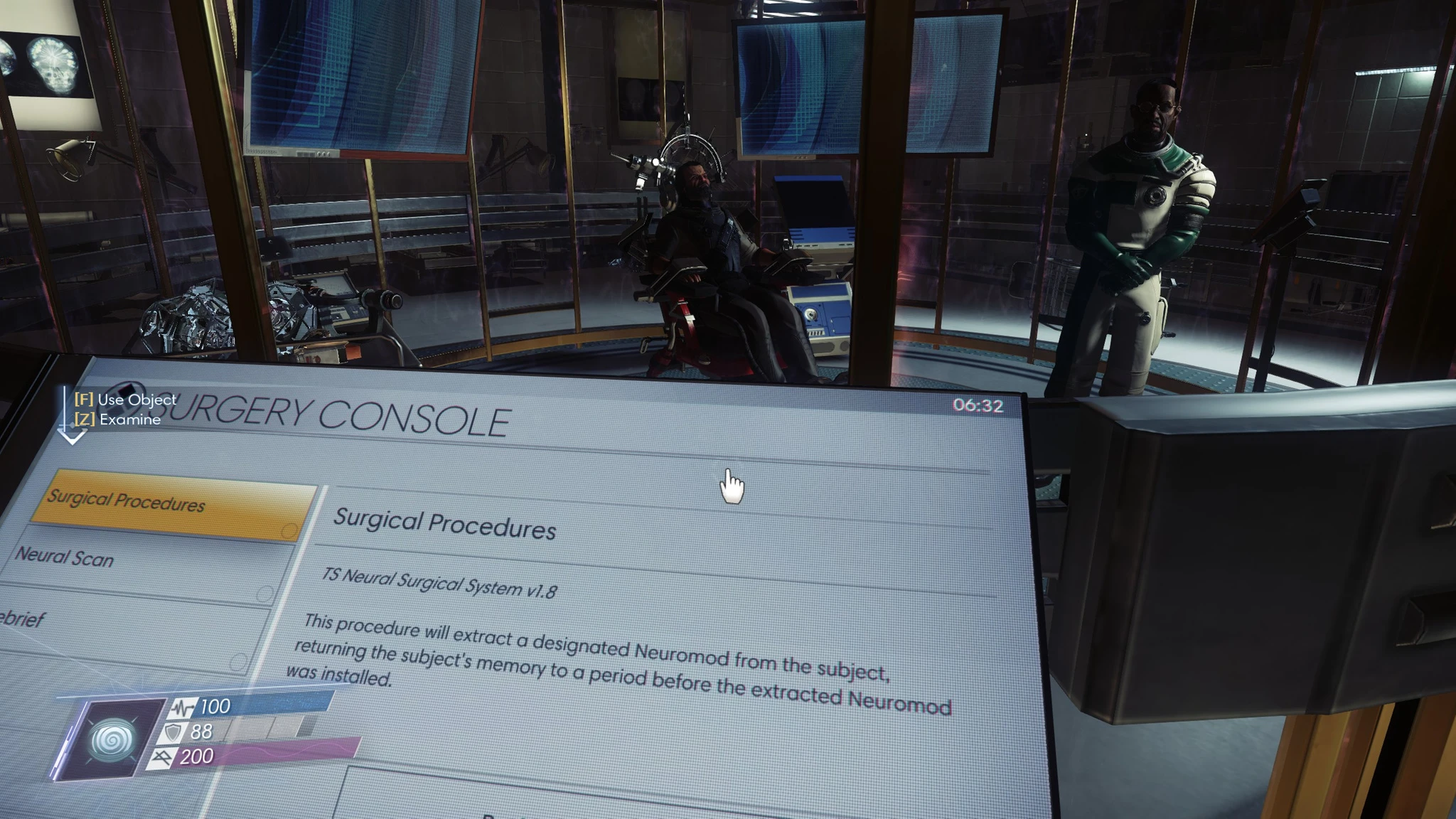
The records left by Morgan—video logs, audio recordings, emails—are as close as anyone gets to the real person. Nothing guarantees those records survived intact, untouched by the agendas of Alex or January. Even if unedited, they conflict. Morgan’s memory was repeatedly erased as Neuromods were removed, and her personality drifted with each forced forgetting. Station logs imply whole departments were routinely memory-wiped. By the end, the player is given the same power, offered the choice to edit Dahl’s memories and present him with a fabricated reality in which he “chooses” to rescue Talos I’s crew. Prey holds that a coherent self depends on memory, but also suggests memory is sometimes harmful; in consequentialist terms, wiping or rewriting it can be the morally defensible act.
The voice of Morgan is carried by several so-called “ghosts”—shadow operators who claim to be past selves, each promoting a different agenda. December urges selfish escape as the only sane way to warn Earth; January pushes, politely but rigidly, toward destroying Talos I. These contradictions turn the player’s own possible histories into a present dilemma: follow January and destroy December, or destroy January to side with December, never certain which of one’s older beliefs should win. A third operator, October, is referenced exactly once and never seen. These operators are not Morgan herself; they are facsimiles carrying directives from the real Morgan, or perhaps pawns in Alex’s simulation—externalized components of conscience. January admits it speaks in Morgan’s voice specifically to put the player at ease, which achieves the opposite: even one’s conscience is suspect. Near the end, a recorded message from the actual Morgan suggests the whole enterprise started in reverse—she intended the Nullwave device to kill the Typhon, while Alex would destroy the station. Why those roles are flipped in the simulation provokes a final shiver of doubt.
The Typhon itself is engaged in discovery, reading Morgan’s emails, listening to her logs, meeting her colleagues, rescuing her former lover Mikhaila. The experience is counterfeit in one sense—this Typhon never lived any of those moments—yet through the simulation, it may as well have. It builds a self through choices, inhabits Morgan’s identity, even begins to convey an inner moral life. The rare survivor’s commentary suggests the Typhon-Morgan might exceed the morality of the real Morgan, who, after all, made her own choices under the pressure of total memory loss. Mikhaila, if the logs of her father’s execution are recovered, notes pointedly that the Morgan who harmed her was not the same woman—it was someone else entirely.
The Real Against the Symbolic
In Lacanian terms, the Real is the undifferentiated physical substrate—electrons, light, raw process. The Symbolic is the structured language of categories humans overlay on experience: taxonomies, algebras, rooms joined by corridors, lanes for pedestrians and cars. As long as reality behaves as organized as we imagine it, the Symbolic approximates the Real well enough for daily life.
Sometimes the Real breaks through. A child, grasping at a world not yet organized in symbolic terms, operates in the Real register; likewise, a natural disaster smashes the conceptual frameworks of roads and buildings. Prey dramatizes both. In a game’s opening minutes, the player meets a world with no pre-formed categories: which surfaces are scalable, which objects respond to force, what harms or heals, whether a control panel is interactive or inanimate. The player must learn the world’s grammar—spatial, mechanical, systemic—before any coordinated action is possible. This literacy is gradually acquired: the environmental design of Talos I invites one to read the station as an inhabitant would, noticing security stations, door types, transit routes, and eventually higher-order gameplay patterns, such as which props move versus which are static clutter. Once the semantics of the station are familiar, subverting that fluency becomes meaningful.
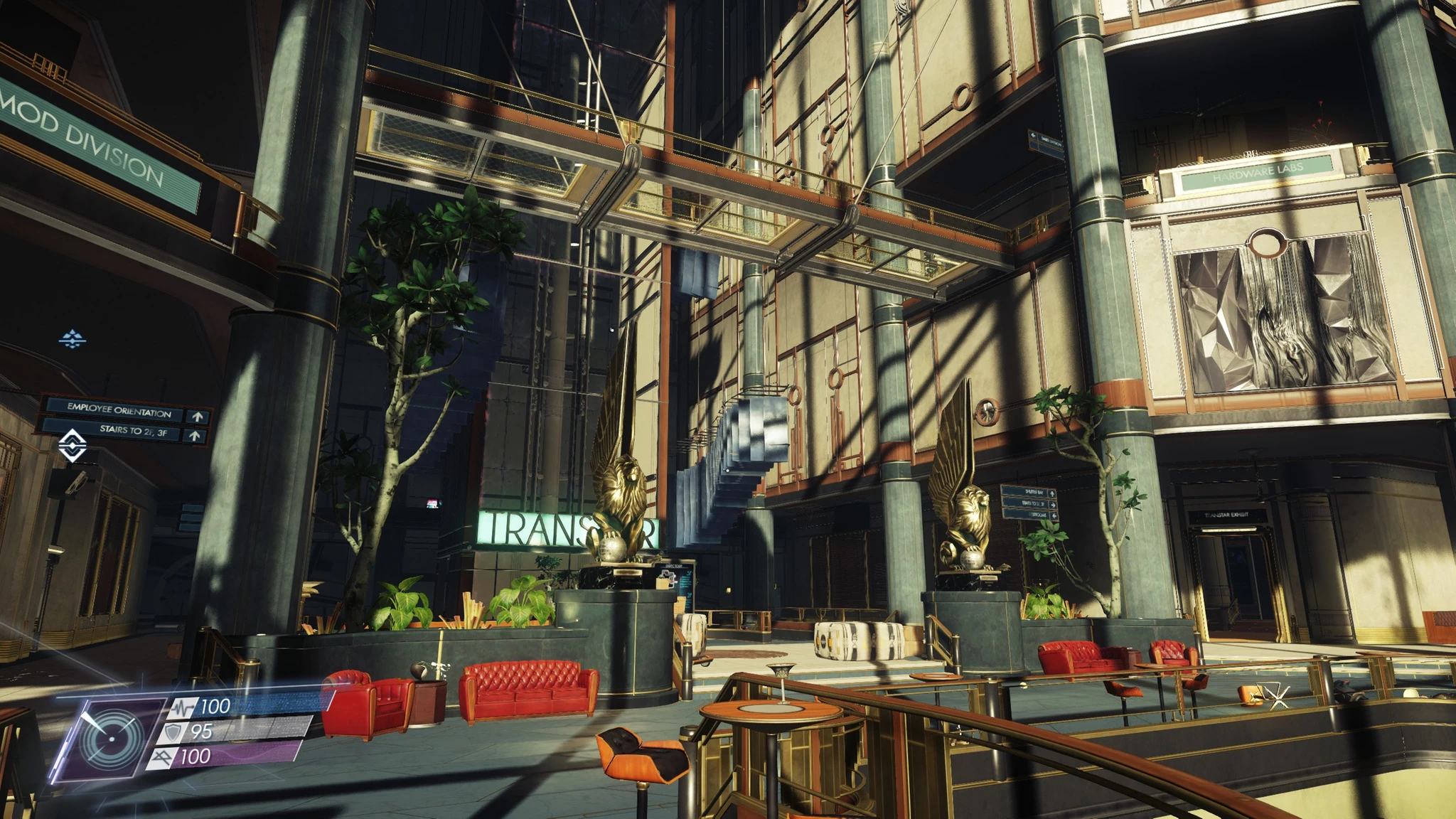
Talos I is, architecturally speaking, nonsense. Injured crew must be carried up stairs to reach the hospital; the hardware engineers’ route to work runs through the executive conference room; a lunch break involves a trek across the arboretum; the shuttle bay’s access protocol is never explained. None of this matters. What matters is the feeling of the space—its haptic coherence in the player’s mind. Prey belongs to the disaster-story lineage of System Shock, System Shock 2, and BioShock. Those games place the player in an environment that is intact enough to be read, then unwind it through catastrophe. The station’s cybernetics run amok in System Shock; the Many’s flesh consumes the Von Braun in System Shock 2; the ocean breaks through Rapture’s hull in BioShock, turning corridors into floods. The architecture of the world itself becomes the antagonist.
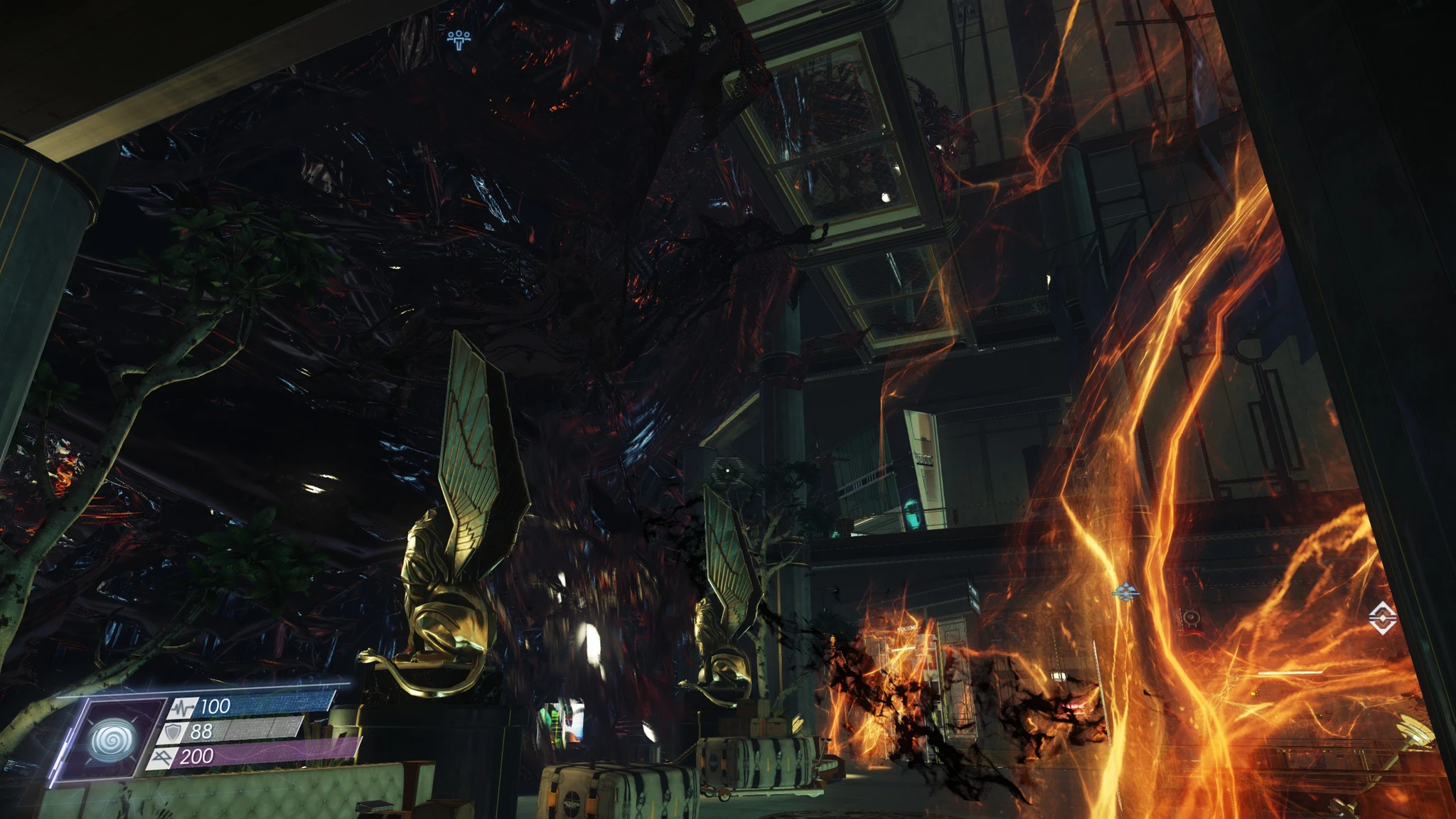
Under that lens, Prey’s persistent dialectic of penetration and containment is also the struggle between the Real and the Symbolic. As Coral and Cystoids spread through Talos I, the station’s legible language visibly degrades. The final threat, the Apex, exerts force less through personal violence than by deconstructing the physical order of everything around it.
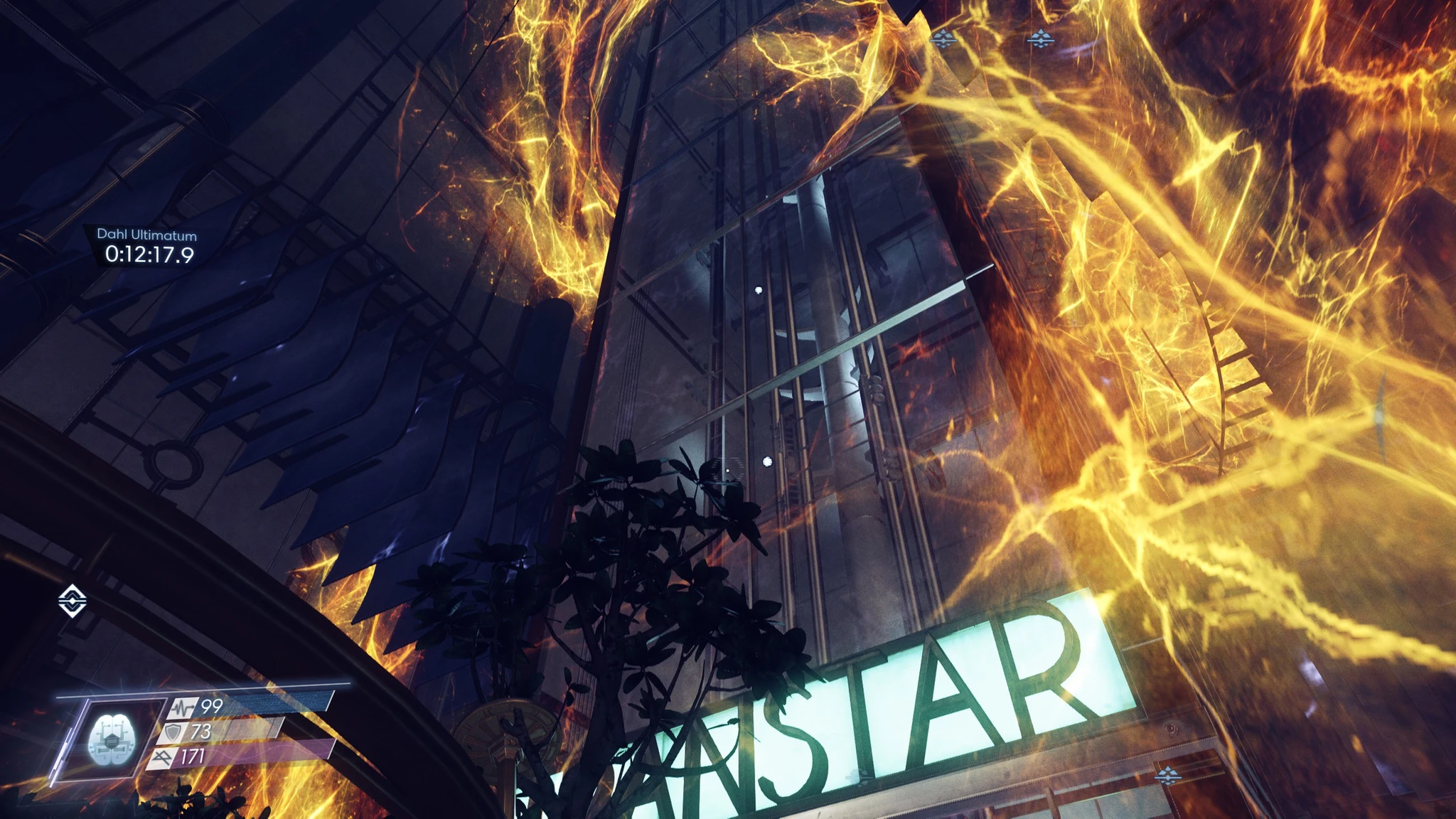
Prey’s visual language strengthens the opposition of these two registers. Human architecture is surfaces, floors, doors, and glass. Typhon spaces sprout amorphous Coral that passes through walls without respect for human spatial norms. TranStar suits spell out clear biological boundaries between person and environment; Typhon bodies lack them deliberately, presenting instead a seething mass of tentacles, shifting limbs that extrude and recede. The Nightmare is unbothered by the classic convention of small-space hiding, oozing fluidly through doorways. Even their speech sounds somehow porous.
The Mimic is the sharpest expression of that conceptual instability: by masquerading as an ordinary coffee cup or wrench, it collapses the discrete game categories of Prop and Enemy. Much of Prey’s tension and humor derives from that impossible taxonomy. Yet the illusion of the perfect facsimile plays against the limits of the medium. As a videogame, Prey must reify concepts like “enemy,” “gib,” and “friendly NPC” in computable entities. Every Typhon is just a mesh, a health bar, a set of states—beatable with a wrench if you can position yourself correctly. That underlying code persists even when a coat hanger shape jitters.
Where security is restored through combat, and the mystery dissolves into familiar mechanics, some sublimity inevitably fades. But those instants when the environment first reorganizes itself, when the Real appears unmediated by symbolic structure, remain perfectly intact in the player’s memory. Even if the Typhon cannot possess mirror neurons, Prey’s construction gives one the uncanny appearance of a conscious inner life—a deception the game plays upon the player’s ability to perceive structure and meaning in the formless.


