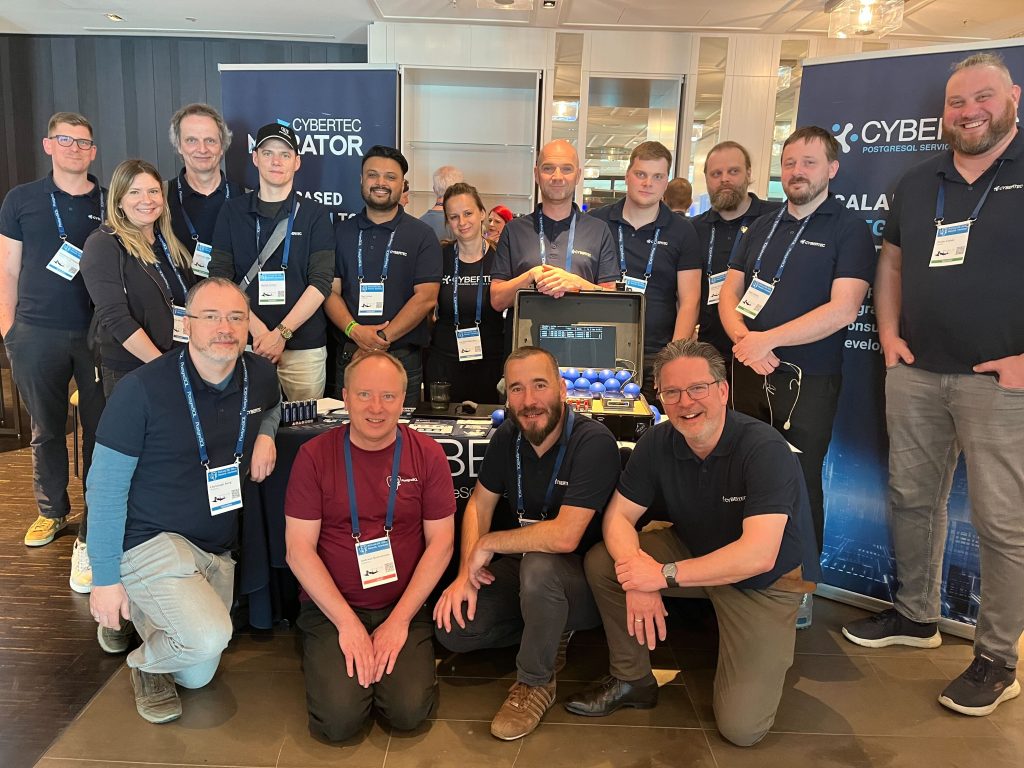
Two rejected talk submissions meant the trip to Munich for PGconf.de 2024 was mostly a logistics exercise: booking train tickets from Düsseldorf. Booking early paid off, with first-class seats secured while colleagues who waited ended up paying more for second class.
Thursday's journey ran smoothly and arrived on time, and a good stretch of work got done en route on CYBERTEC's PostgreSQL Enterprise Edition Docker images, which are slated for publication soon.
Colleagues trickled in over the afternoon, followed by a "relaxing" 7 km walk into the city center and a company dinner at Wirtshaus Eder. The conference organizers had booked the same restaurant for the speakers' dinner, so colleagues with talks only had to pick a side of the main entrance. The food and service were good, and Bavarian beer did the rest.
Friday sessions
Friday opened with a tribute to Simon Riggs, a frequent attendee and speaker at past PGconf.de editions, who had recently died in a plane accident.
The first session attended was Michael Banck's comparison of the three major PostgreSQL cloud providers—Amazon RDS, Google Cloud SQL and Microsoft Azure Postgres. The key takeaway: all three offer a mostly solid service, Amazon is the most advanced, and Azure has made significant progress over the past three years. That progress shows in the growing number of community members at these companies contributing to PostgreSQL.
The next slot was skipped in favor of a hallway conversation with Peter Eisentraut about community matters and PostgreSQL extension ecosystems.
Laurenz Albe then covered security attacks on PostgreSQL. Most of the attack vectors were already familiar, but a summary of real-world issues was useful.
After lunch none of the abstracts stood out, so Wolf Beckmann's talk on practical usage of ChatGPT and databases was the pick. It turned out to be far more informative than expected; the speaker's enthusiasm carried the audience. Trying the API of these AI services is now on the list, and there are plausible uses for CYBERTEC. The talk ended up the highlight of the conference, followed by a hallway chat with Wolf that ran well into the next session.
Julian Markwort followed with 15 pitfalls and solutions for PostgreSQL replication. Several were surprisingly insightful, particularly after years of support cases.
The day closed with Ants Aasma on what PostgreSQL's "explain" does not reveal. Three missing performance metrics were highlighted, alongside a proposed list of eight further items that would help with performance debugging. The ideas could feed into PostgreSQL 18 development and beyond.
Friends and colleagues stayed through Saturday, with dinner at Augustiner Bräustuben and, once again, excellent food and beer. The Saturday train toward Cologne and Düsseldorf ran late, costing the connection, but everyone made it home.
The conference was enjoyable overall and would benefit from expanding to two days, which would leave more room for meaningful exchanges between sessions.