

Designing for an Unknown Audience

Ableton Note, the company’s mobile music-sketching app, looks and behaves unlike traditional recording software. Instead of a conventional transport bar with a red record button, the interface opens directly onto playable instruments, and a "Capture" feature silently loops musical phrases after a user has played them. The design is a direct result of a seven-point philosophy Pablo Sánchez, the app’s principal designer, laid out in a talk at Config 2024, where he was joined by user researcher Oliver Sommermann.
Sánchez argues that the foundation of such unconventional design is a rejection of objectivity in favor of internal conviction. He acknowledges that creation is not solitary; even reclusive work is shaped by absorbed influences from past and present, a "plural consciousness." However, he believes the design process itself must start with personal taste. His seven rules, refined while building Note, chart a path for product teams who want to eschew the obvious and find solutions that don't feel preordained.
Trusting Personal Taste
Sánchez’s first rule is to design for yourself. The only user you can truly know is you, so abandoning objectivity for personal inspiration tends to yield an authentic product.
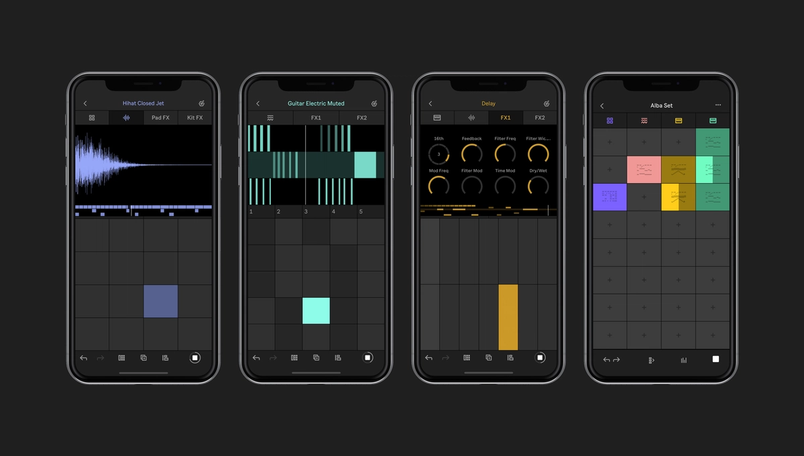
He applied this directly during Note’s early development. The initial prototype was built around a MIDI editor, a serious tool many users might expect. However, Sánchez felt a mobile interface should be more immediate and tactile. He pushed for an experience where users could play instruments directly, a direction that validated user testing and resulted in a launch with no MIDI editor at all.
This instinctual approach extends to the sketching phase. He recommends brainstorming without references or external input, as bringing any precedent to the table limits you to an existing path. By drawing on personal history and judgment, designers create inherently original assemblages. For Note, his reference points were not leading music apps—they were granular processors like Samplr and Borderlands Granular, whose essence is woven into the core but whose influence is not overtly visible in the UI.
Expanding the Source Material
Inspiration should not come from design alone. Sánchez designs for emotions and systems pulled from outside the discipline, whether that is the tension of a novel, physical movements, or the principles of Brutalist architecture, where ornamentation is stripped away in favor of structure.
This philosophy drives Note’s visual minimalism and interaction model. The UX goal was to recapture the immediacy of absentmindedly plucking at a guitar, not the interface of a desktop DAW. The app removes datapoints and knobs, instead presenting a clean space for directly manipulating sound. By avoiding analogies to hardware, he crafted a digital medium that feels abstract yet intuitive.
Looking Forward, Not Down
This balance between the critical and the speculative is rule four: design for tomorrow. Sánchez references Dunne and Raby’s Speculative Everything to distinguish between affirmative design, which solves problems in the present, and critical design, which raises questions about how the world could be. He advocates for a nimble position straddling both, using open questions to push beyond the status quo.
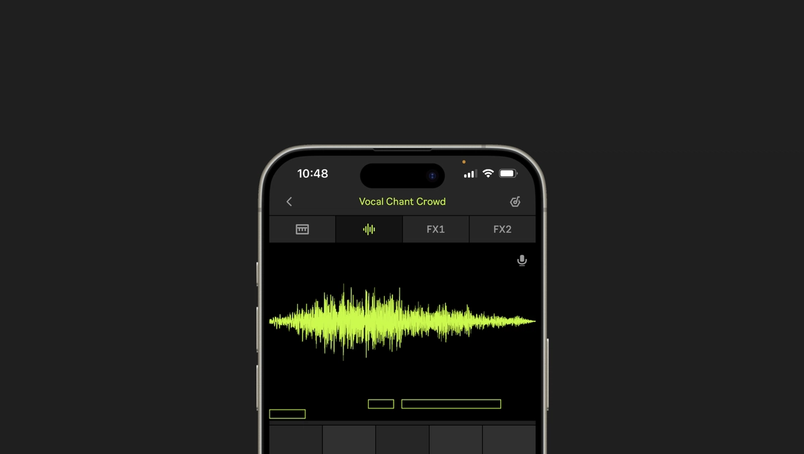
The speculative process found its way into Note by asking fundamental questions. Could a music tool exist entirely free of labels? Even so, Sánchez clarified that in digital environments, there is no reason to constrain designs to obey the limitations or mental models of physical hardware, freeing the team to build a digital-native interface for sound. The design process looped in challenges he gives university students to imagine future scenarios and speculative technologies.
Refining for Complexity
Audio software has a reputation for intimidating complexity. Sánchez, however, warns against underestimating users: they are generally more capable and curious than they look. The team must resist oversimplifying and instead invite gentle exploration.
One beta tester interpreted Note’s minimal screen as a technical wireframe rather than a finished application. The team did not react by adding more ornate chrome; they iterated on the simplicity until testers felt liberated by it. This acceptance has allowed users to reinvent their own workflows, with some adaptations far exceeding what the team predicted, such as the artist using the app in a live performance setting.
While the end result favors minimalism, Sánchez pushes designers to also think in negatives. The fifth rule is to consider the historical phenomenon of multiple discovery, where scientific breakthroughs happen independently and simultaneously. This thought could be paralyzing, yet he prefers to frame everything as a remix. The personal answer may hold the same conclusion as another’s, but the difference between independently arriving at a solution and merely adopting one is vast—one empowers a product, the other inhibits it.
Generating Alternatives
Iteration does not pause when a solution looks good. Sánchez’s final rule is to push past the obvious by producing three variations of the same concept rather than settling on the first viable idea. He invokes the Occam’s razor principle as a guideline for a starting point but argues that creating complexity is necessary to reference what's being reduced.
For every feature in Note, his team built three design versions ranging from simple to highly complex. This exercise was not fruitless labour—the complex versions were workable prototypes that could be refined down or sanded away, while the simple ones were ripe for refinement or being repurposed to seed other ideas within the app. Only by exhausting these distinct versions could the product team reinterpret musical tooling and find new ways for users to sketch with sound.


