

Why Informational Websites Publish Poor Copy
Most of the web is informational, yet much of that content fails its readers. According to the Nielsen Norman Group, users read only 20 to 28% of a webpage, which means every word must earn its place. The bigger problem is that those writing the words usually are not trained copywriters. Large organizations especially rely on an eclectic mix of staff from across the business to publish content, and quality suffers as a result.
There is no single fix for this. But four practical techniques, applied together, can have a transformational impact on content quality across a large site.
Build Reference Training, Not Just Courses
Most training for content creators focuses on operating the CMS rather than on writing for the web. Where writing training exists, it is usually delivered live. Live sessions are hard to schedule, must be repeated for every new hire, and are easily forgotten. Unless attendees immediately apply what they learned on an ongoing basis, they default back to old habits.
The answer is reference material creators can consult when they sit down to write. Break the material into small, self-contained modules tied to concrete tasks:
- How to optimize a page for search engines.
- How to ensure your page is accessible.
- How to structure your content.
- How to write clear and engaging titles.
- How to make content more engaging.
Each module should take a few minutes to digest, ideally with video walkthroughs and specific actions the creator can take. Pair these with checklists that remind creators of the required steps every time they publish.
Assign Ownership and Make Creators Accountable
If content creators are not made accountable for the content they create, they will not put the effort in to ensure its quality.
Assign every page to a specific individual. Optionally add contact details to the page so users can direct questions to the owner. This motivates creators to keep content complete and current, because they are personally on the hook for gaps and inaccuracies.

Expect resistance, as roles change and responsibilities shift. That is precisely why an explicit handover matters. Without it, pages become orphaned when someone leaves the organization, and abandoned content slides into ROT (redundant, out of date, or trivial content). Ownership alone is not enough; pages must also stay relevant, which leads to the next technique.
Create Governance That Forces Review
Content stays current only when it is reviewed regularly. Governance creates the pressure to do so. Establish a policy that content will be archived if certain conditions lapses.
The conditions are up to you. For example:
- Require a threshold of page views or engagement, which encourages creators to keep titles relevant and clear.
- Flag pages that perform poorly in search engine rankings.
- At a minimum, require each page to be reviewed on a fixed schedule. For public sector and higher education sites, where change is slow, an annual review is often sufficient — except for time-sensitive pages.
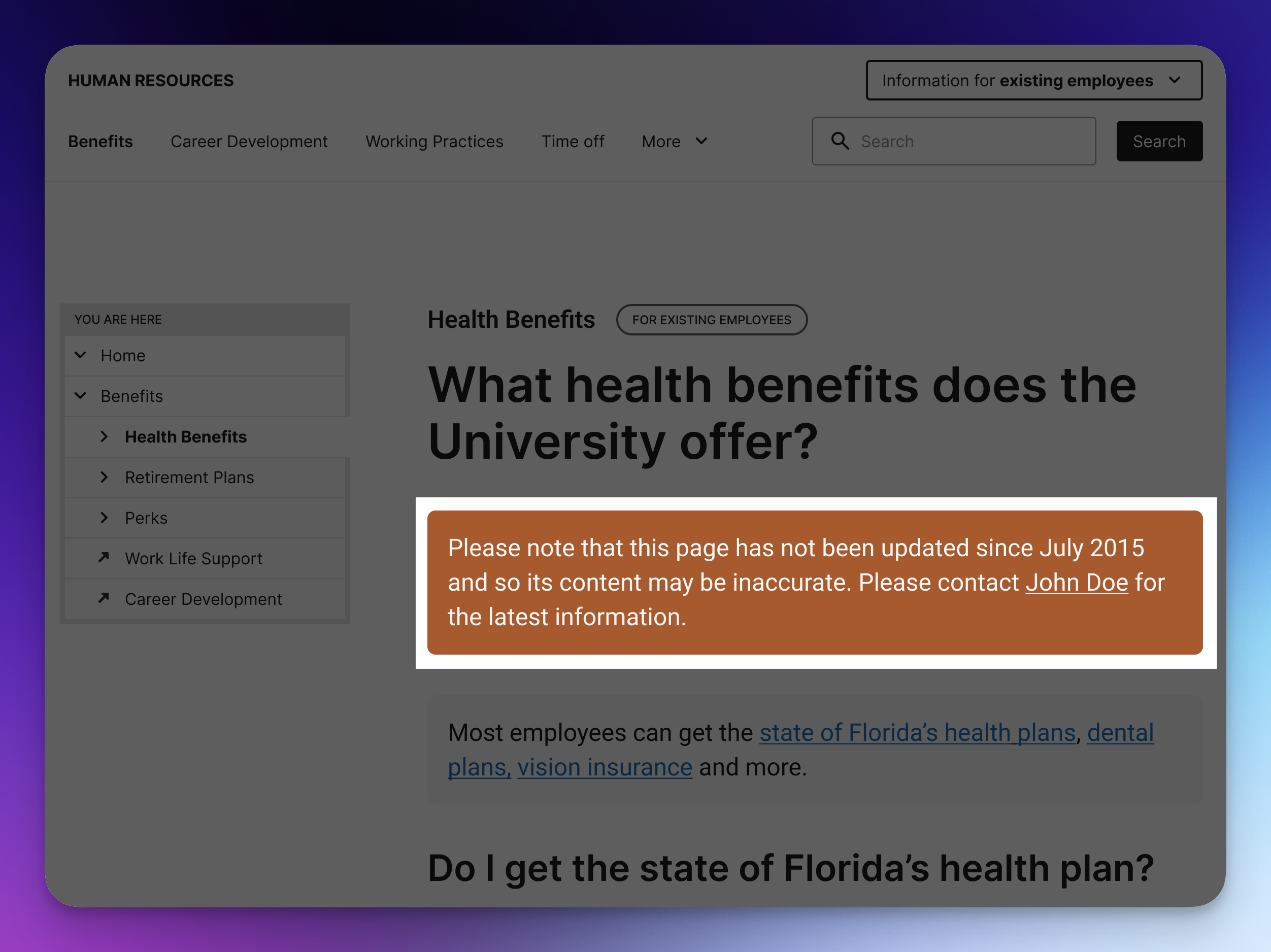
When a condition is not met, remove the page from navigation and search to effectively orphan it. Add a banner stating that the content may be outdated and telling users to contact the page owner for current information. Few creators want to field a stream of such emails, so the threat of that traffic motivates timely updates.
Poor user feedback is another condition that works well — and feedback is the focus of the final technique.
Give Creators Feedback They Can Act On
Surveys are one way to collect user feedback. Place them at the bottom of pages or integrate them into the site experience to ask users how helpful the content was and what they want to see added.
Social media listening also reveals how users engage with and talk about your content. Monitoring those channels can identify problem areas or show which topics resonate most with your audience.
Review analytics regularly, paying attention to dwell time, traffic levels, and search rankings. This data tells you which pages need improvement and which subjects interest your readers most.

Whatever the source, feedback must reach the content creator. When a page rates poorly, the creator is then in a position to act. You can extend the idea further by celebrating the most successful creators or the most improved pages with awards and prizes, much like an employee-of-the-month program.
Dashboard: Bringing the Techniques Together
All four techniques can be combined into a content creator’s dashboard. This view lists every page a creator owns, showing how each one performs and highlighting the best and worst. Pages in danger of being archived — because they are overdue for review or rated poorly — appear at the top for special attention.

Integrate training directly into the dashboard as quick tips or detailed advice surfaced at the exact moment a creator needs it. That way guidance is contextual, not buried in a manual. This framework does not fully solve poor quality, but it does create a structure for improvement — one that works across large sites where most content is written by non-specialists.


