

Open Source at the EU Level: From Workshop Talk to Strategic Direction
The European Union is increasingly looking at open source not just as a licensing model but as a strategic lever for digital autonomy. A recent day of workshops in Brussels, held alongside the broader open source festivities around FOSDEM, brought together 80–100 participants to discuss how the EU can reduce its dependence on proprietary technologies, particularly in critical industries like automotive.
The core message from the opening sessions was unambiguous: community-governed open source should be the primary development path for solutions the EU relies on. While there remains room for proprietary software, the emphasis is shifting. Open source is framed as an industrial differentiator and a cornerstone of Europe's competitive position. One recurring challenge, however, is the lack of a natural marketing motion in open source. Projects are typically built to solve problems, not to be sold or promoted, making central visibility a continuous effort that requires dedicated attention.
Cybersecurity Regulation vs. Community Reality
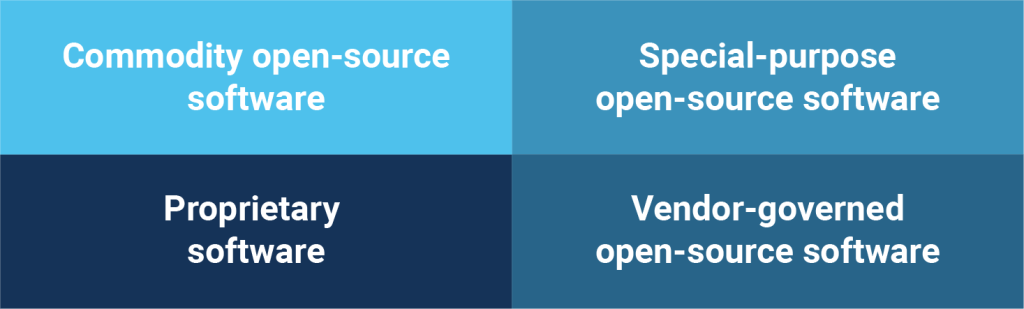
A significant point of friction emerged in discussions around the European Cyber Resilience Act. The consensus was that the regulation does not map cleanly onto how open source actually works. The fundamental issue is the distinction between vendor-governed and community-governed projects. In a community setting, software is a by-product of collective activity; there is no single entity that will respond to or enforce government regulations across a specific geographic region. A community might, in theory, decide to blacklist a jurisdiction entirely rather than comply with its rules.
This creates a core identity question for companies that build a commercial layer—operational, legal, and support—over community-governed projects. How does such a company position itself when the upstream project doesn't have a traditional vendor to hold accountable?
Software-Defined Vehicles and Long-Term Lifecycles
A separate workshop on software-defined vehicles (SDV) highlighted a different angle: managing software over a 20-year-plus vehicle lifespan. Cars today contain hundreds of software stacks, and the governance model matters as much as the license. In an industry where an SOP (Start of Production) delay of one hour costs one million Euro, the durability and competitive nature of software can directly impact a vehicle's success. If one manufacturer cuts corners on software longevity, it undermines the entire competitive landscape.
The discussion also touched on the ecological angle of IT infrastructure. Most energy consumption in IT comes not from compute resources but from data transfer. This is where edge-data persistence becomes critical, and notably, PostgreSQL—designed by Mike Stonebraker 30 years ago—proves remarkably suited for this modern workload.
A closing finding from Dr. Detlef Zerfowski was that open source needs to be far more visible in decision-maker circles. Both higher and middle management must buy into the shift to open source and help mitigate lingering skepticism.
PostgreSQL in Public Services: A Migration Case Study
Even within an unplanned context, PostgreSQL found moments to shine. David Grössing presented the Austrian National Bank's (ÖNB) successful migration from a proprietary data management system to PostgreSQL. The story was backed by impressive KPIs on cost savings and increased agility, with the CYBERTEC Migrator playing a critical role in the Oracle-to-PostgreSQL transition.
The takeaway for enterprise adoption is the importance of having "one throat to choke"—a single point of accountability which is a critical success factor when taking open source into live projects. The migration also highlighted the need to navigate practical limitations of vendor lock-in created by the source system.
The findings from the session:
- The main goal was achieved in time, in scope, and in budget.
- Cost savings were realized alongside increased flexibility when scaling database capacity.
- Operations and development teams worked closely together.
- Around 170 TB across 50 services were migrated to PostgreSQL.
The Rise of Data Spaces
Data spaces represent semantic domains designed to share information on specific topics across large groups. They combine elements of Master Data Management with deep domain understanding. A prime example is public procurement, which accounts for almost 14 percent of Europe's GDP—roughly 2 trillion Euro.
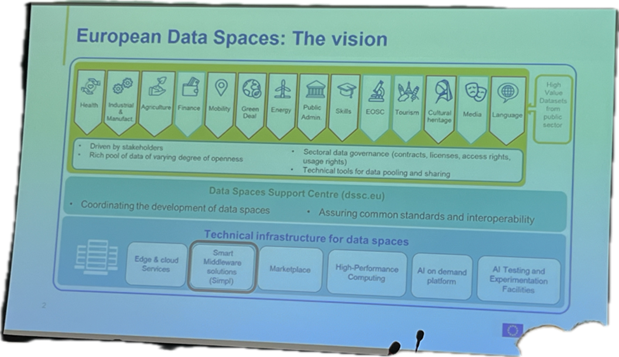
The SIMPL consortium is building the middleware that will serve as the backend for these data spaces at a European level, as explained by Eline Lincklaen Arriëns, Communication and Engagement Manager for the project.
Striking the Balance
Across the workshops, a general concern was how to balance competition and collaboration in open source. This is not just a software industry question but a societal one that will determine Europe's competitive standing relative to Asia and the US. Organizations need "the guts" to let communities steer projects, with the art lying in influencing outcomes through circumstantial factors rather than direct control.
After nine hours of information, discussion, and interaction, the day reinforced the significance of open source in shaping European digital policy. The push for digital autonomy is real, and so is the role PostgreSQL—and its supporting ecosystem—plays in that transition. The challenge now is translating workshop consensus into practical adoption strategies that scale across industries and public services.


