
The industry-norm defence
Jeremy Keith’s response to Eva PenzeyMoog’s Design for Safety centres on a line he found hard to shake: the belief that any unethical practice is acceptable simply because it is the current industry norm is widespread in tech, and dangerous. Applied to user tracking, his conclusion is blunt — we should stop tracking users because it is wrong.
Ten years of Google Analytics
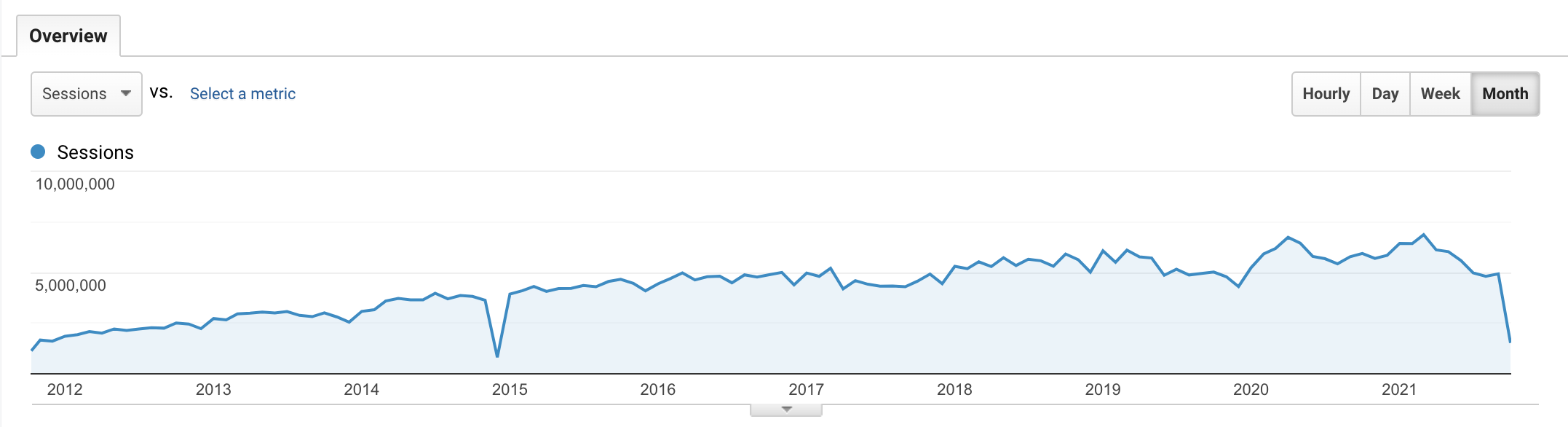
The uncomfortable part is complicity. This site has run Google Analytics for well over a decade, which makes the practice not an exception but a long-standing default rarely subjected to scrutiny. The tool allows zoomed-out views of traffic over time:
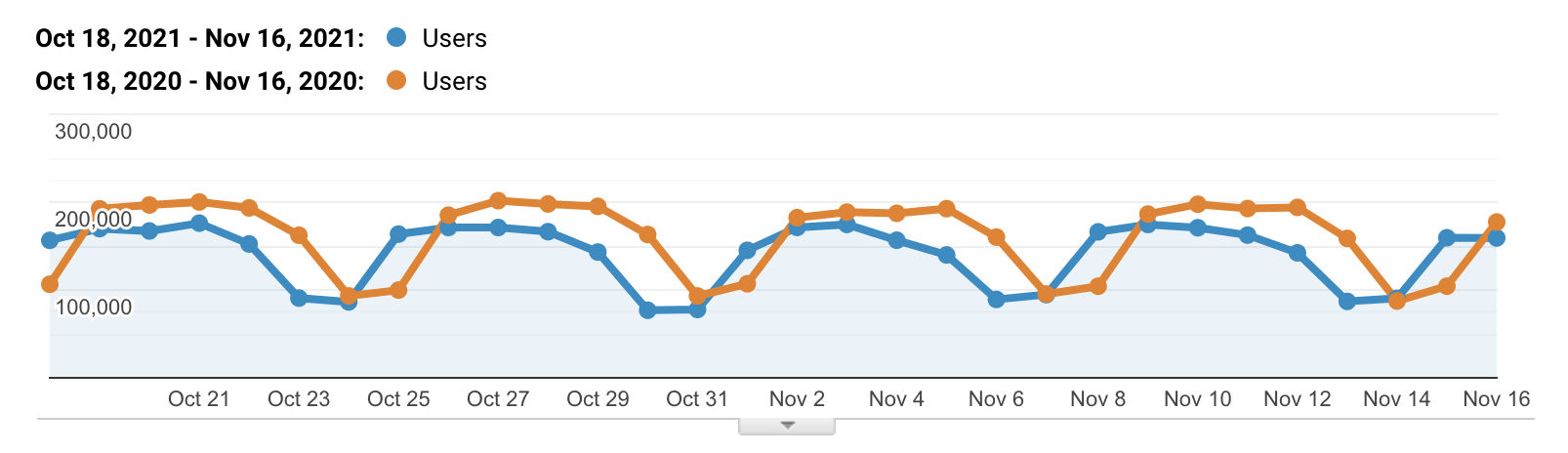
It also surfaces year-over-year shifts, such as mobile traffic to the site falling by nearly 6%:
What goes to Google is anonymous, aggregate data — no personal information is sent, and the Analytics terms of service prohibit transmitting PII such as names, social security numbers, email addresses or data that permanently identifies a device. On that basis the ethical line has always felt clear. Even implementations that tie a user to an action have been anonymised so that the person behind a record cannot be identified from within the tool.
That defence does not settle the question. Anonymity at the point of collection does not guarantee anonymity in practice: whoever holds the data may still attempt to work out exactly who did what.
I’m generally fine with anonymous tracking, but the receiving parties go to great lengths to deanonymize it which may be where concern stems from.
— Cory LaViska (@claviska) November 17, 2021
Email is worse than expected
The newsletter goes out through MailChimp with the default settings left untouched, which yields the usual reporting — recipients, opens, clicks:

Digging through the reporting section reveals something more serious: the tool shows exactly who opened an email, by email address, and which links each person clicked. That is personally identifiable analytics of the most direct kind, and it was not previously apparent. The plan is to find out how to switch it off, because it crosses an ethical line.
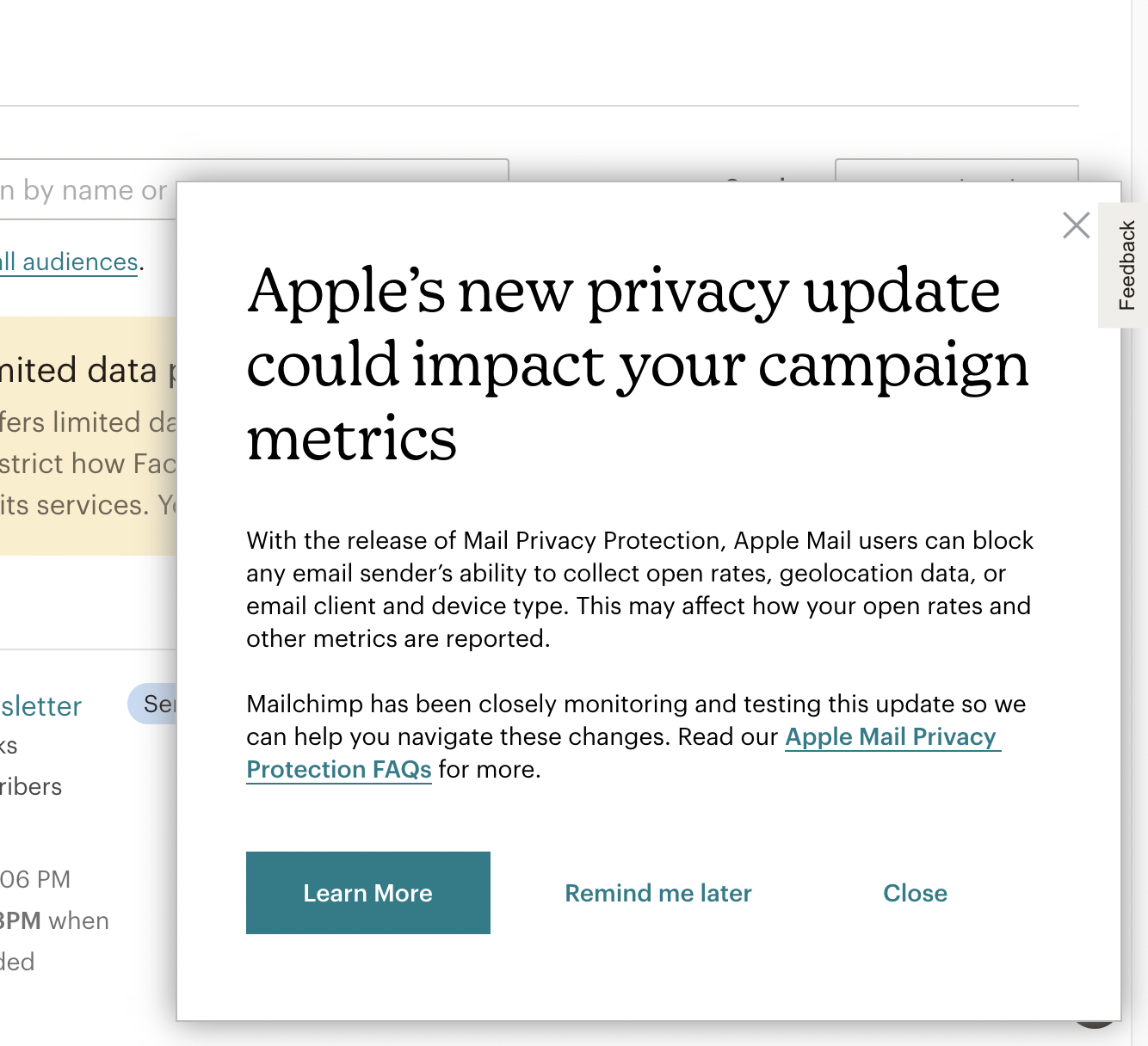
Email tracking is also the site of a fresh skirmish. Gmail’s decision to proxy images through its own servers once broke tracking-pixel accuracy; now Apple is blocking more aggressively, and vendors such as MailChimp are warning customers that their analytics will be affected.

The advertiser’s question
Ethics aside, this is written by someone who sells advertising. Two things are reliably true in that role:
- Pricing meetings rest on the historical performance of what is being sold — impressions and clicks.
- In the overwhelming majority of first conversations with advertisers holding the budget, the opening questions concern performance metrics.
That much seems reasonable. Buying walnuts at a store, you want to know how many walnuts your dollar buys, and you expect the price to reflect ordinary factors such as cost and supply and demand. Ad buyers are walnut buyers: they want an idea of the performance their money will get.
Now imagine the opposite pitch. I don’t know how many people see the ads, or click them, or where they are from — and neither are you allowed to find out. You can supply a URL, but it cannot carry tracking parameters, and clicks will not be tracked.
Would that cost money? In the short term, yes. Landing advertisers is hard enough already, and appearing standoffish about how many walnuts a dollar buys invites an eye-roll and a swift exit. Longer term, it might work: state the stance on user tracking plainly and up front, accept that no tracked numbers exist or will be supplied, and price entirely on supply and demand. Set spots at $X, raise the price while there is interest, lower it when sales stall.
But the apple cart is not being tipped yet. There is a mortgage, there are employees to pay, and there is no war chest to absorb a major income shortfall; losing most advertising revenue would mean closure and drastic life changes. Nor does it feel like a gamble, since a gamble implies the chance of a big win — under a hardline stance, the best outcome is simply returning to baseline.
Doubt as the starting point
None of this is meant defensively. Any defensiveness would be attributable to inertia: following practices that have long felt like industry standards, and to being conditioned to regard them as fine. The current position does not feel like a major ethical breach, but questioning it and acting when appropriate is preferable to tying a bandana over one’s eyes.
Other, privacy-focused analytics services have been tried — Plausible among them.



