
New Zine: How Integers and Floats Work
Wizard Zines has released a new edition: How Integers and Floats Work. The zine is available for $12 from the official page, or as part of a 13-pack bundle. Print copies can also be ordered for home delivery, with shipments expected in August.
Why Binary Is More Approachable Than It Looks
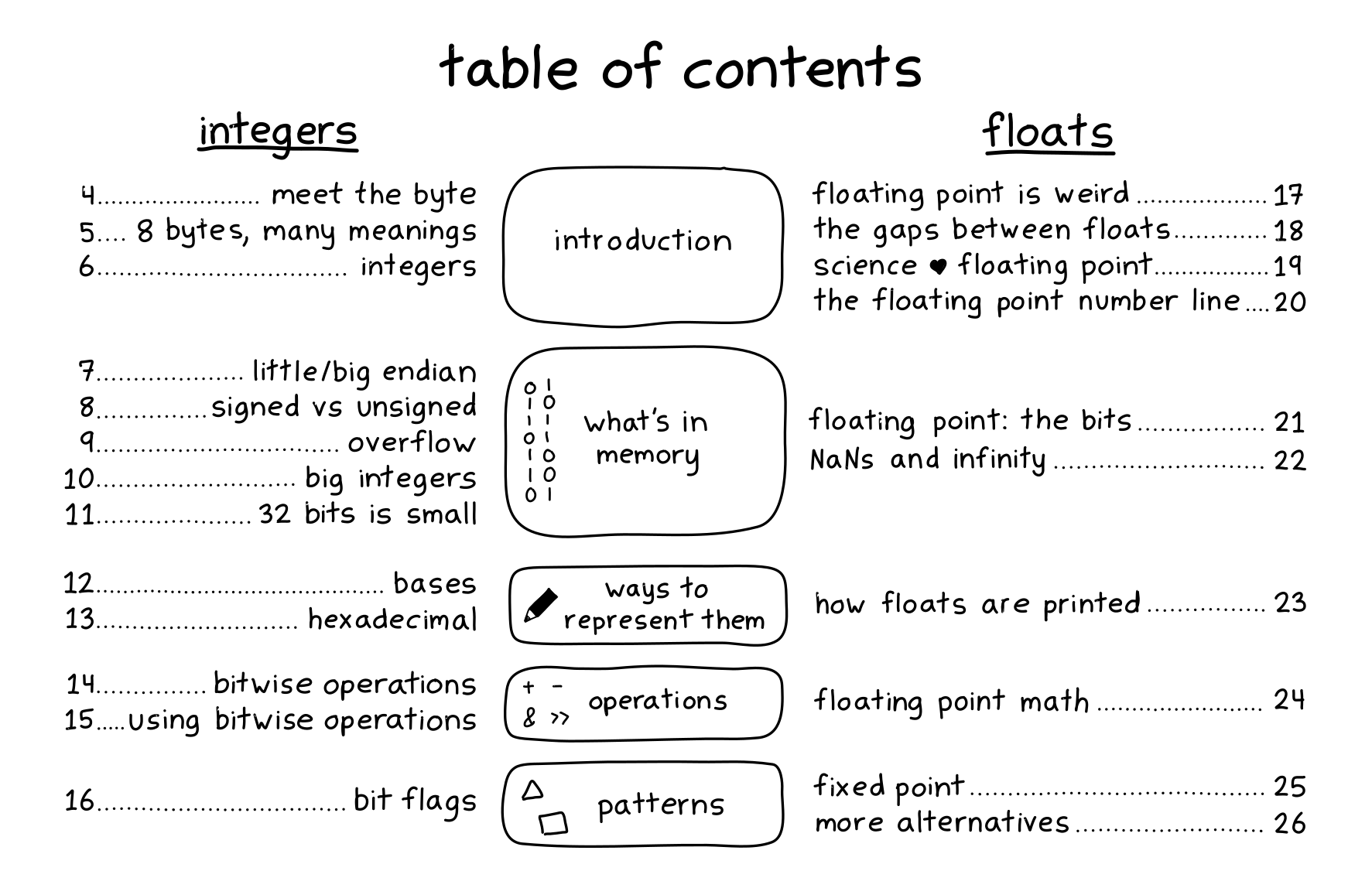
The author's primary goal is to demystify binary data. Most binary file formats are dominated by integers—DNS parsing, for instance, is largely about encoding and decoding integers alongside ASCII strings. Understanding integers deeply is therefore a practical entry point for working with raw binary data. The zine also covers techniques for packing data into integers using binary operations and bit flags.
A Visual Approach to Floating Point
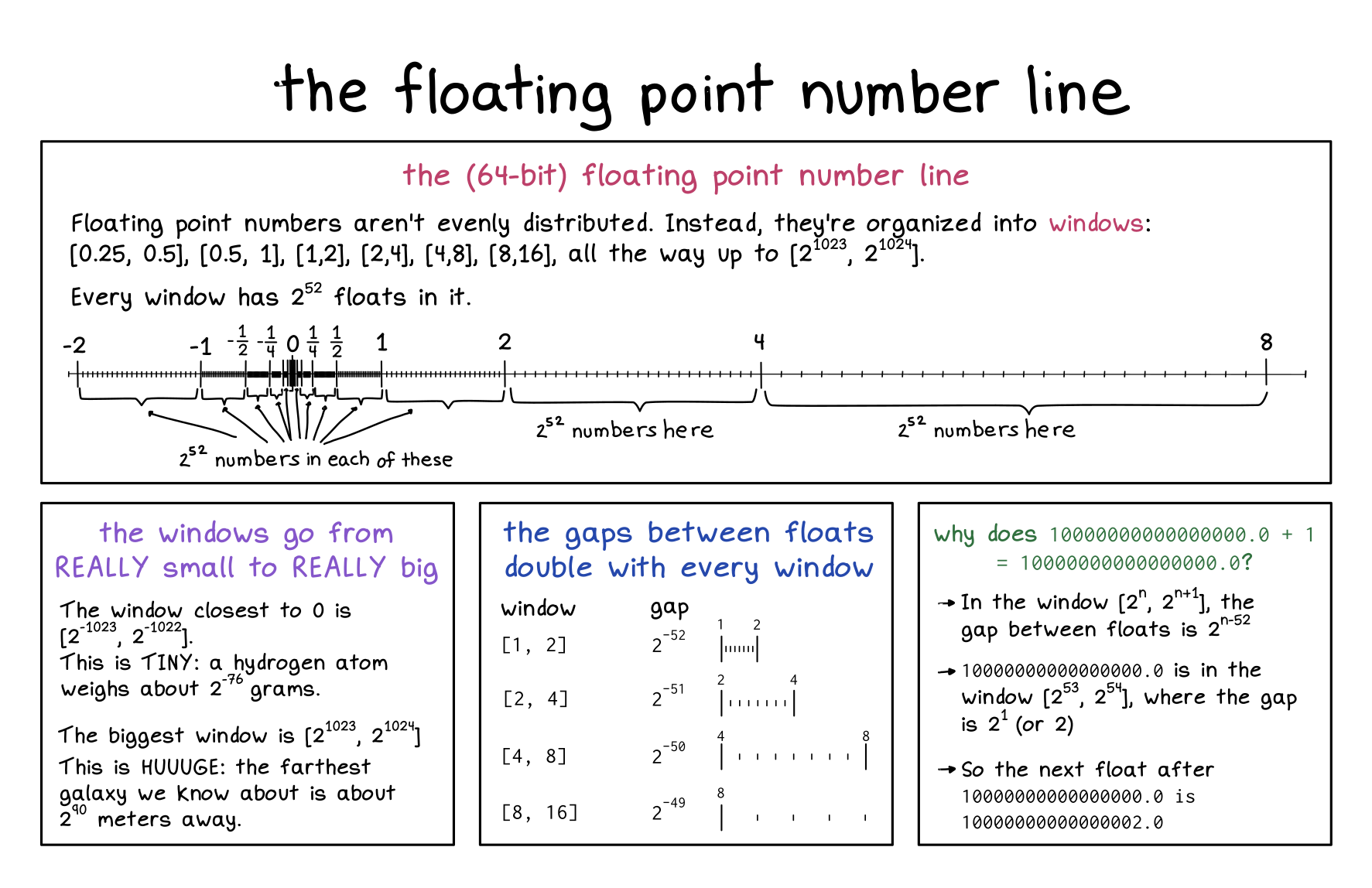
Floating point representations are notoriously difficult to grasp. Many existing explanations lean heavily on mathematical notation, which can be off-putting even to those comfortable with math. This zine aims for a clearer path: minimal math jargon, extensive illustrations, and a focus on intuition. The example below shows the floating point number line, a key visualization used throughout the guide.
Hands-On Learning with Memory Spy
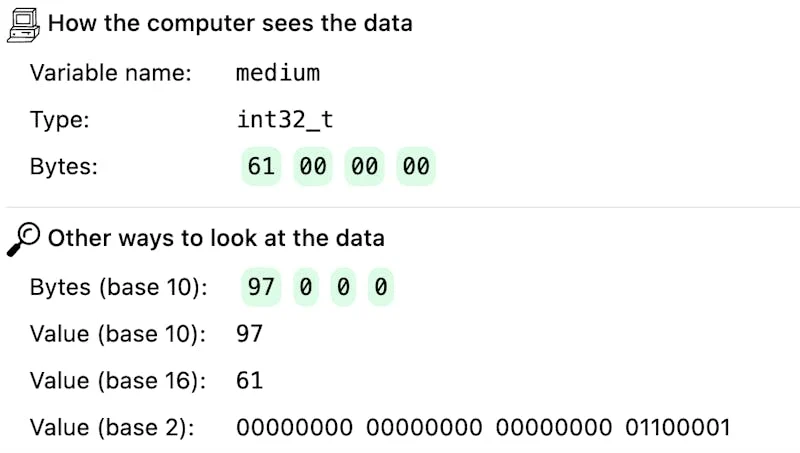
One of the best ways to understand how data is stored is to inspect a running program's memory. While debuggers like gdb are powerful, they are also intimidating for beginners. To bridge that gap, the zine includes a companion playground called Memory Spy. It wraps a real C debugger behind a simple, clickable interface: users step through small example C programs and see exactly how each variable is laid out in memory.
The tool is inspired by Philip Guo's Python Tutor. For floating point exploration, the author also recommends float.exposed by Bartosz Ciechanowski, which was so useful that a companion tool, integer.exposed, was created for integers.
Background and Acknowledgments
Several blog posts were written during the research phase, covering floating point pitfalls, integer overflow issues, and the history of 8-bit bytes.
The production was a collaborative effort: Marie LeBlanc Flanagan contributed to explanations and built Memory Spy, Vladimir Kašiković designed the cover, and Gersande La Flèche and Dolly Lanuza handled copy editing and editing, respectively. The author also credits an earlier talk by Stefan Karpinski as the first clear explanation of floating point they encountered, along with 60 beta readers whose feedback shaped the final release.


