

A 2022 Crash Revisited: Hardware Failure, Human Survival
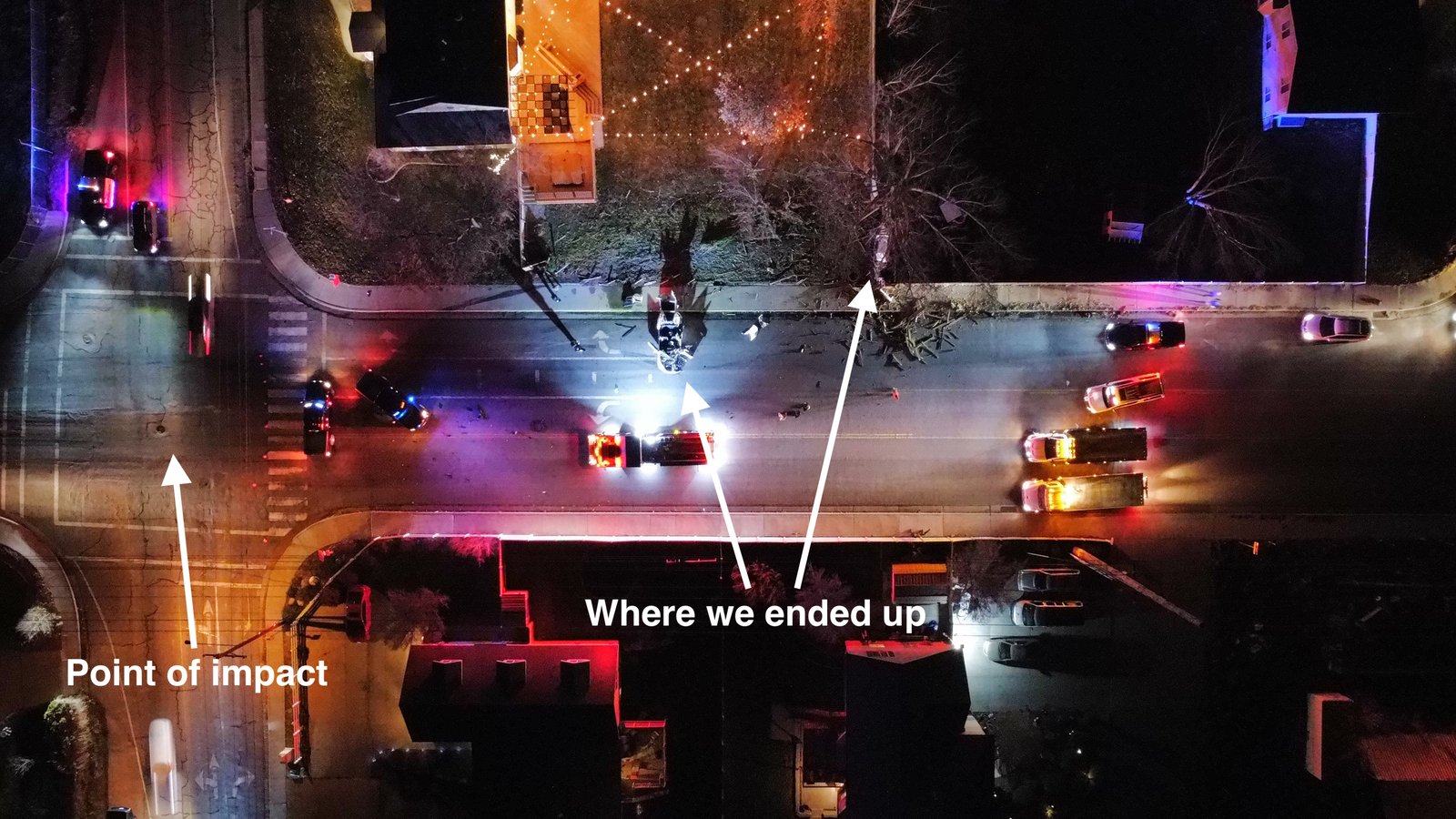
In January 2022, while returning home from dropping his son at a birthday party, I was involved in a severe collision at a four-way stop. After stopping and checking both directions, I proceeded through the intersection. A second check to the left revealed headlights approaching at high speed, giving me less than half a second to react. The impact was with a Dodge Ram 2500 traveling at 80 mph in a 35 mph zone.
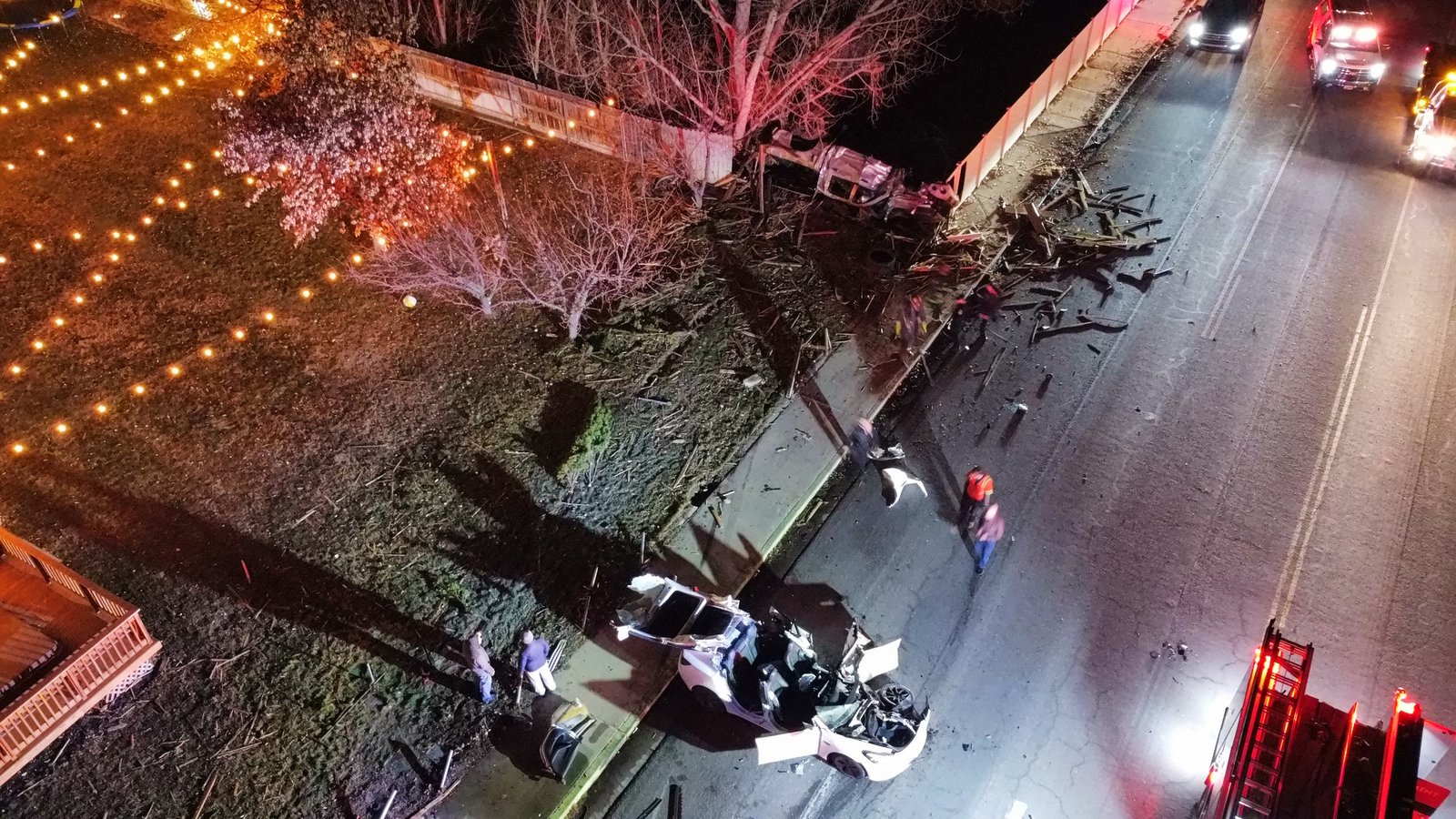
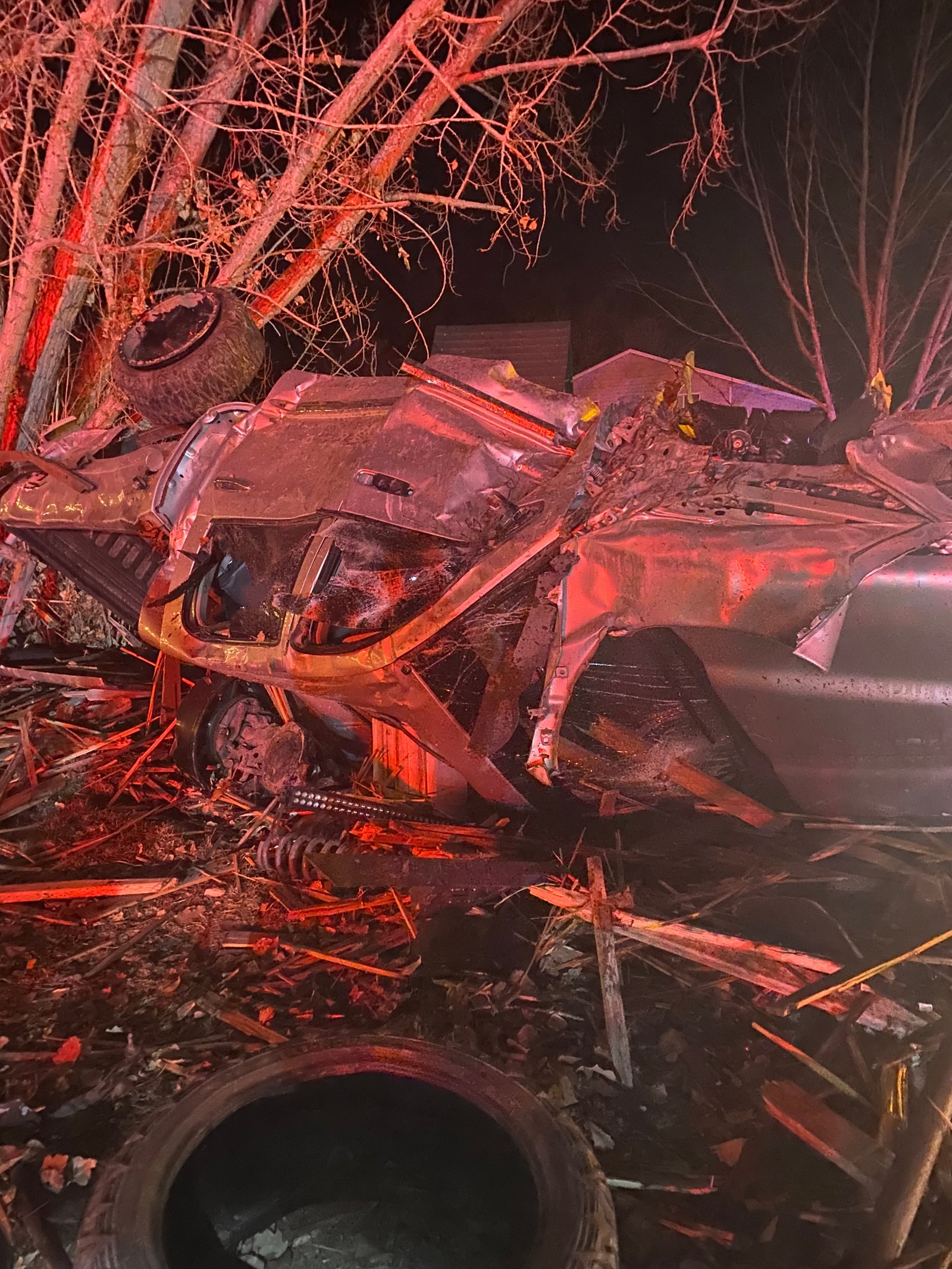
The collision threw the vehicle 75 feet from the point of impact. My car spun 180 degrees, an outcome I attribute to the low center of gravity of the electric vehicle’s battery pack—a rollover was not a possibility. The truck, however, rolled several times, carving through a fence before coming to rest.
Ejection and Extraction
The first sensation after impact was spitting out pieces of my two front teeth. I was trapped in the car for 40 minutes, conscious throughout. Spectators advised against attempting to move, as the risk of aggravating injuries was high. I had to ask a bystander to call my wife to let her know what happened. Emergency responders arrived within minutes and had to cut the roof and door off the car to free me; an IV helped keep me hydrated and warm during the wait.
In the ambulance, I learned I had broken my collarbone—news I did not take well.
The injuries were a direct result of the car’s safety systems and the crash itself:
- Two front teeth broken on the airbag.
- Left clavicle broken on the seat belt.
- Right ankle damaged as the dashboard pressed against my foot during the 40-minute extraction.
- Nerve damage in my left wrist from a piece of glass.
- Glass fragments found in my scalp and hands days later.
Recovery and Surgery
Surgery on the clavicle required a plate and resulted in additional nerve damage. Tooth repair waited three days, during which eating and drinking caused extreme pain; the eventual operation involved crowns on both front teeth, one with a root canal. I spent a few weeks each with a chiropractor and physical therapist for issues in my neck, back, shoulder, and foot.
Pain in my ankle ultimately forced me to quit an indoor soccer team. I did manage to return to snowboarding before the season ended. While soccer was resumable after a few months, tooth recovery lagged: a year later, biting into food firmer than a hamburger remained impossible.
Just weeks ago, I had a second surgery to remove the clavicle plate. The operation erased the partial nerve recovery I had achieved, and I continue to recover from that setback. Pain persists in the shoulder, wrist, teeth, and ankle. Activities like giving my children piggyback rides are now painful, and snuggling on the injured side is off-limits.
Beyond the Crash
The driver of the truck was neither intoxicated nor distracted—he was simply driving recklessly at more than double the speed limit. He left the scene but was caught a few blocks away, treated for minor injuries, and taken to jail.
Two witnesses believed I was dead at the scene. Medical personnel repeatedly told me I was lucky to be alive. The crash has permanently altered daily life, but I remain grateful for the recovery I’ve made. I have a wife and four children, and time together since the accident has reinforced my relief at surviving. I expect recovery to continue slowly.
One positive to emerge from the experience was the creation of a useful development tool, “kif,” which I could only have made because the injury postponed my usual activities. In the end, I am most grateful for the ongoing chance to contribute to my family and my work.


