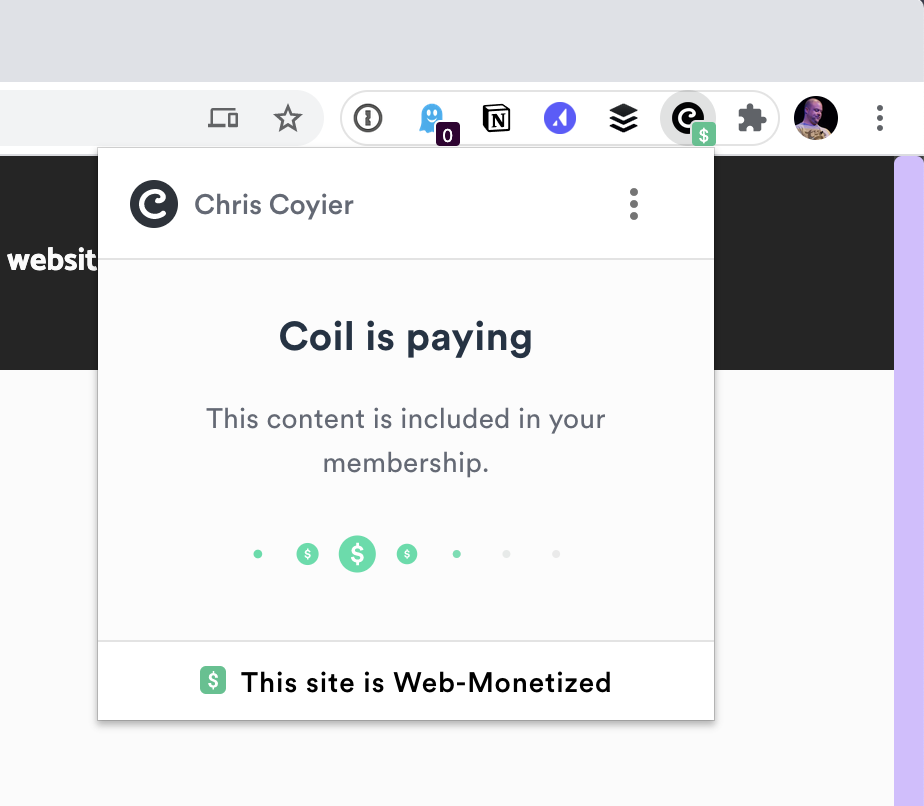
Web Monetization is gaining traction beyond early adopters: Léonie Watson calls Coil and the protocol "the vanguard of a quiet revolution," and sites such as TechDirt and CodePen have added support. Implementation is small: a Coil subscription costs $5/month and spreads funds across visited sites that have monetization installed.
How the Money Moves
Subscribers fund their own wallets — Uphold, in this case — and other subscribers deposit small amounts into it as payments for visits. Setting this up took little effort, though the author notes a year-old setup and no deep investigation into every detail, and PPK has called the model user-hostile, a criticism the author concedes has good points.
Signing up for payment services is a complete hassle, because you don’t know what you’re doing while being granted the illusion of free choice by picking one of two or three different systems — that you don’t understand and that aren’t explained. Why would I pick EasyMoneyGetter over CoinWare when both of them are black boxes I never heard of?
Also, these services use insane units. Brave use BATs, though to their credit I saw a translation to US$ — but not to any other currency, even though they could have figured out from my IP address that I come from Europe. Coil once informed me I had earned 0.42 XBP without further comment. W? T? F?
Why It Might Beat Earlier Micropayment Attempts
If this were only about sprinkling pennies at sites, it would be doomed. Micropayments have been tried repeatedly without working, and that skepticism applies to the current behavior. Two properties set Web Monetization apart, though neither is realized yet:
- It has a chance of becoming a web standard rather than requiring an install.
- APIs let a site actually do something when money reaches it.
A site could, for example, promise no ads to anyone paying $1/month and enforce it in code, all anonymously. That gating is harder than it sounds: two problems block the obvious version. Coil does not let you control how much goes to each site, and a site must know very quickly whether a given user supports it at the required level. Waiting 2600 milliseconds to decide whether to request ads damages ad revenue, and requesting the ads and hiding them later betrays the promise — trackers will already have run.
Coil's recommended approach is its "100+20" Rule: give everyone the full value of the site, then add extras for users who hit monetization thresholds. Existing supporter perks, such as downloadable screencast originals, fit this model and would be good candidates to unlock via Web Monetization once the code is easier to write.
What Would Actually Move the Needle
An installed Coil subscription and enthusiasm don't make a difference on their own; sites that deliver real value to paying users do. Hypotheticals like a printable shopping list for recipe-site supporters point the way, and the author admits to doing nothing of the sort yet.
If the effort gains legs, the standard should prevent any single service from dominating: standardized APIs could support an ecosystem of wallets, disbursement services, in-browser features and site-owner experiments. The protocol's own site, webmonetization.org, tracks the process.
Also in This Issue
CSS-Tricks accepts sponsorships, and the bi-weekly newsletter delivers front-end roundups, browser updates and exclusive content. Ads on the site are self-hosted.