

Line Length Research: What We Actually Know
Mary Dyson’s recent deep dive into line length research challenges a long-standing assumption in typography: that shorter lines are always more legible. The study’s core finding is more nuanced than a simple verdict — longer lines don’t slow readers down as much as earlier research suggested, but that doesn’t make them inherently better.
For designers hoping to settle a debate, the answer remains frustratingly open-ended. But the research offers useful context on how we read, why old assumptions stuck around, and what questions remain unanswered.
Reading Mechanics: Return Sweeps and Undershoots
The act of moving from the end of one line to the start of the next has a name: return sweeps. Readers’ eyes don’t always land precisely at the left margin, though — they can stop short, a phenomenon called undershoots.
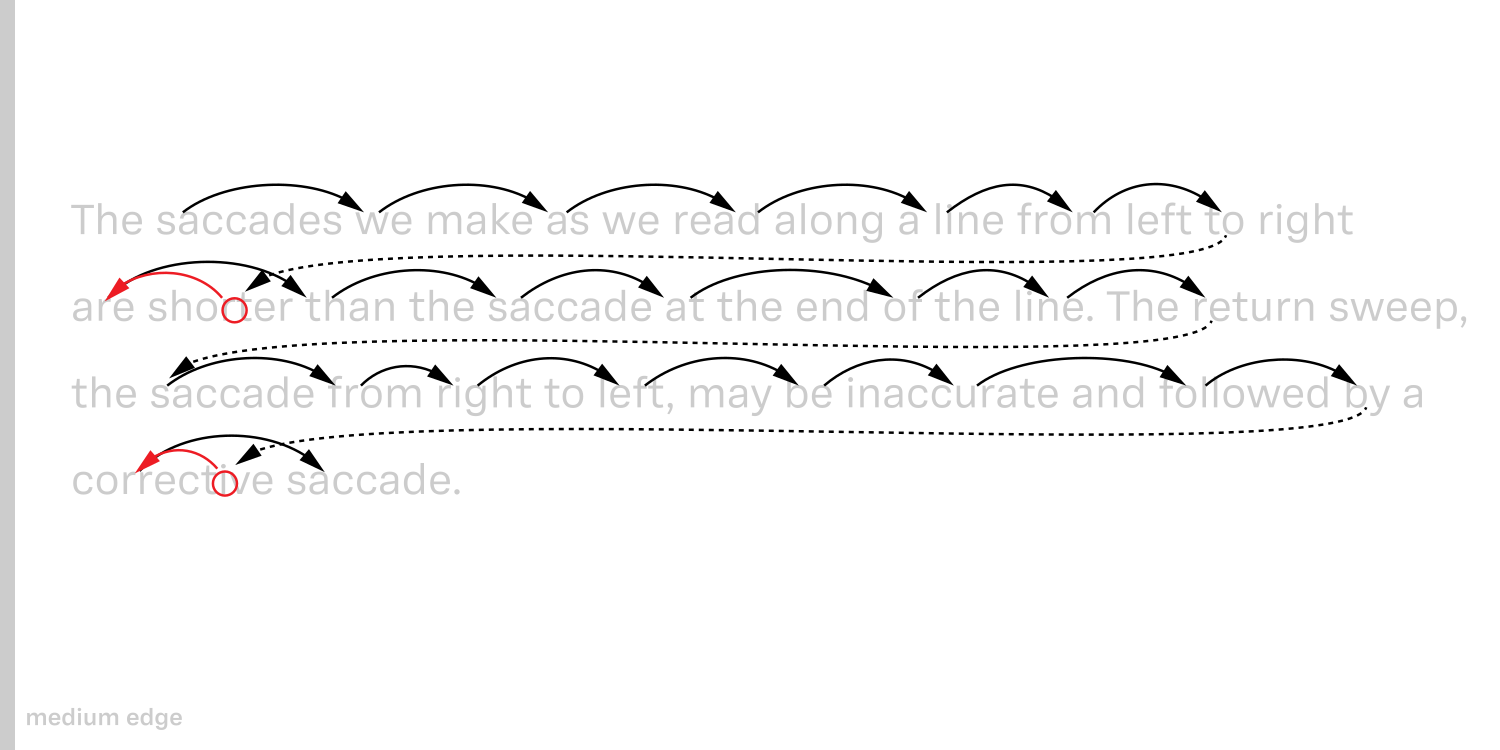
These rapid eye movements between words and phrases are called saccades, a term worth knowing when discussing reading behavior.
Where the Shorter-Is-Better Assumption Came From
The prevailing wisdom about line length traces back to a 1940 study, conducted in the era of paper pages rather than bright digital displays. That research suggested longer lines increased the likelihood of undershoots during return sweeps, forcing readers to regress and costing them 130ms to 250ms while their brains reoriented. This delay is known as undersweep-fixation.
New Evidence Complicates the Picture
A 2019 study tested a corrective technique: bolding the first word of each line as a visual anchor to reduce undershoots. The intervention did cut the frequency of undershot return sweeps — yet reading speed didn’t improve. That finding is what prompted the current reconsideration of the assumption that shorter lines are better.
Dyson explains why longer lines on screens may not be the handicap earlier research suggested:
In seeking to reconcile why longer line lengths may not slow down reading on screen but do so when reading print, I outlined some differences, e.g. visual angle, time spent scrolling. But although physical differences between reading from screen and reading print still exist, we now have direct evidence to explain why longer lines were read at least as fast as shorter lines. Readers can process words during the brief fixation when undershooting the start of the new line. This saves time in subsequent processing. Now we might also acknowledge that there is greater consistency between the range of optimal line lengths for print and screen.
Implications for Design
No definitive design rule emerges from this research. Dyson stops short of recommending longer lines, citing several outstanding factors:
- Shorter lines are more effective for people with dyslexia.
- Questions about return sweeps and undershooting remain unanswered.
- Other studies show users prefer shorter lines and perceive longer ones as harder to read.
For practitioners, the takeaway isn’t a new fixed number but a loosening of an old constraint. Line length deserves consideration, but it carries less weight than previously assumed — and user preference still matters independent of raw reading speed.


