

Open source feels scary. TwilioQuest makes it a game.
For many students, the path to open source contribution starts with good intentions—and stalls. A Major League Hacking survey found that while most students recognize the career value of contributing to open source, roughly a third lack the confidence or know-how to take the first step. TwilioQuest, a coding game built by Twilio, aims to close that gap by turning skill-building into a mission-based adventure.
How TwilioQuest works
TwilioQuest casts players as “Operators” who complete missions to save “The Cloud.” Each mission teaches a different programming language or skill. Among the available missions, one stands out for aspiring contributors: “Flame of Open Source.” It walks players through contributing to a real open source project in a low-pressure, game-like setting—no prior experience required.
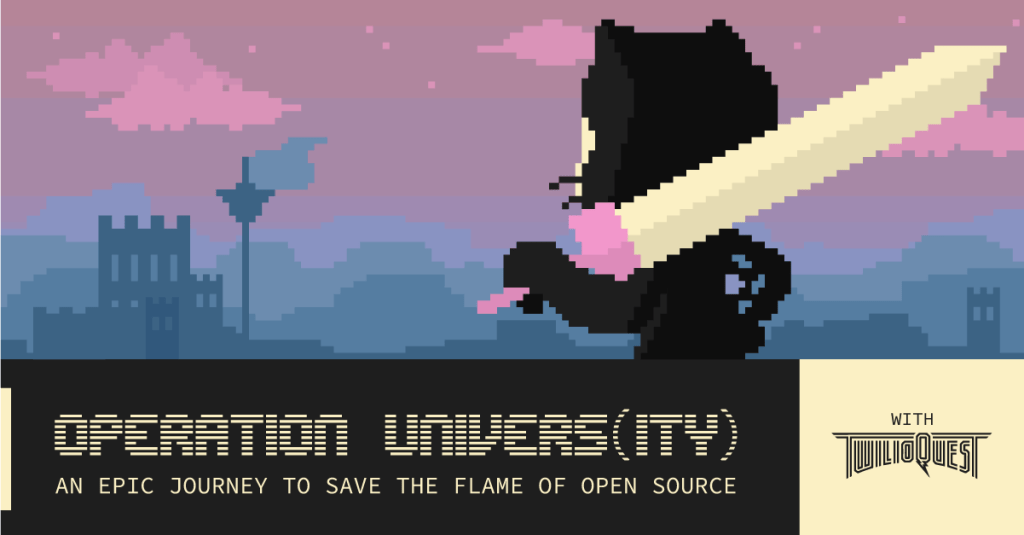
Proof it works: Operation Univers(ity)
During GitHub Univers(ity), Twilio ran a challenge called Operation Univers(ity) that asked students to play TwilioQuest and complete as many tasks as possible. The results were striking:
- 220 unique players participated.
- On average, each completed 24 code challenges in the game.
- 160 players finished the dedicated “Flame of Open Source” challenges.
Details on the competition are available in the GitHub Education repository.
Why this matters for new coders
The takeaway is straightforward: play can be a legitimate pathway to stronger, more confident programming. For more on the design thinking behind TwilioQuest, TwilioQuest creator Kevin Whinnery explains the approach in this presentation. (And if you need an extra nudge, this Twitter thread may be just the motivation you’re looking for.)


