
From Mun to Minmus: Early Accidents
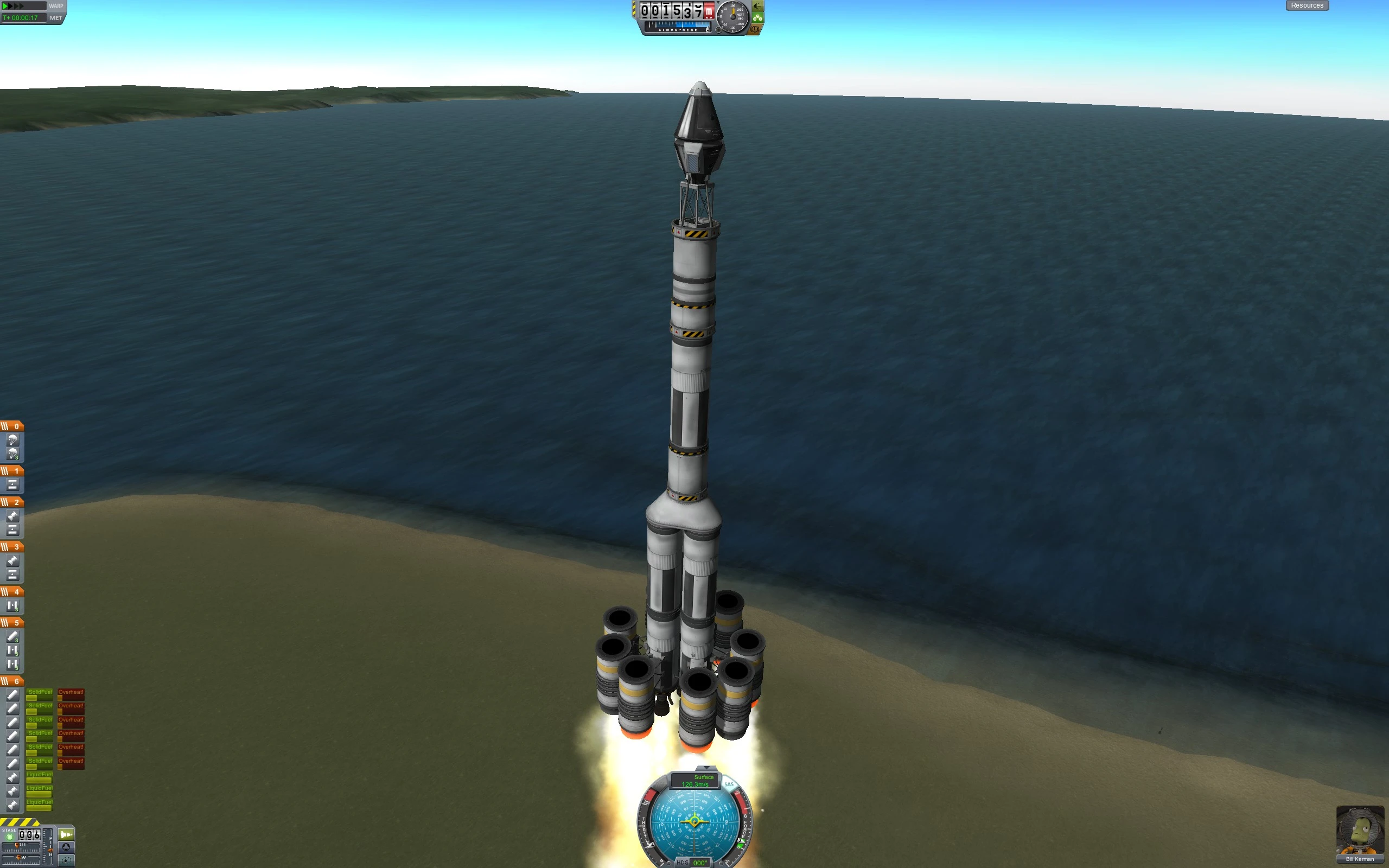
Kerbal Space Program‘s early career is defined by spectacular failure. My first successful craft lifted off, flew a short distance from the pad, and—after several botched attempts and multiple casualties—actually touched down. That modest success was followed by an utterly inefficient design: three off-axis tanks and rocket motors arranged symmetrically without a central shaft.
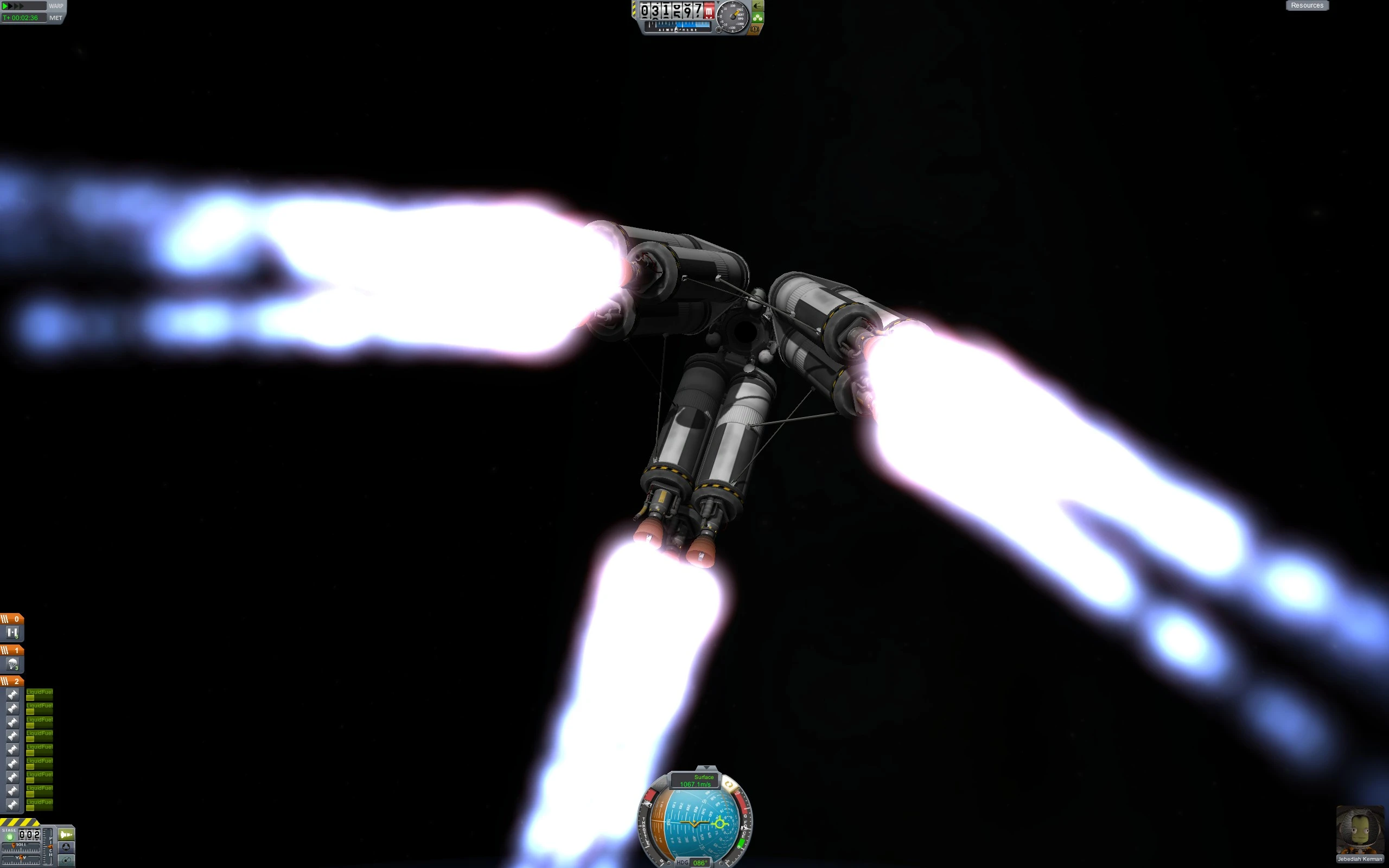
That tetrahedral creation barely made it off the launch pad. My next goals were more pedestrian: walking on the Mun. What followed were explosive solid-booster failures until a lander scheme finally stuck.
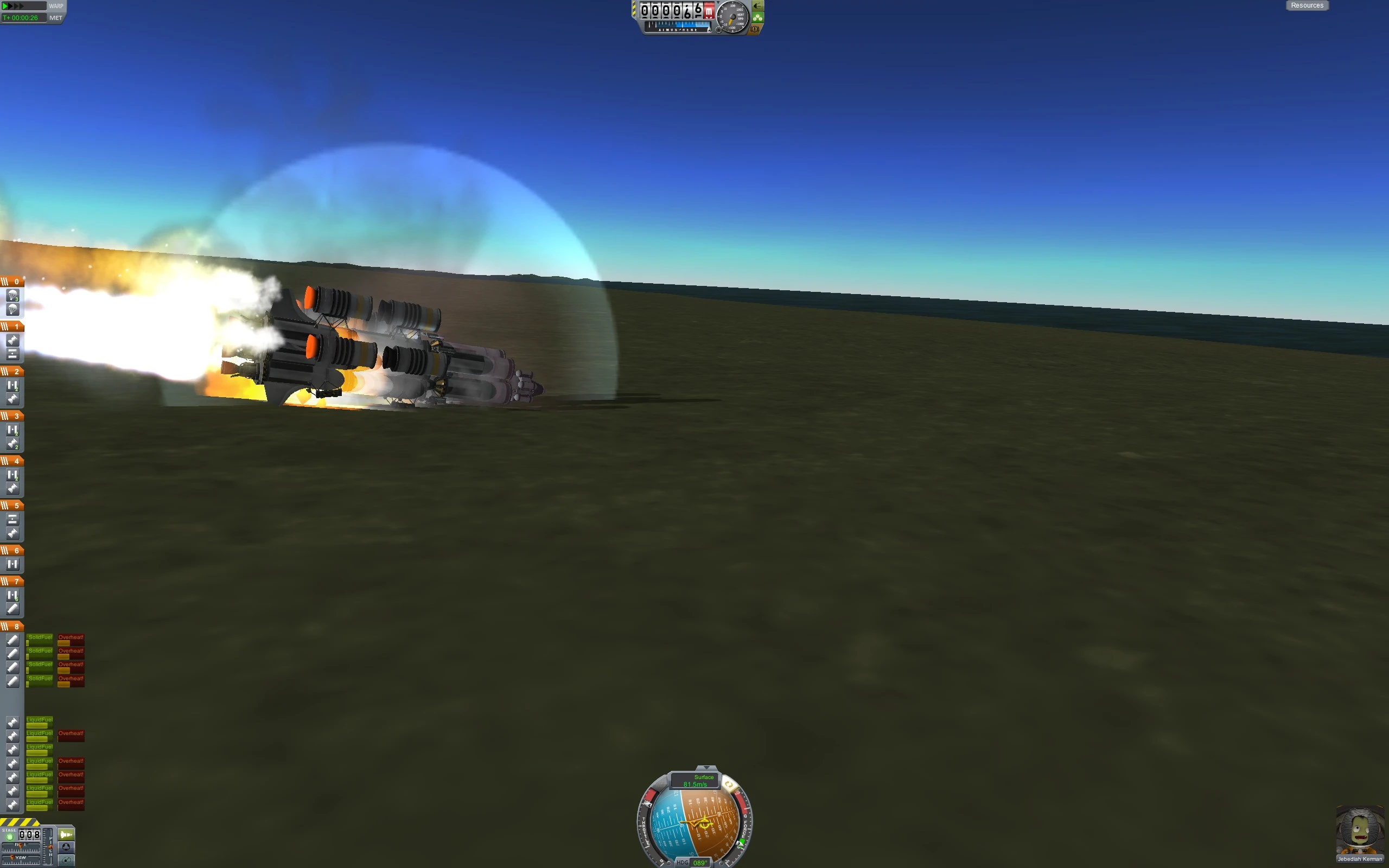
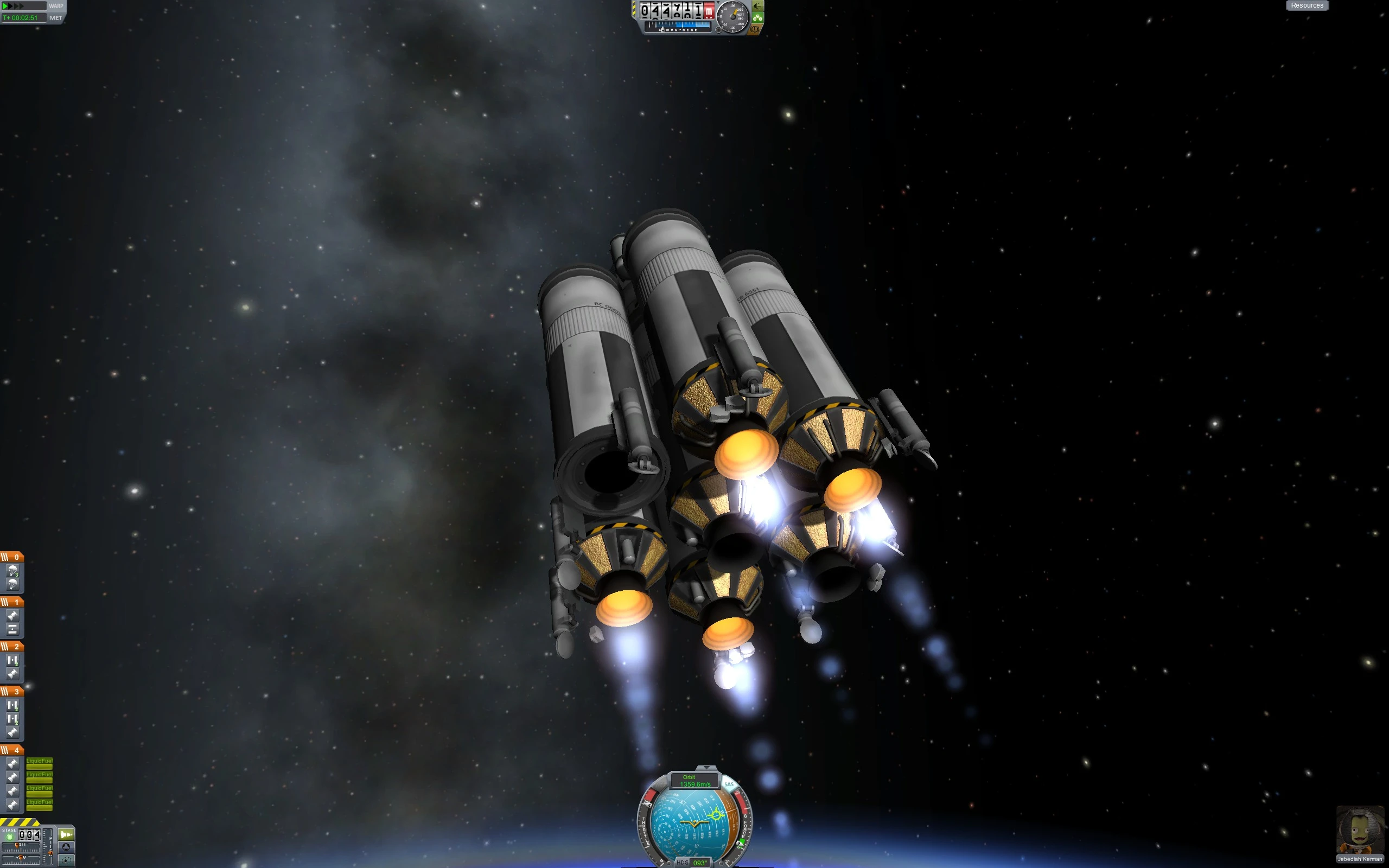
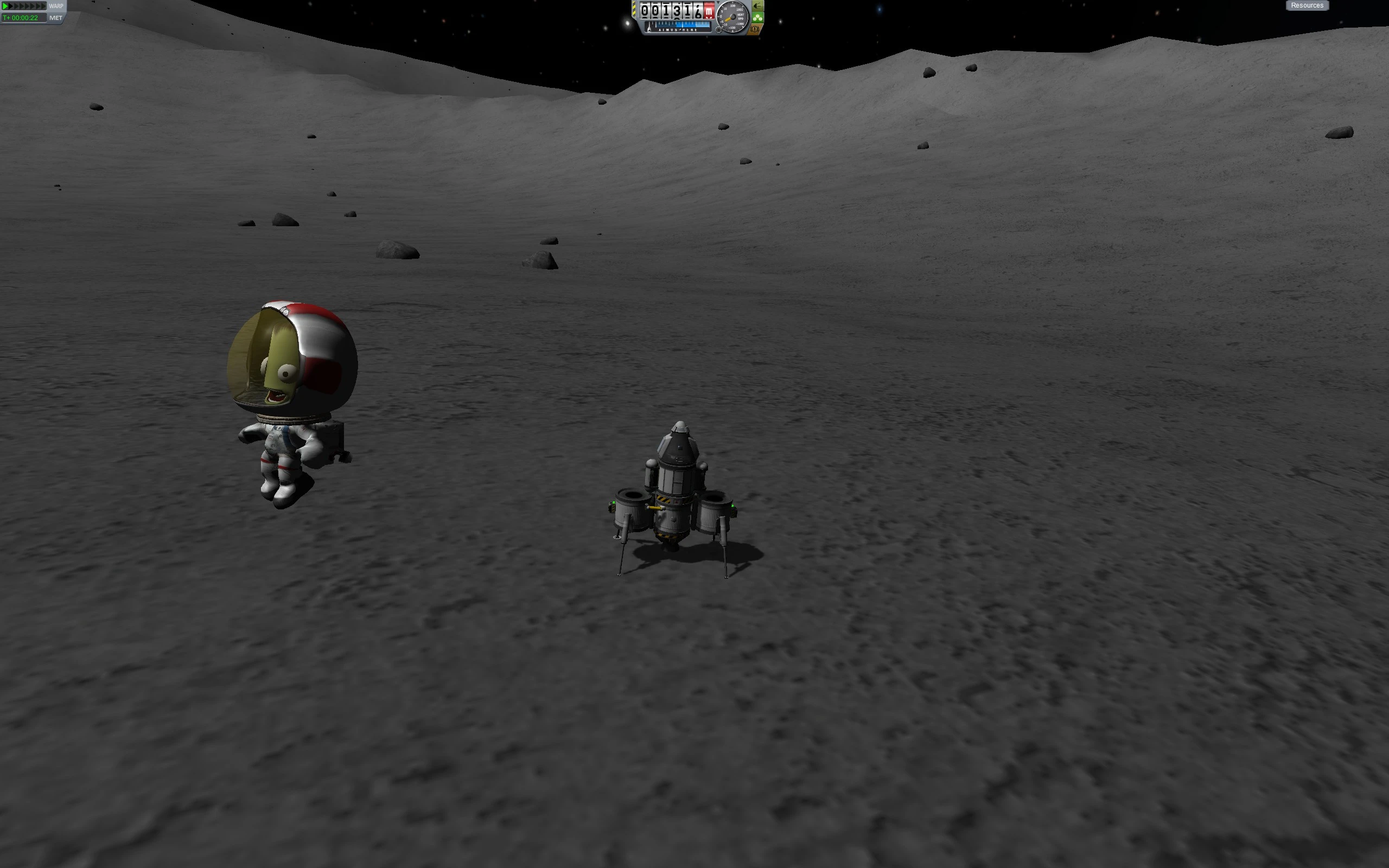
Forced to shut down one of the descent stage’s seven nozzles after an unplanned collision between its landing gear and the motor base, I funneled fuel to the four remaining balanced engines. Burns consumed far more fuel than anticipated, so we landed only the command module—which, conveniently, carried Kerbin-rated landing gear that worked on the Mun.
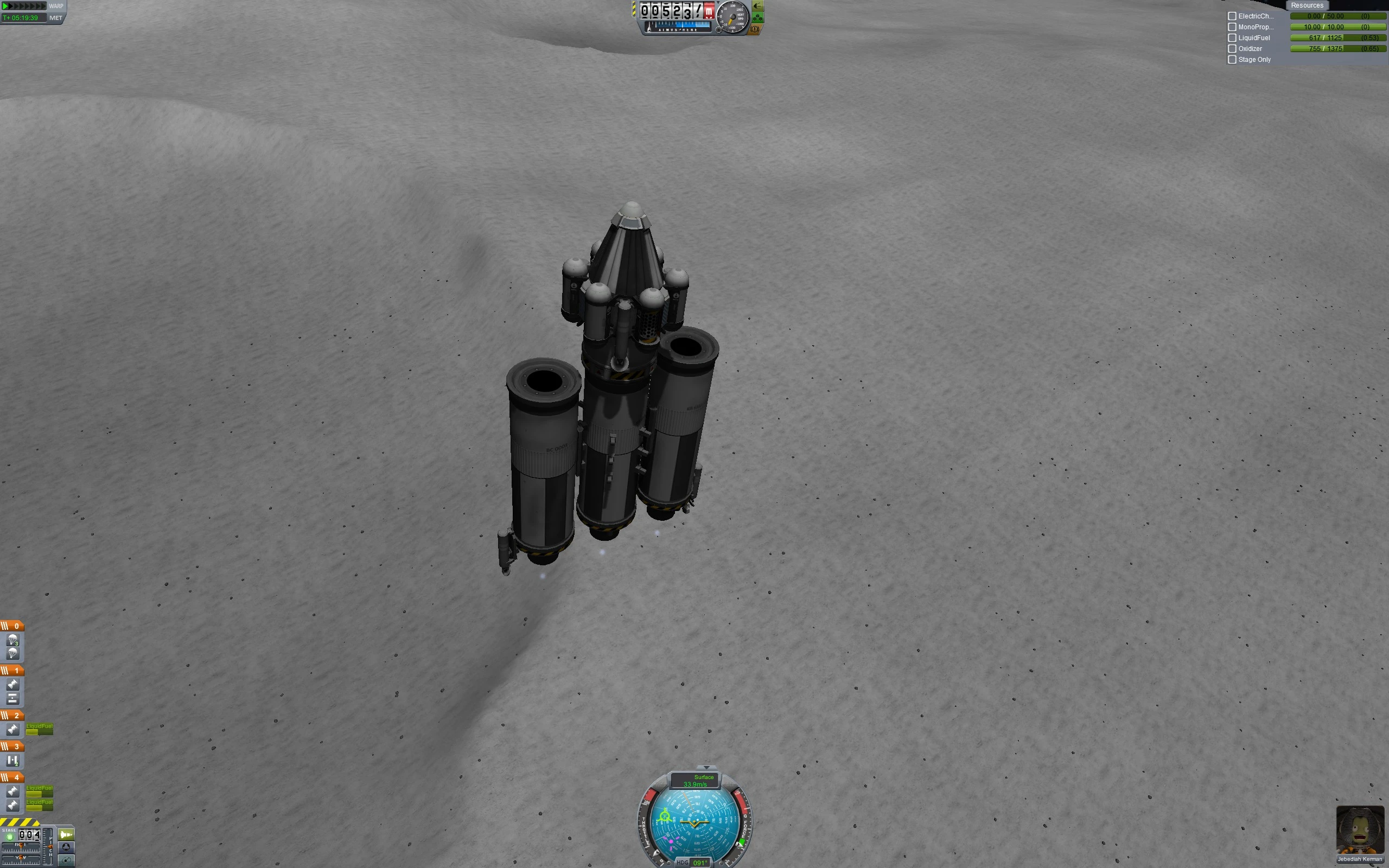
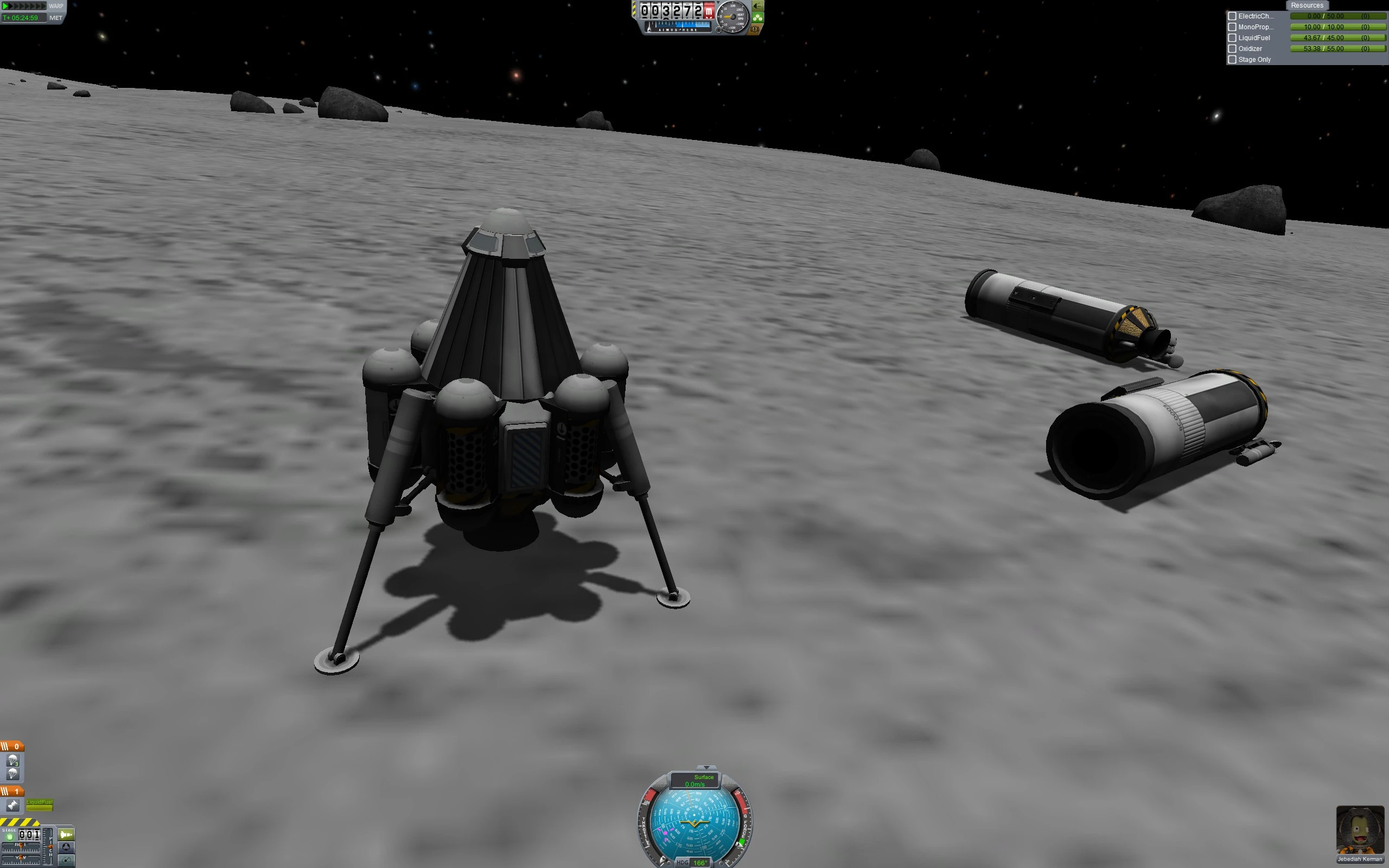
Getting Jeb Kerman back home was impossible from that module’s orbit: he reached 21 kilometers of altitude but had no fuel for a full orbital injection. Thinking fast, he stepped out of the capsule and used his EVA pack to complete the burn. The command module fell back and exploded on Mun, leaving Jeb stranded in orbit—and his tank nearly empty.
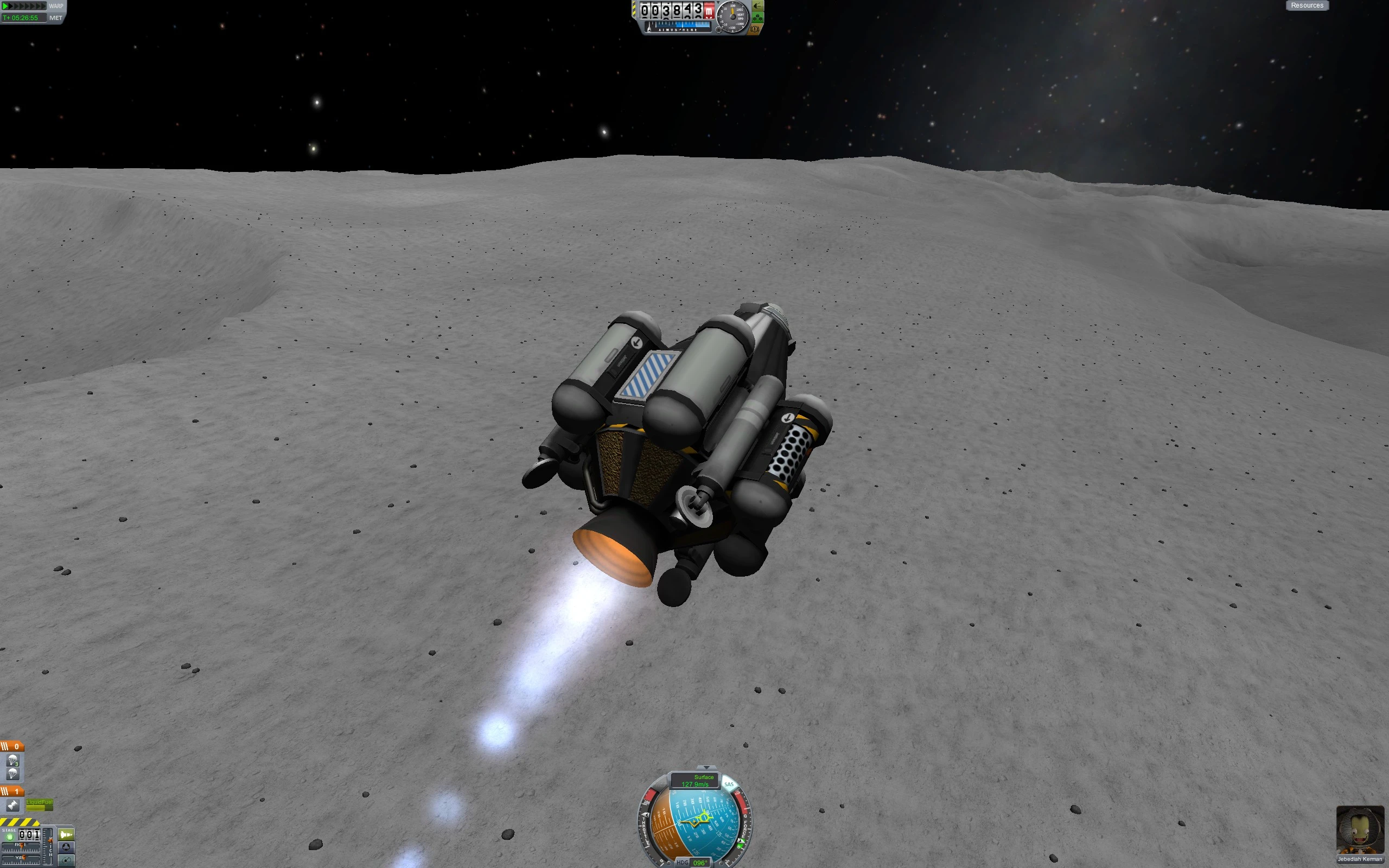
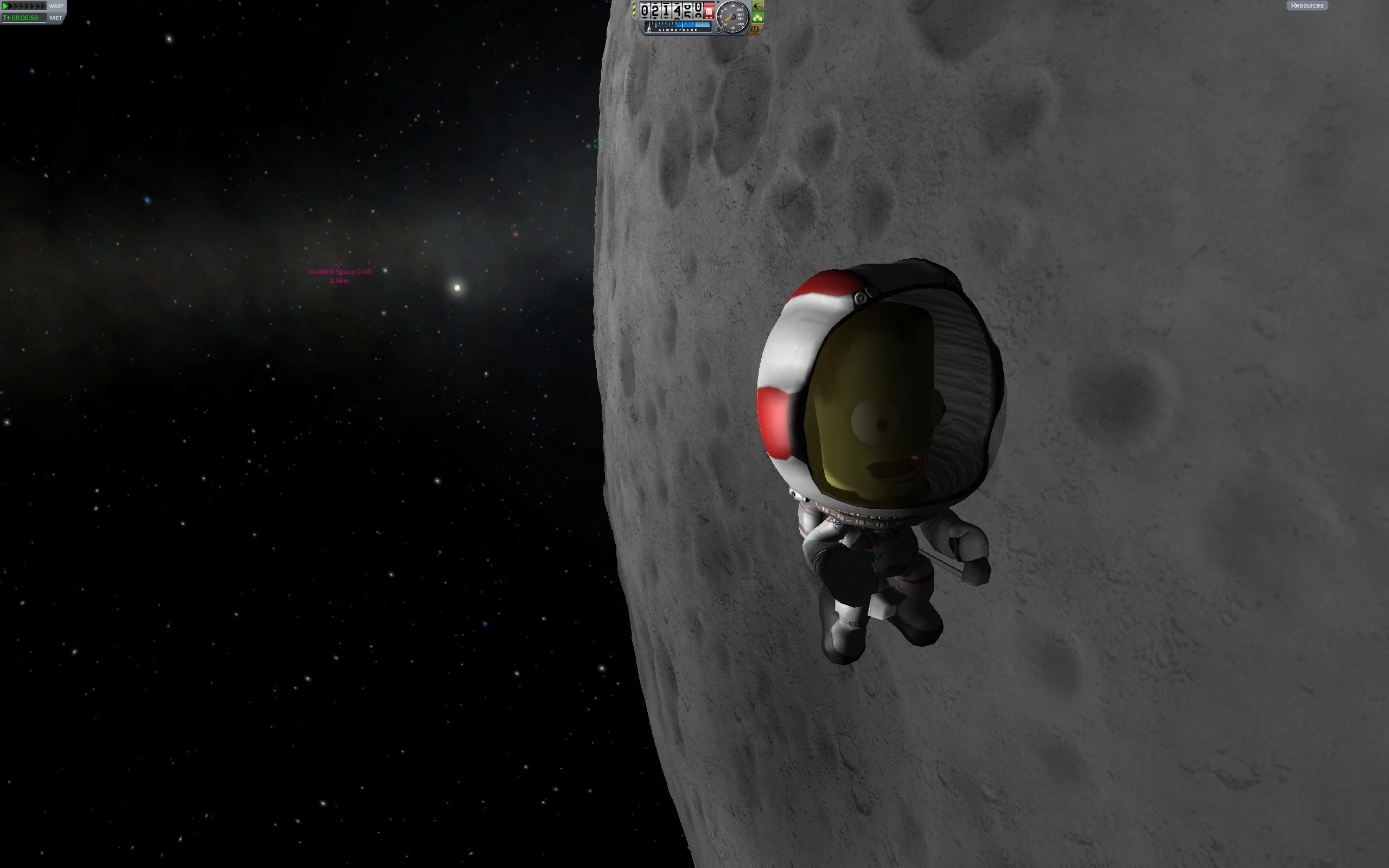
A rescue mission under those part constraints demanded unorthodox construction. Our design required the returning Kerbal to climb into a command chair that hung upside-down beneath the recovery rig—an arrangement forced by everything our engineers had done wrong from pad to orbit.
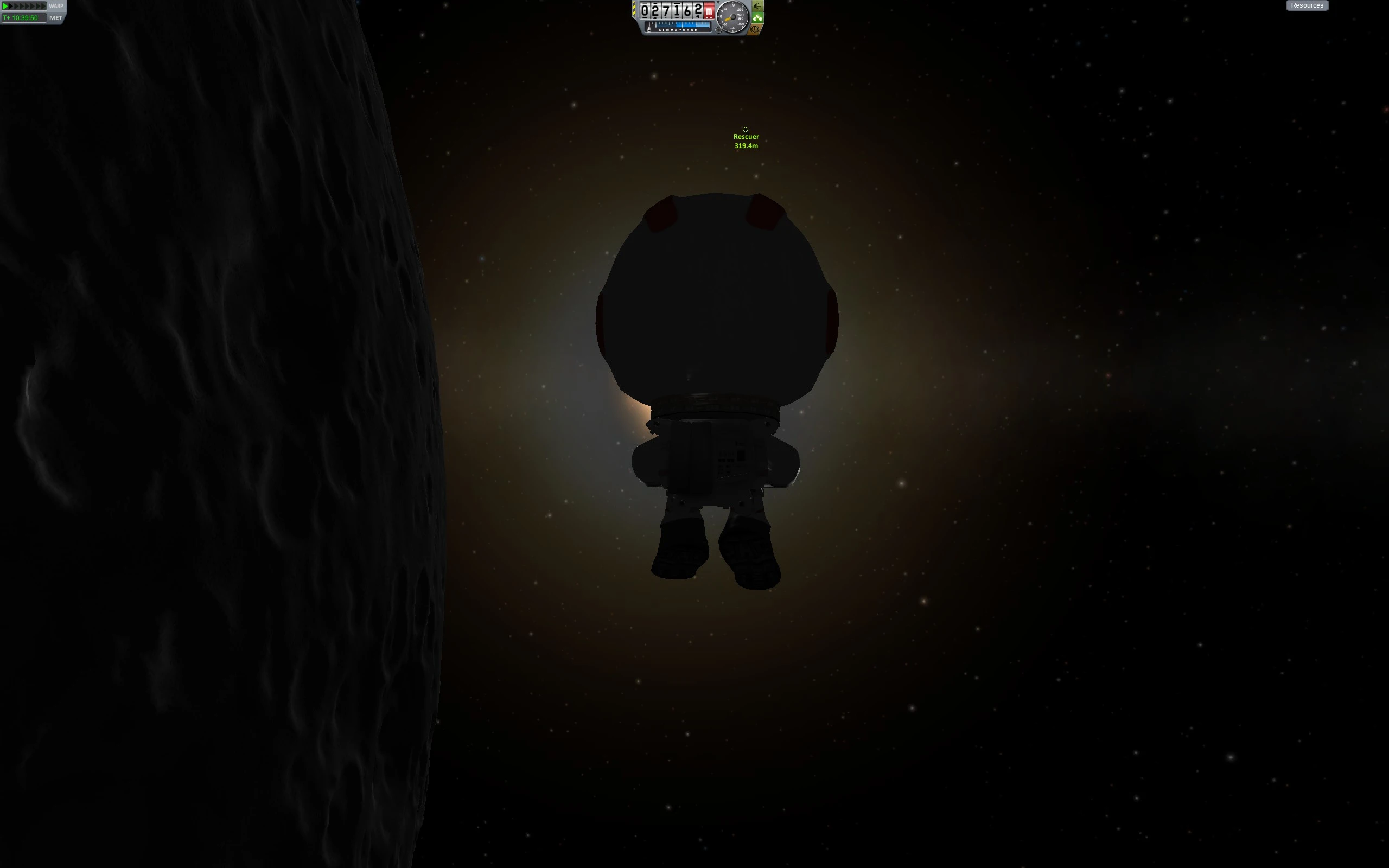
The thin remaining EVA propellant dictated the only possible interception: a soft high-speed collision with the rescue ship so Jeb could anchor at a recovery-capsule handhold.
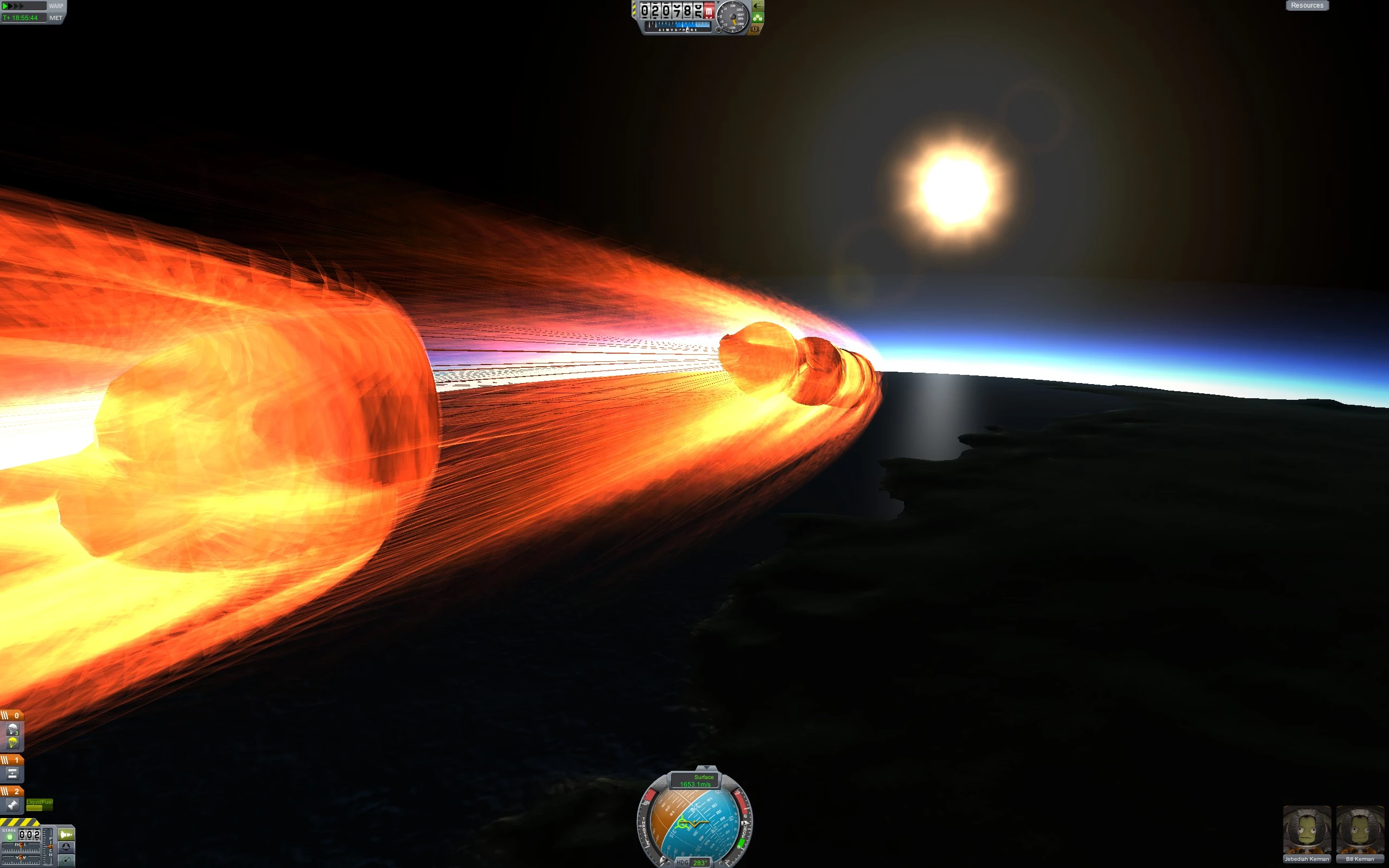
Re-entry was smooth. Jeb walked into Mission Control shaken but alive.
Spiral staging and real payloads
The Great Fuel Debacle pushed our engineers to discover spiral staging—a technique yielding far higher delta-v. Subsequent Mun and Minmus landings went comparatively smoothly:
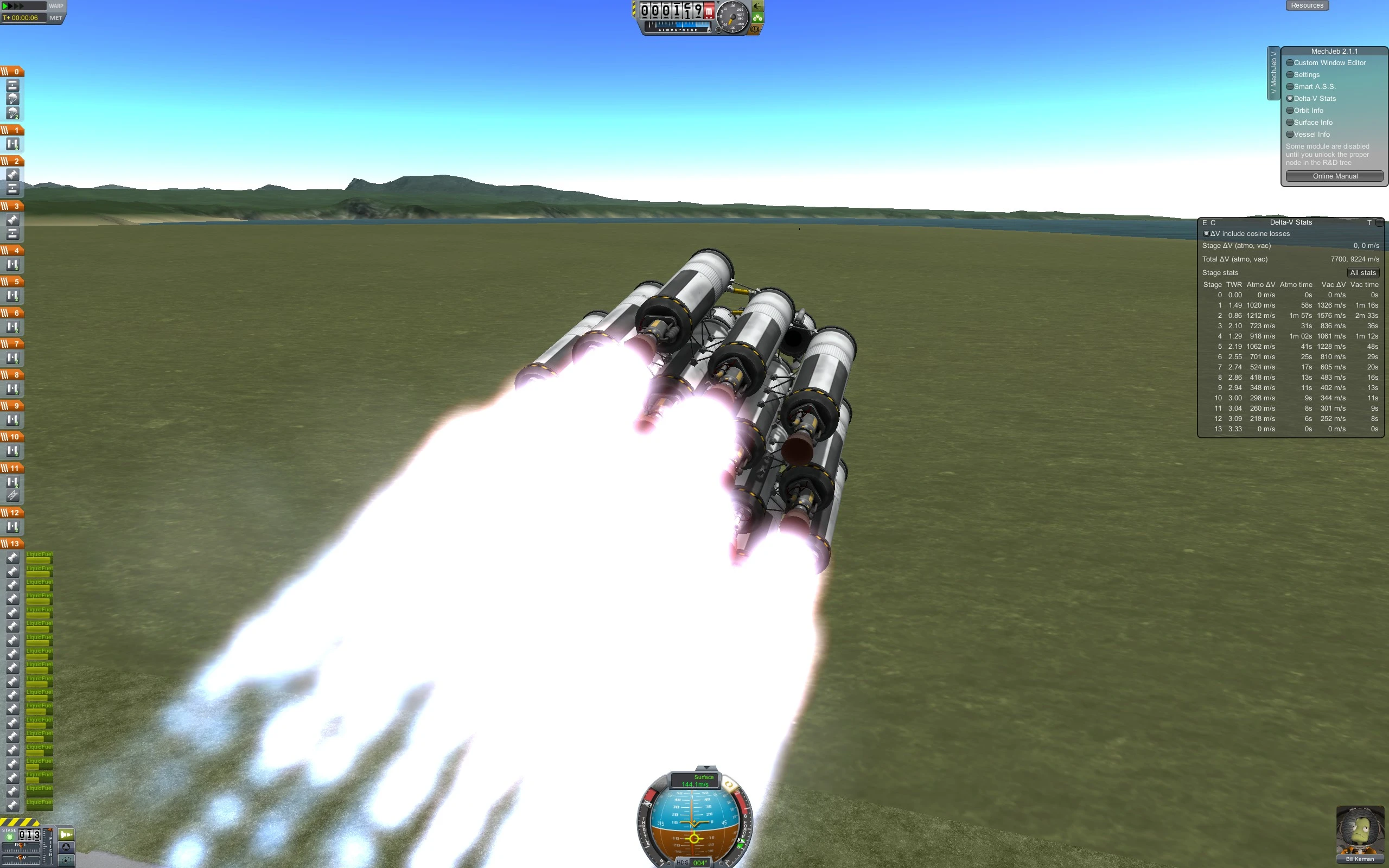
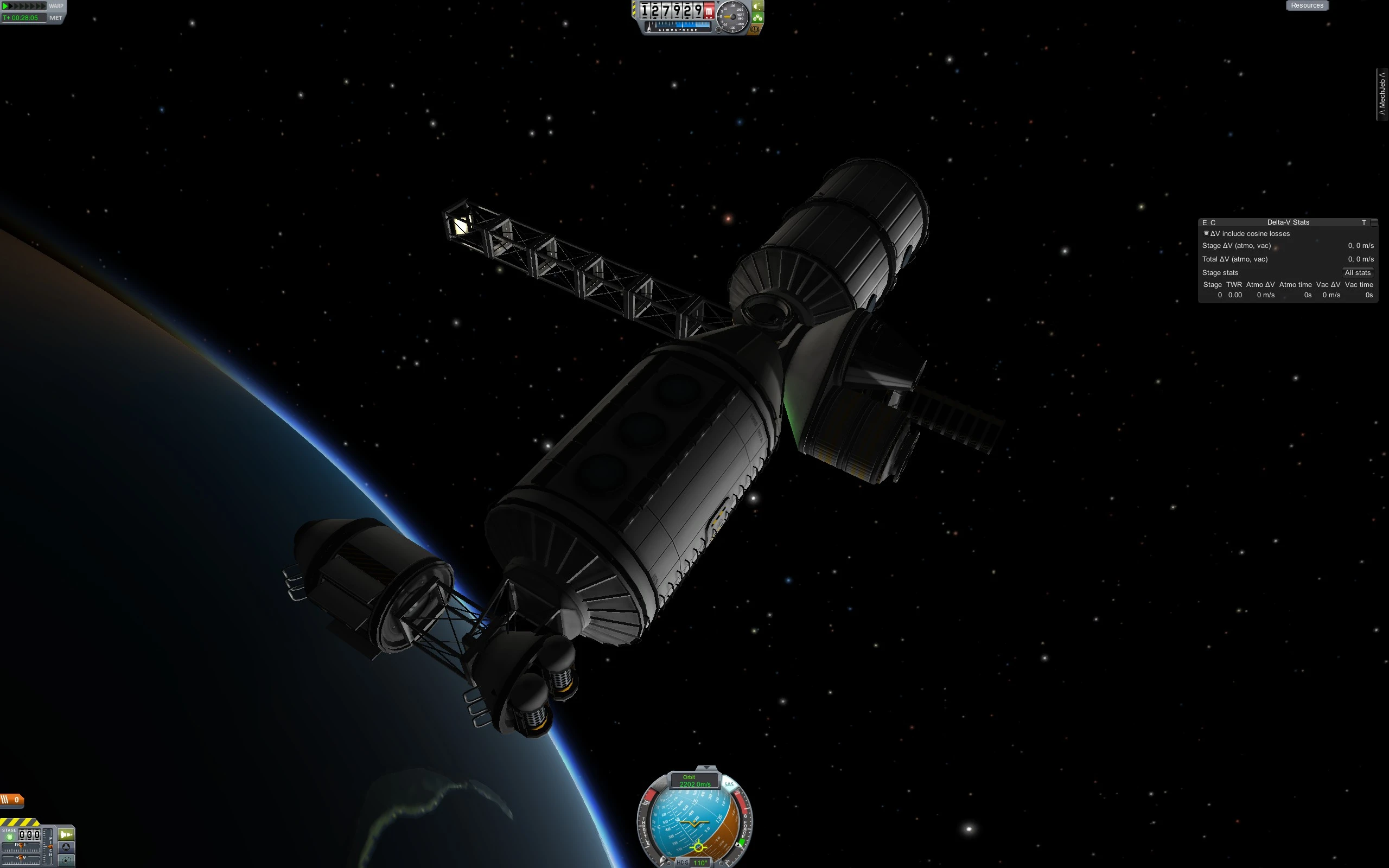
Once enough Science had been spent on new hardware, I launched a space station into geosynchronous orbit roughly 200 meters south of KSC’s pad—a location for the first module that works only in Kerbal Space Program. The asymmetric launch vehicle taught me to balance drag in atmo and center of mass everywhere; once fixed, the hab and research modules reached acceptable orbits.
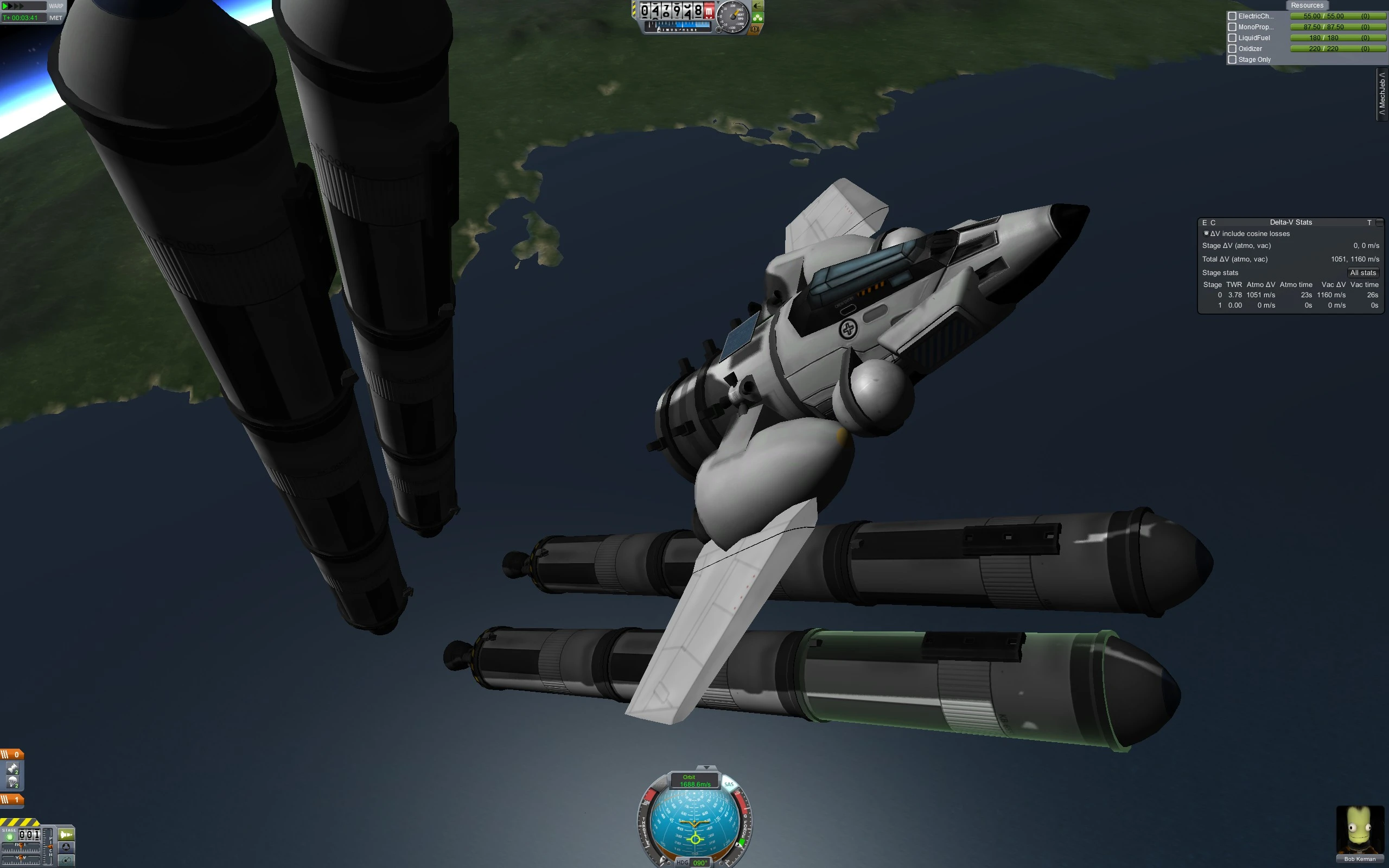
Stations need transport, but spaceplanes were beyond my building ability. This shuttle uses conventional rockets to reach orbit, where it ferries crew between stations and ships, and re-enters with passengers. Crew recovery mattered: empty fuel tanks left several Kerbals drifting in space.
Science scarcity forced probes to do the legwork. Instruments joined in a “seed pod” that scatters seven probes across a target planet:
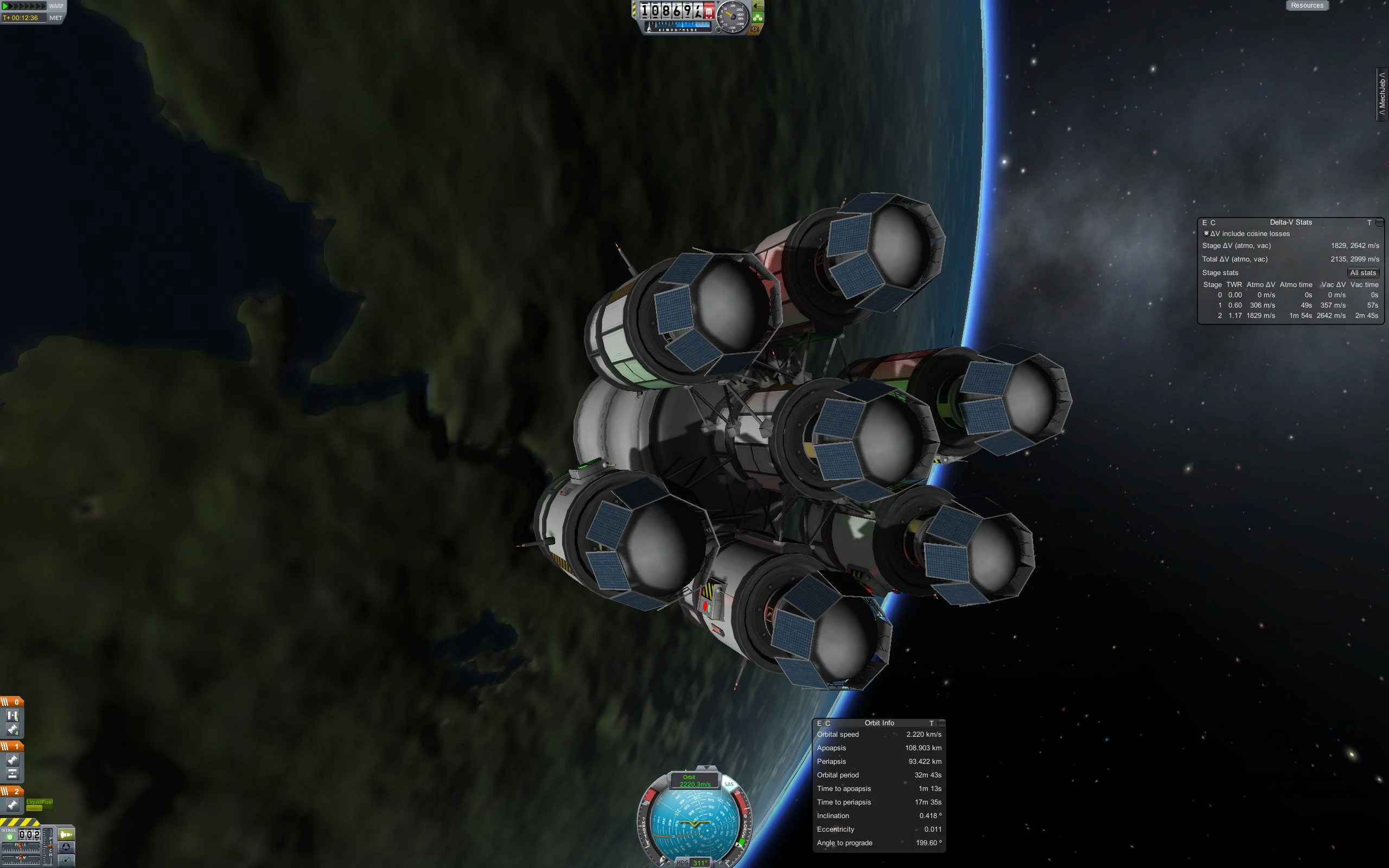
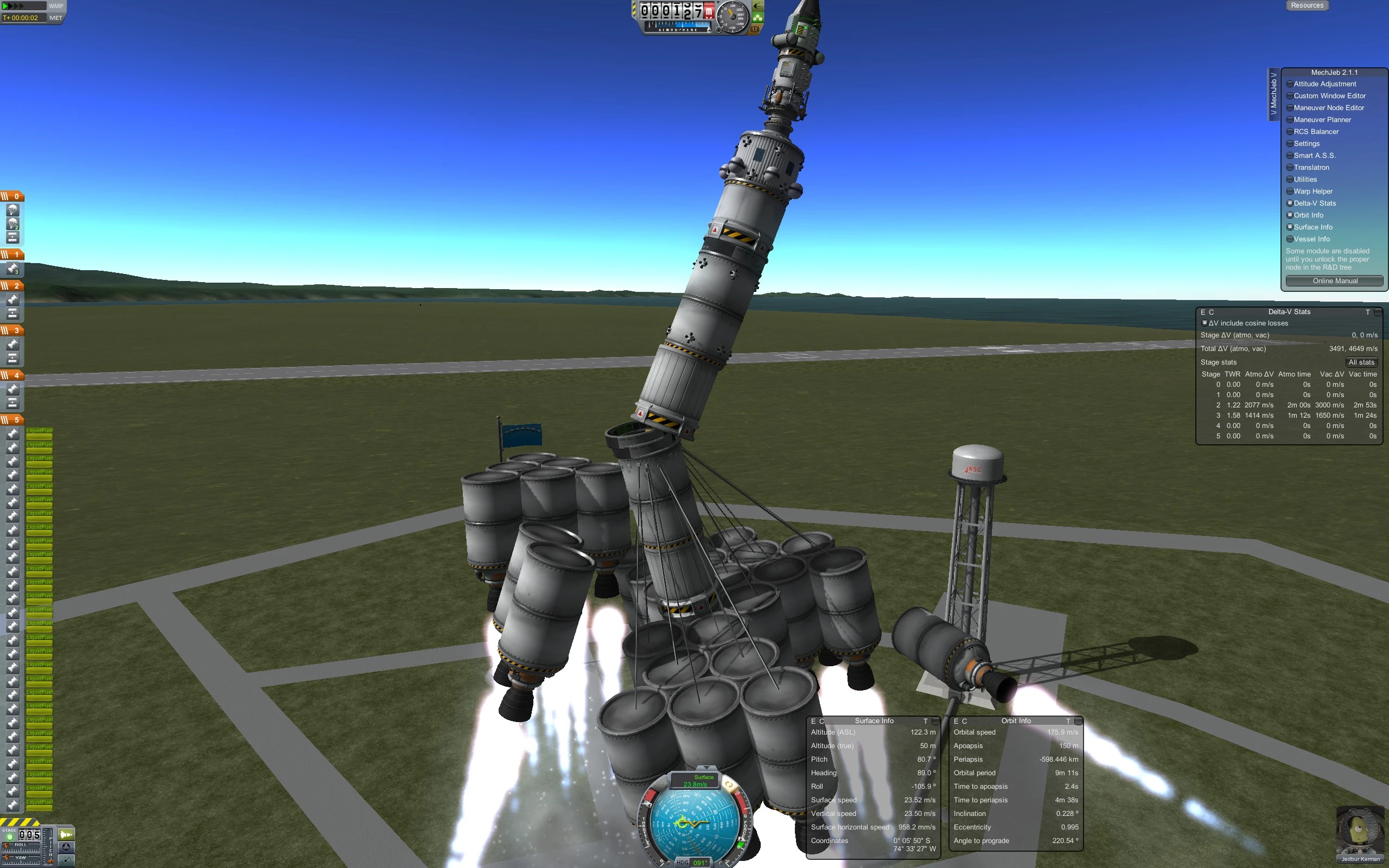
Research expanded the part catalog almost as fast as our ambitions grew. Larger vehicles brought big numbers: the single-stage core alone provides around 6,000 m/s spare after achieving orbit with its full first stage, with the vehicle’s total delta-v near 10,000 m/s.
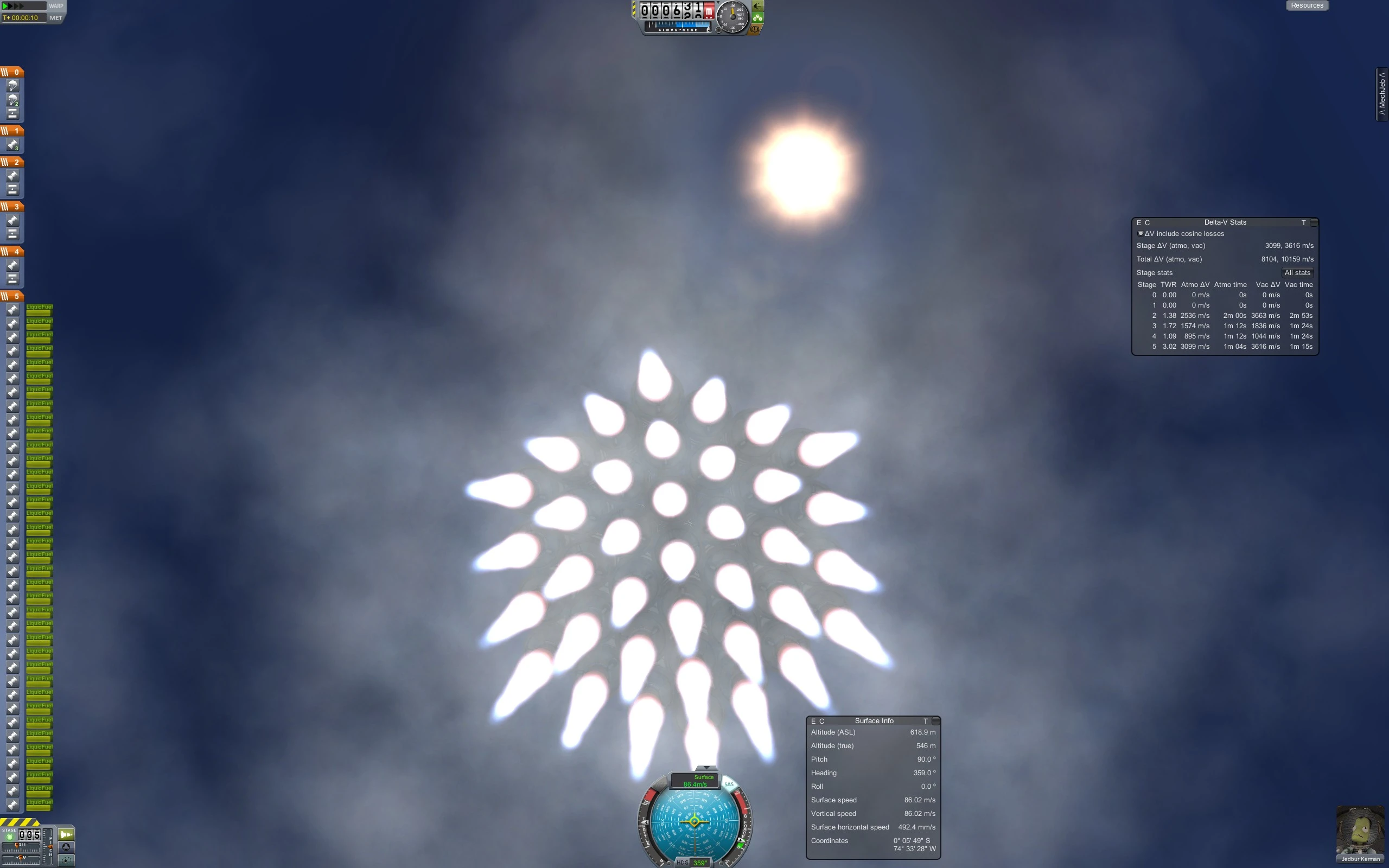
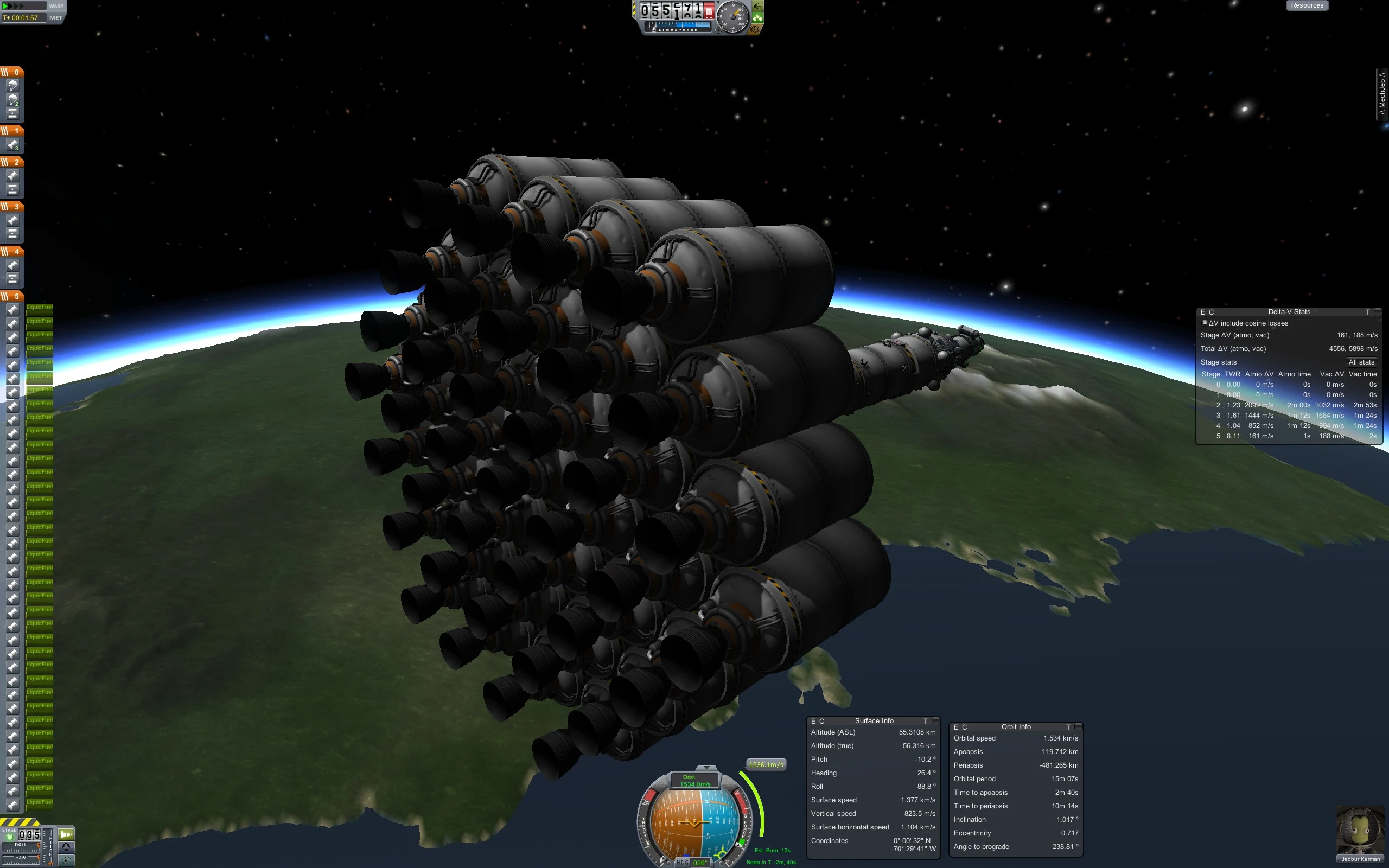
That margin kept crews safe even when misadventure derailed nominal flight plans.
Deep-space crewed science
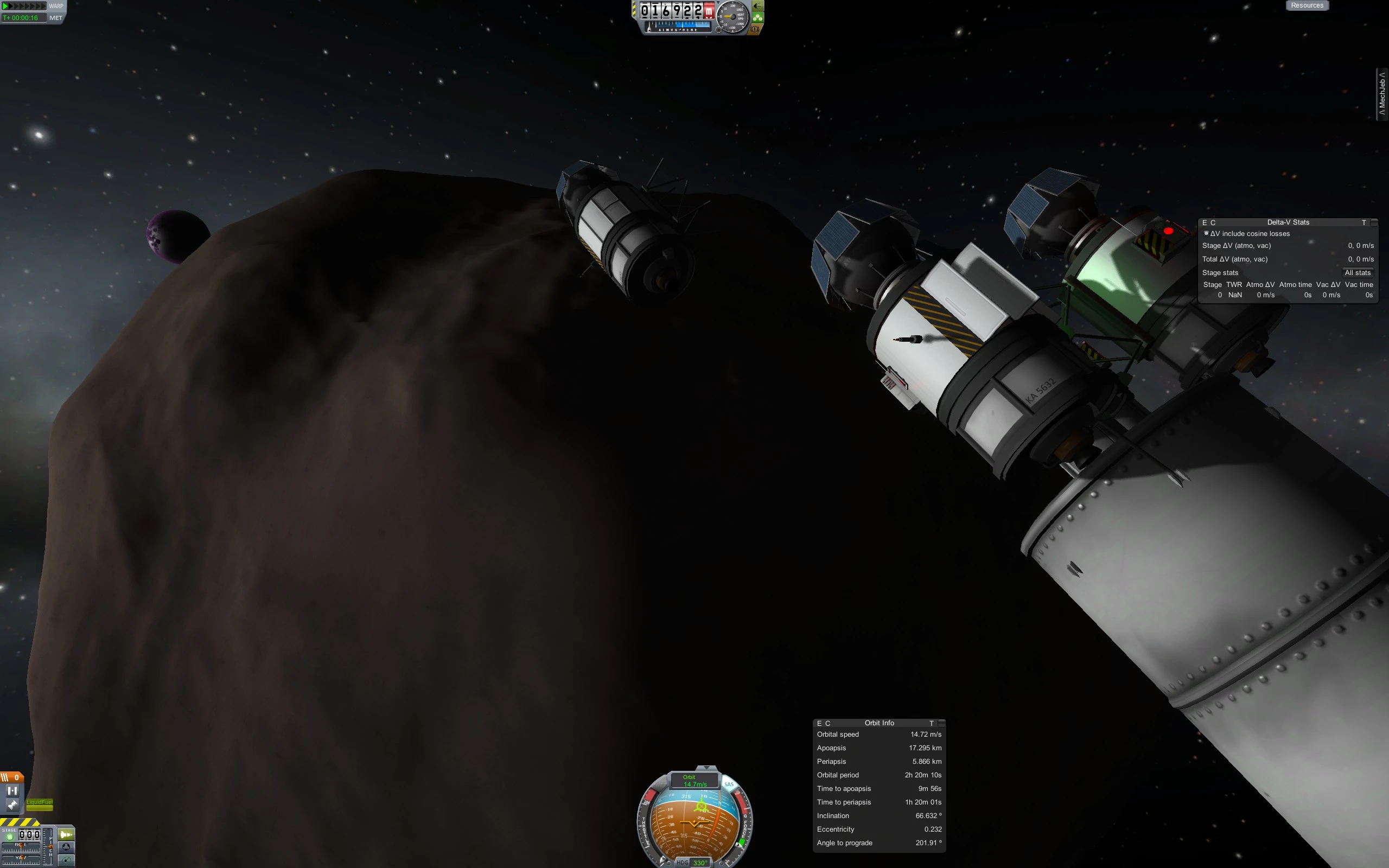
Interplanetary operations made staging explicit. Here, ~3,000 m/s carries the crew out to Duna for insertion maneuvers.
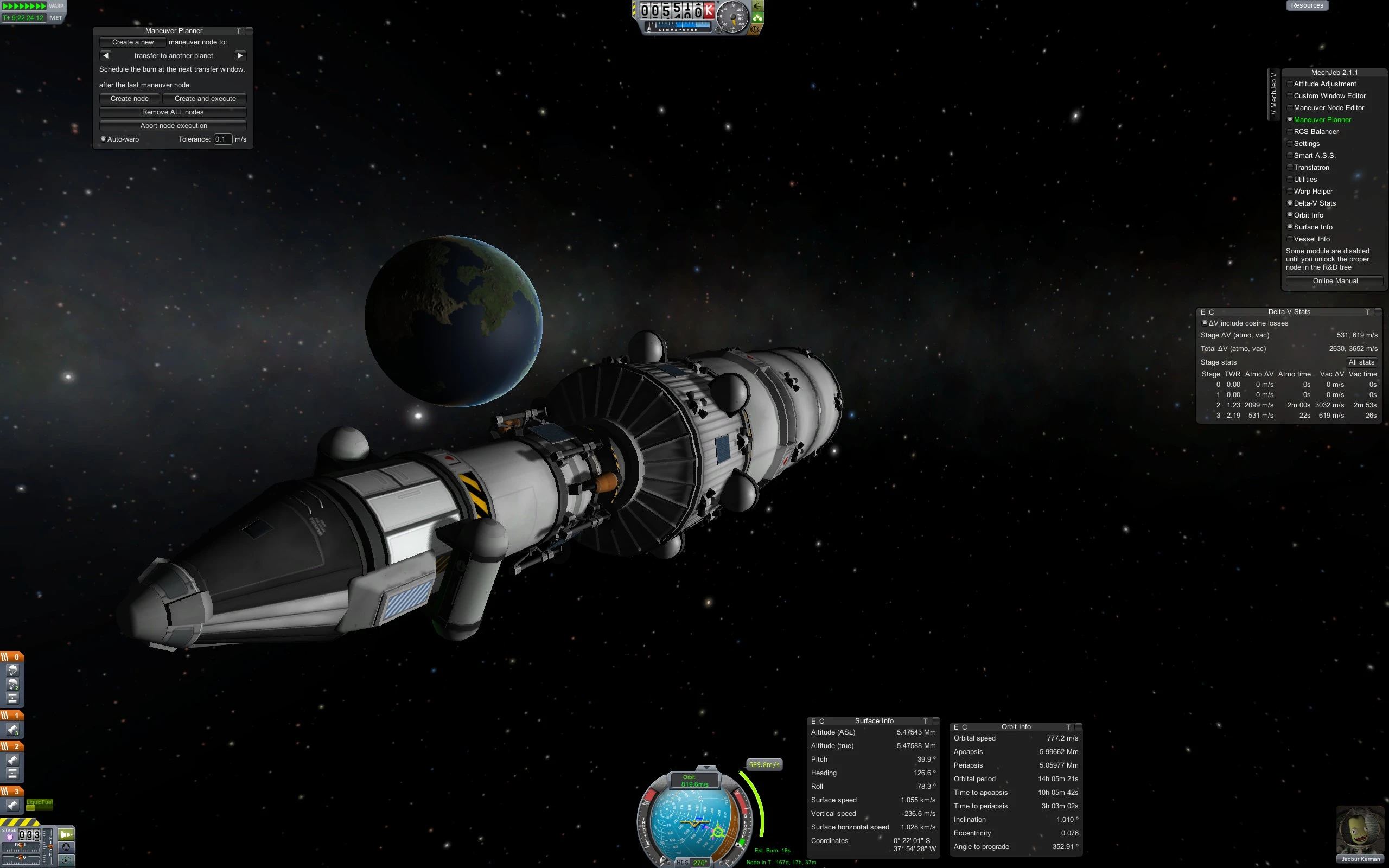
The lander packs a few small side-mounted motors—the largest mounts that still leave room for a docking port. They are efficient for low-gravity moons: ~1,800 m/s remains after the lander reaches the landing site. The transfer vehicle keeps all Reaction Control motors and monopropellant to save lander mass, commanding its orbit via radio to dock with the science lander.
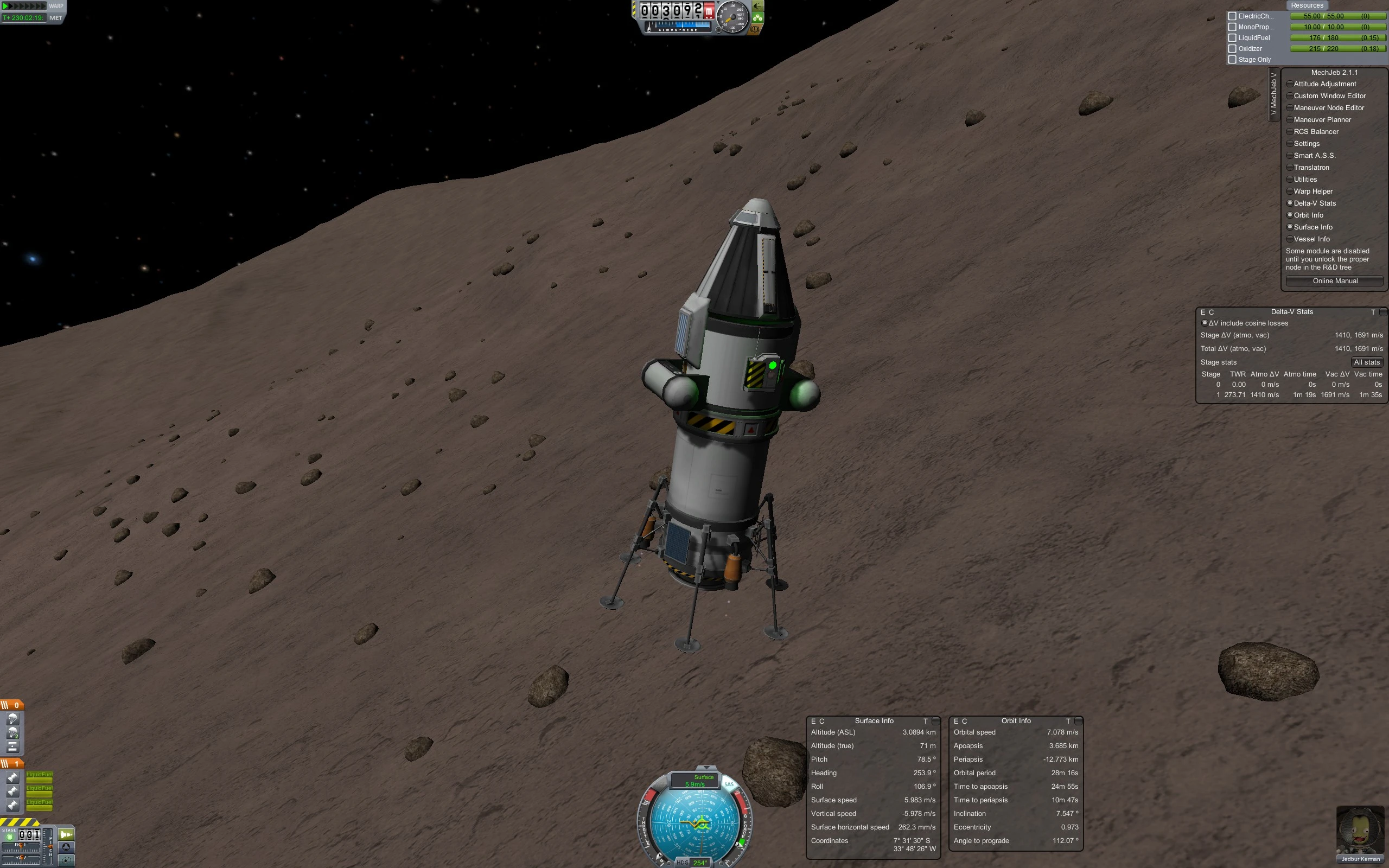
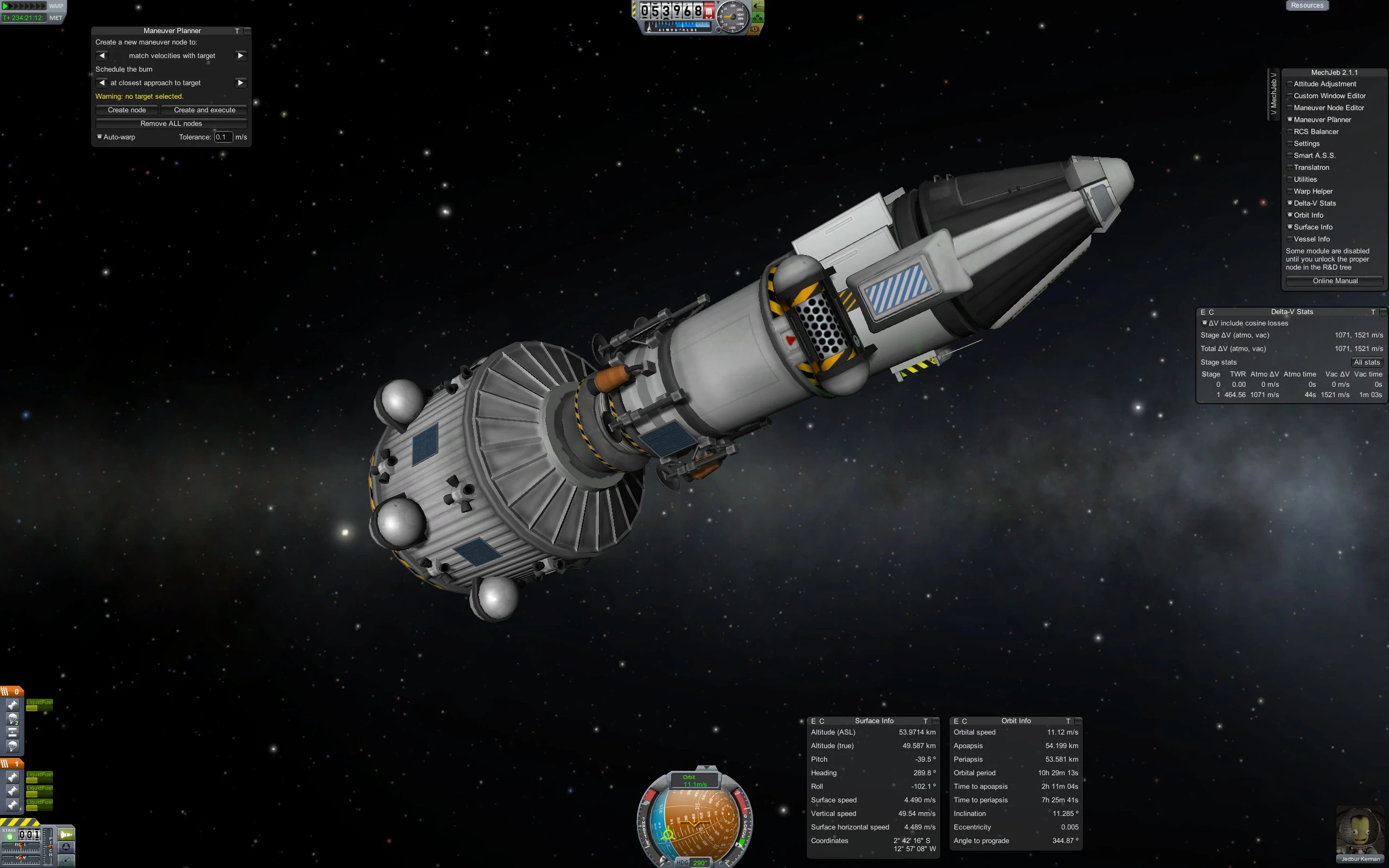
That plumbing allowed a full crewed science lander to return home intact, with experiments aboard. With a range of targets, long burns, and ever-growing rocket assemblies, the natural next step was larger yet.


