
Fission, fins, and a long way home
Kerbal Space Program's Interstellar mod adds a lot of speculative propulsion and power technology. One early favorite: attach a small nuclear reactor to a thermal nozzle and fly a plane for years using only air as reaction mass.
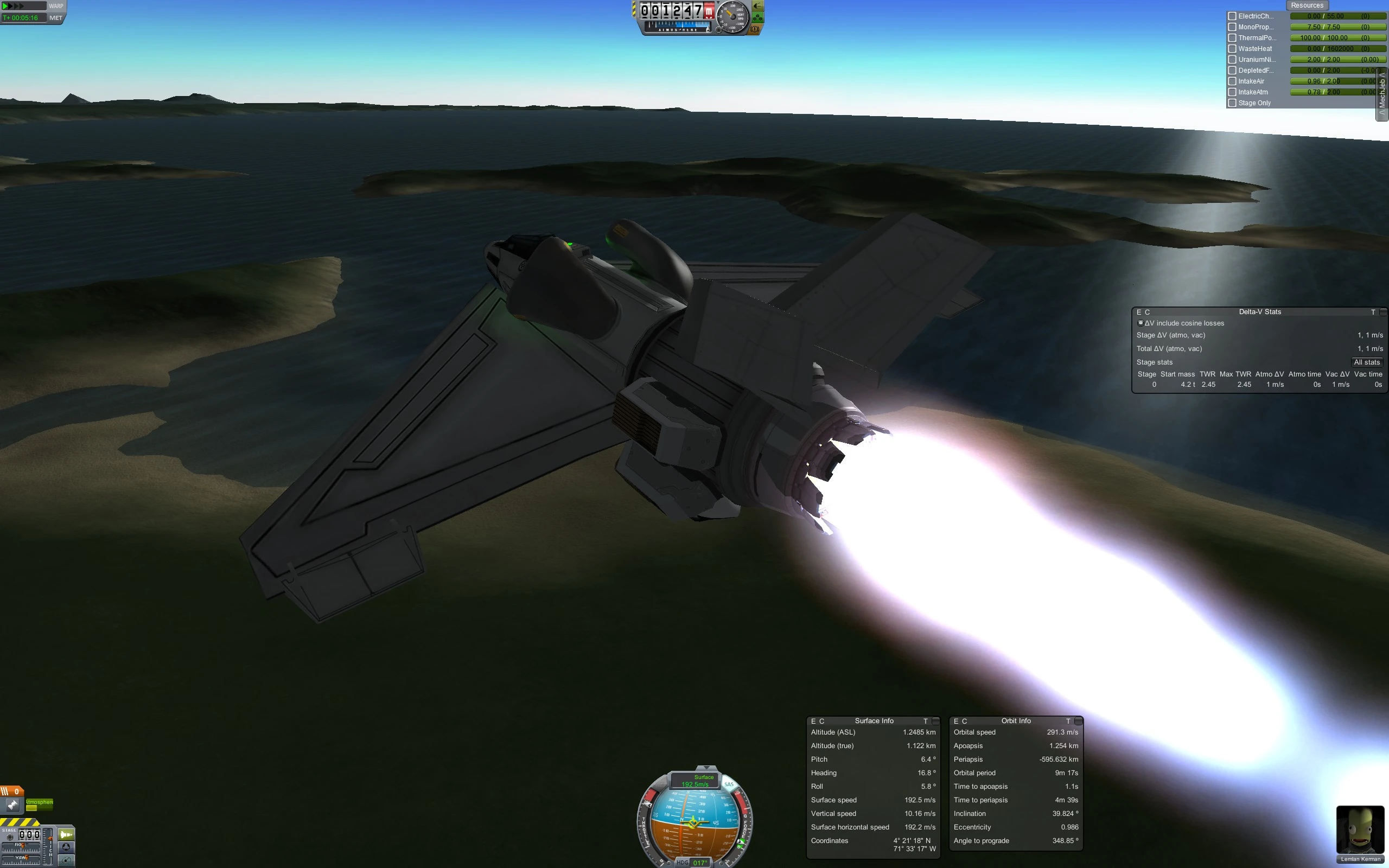
That idea was studied for real aircraft, then abandoned because any crash would spread radioactive material. Kerbals, as usual, are less cautious.
Heat is the real problem
The mod makes you manage two resources: electric power and thermal power. You can bolt rockets and jet engines directly onto fission reactors (fusion and antimatter come later), or attach generators for electricity to run electric engines. The hard part is getting rid of the waste heat — a reactor that hot has to dump energy somewhere. In the atmosphere, small radiator panels can ride on airflow for convective cooling. In vacuum that option is gone, and any spacecraft must shed heat by direct radiation.
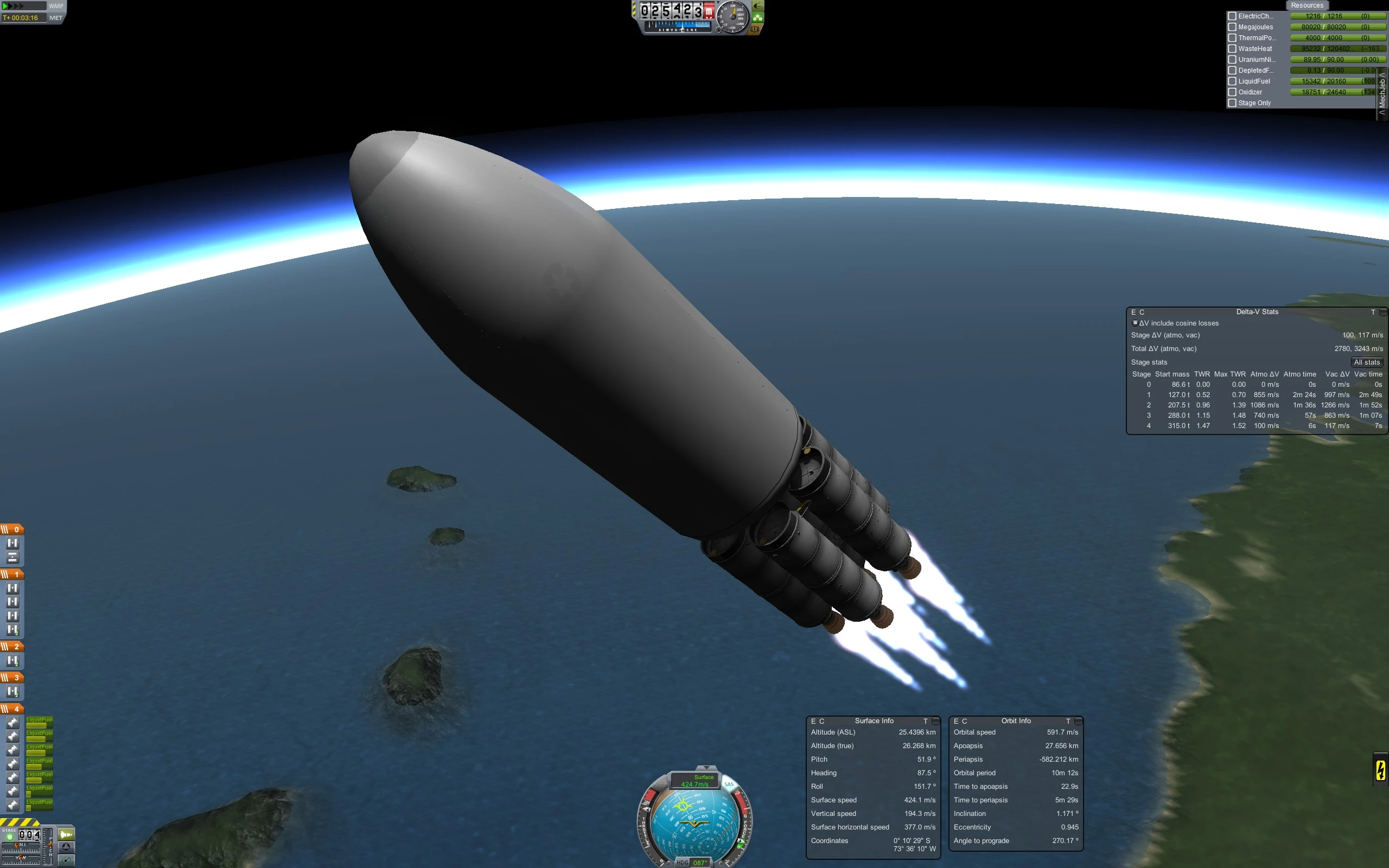
Effectively, once you leave the atmosphere, spacecraft need fins.
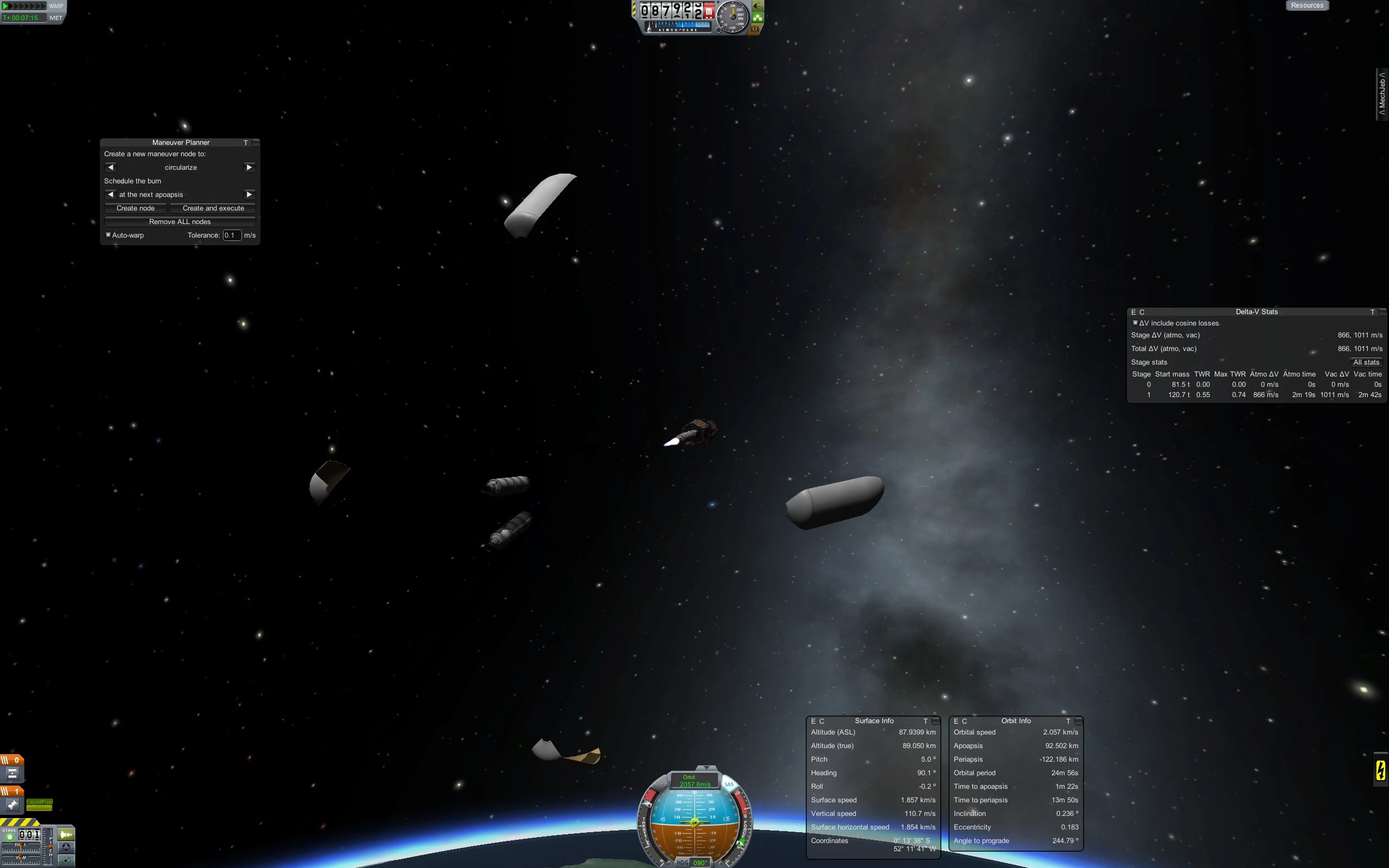
And they need to be very large fins, which would snap under aerodynamic loads. So they launch folded.
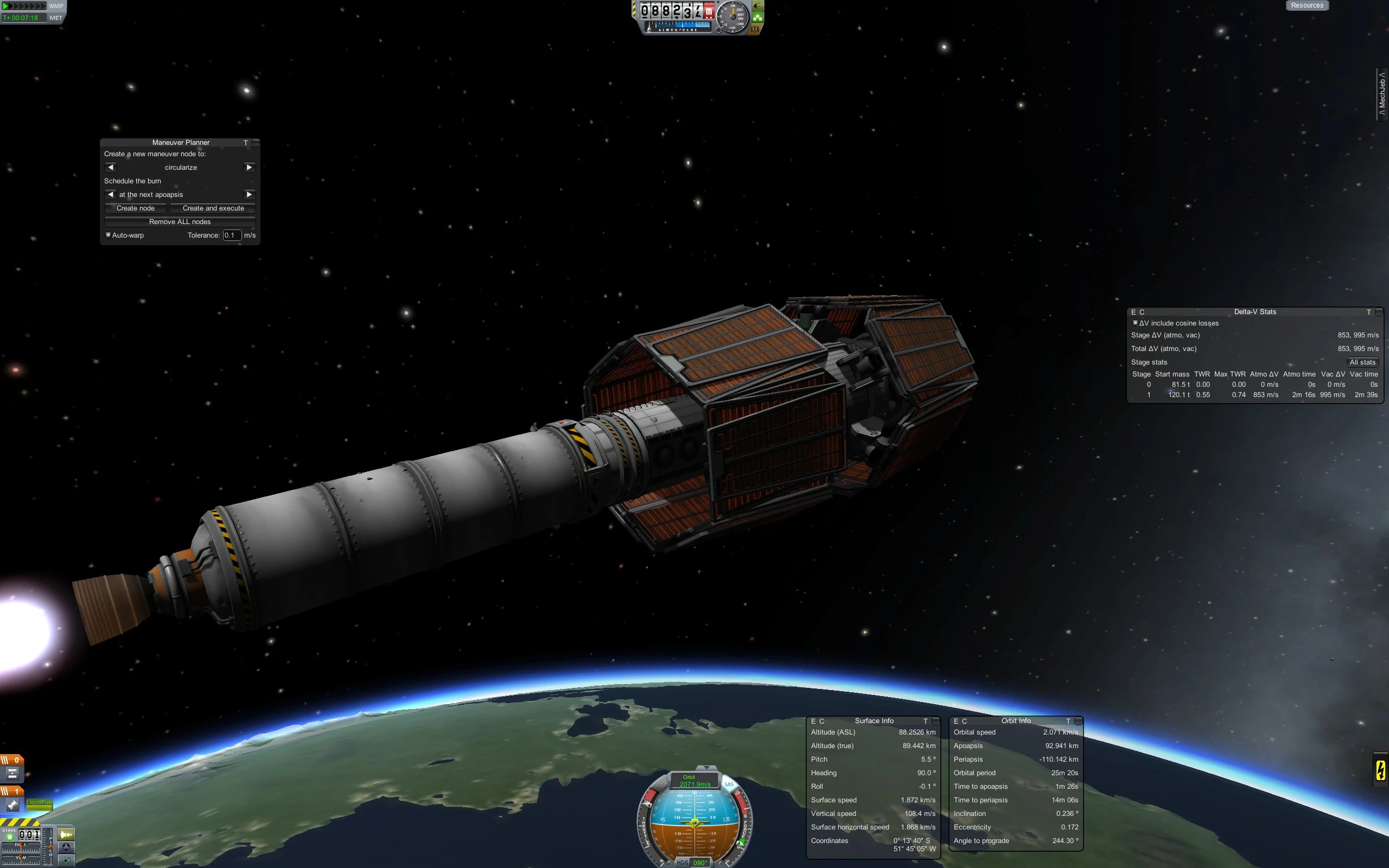
On orbit they unfurl. The dim red glow visible in the structure is hot coolant from the electric generator, circulating through the radiators and radiating heat into space.
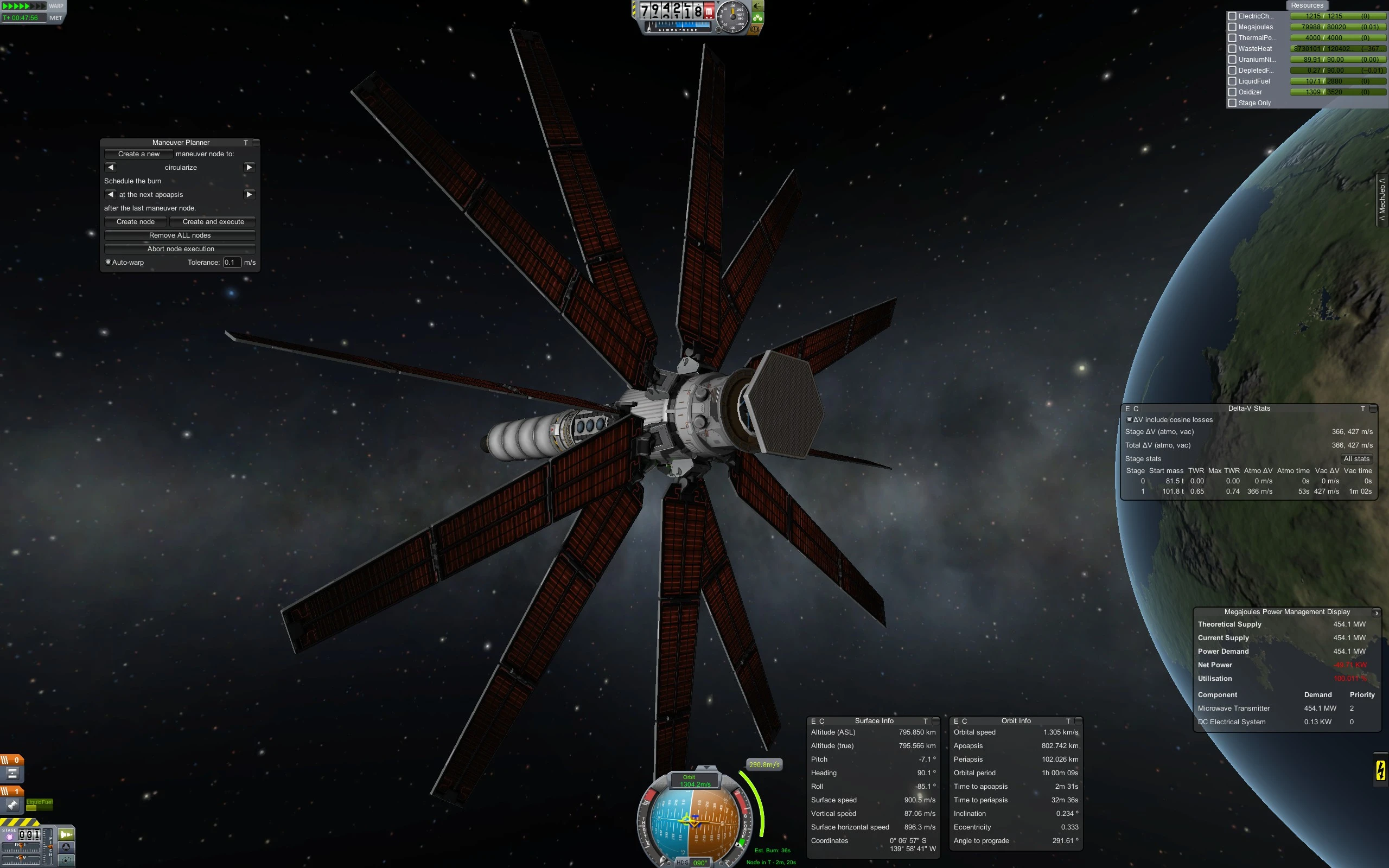
That station also carries a hexagonal microwave transceiver, part of a network that can beam power between transceivers in line of sight. The idea: rather than ship reactors and generators on every probe, build cheap ion-engine craft that draw on microwave power beamed from an orbital fission plant.
The first attempt didn't produce enough power to be interesting, so the project moved on.
A variable-fuel rocket
Nuclear thermal rockets can run on nearly any propellant — there's no need to carry separate fuel and oxidizer. One test craft carried eight radially symmetric water tanks around a fission reactor, feeding a single thermal nozzle.
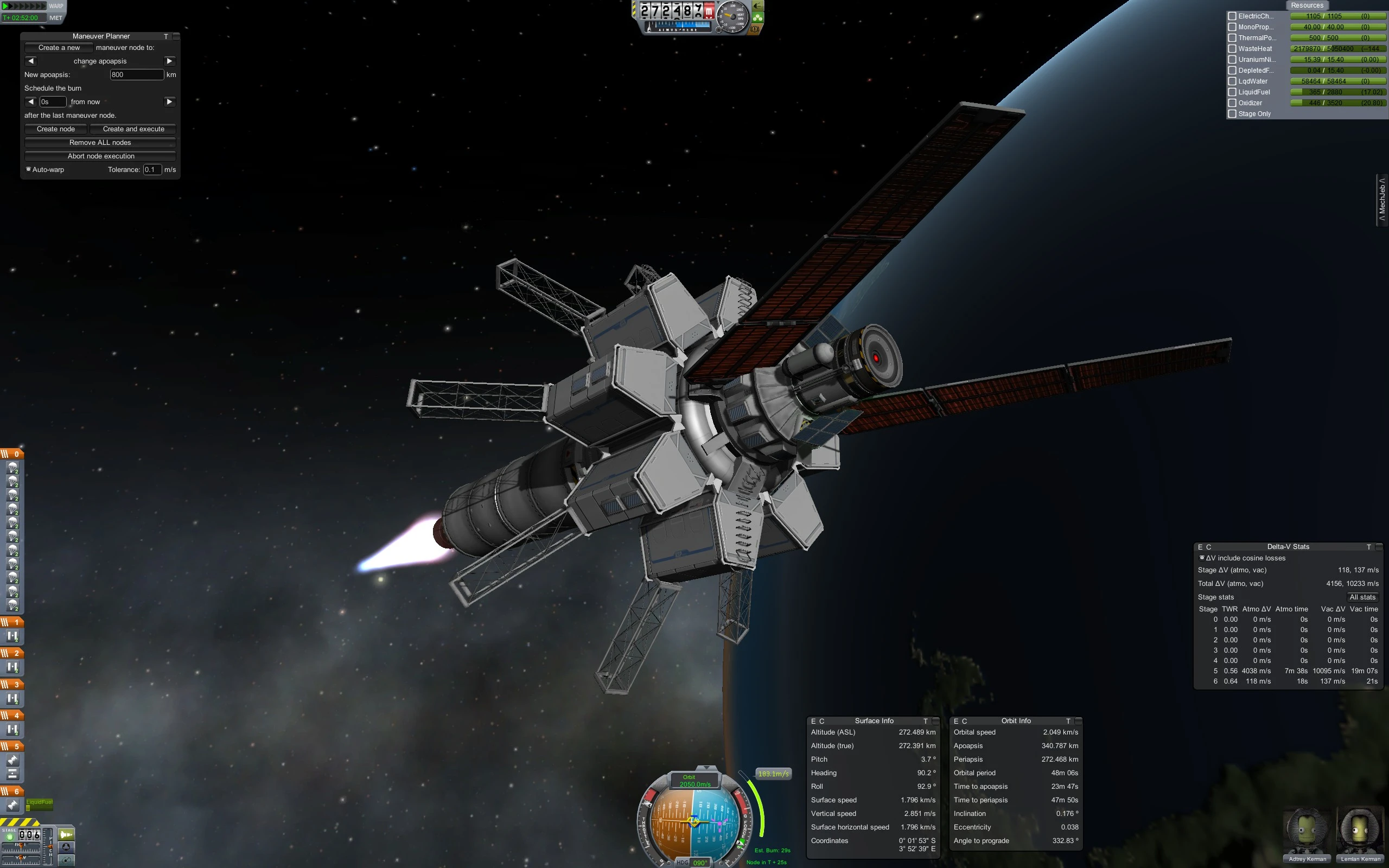
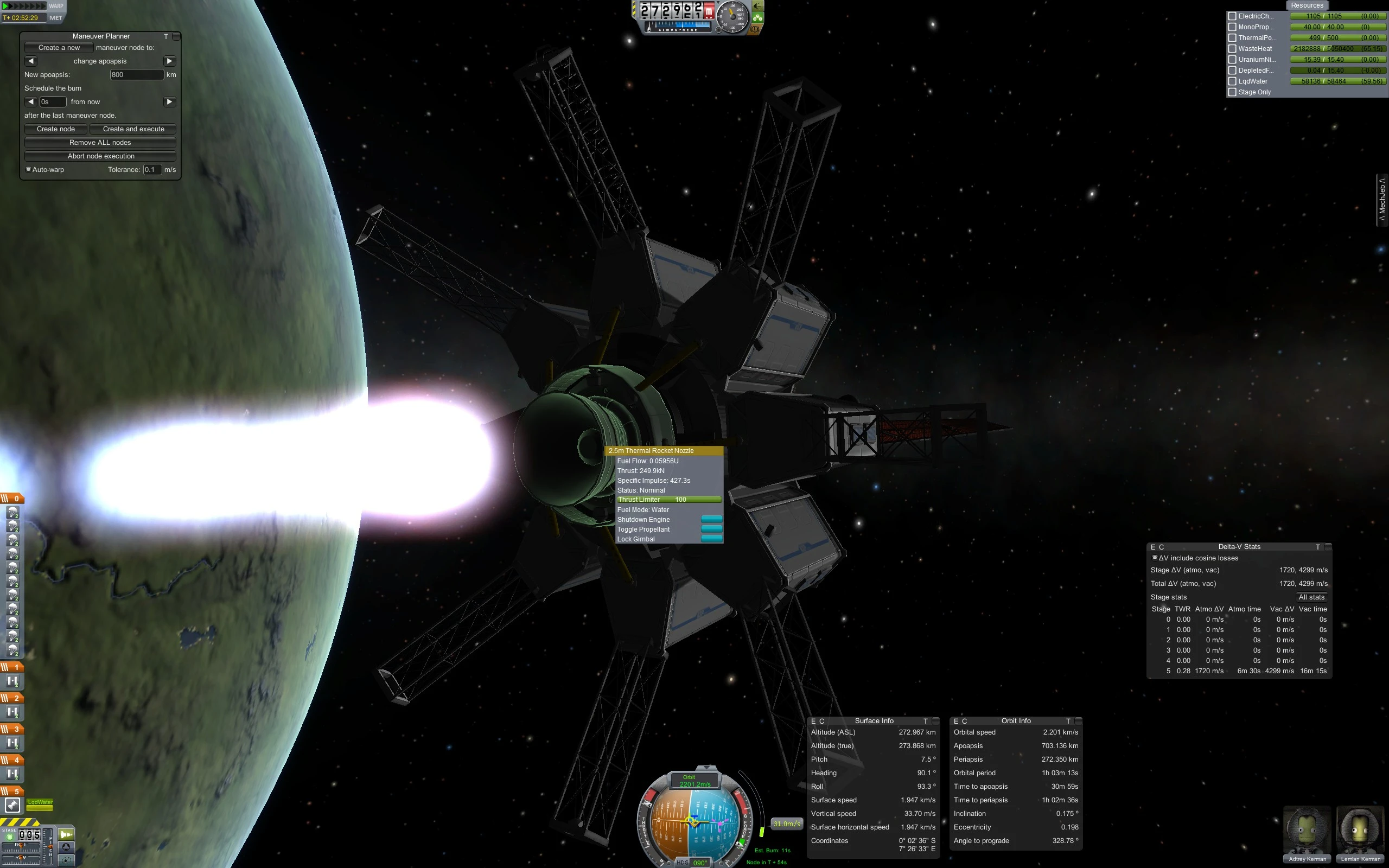
To keep mass down on the journey, tanks were jettisoned in pairs as they emptied.
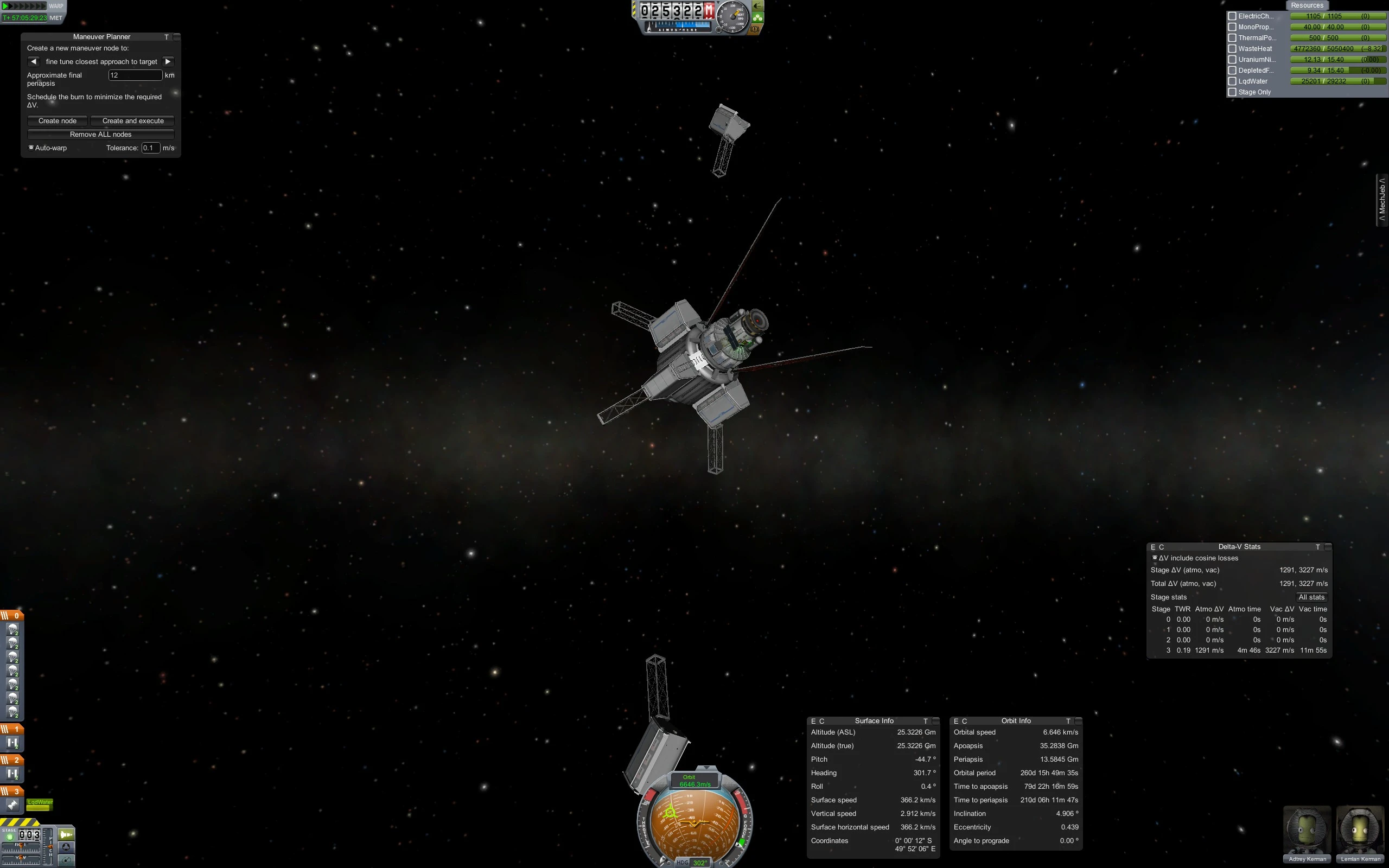
The craft touched down far out from the inner system — possibly a moon of Jool — but then ran dry of fuel on the return leg, leaving Adtrey and Lemlan Kerman stranded beyond Duna.
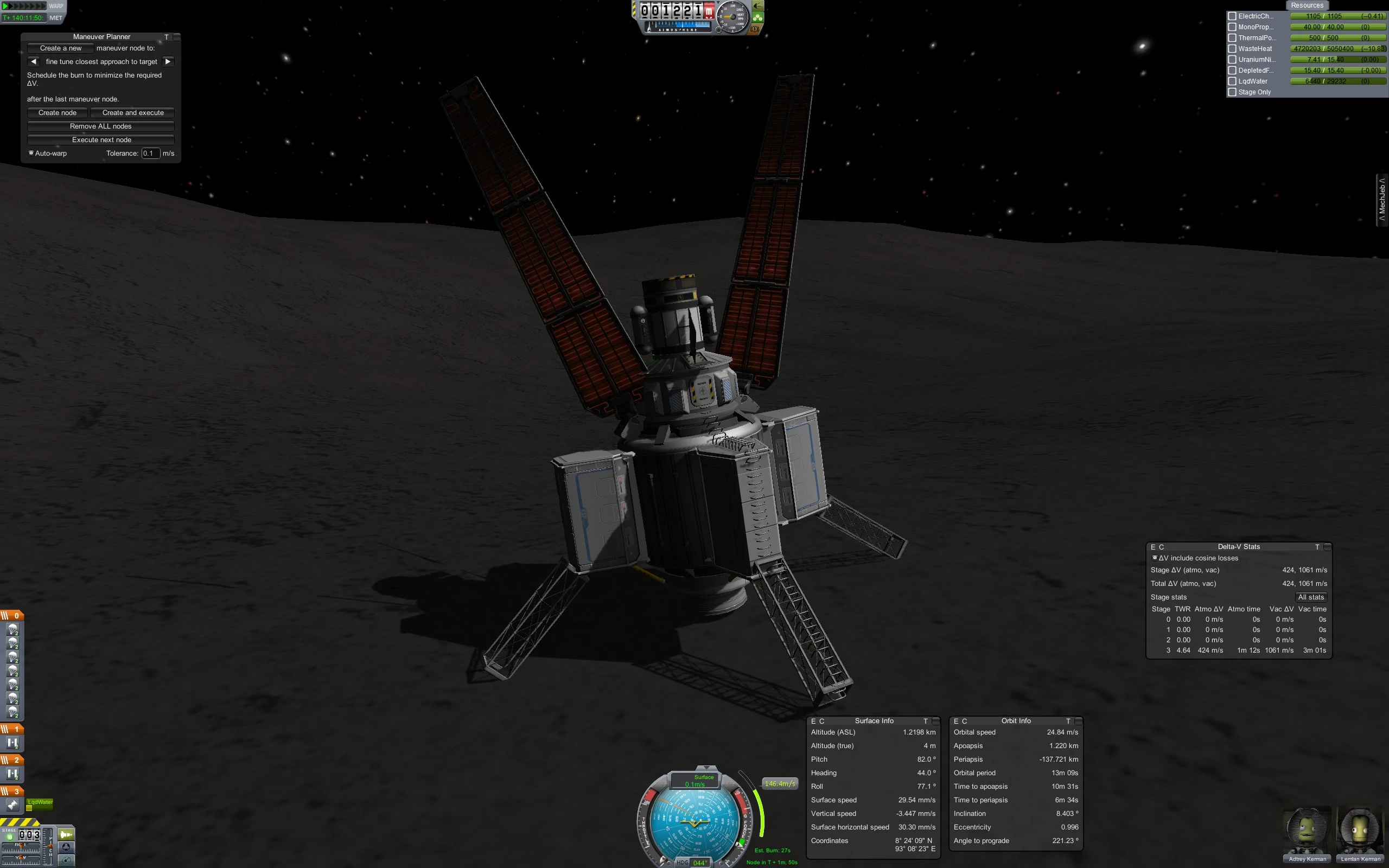
Bringing the science home required returning the whole craft (not just the crew) to Kerbin. That meant an uncrewed rescue ship — this one running conventional chemical engines, after some frustration with the early Interstellar tech.
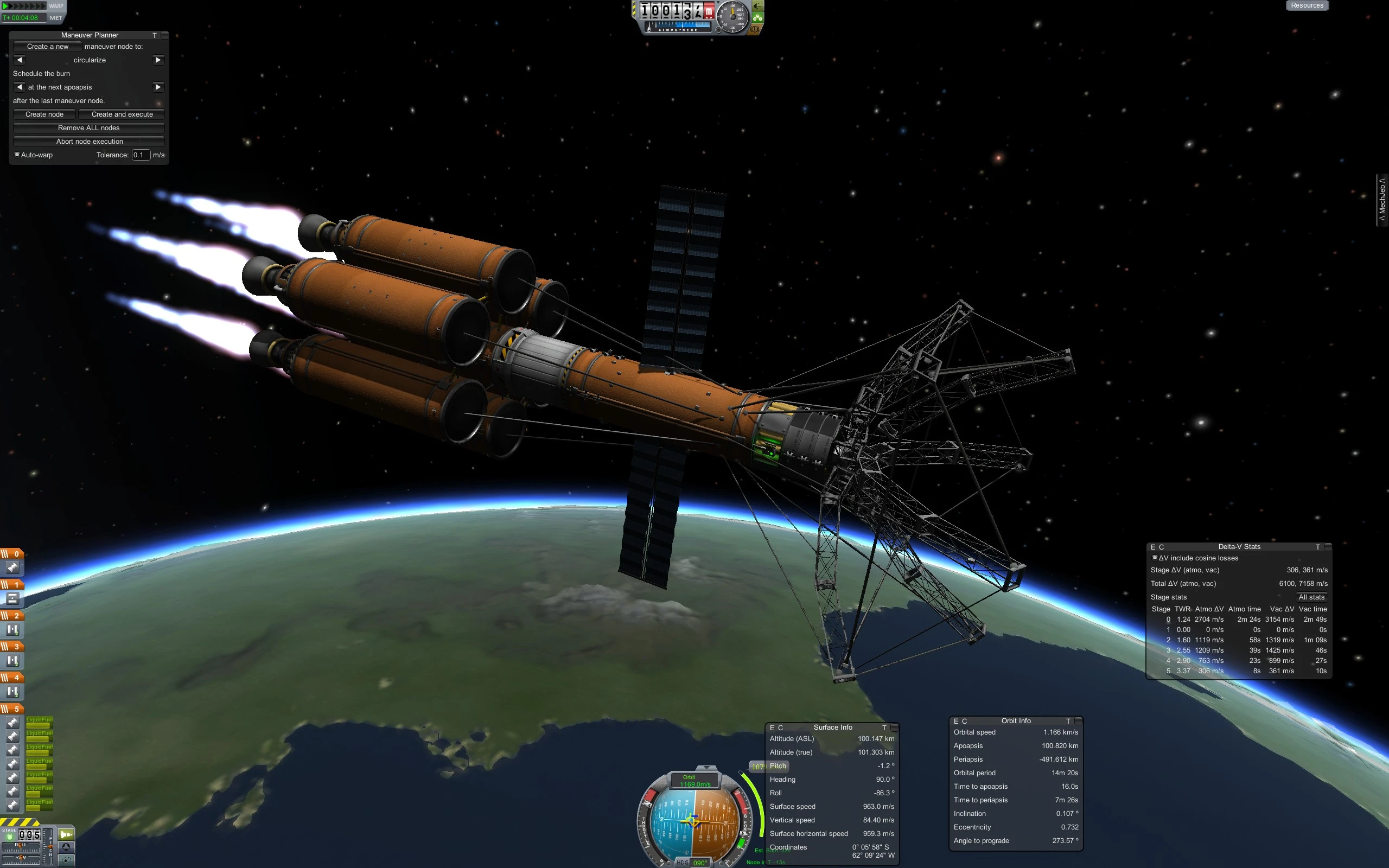
By then, hundreds of manual intercept and docking maneuvers had been logged, and MechJeb was handling the routine ones. Manual skill still matters: if the autopilot gets it wrong, somebody has to take over.
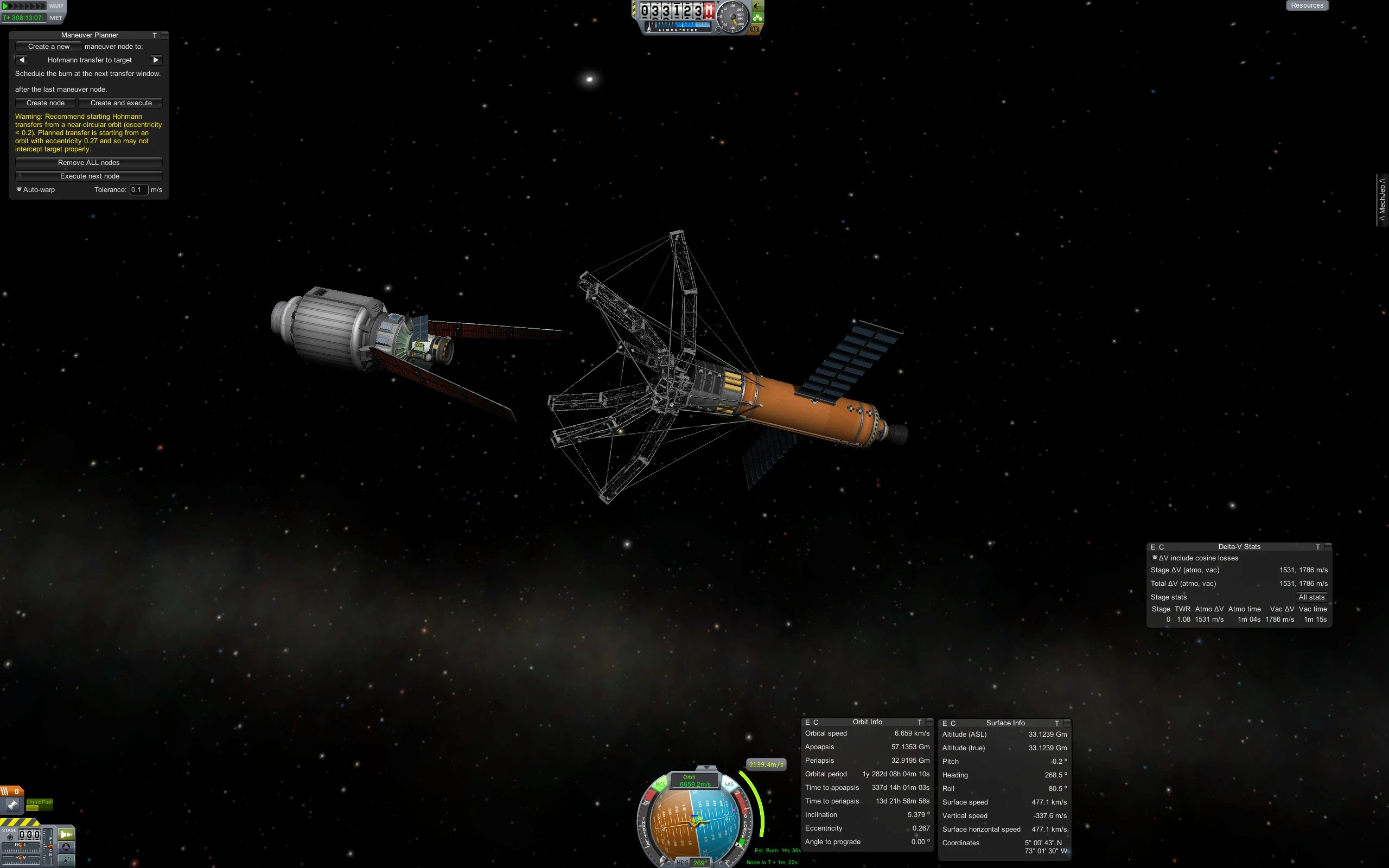
The rescue ship managed to grab the stranded craft, point it roughly toward Kerbin, and start the burn.
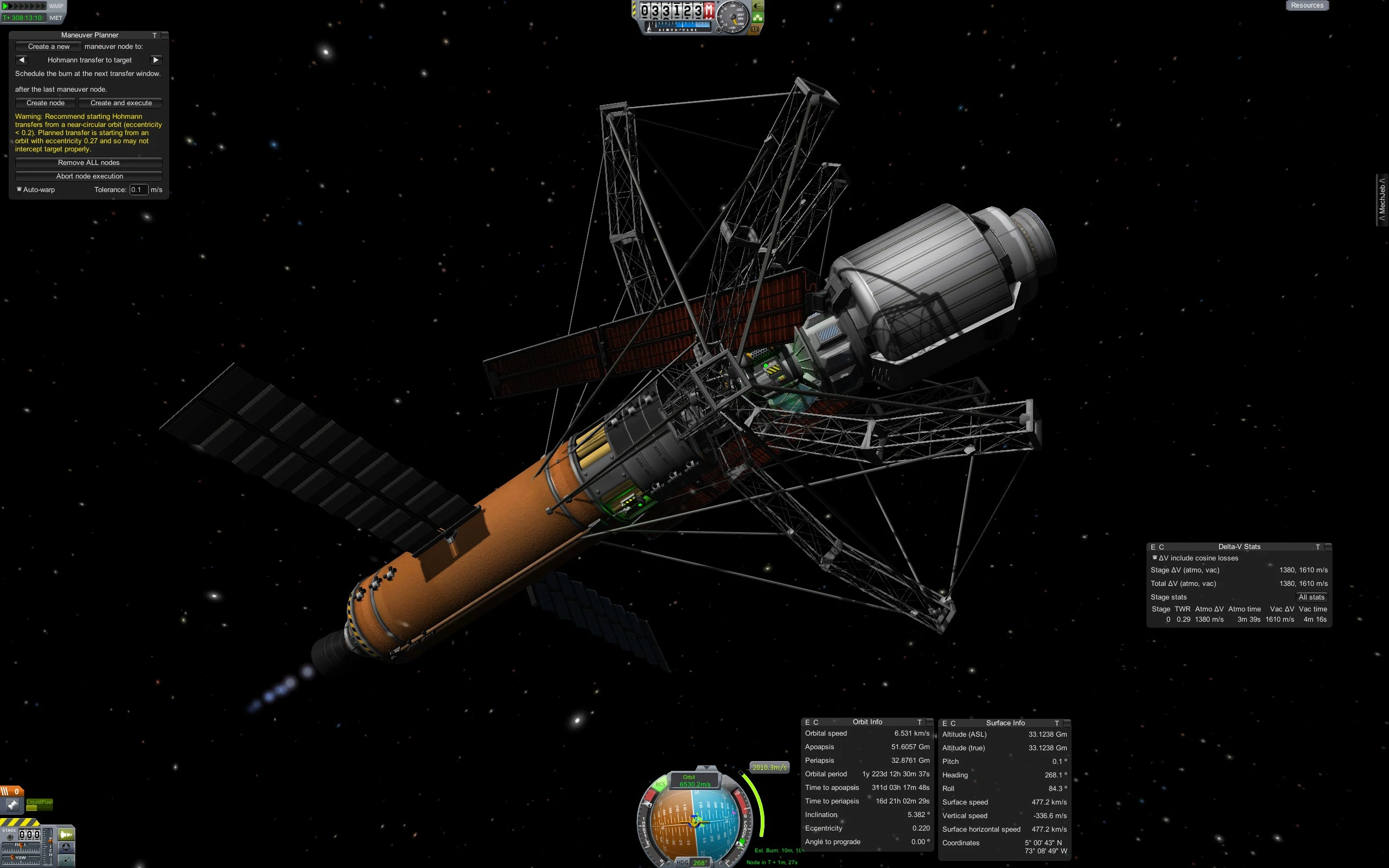
Then the rescue ship itself ran out of fuel. Follow-up help went up with traditional KSP nuclear engines.
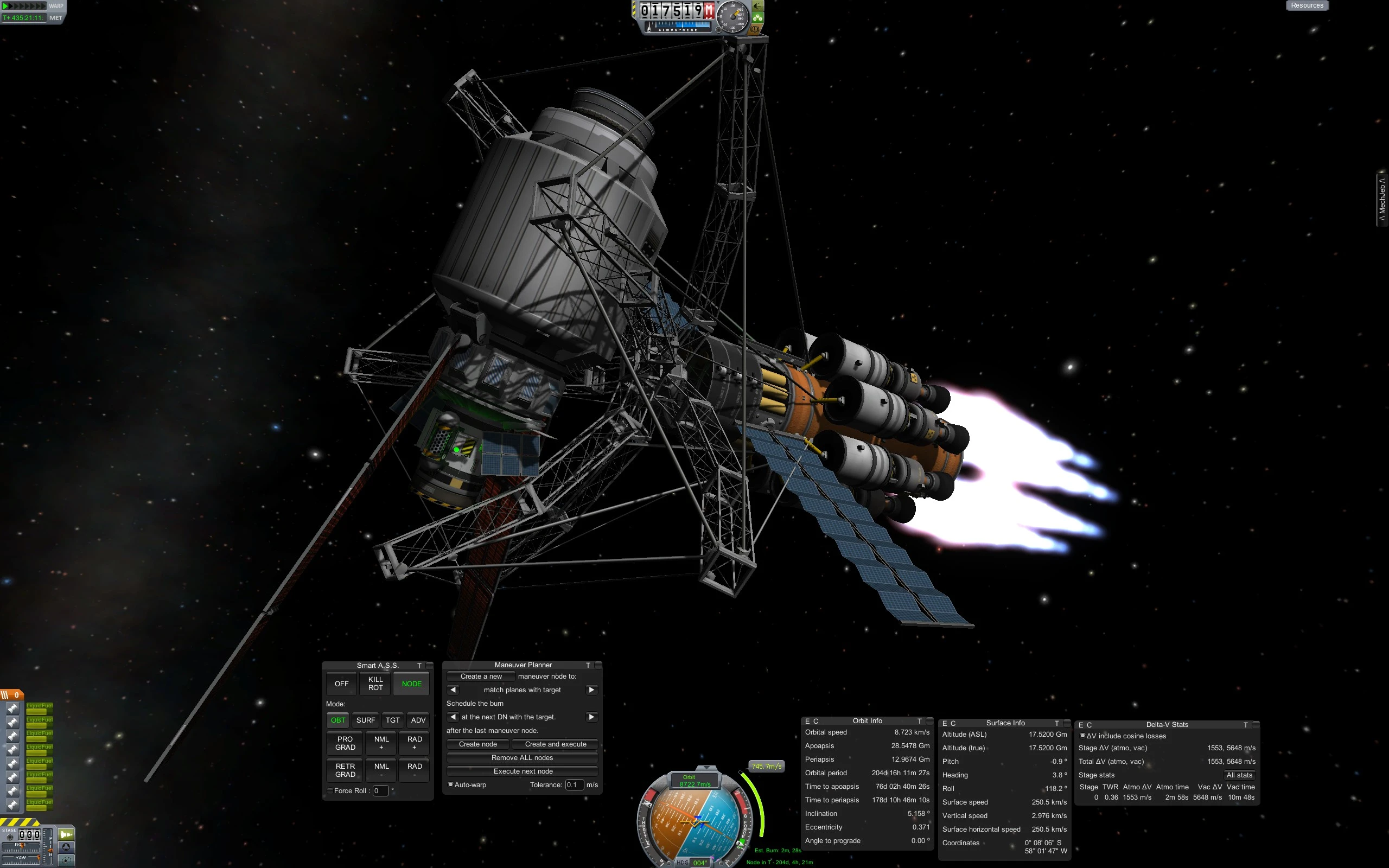
This predates the claw grabber, so the stranded vehicle sat loosely in a steel basket while the rescue ship tried to push it homeward.
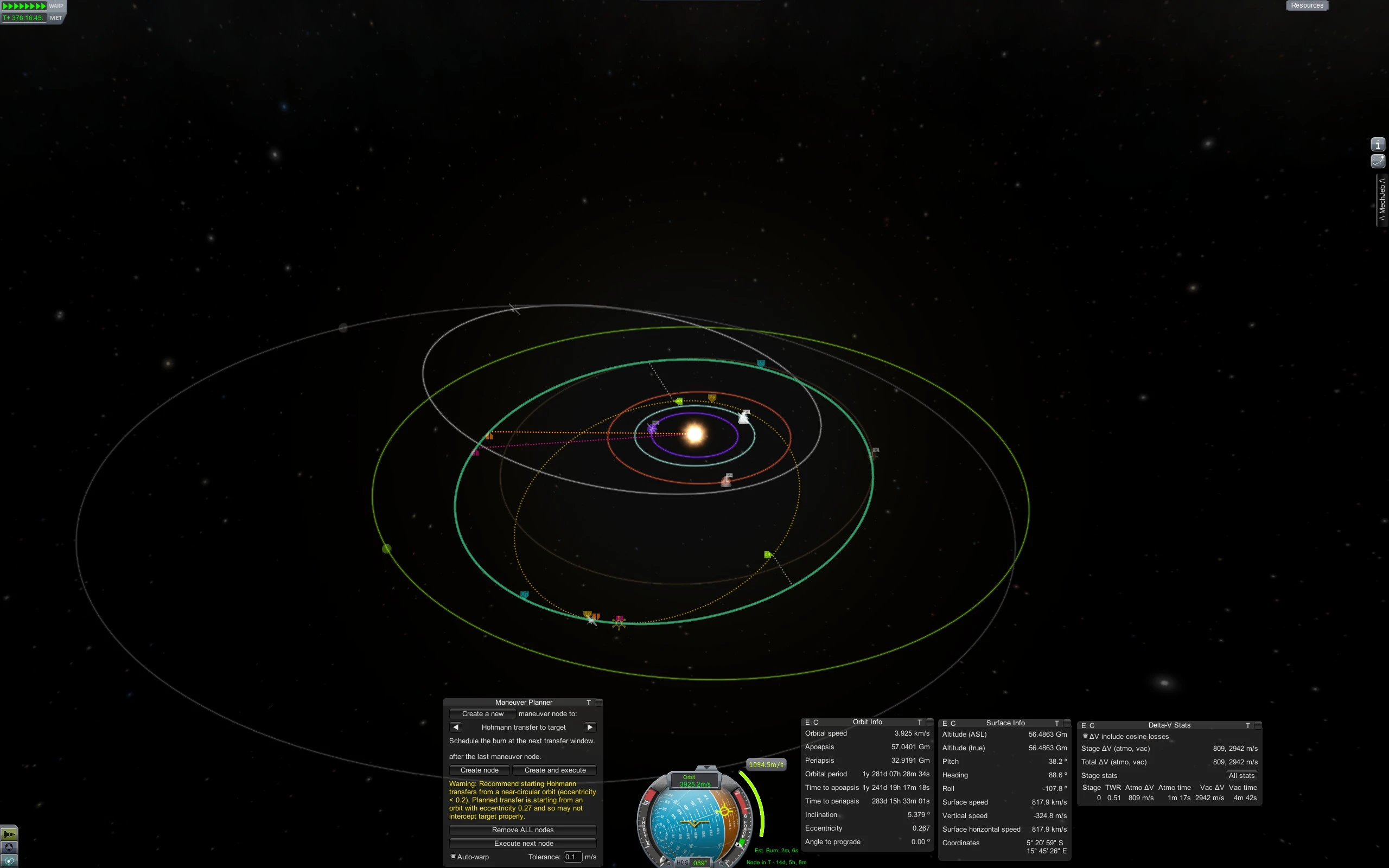
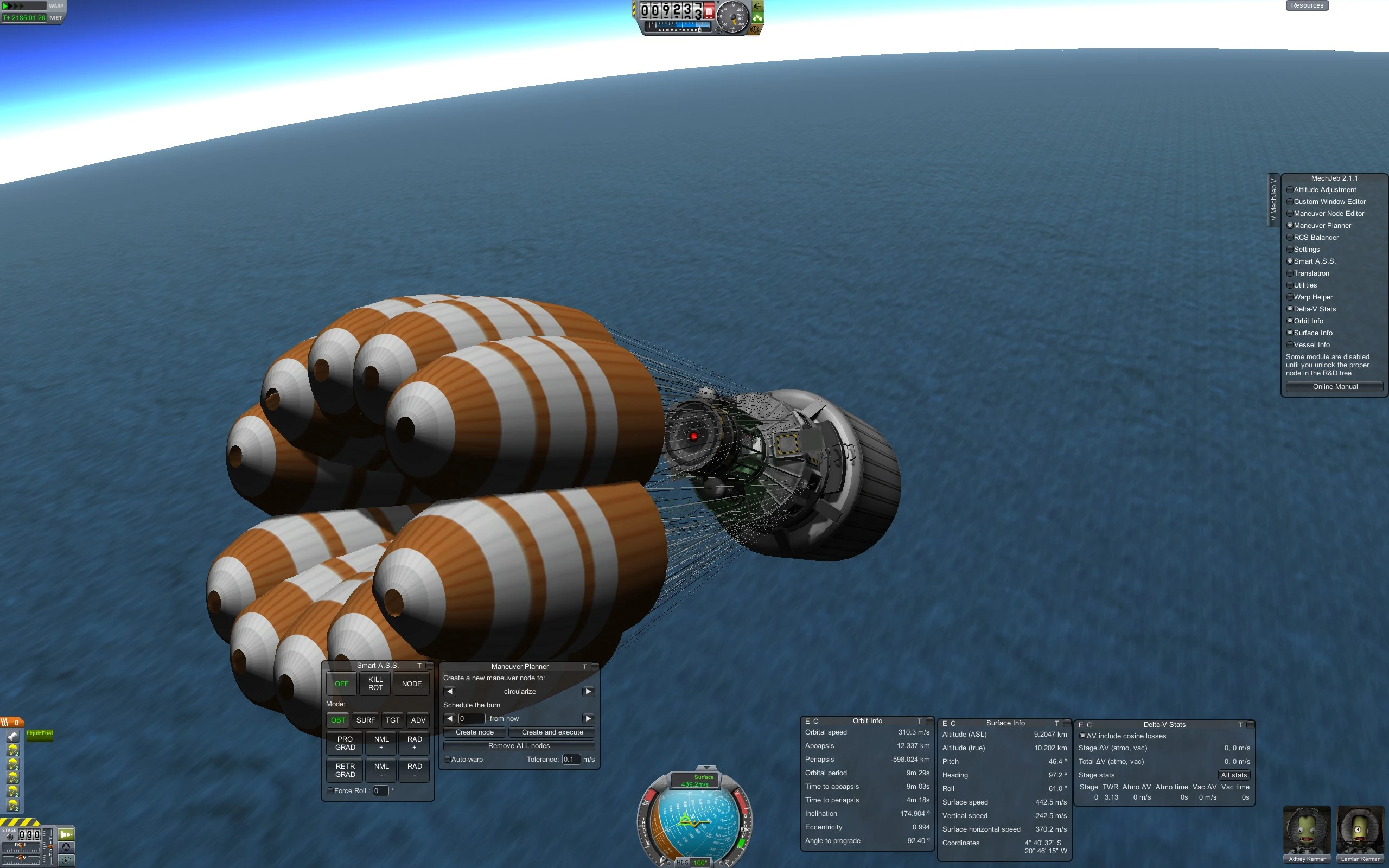
Somehow the whole stack did get put on an impact course with Kerbin. The radiators sheared off immediately at re-entry, leaving Adtrey piloting what is functionally a heavy jar of uranium with instruments and crew strapped to it.
The mission succeeded, thanks to a generous application of parachutes, and the craft splashed down intact.
Frustrated with thermal rockets and inspired by Blindsight's Icarus station, the next project returned to the microwave power question. Up next: very sparse Dyson spheres.


