When Aerospace Engineering Meets the Ground
Kerbal Space Program excels at selling the quiet majesty of interplanetary travel — the multi-day burns, the staged shedding of hardware, the final descent to a foreign surface on a whisper of thrust. That poetry tends to end abruptly at wheel contact, or slightly before it.
There is no graceful recovery from a tipped rocket. The practical path to sanity in Kerbal Space Program is a compulsive quicksave habit, paired with the discipline to occasionally accept an arbitrary failure as part of the mission narrative. Some failures write themselves: forget solar panels on one side of a ship, spin it halfway around for a maneuver node, and you’ll drift powerless for roughly half a year.
Our science landers now mount solar panels on every face.
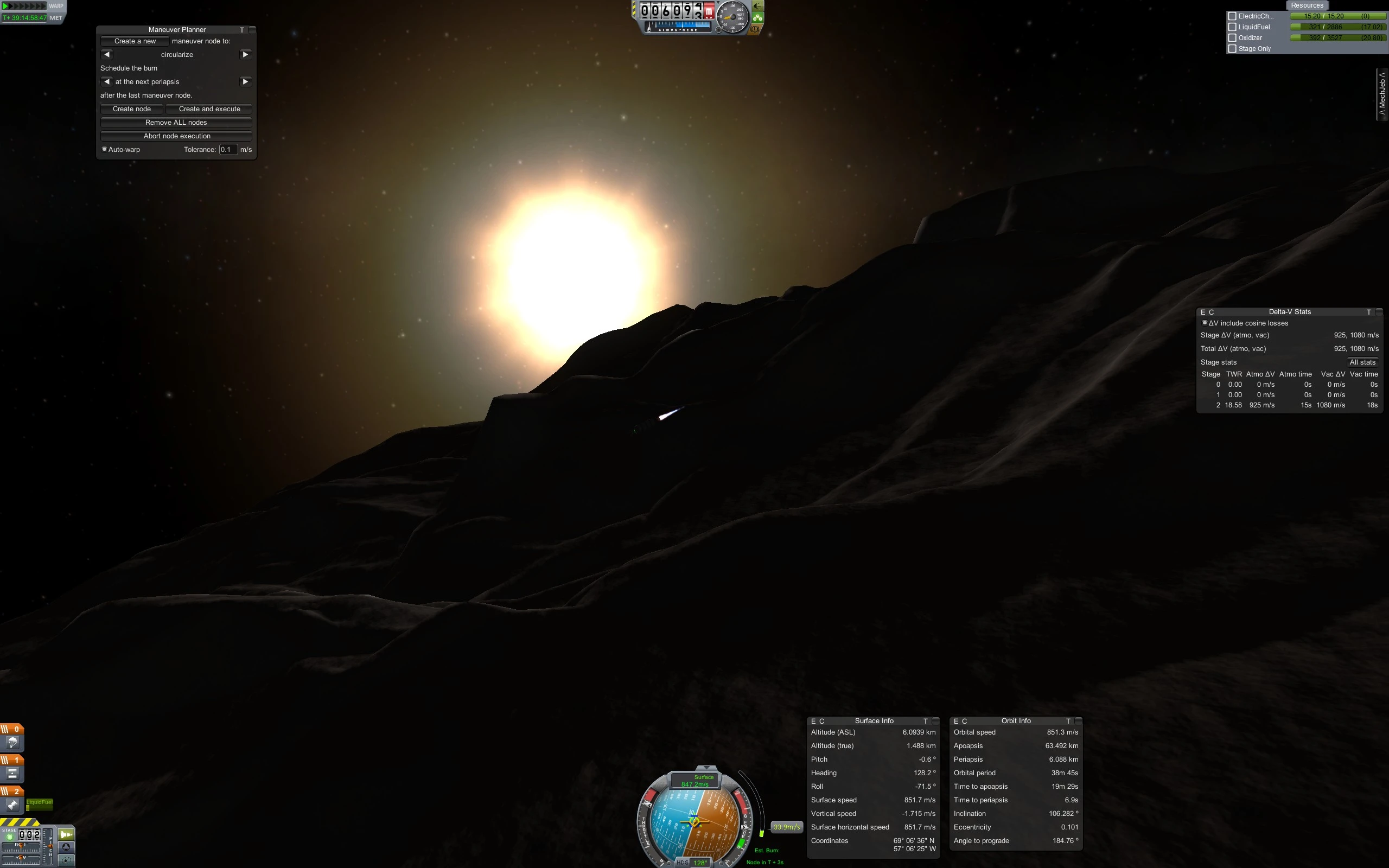
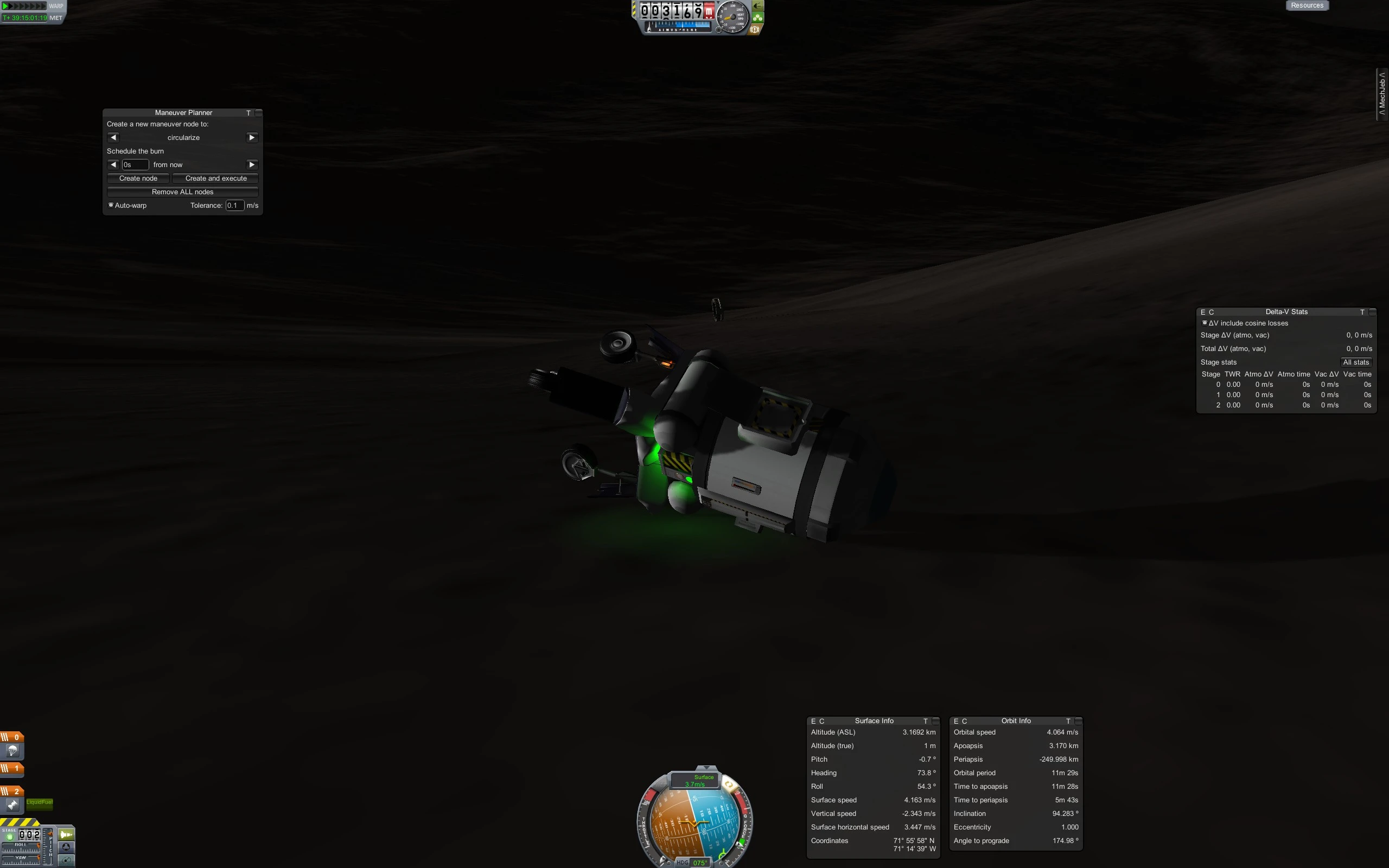
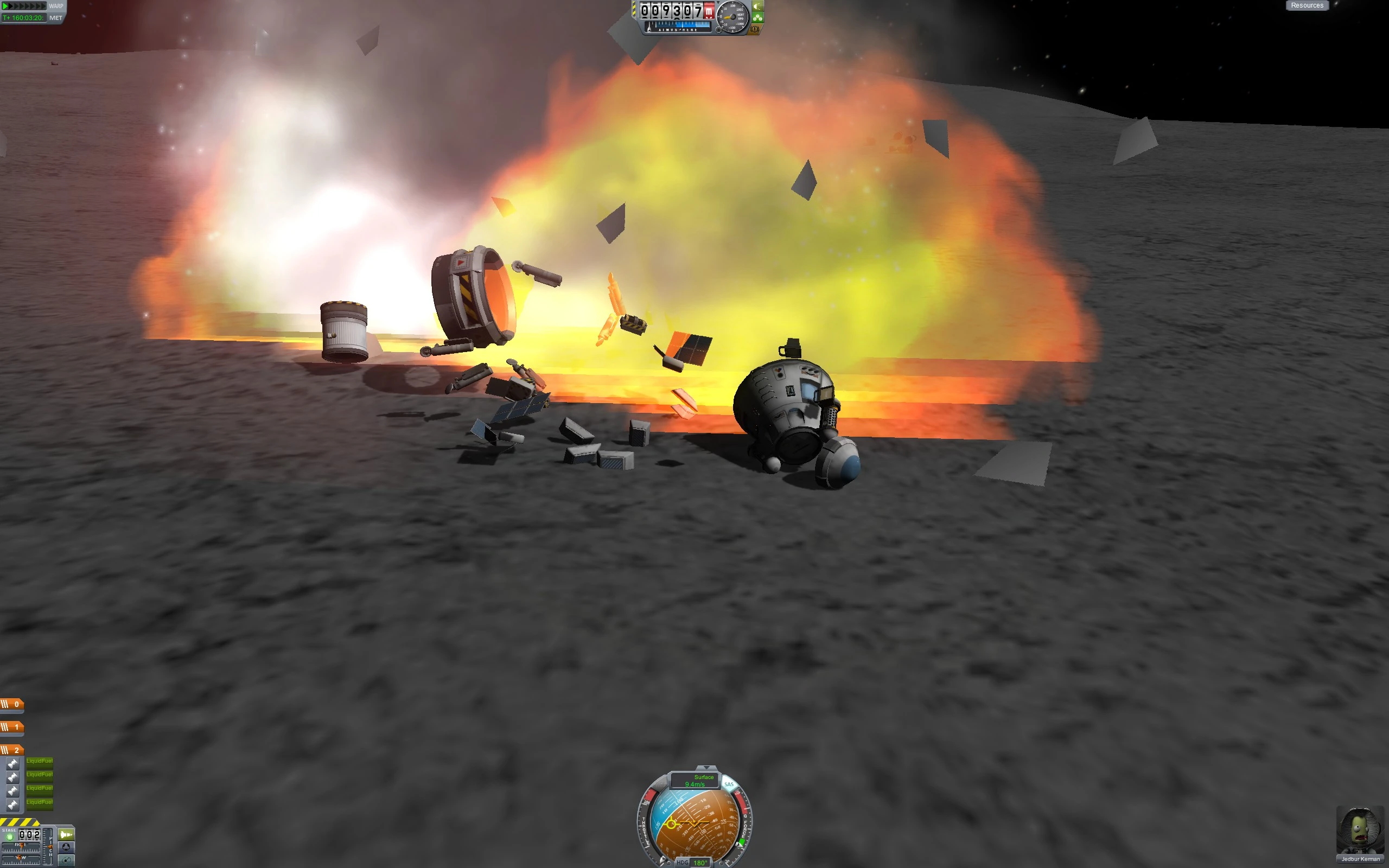
This particular landing went sideways — literally. The exact cause of the mishap is unrecorded, but the visual evidence is unambiguous: part of the vehicle is no longer attached, and the rest has adopted an orientation it was never designed to hold for long.
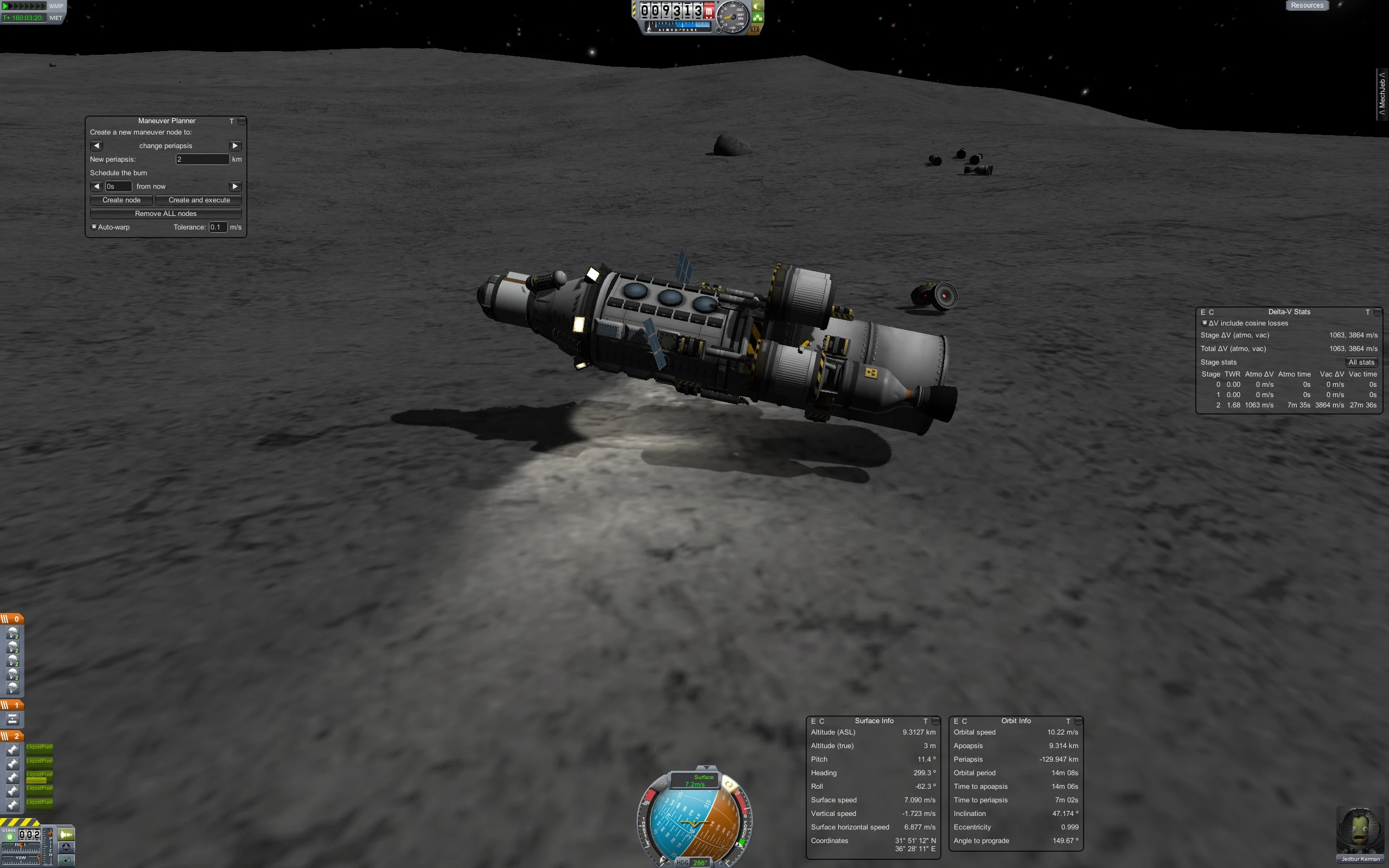
Quicksaves were, apparently, not consulted.
The Mission Profile
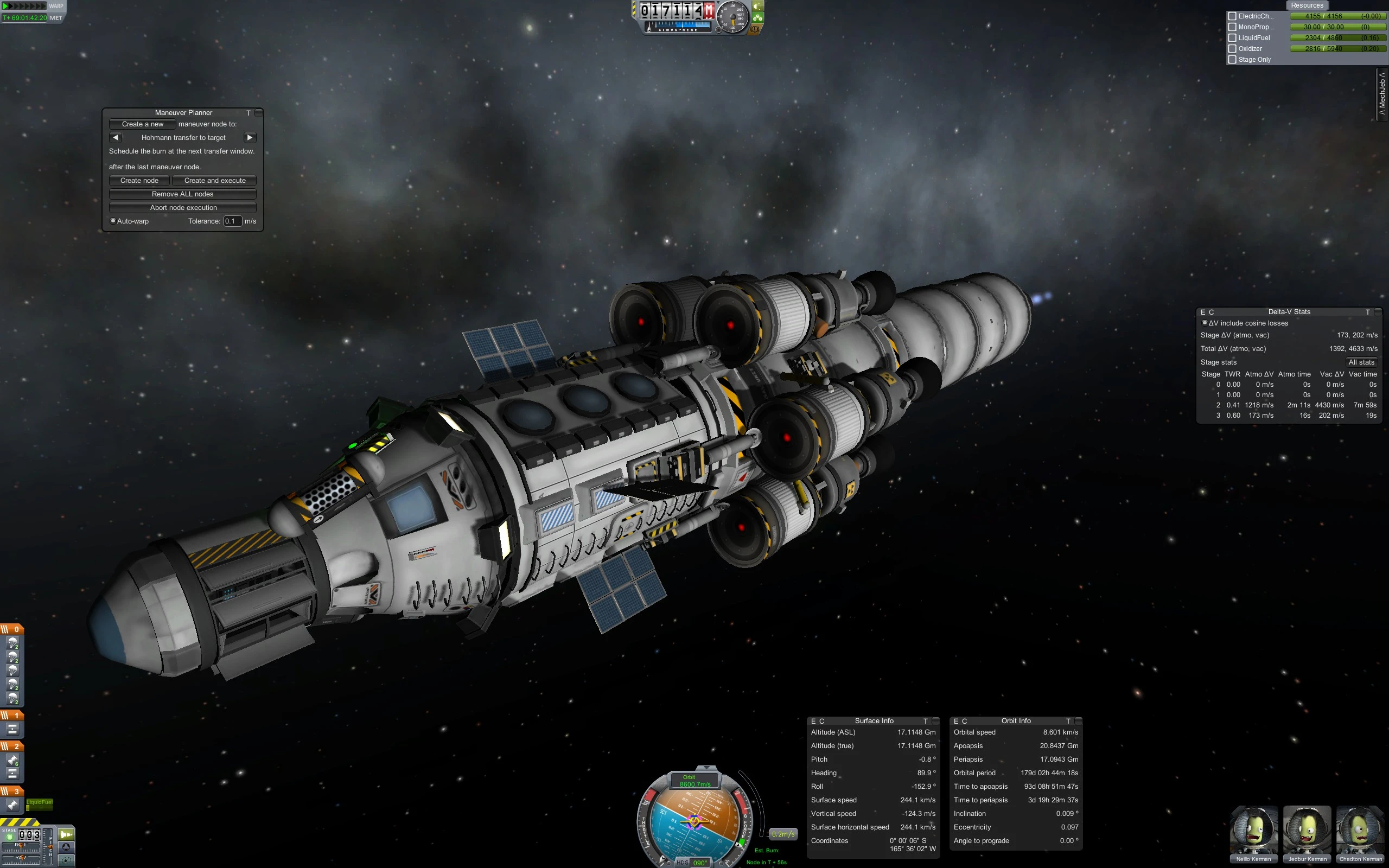
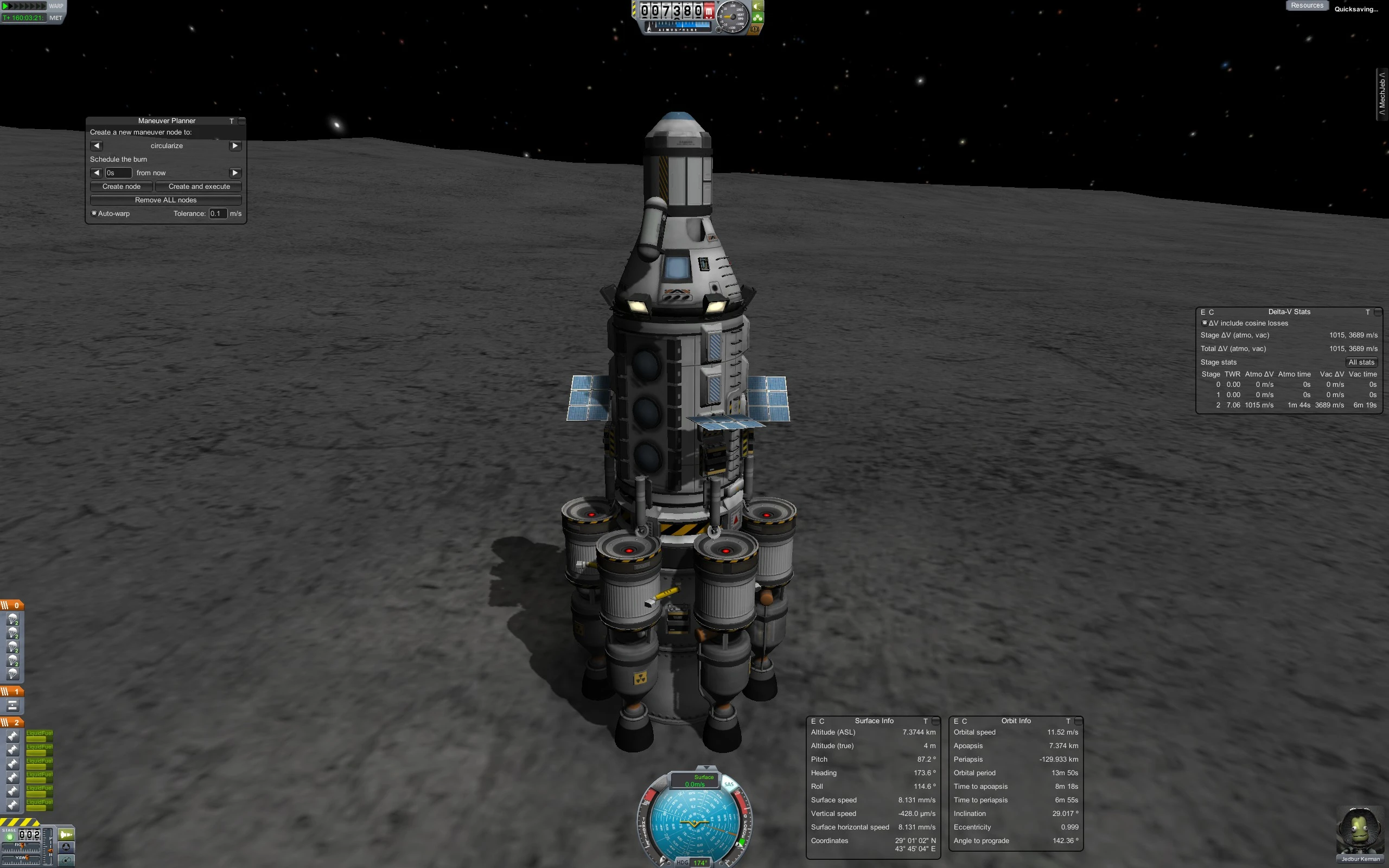
The six nuclear engine pods visible in this configuration offer roughly 4000 m/s of delta-v in a compact form factor, with markedly better vacuum efficiency than the standard chemical engines used earlier. Their low thrust does come with a constraint: this stage cannot land on massive planetary bodies under its own power. The profile instead calls for a lunar landing first to gather samples, process them aboard the lab module (the three-windowed center section), then depart for a heavier target.
Duna’s atmosphere is thin but undeniably present, so the descent relies on a combination of retrorocket burns and parachutes to achieve a safe touchdown.
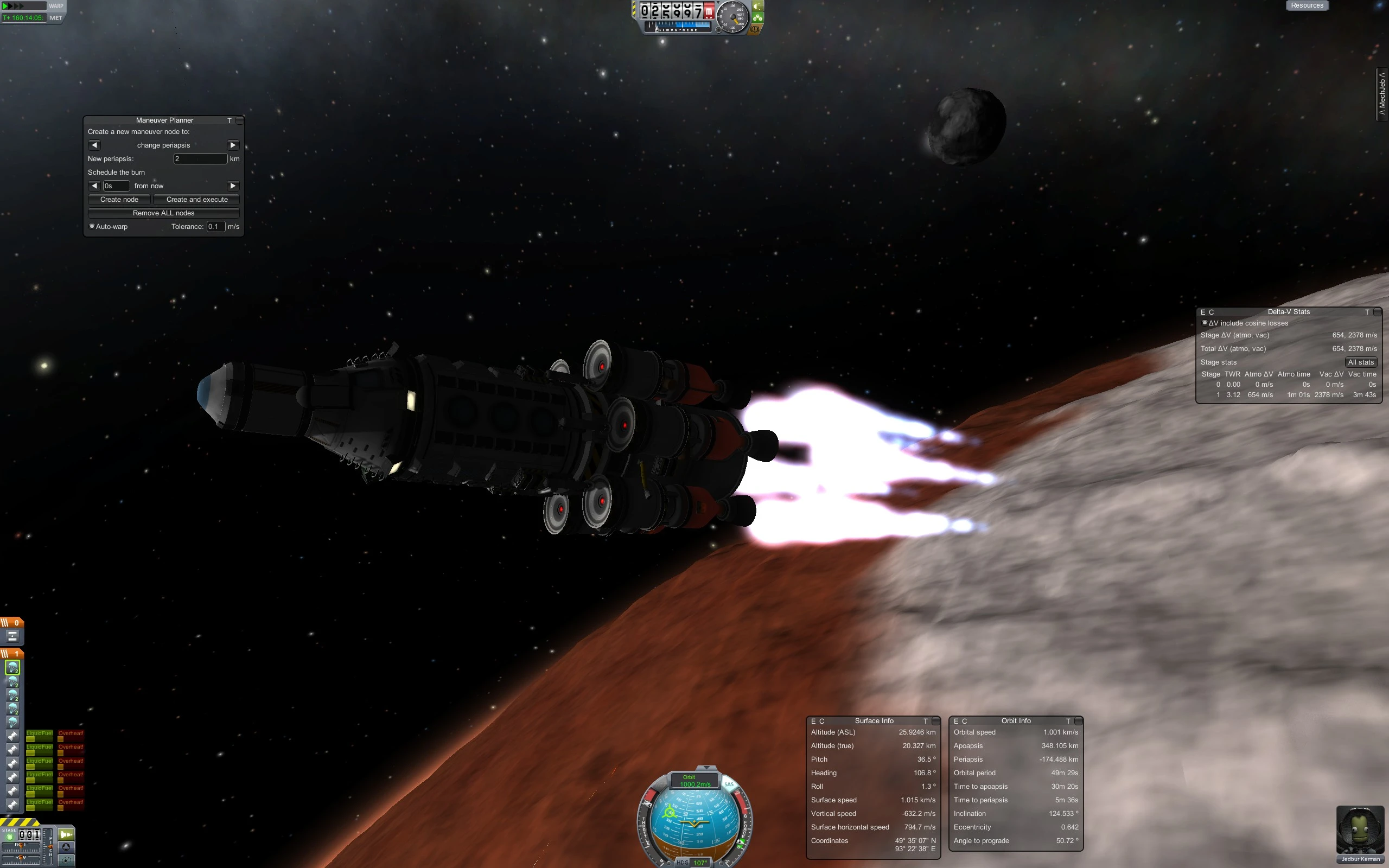
With the nuclear stage spent, it is jettisoned groundward, where its explosive arrival ensures the landing site retains nothing remotely hospitable to life.
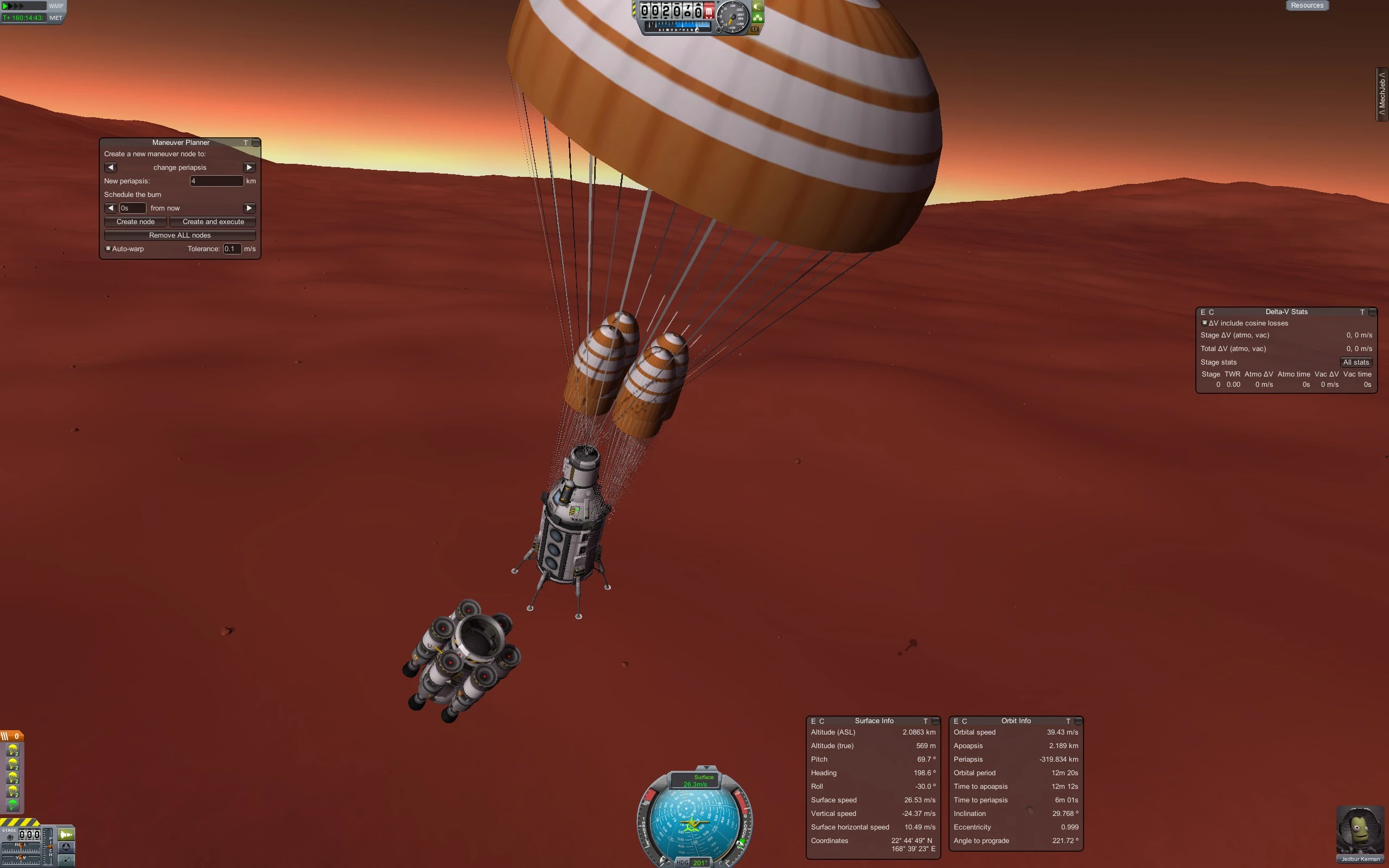
The mission includes no return vehicle. Ms. Jedbur’s eventual retrieval from her Dunan posting is left as an exercise for future technological development.


