Power Beaming: Orbital Solar Arrays in Kerbal Space Program
In Kerbal Space Program’s Interstellar mod, fission reactors paired with electric generators are heavy and prohibitively mass-expensive early in the tech tree. Microwave power beaming offers an alternative, but initial tests showed that moderately sized orbital fission reactors couldn't supply enough energy. A different source was needed—one that could scale well beyond early-game reactor outputs.
Solar panels are light and inexhaustible, but weak compared to full-size reactors. Their output also falls with the inverse square of distance from the sun, which hampers deep-space operations. But that same falloff works in reverse: park a large photovoltaic array in low solar orbit and it collects a trove of energy, available for focused microwave transmission anywhere in the system.
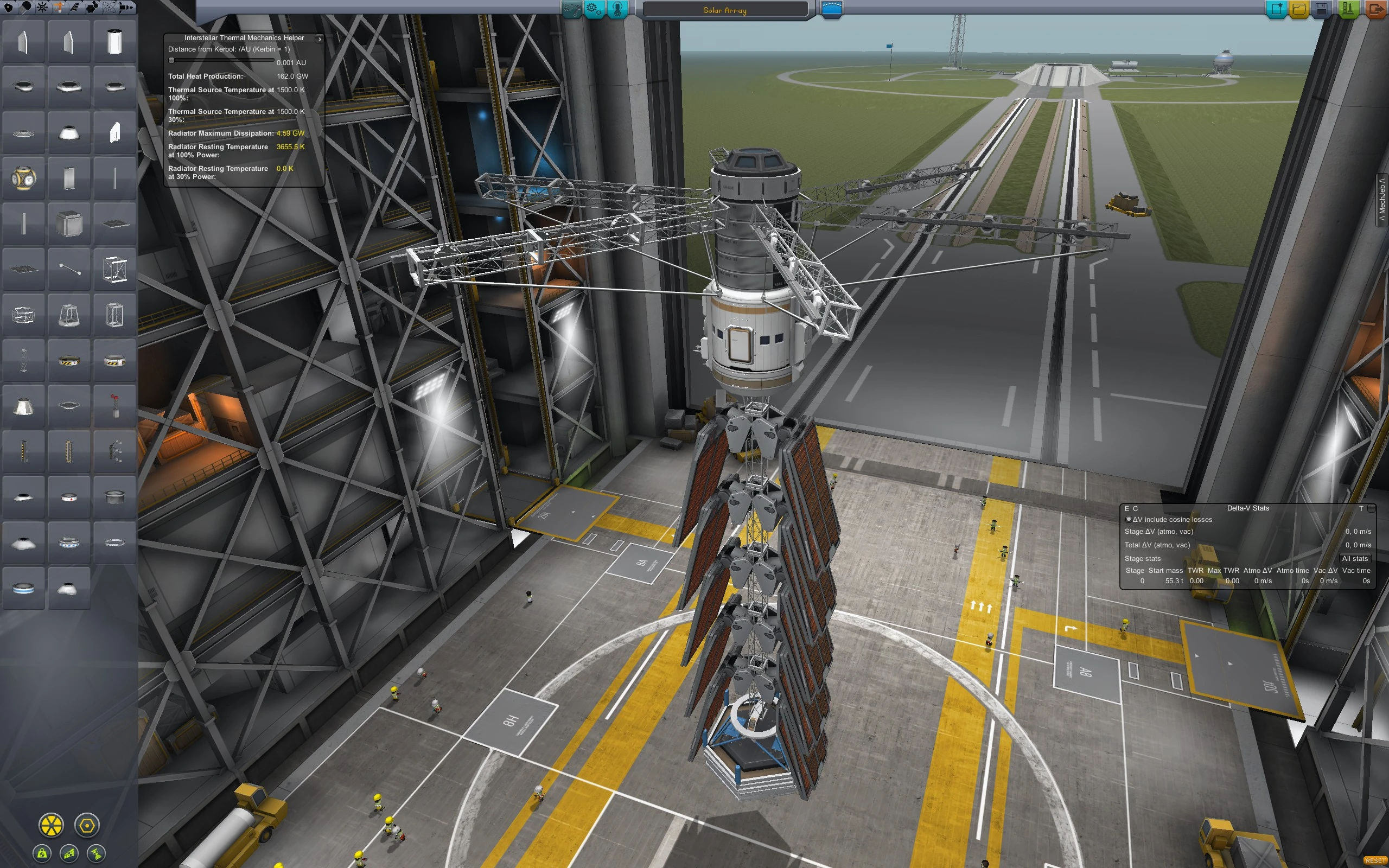
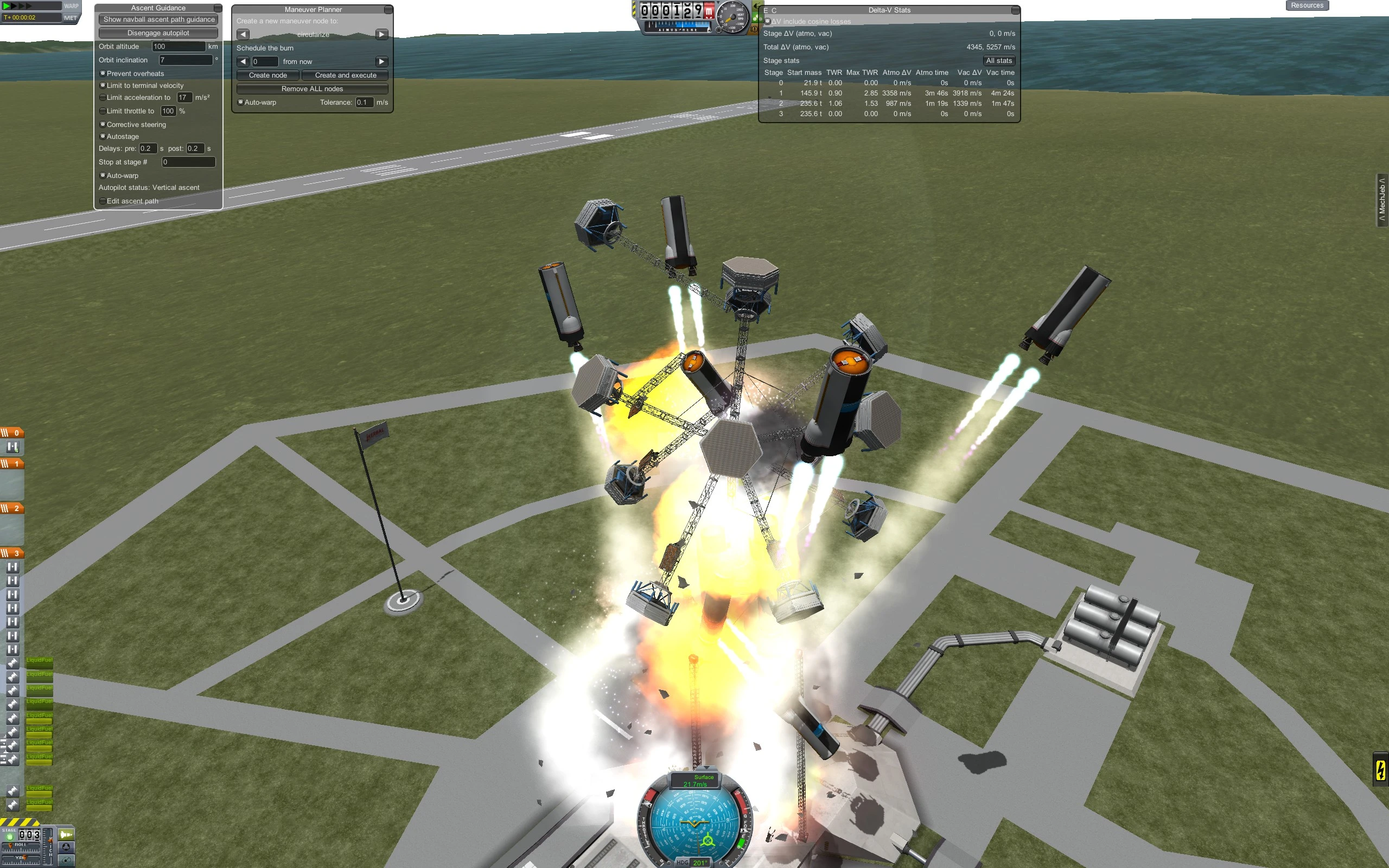
The first prototype station used trusses from which solar panels unfurl. A long chain of radiators handles the intense heat of low solar orbit, and a microwave antenna sits at the base for beaming power across interplanetary distances. A small crew hab and cupola were included, offering what can generously be called extreme suntanning accommodations.
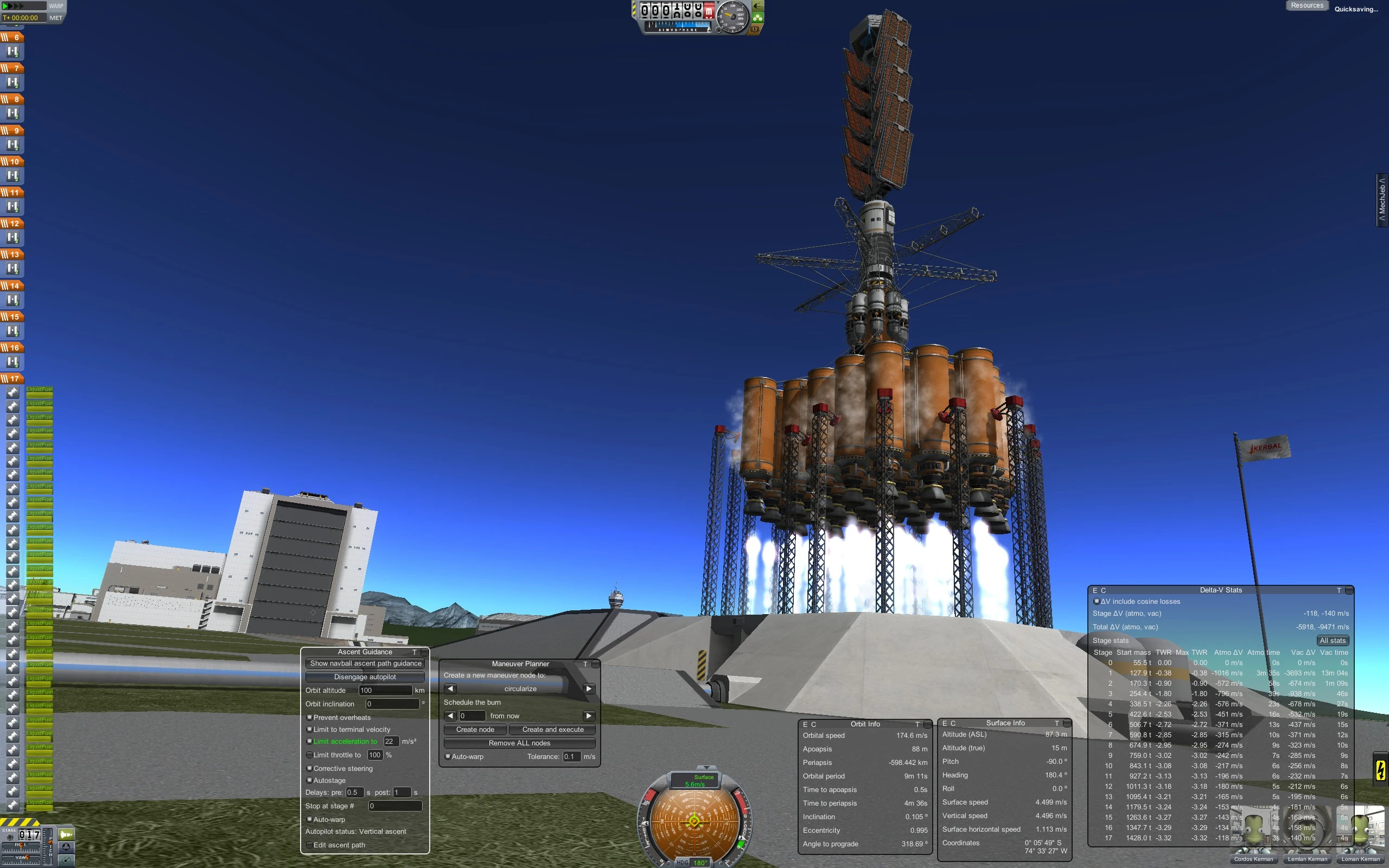
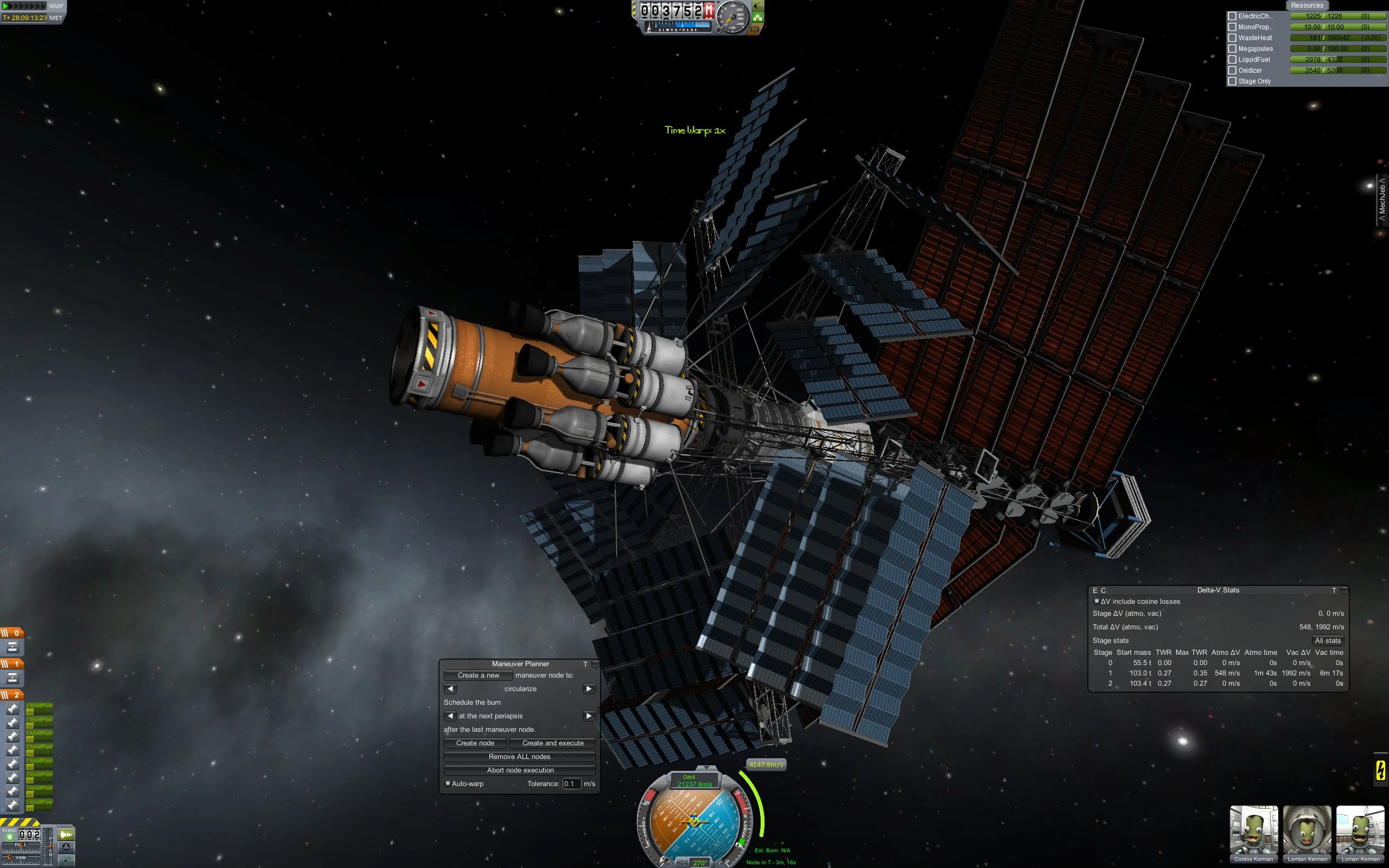
After launch, the solar panels and radiators deploy, and a stock nuclear engine pack moves the station into solar orbit.
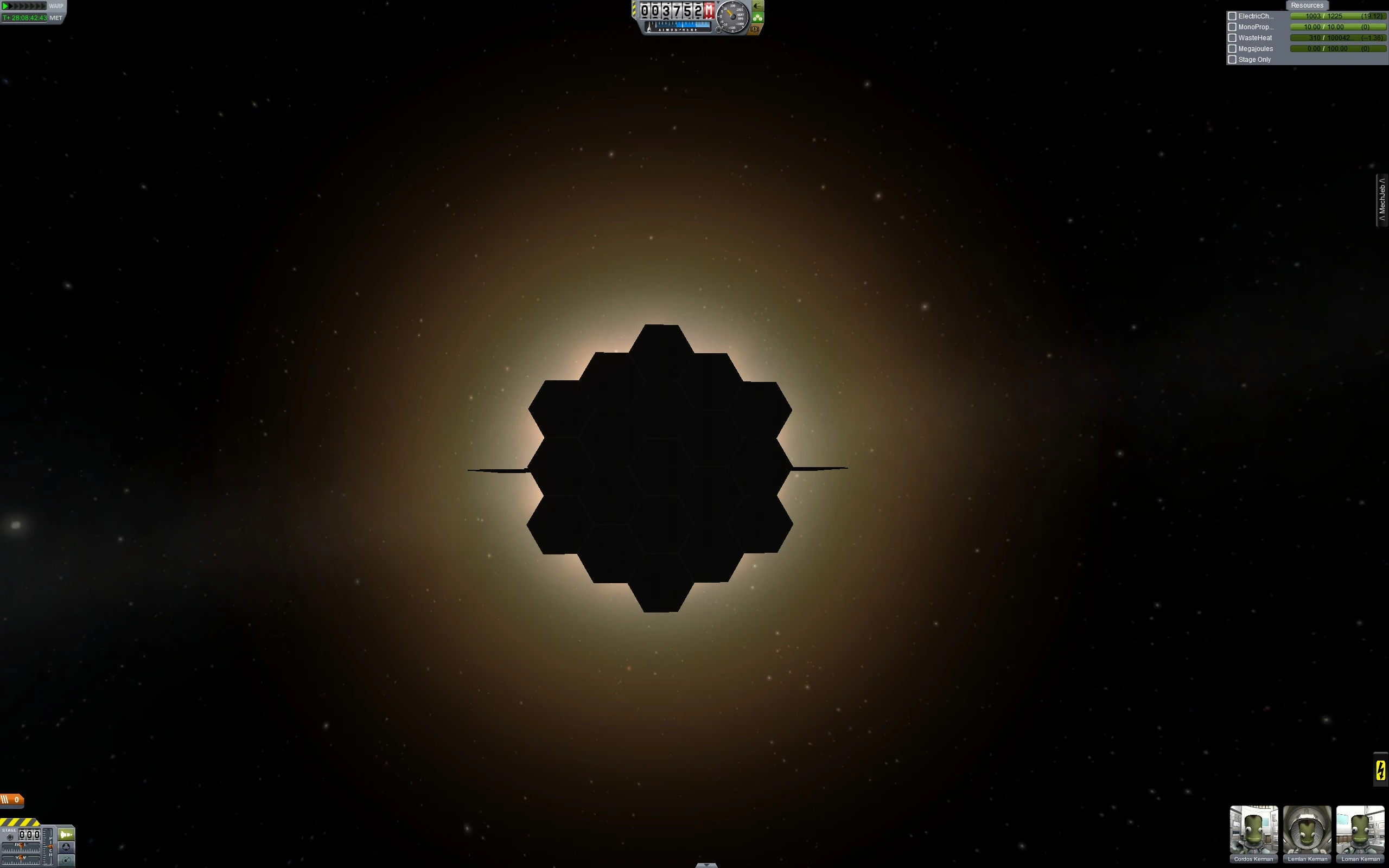
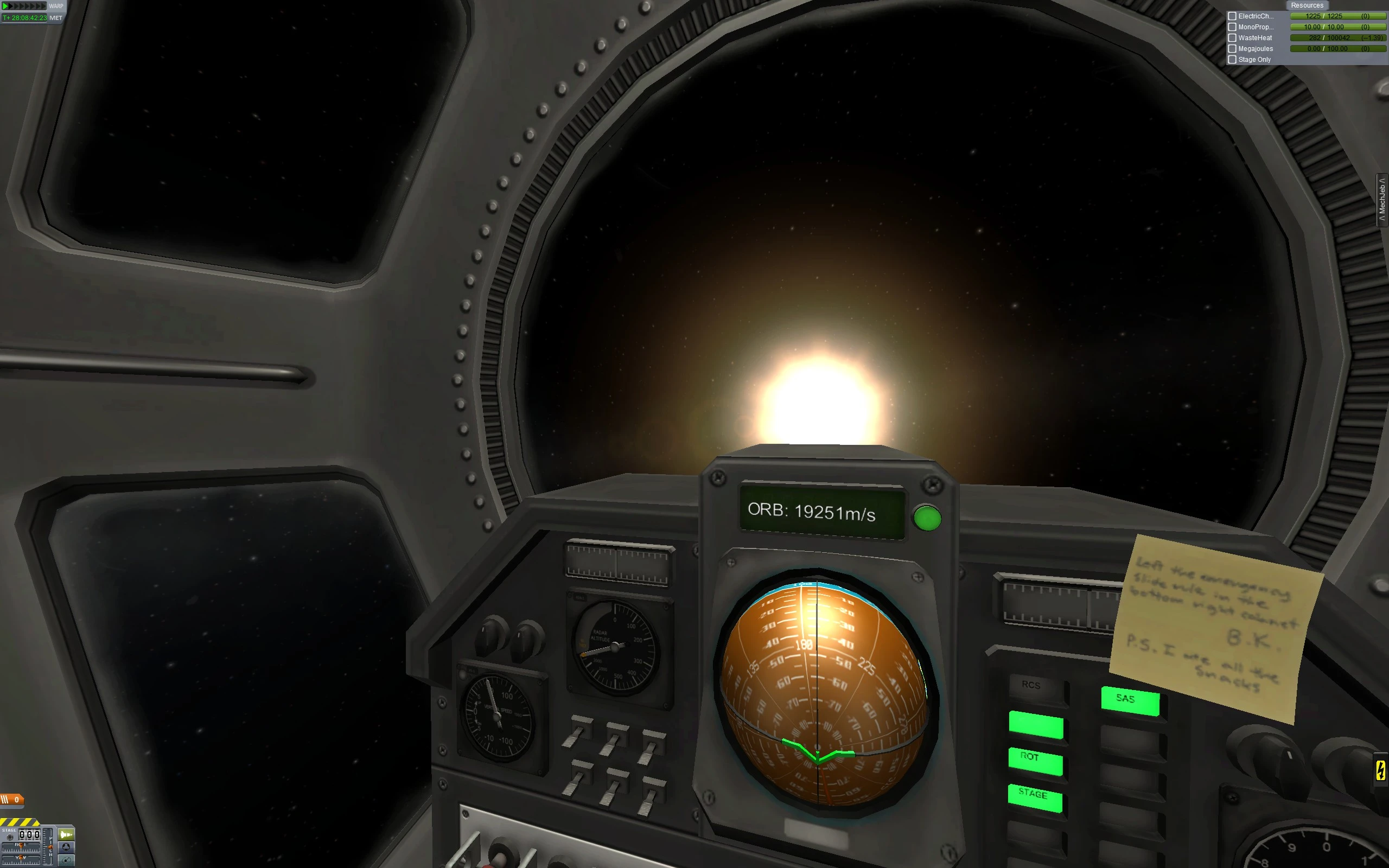
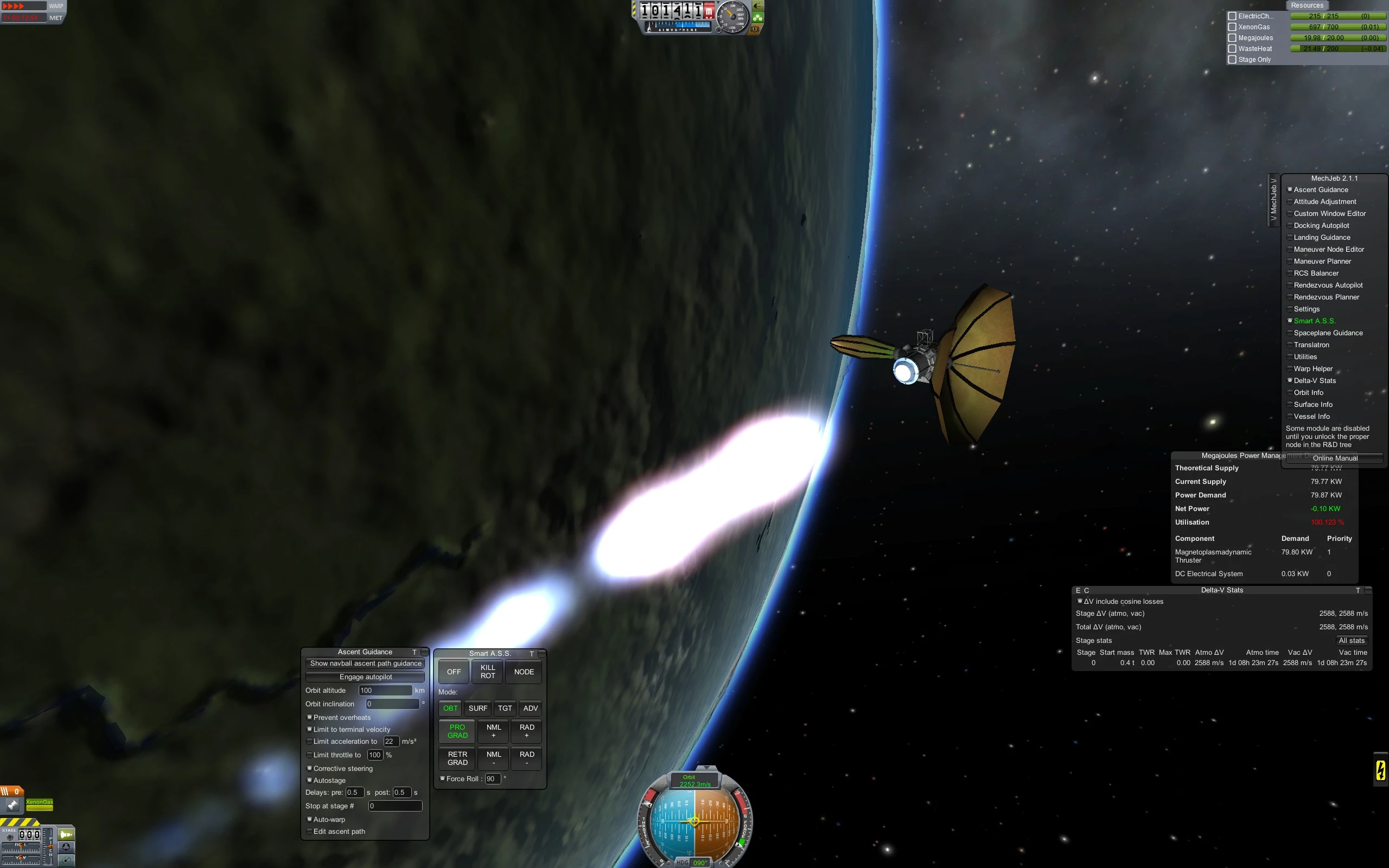
The initial delivery only reached a fairly high solar orbit, yet the station still pumps out ~3.5 megawatts of microwave energy. A tiny ion-engine craft released from a standard launch vehicle can draw enough through its parabolic antennae for ~2588 m/s of delta-v—specific impulse scales with available power—though its thrust-to-weight ratio is close to useless.
More power was needed.
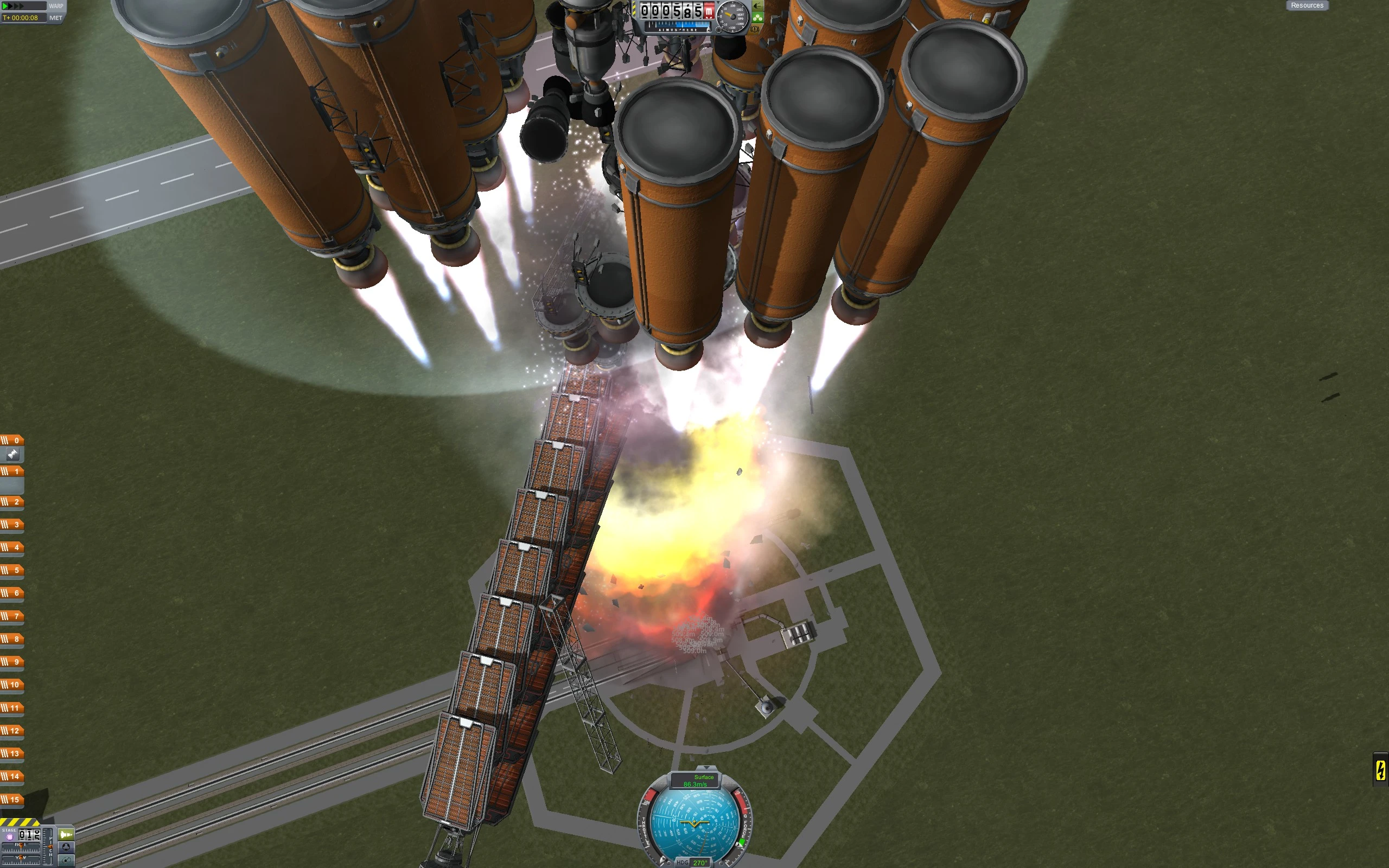
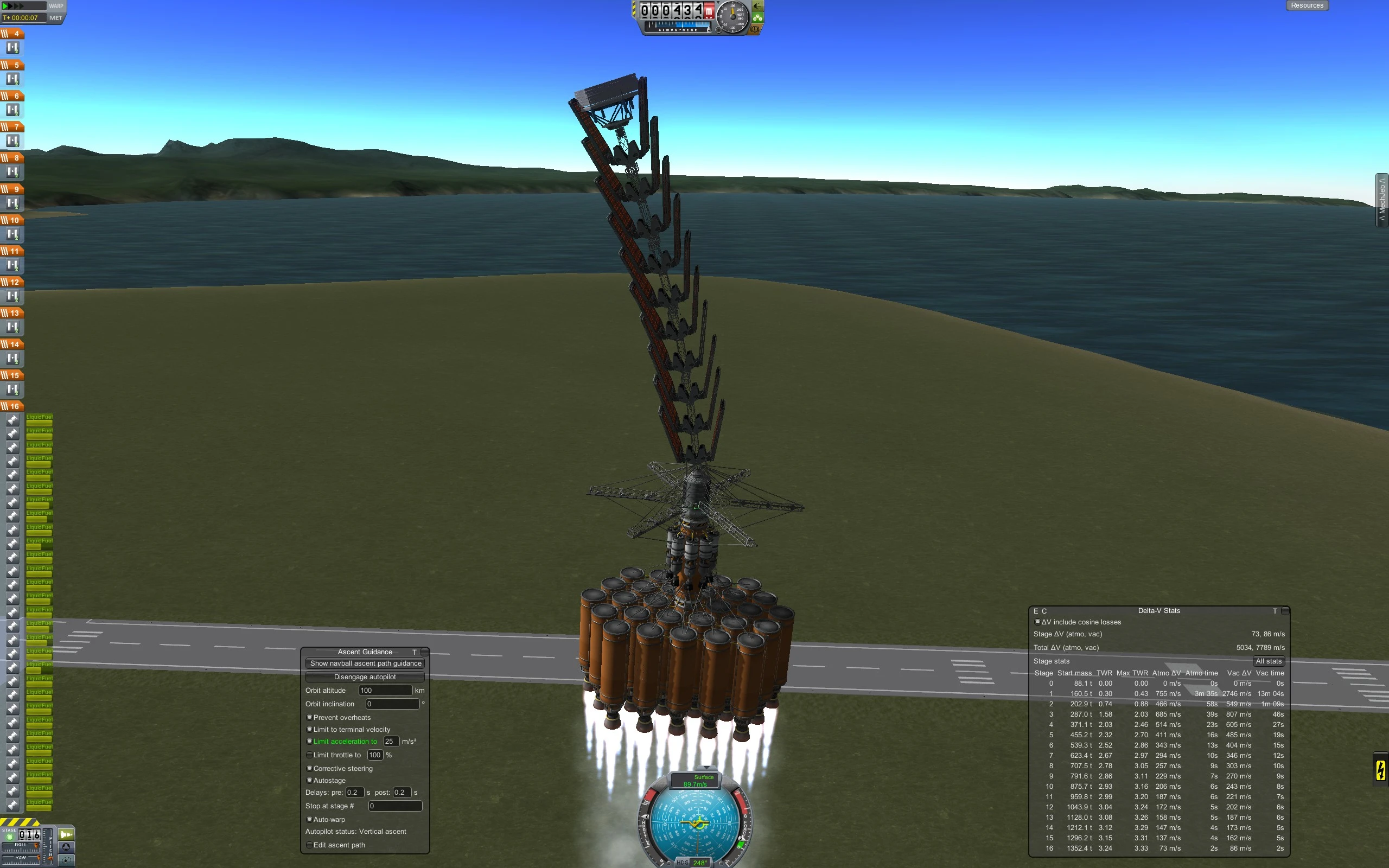
Lowering the orbit meant redesigning the station. The spine of the original assembly had many joints, causing the whole structure to wobble uncontrollably like an inflatable advertising figure. Autopilot and SAS couldn't compensate. Removing the crew module and observatory saved weight, allowing for additional radiators and solar panels. A docking port at the head of the station lets a second transfer vehicle push the station into a lower orbit after the initial NERVA pack's fuel runs out.
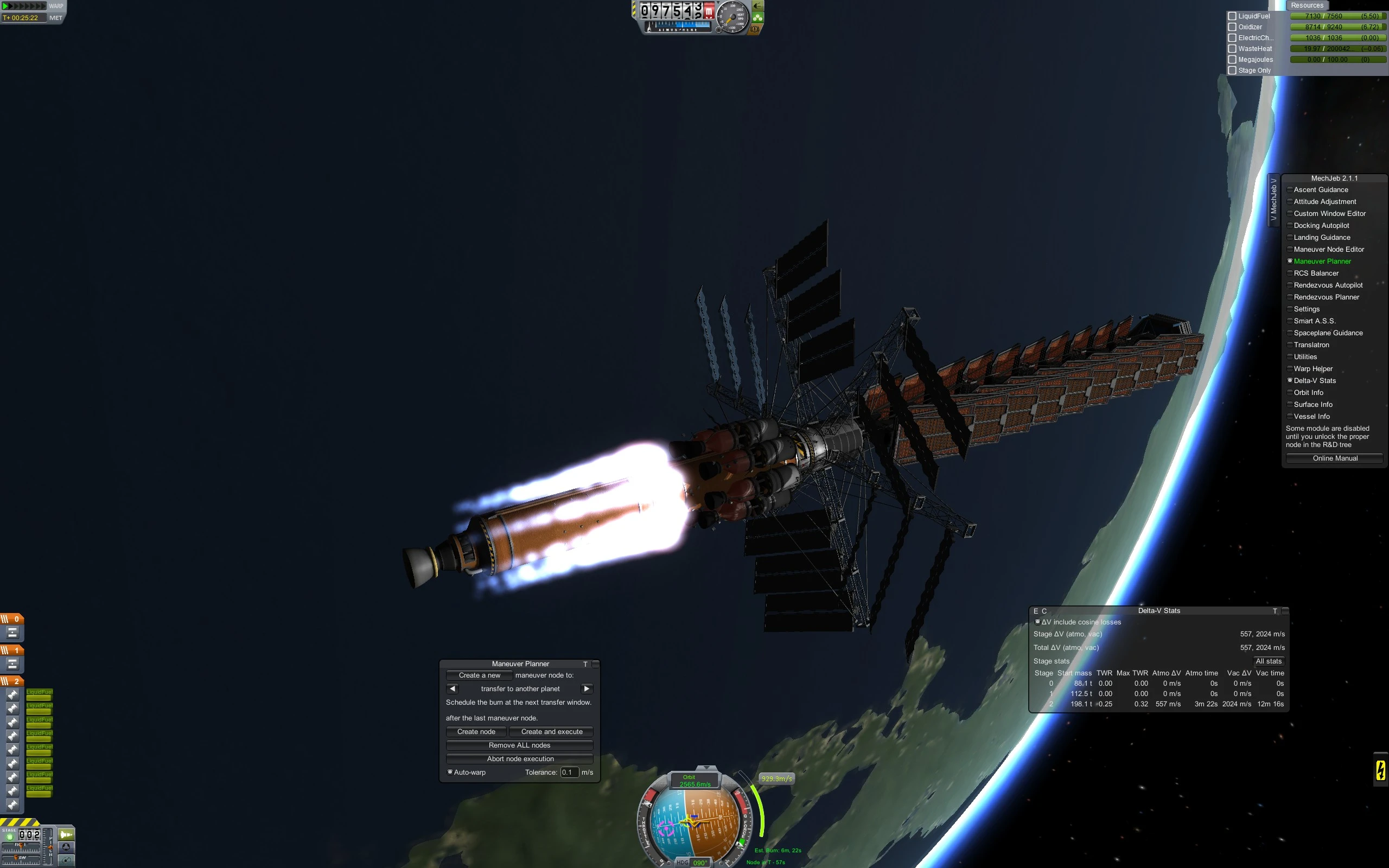
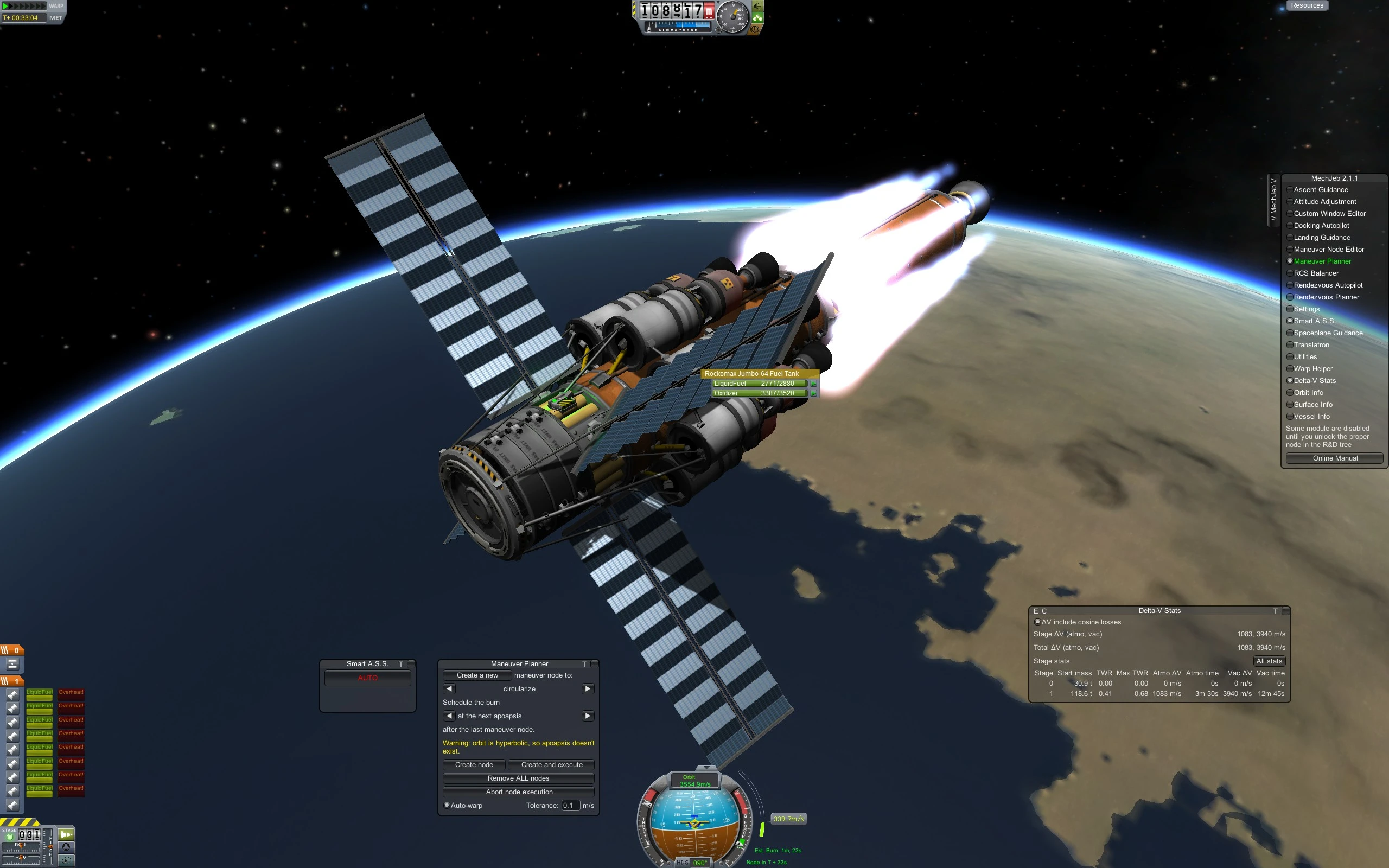
The lower orbit boosts power output significantly enough that new missions can drop dedicated electric generators altogether. The revised design keeps a uranium-tetrafluoride cycle fission reactor for thermal rockets, but relies on microwave transceivers for all electrical power demands.
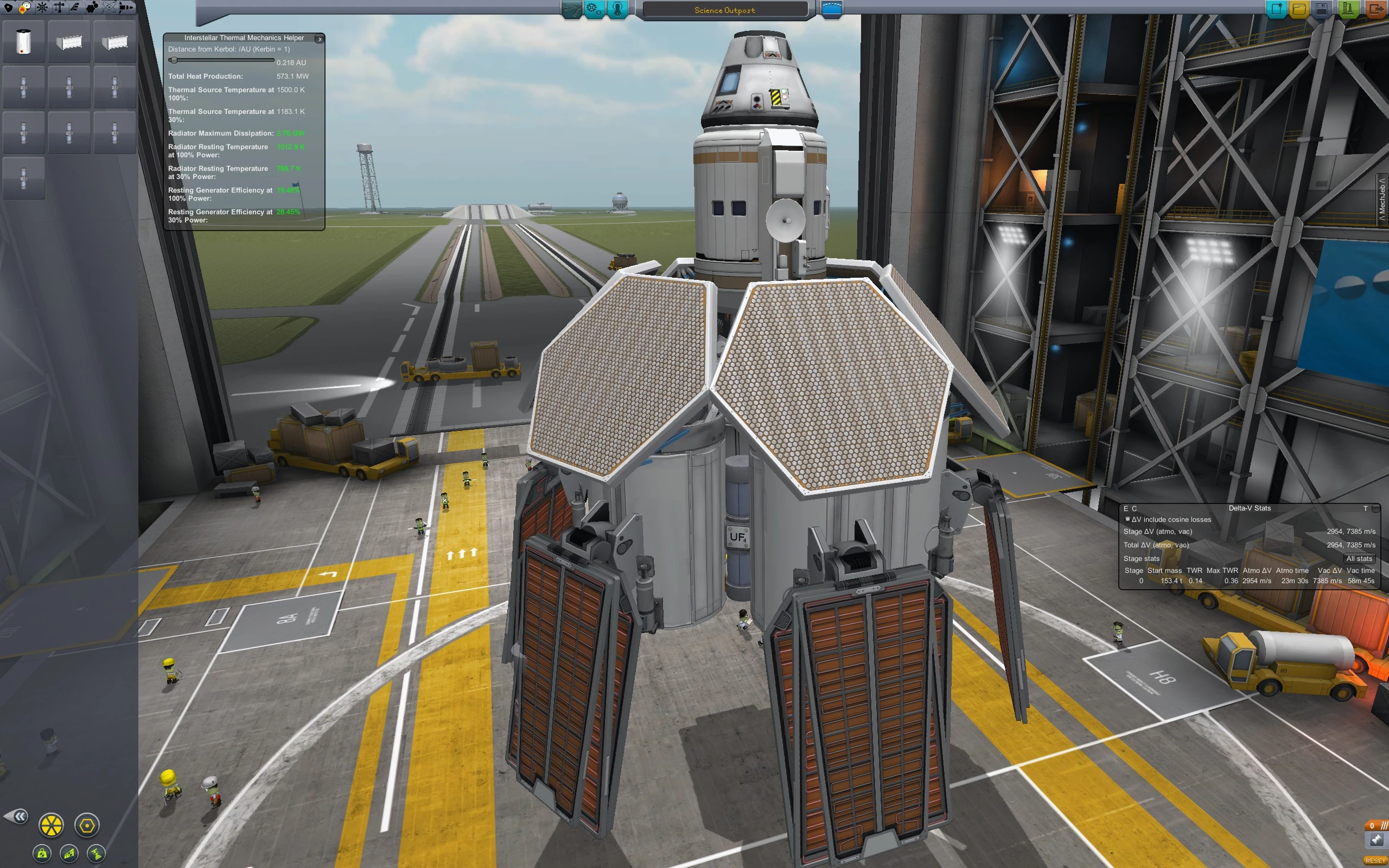
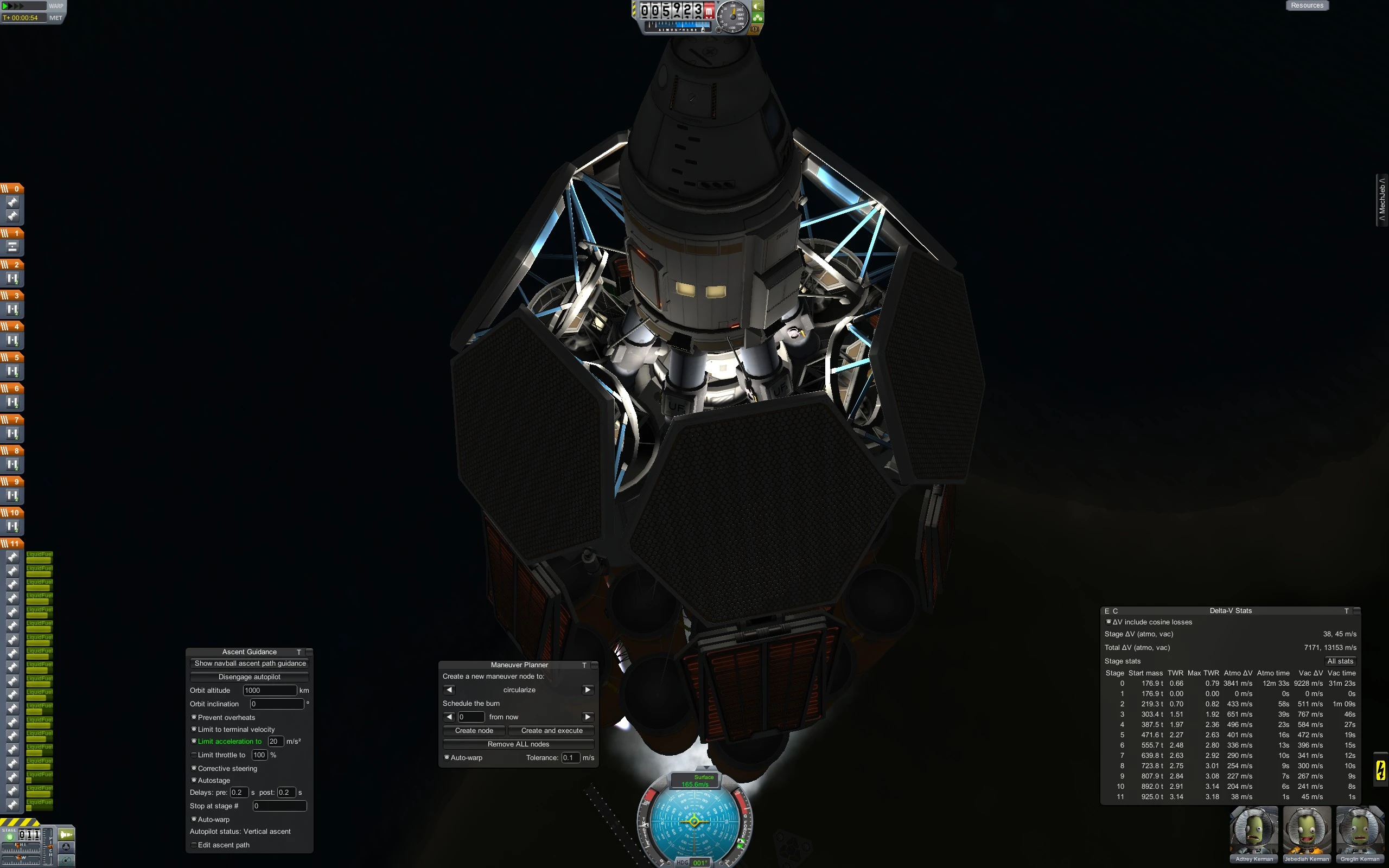
Microwave power also ran research labs on other planets—essential for unlocking better propulsion technologies.
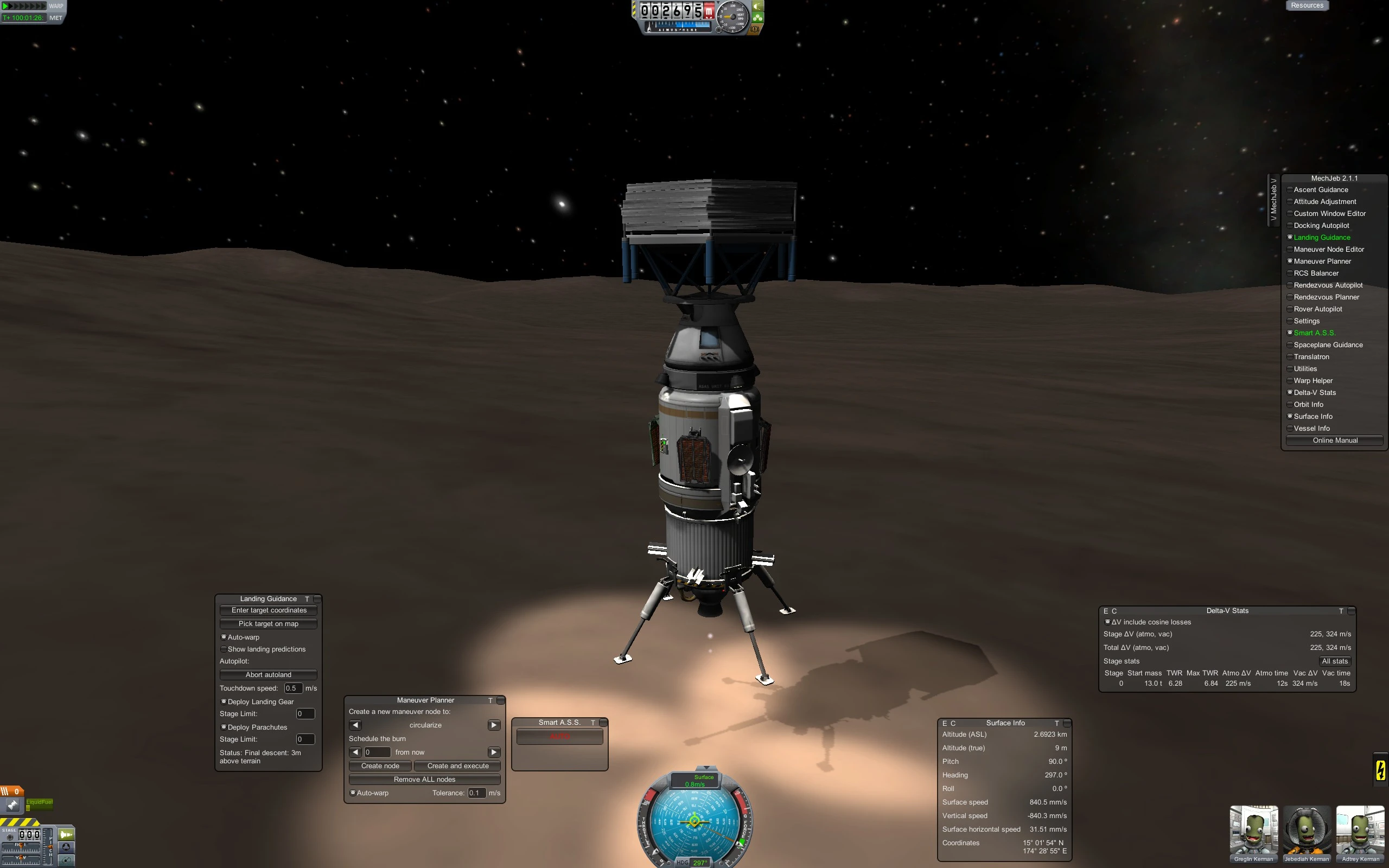
One such technology is the inertial fusion engine. It ejects tiny pellets of hydrogen and crushes them with laser beams, producing intense explosions. The radiation output kills any Kerbals within several kilometers, but the efficiency is extreme. A single-stage-to-orbit craft equipped with this engine achieves a 1.72 thrust-to-weight ratio and 33,000 m/s of delta-v.
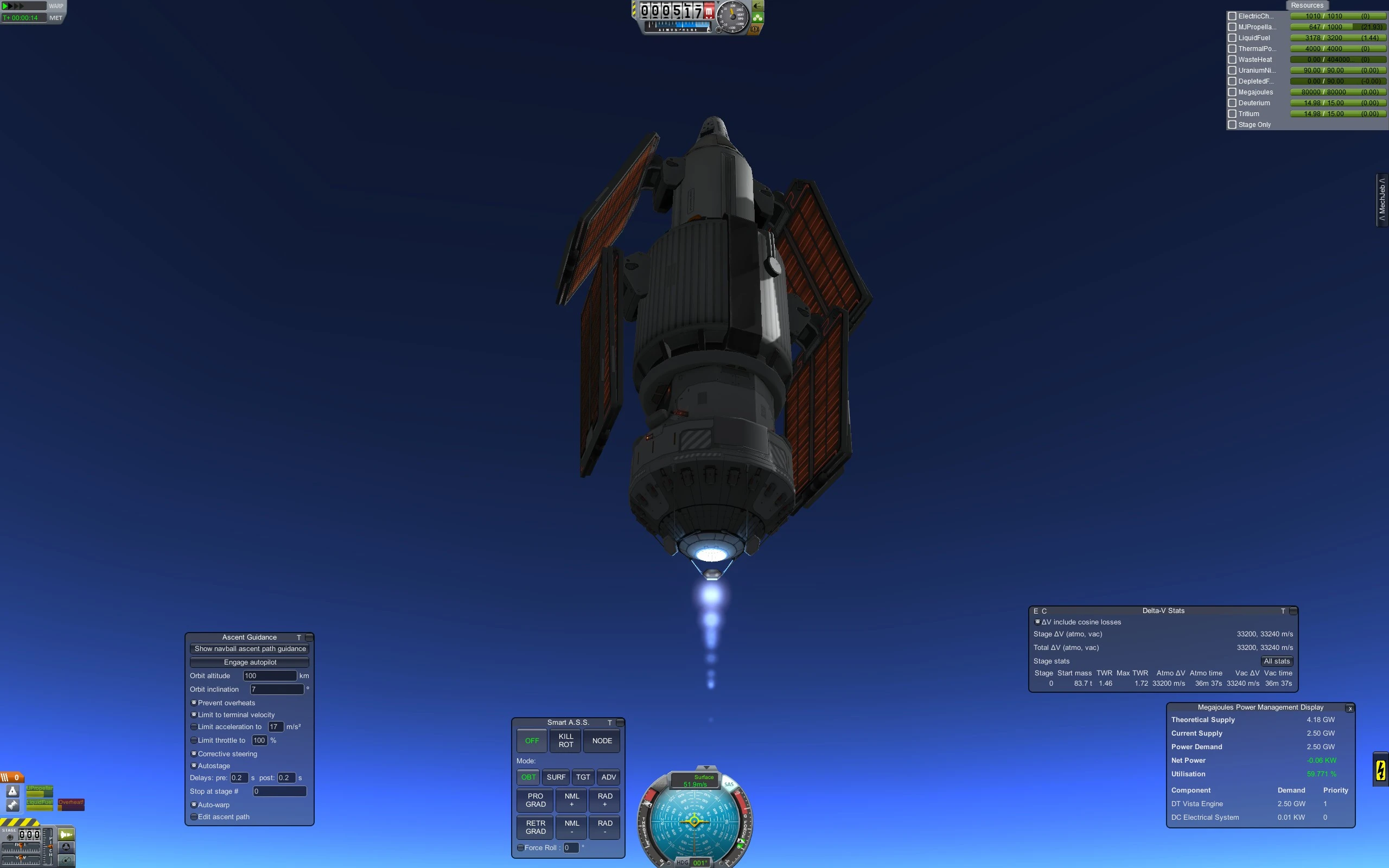
With the fusion engine, the station could fly shockingly close to the sun before waste heat overwhelmed onboard systems.
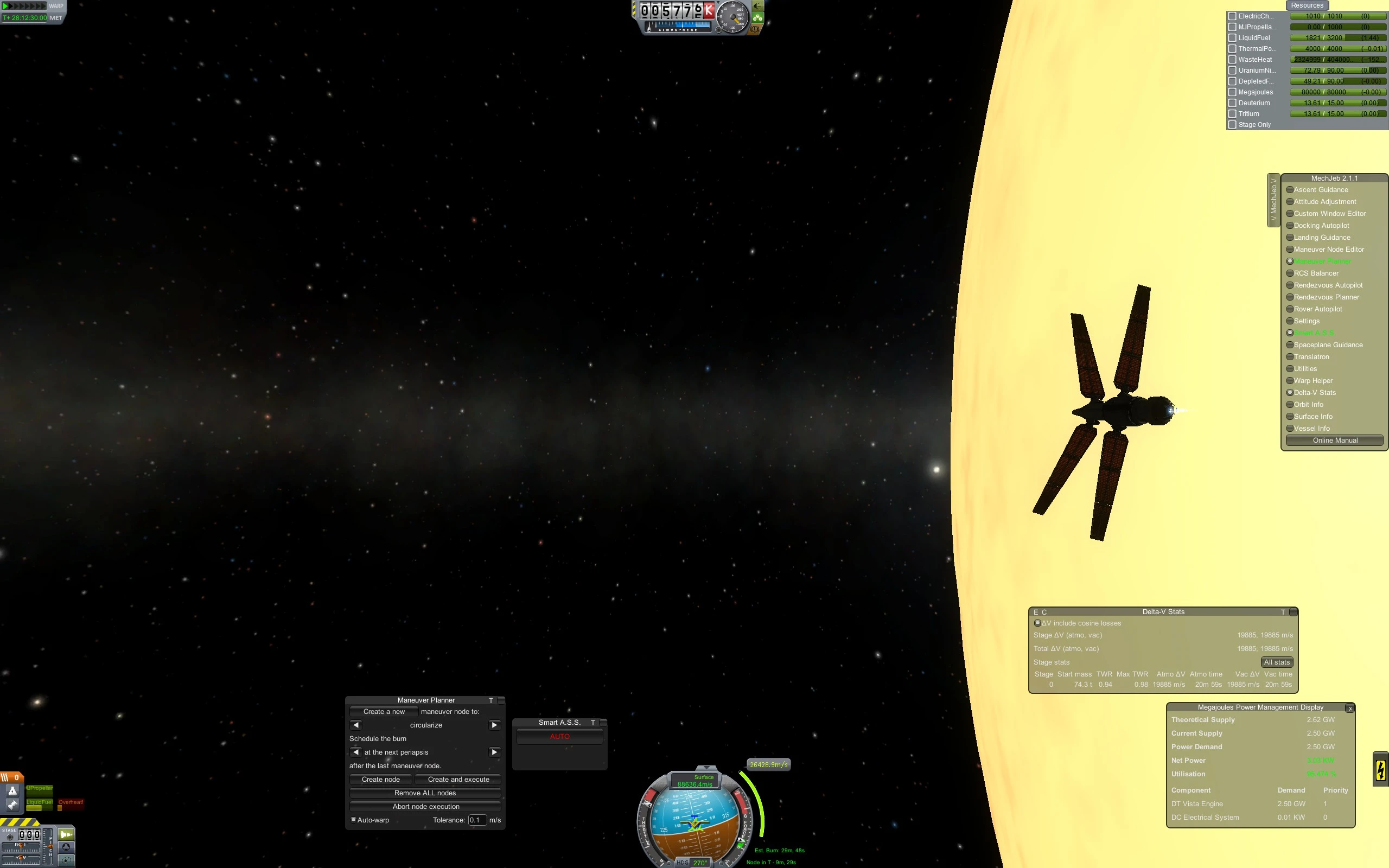
The next step was scaling the concept sevenfold. A purpose-built transfer vehicle docks with the orbital stations and pushes them into lower, more interesting orbits.
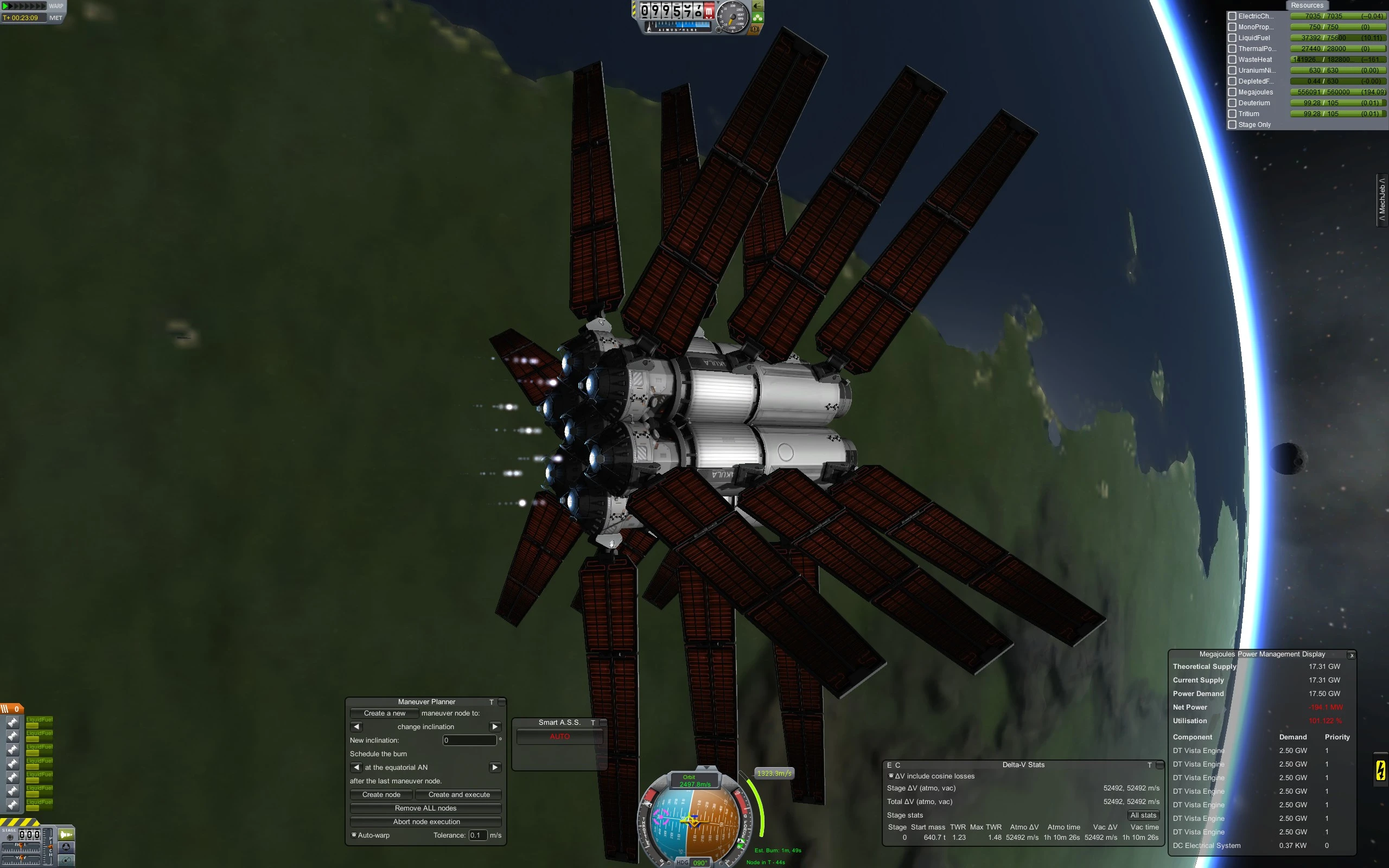
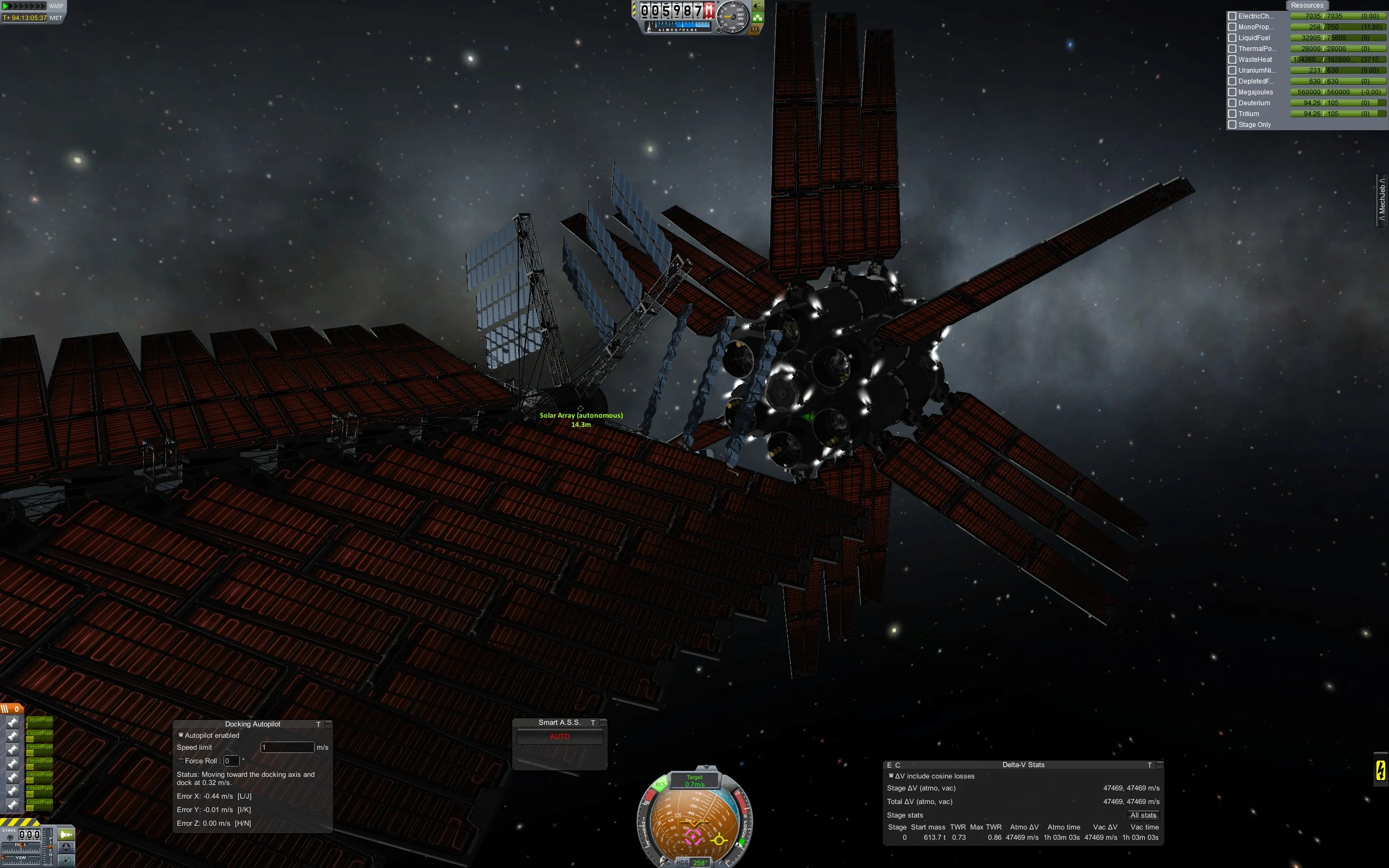
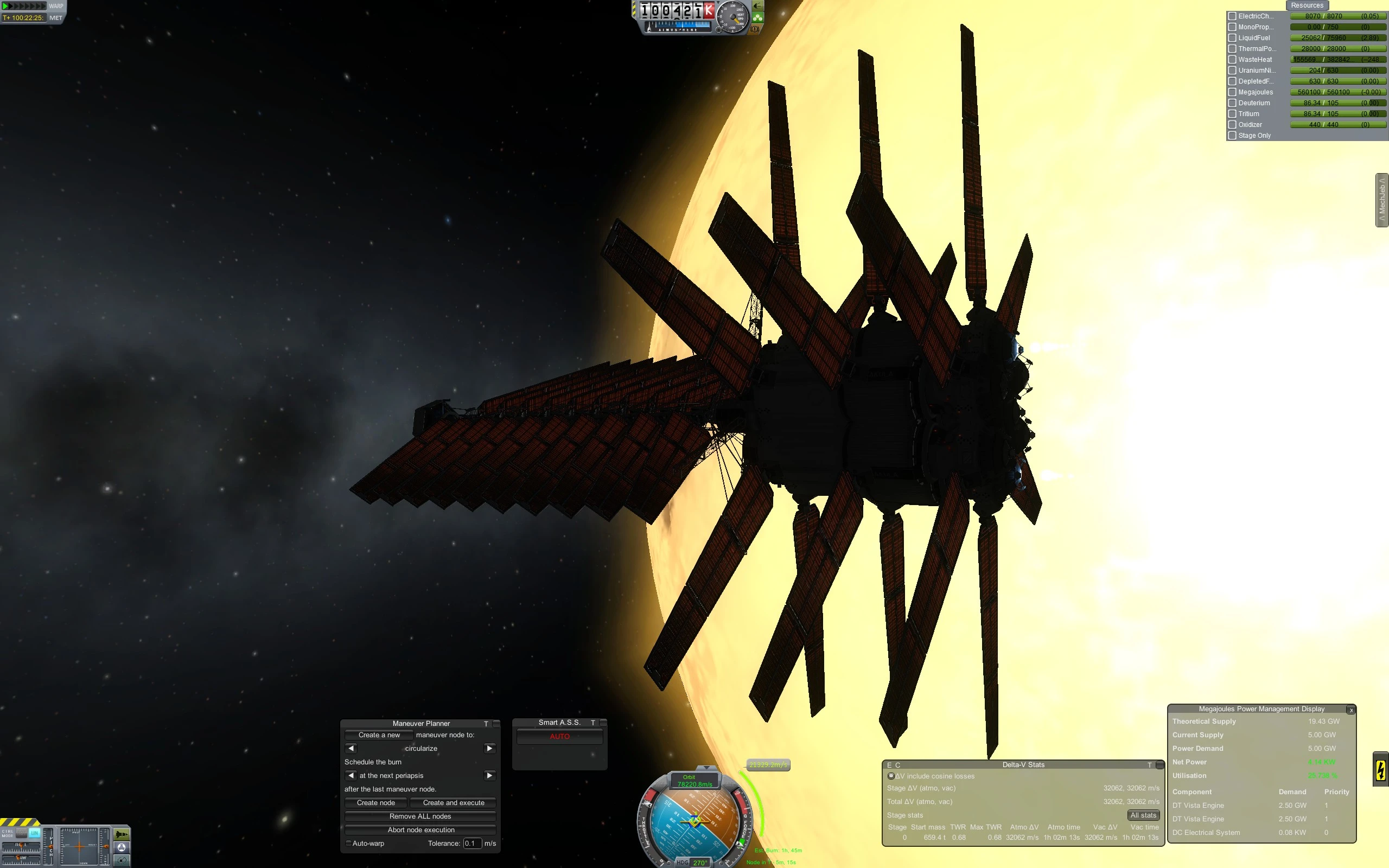
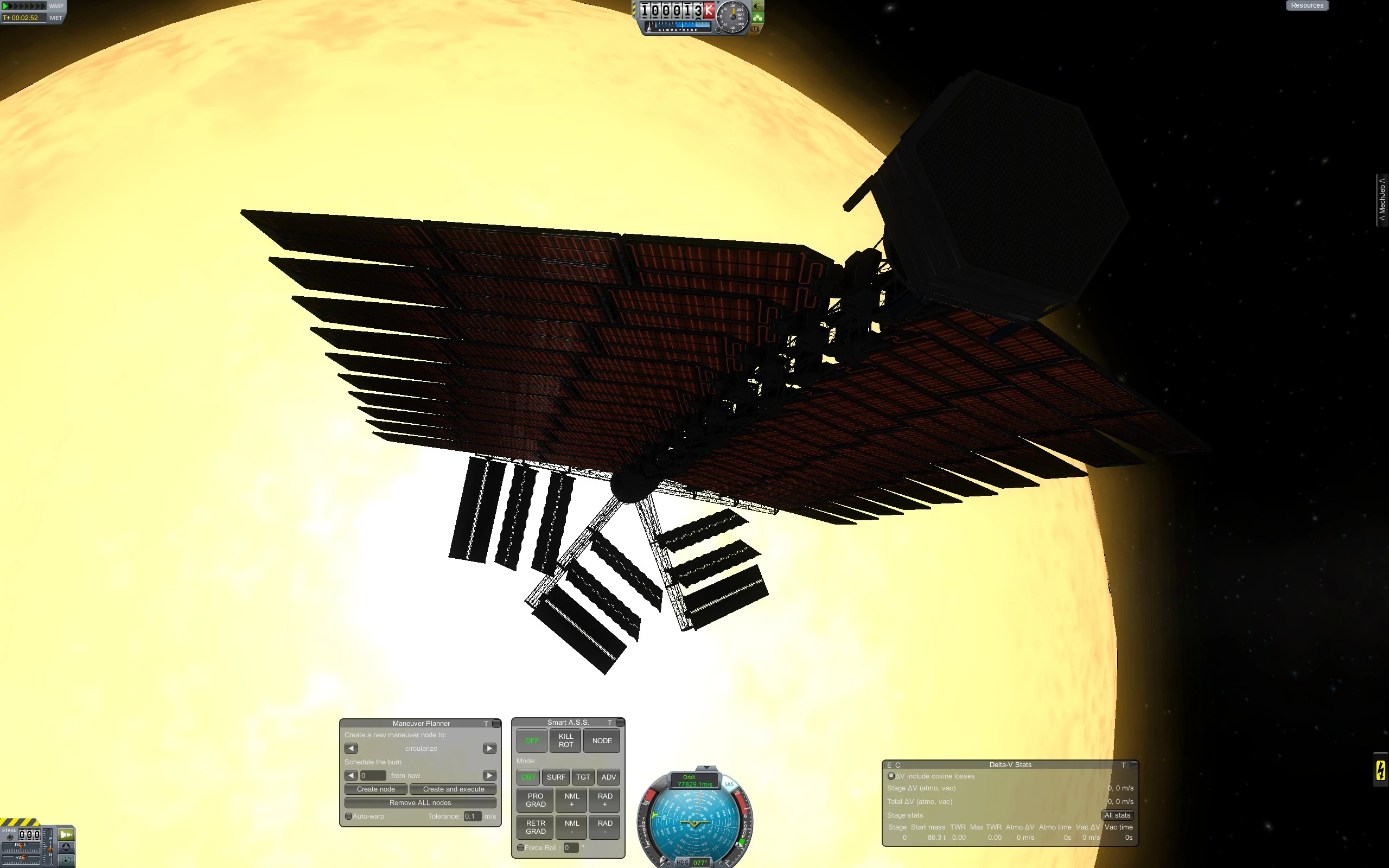
Precise output figures are lost to memory at this point, but the generated power is substantial. Three additional stations were built for good measure. Since the beaming only works in direct line of sight of the sun, microwave repeaters were needed across the system—including one that looks particularly silly.
With this infrastructure in place, far more ambitious craft became possible. A deep-space infrared observatory was launched on a 90-year elliptical trajectory toward the outer edge of the solar system, powered entirely by beamed microwaves.
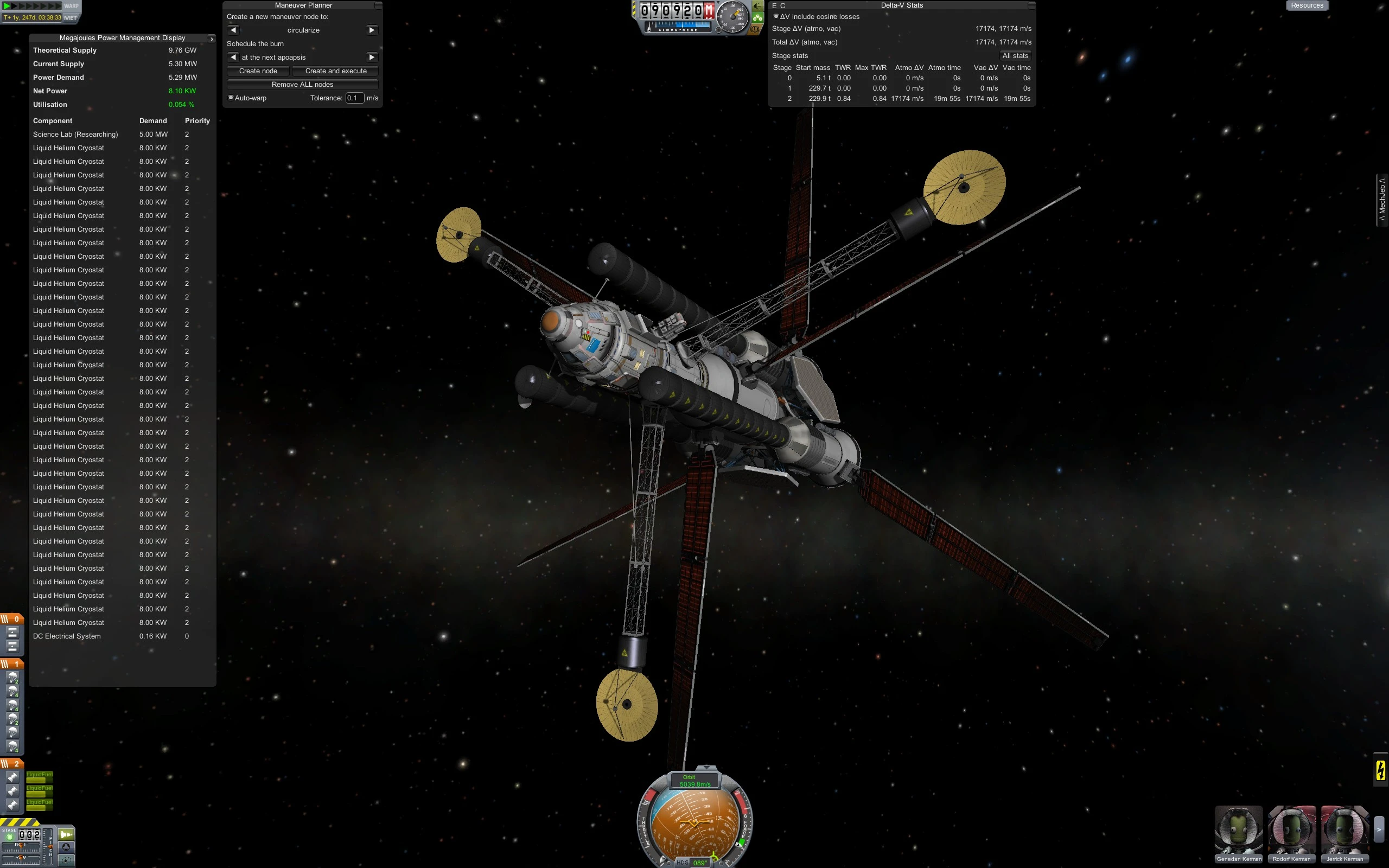
The observatory is presumably still out there. One wonders whether snacks were packed.


