
Baseline compatibility checks reach more developer tools
A quiet month on the web platform front, but July saw Baseline support spread across the tooling ecosystem. JetBrains shipped native integration, Chrome DevTools gained new hover-card data, and two more VS Code-based editors picked up the compatibility indicators.
JetBrains IDEs get Baseline built in
JetBrains has added Baseline support to its IntelliJ-based IDEs, covering WebStorm and the IDE platform's other products. The update brings Baseline information for CSS and HTML, with JavaScript feature support included as well. No plugin installation is required—the support arrives as a core update for existing users.

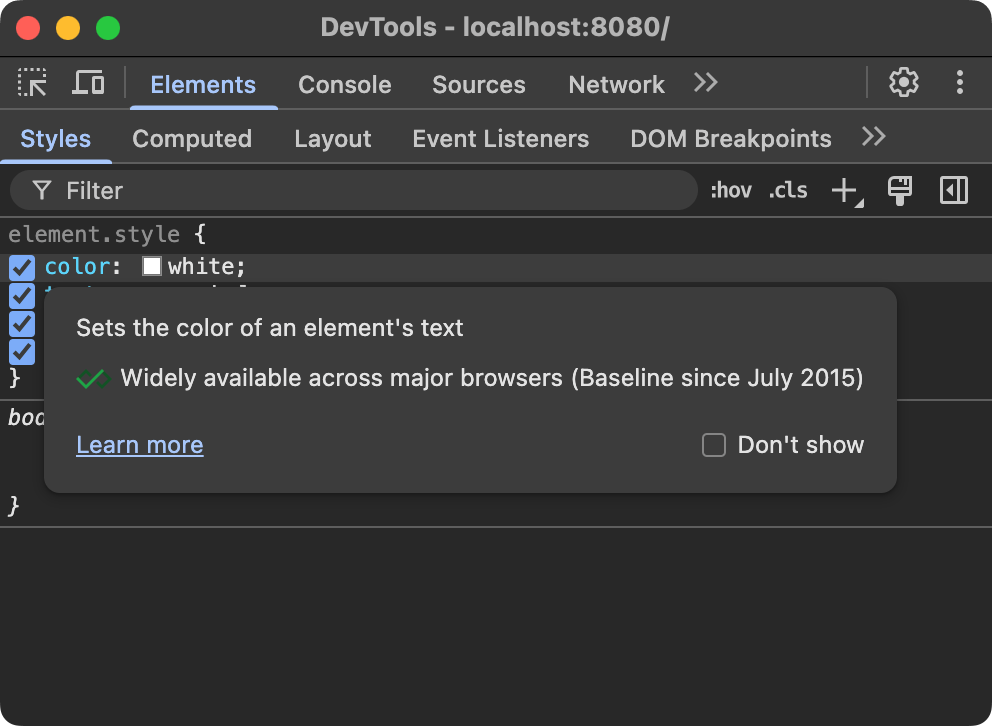
Chrome DevTools shows Baseline in CSS hover cards
Chrome 140 adds Baseline data to the tooltips shown when you hover over CSS properties in the Elements panel. The new messaging makes it possible to judge a property's compatibility status while debugging or experimenting with styles, without leaving DevTools. The feature was implemented by Alexey Rodionov.
VS Code-derived editors inherit hover cards
Editors built on Visual Studio Code pick up new functionality as they track upstream releases. Two more inherited the Baseline hover cards for CSS and HTML that arrived in VS Code earlier this year:
- GitHub Codespaces
- Cursor—though currently with only partial HTML support
Expect further VS Code-based editors to gain the same hover cards as they update, bringing compatibility information closer to developers' everyday workflows.
If anything Baseline-related was missed in this round-up, the team welcomes reports through the standard issue tracker.


