

GitHub Adds Achievement Badges to Developer Profiles
GitHub is introducing a new system of achievement badges designed to recognize developers at various stages of their coding journey. The feature is rolling out in public beta and will appear on user profiles alongside existing markers like the contribution graph and profile READMEs.
According to GitHub, nearly 5,000 public contributions were made every minute on the platform last year. The company has previously found ways to celebrate notable developer work, including contributions that helped NASA conduct the first powered flight on Mars, code archived for the next 1,000 years in the Arctic Code Vault, and users who sponsor open source projects. Achievements extend this recognition to more common developer milestones, from early commits to meaningful participation in project discussions.
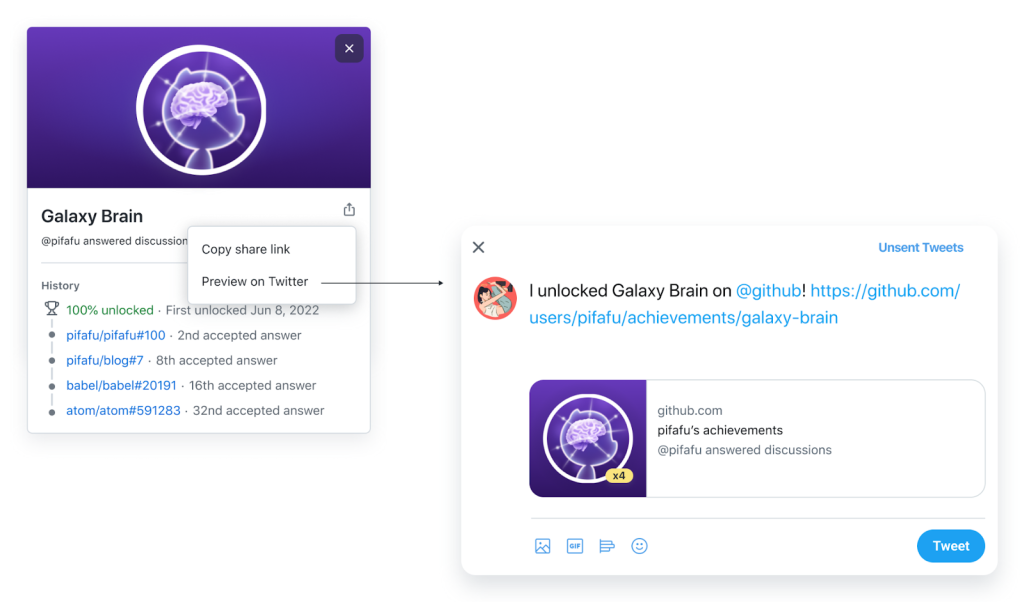
How Achievements Work
The badges commemorate key events in a developer's history on the platform. Some achievements will surface activity dating back to a user's earliest days on GitHub, allowing developers to look back at their progress over time. Users can also share earned badges on social media.
GitHub is intentionally keeping the exact criteria for each achievement undisclosed. The company says this adds an element of discovery — users can infer what actions unlock a badge by viewing achievements on their own profile or on the profiles of other developers. As noted in the example above, the Galaxy Brain achievement will recognize users whose answers in discussions have been marked as helpful by another user.
Opting Out
Displaying achievements is optional. By default, they are visible to anyone viewing a public profile, but users can opt out entirely through their profile settings. Developers who previously opted out of existing badges (Arctic Code Vault, GitHub Sponsor, and Mars Helicopter 2020) will be automatically opted out of the new achievements as well.
Planned Expansion
GitHub plans to release additional achievements over time, noting that the initial set does not cover every core milestone. The company describes its approach as "ship-to-learn," and is soliciting feedback from the community on what future achievements should recognize and which accomplishments developers most want to highlight for their communities. Feedback can be shared in the profile feedback discussion on GitHub Community.


